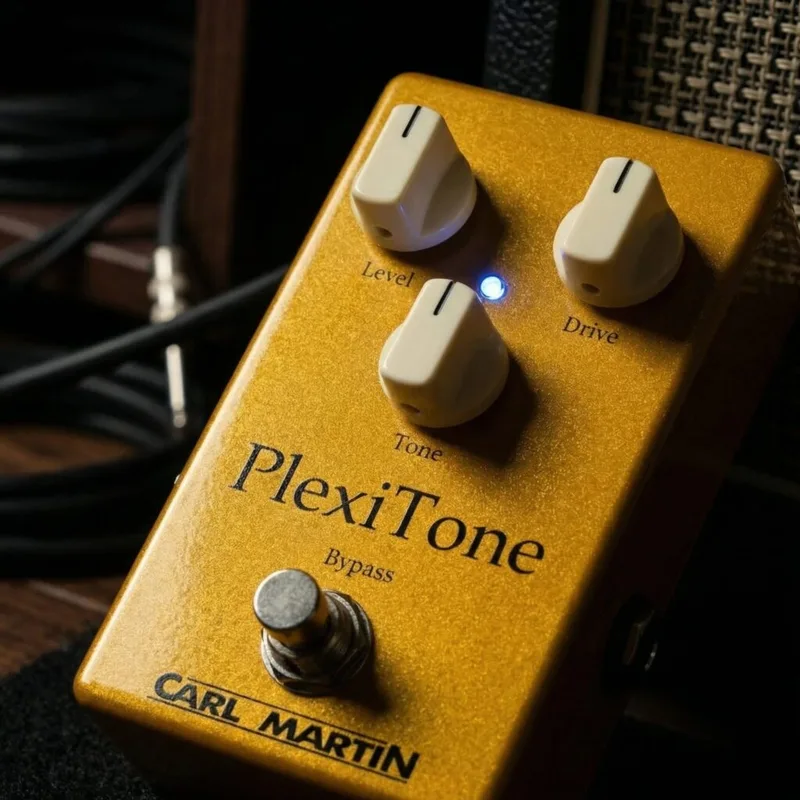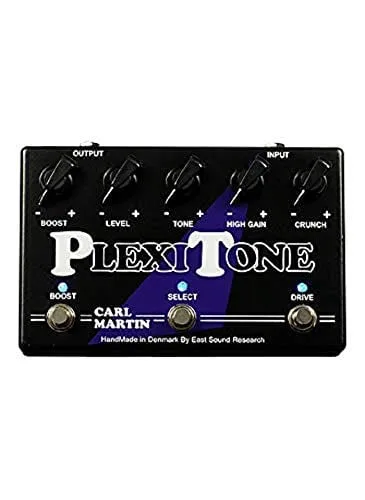


The Carl Martin PlexiTone is a Carl Martin overdrive/distortion pedal designed to emulate a vintage Marshall Plexi amp tone. It is a dual-channel design: a Crunch channel for lower-gain breakup and a High Gain channel for saturated lead tones, plus an independent clean boost that offers up to +20 dB12. Delicious Audio calls it "a 1994 device that started the Plexi-in-a-Box trend"3.
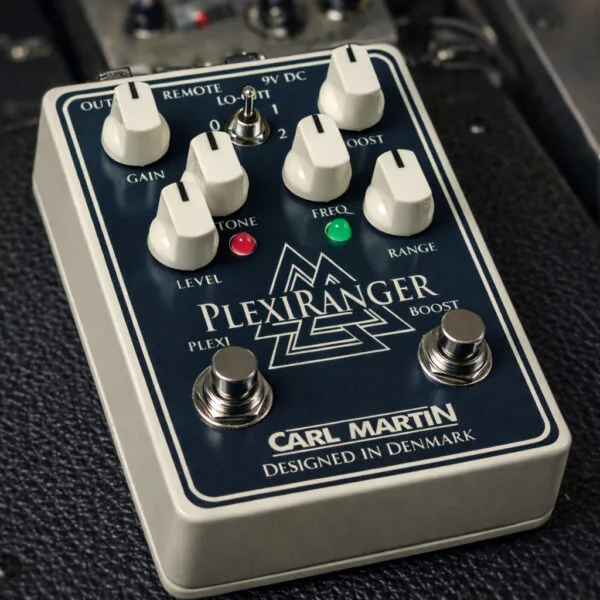
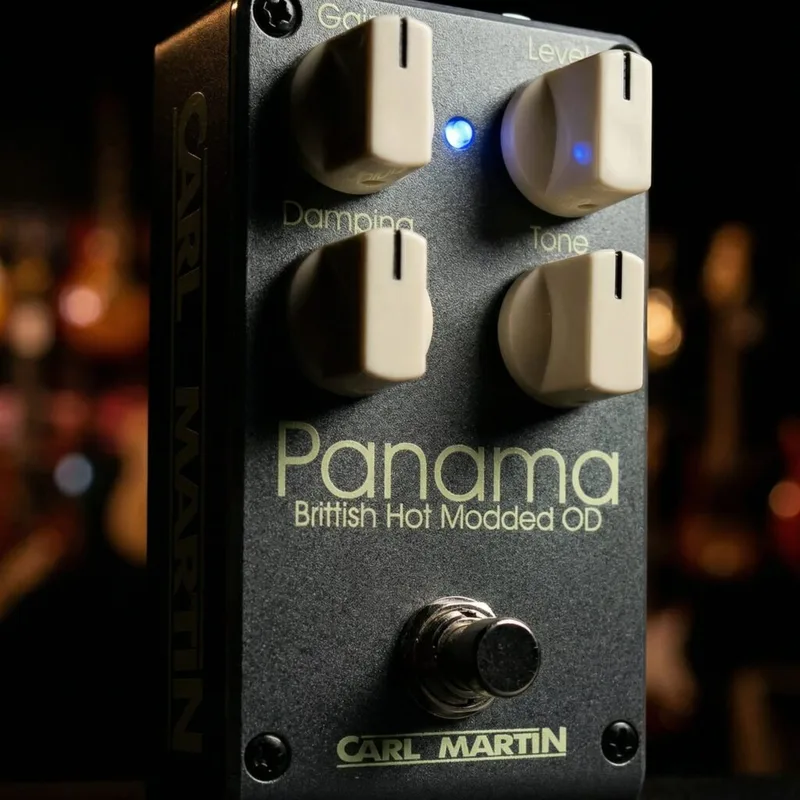
Carl Martin describes the Crunch channel as "open, punchy and dynamic, reacting directly to picking strength and guitar volume," and the High Gain channel as delivering "saturated lead tones with thick gain, smooth highs, and tight low end"1. The pedal sits in the same Marshall-voiced corner of the overdrive world as Carl Martin's own PlexiRanger and Panama, which the maker says cover the classic Plexi and early Marshall voicing4.
The three channels and how they interact
At the heart of the pedal is a three-stage design: Crunch, High Gain, and an independent clean Boost1. The Boost sits after the drive circuit, so it can be used on its own to push a clean amp or stacked on top of the drive channels1. The High Gain switch only works when the pedal is active, and Crunch and High Gain share the same Tone and Level knobs1. Delicious Audio notes the same layout: "There is a single gain knob for the crunch and high-gain channels, and they share tone and output volume controls"3.
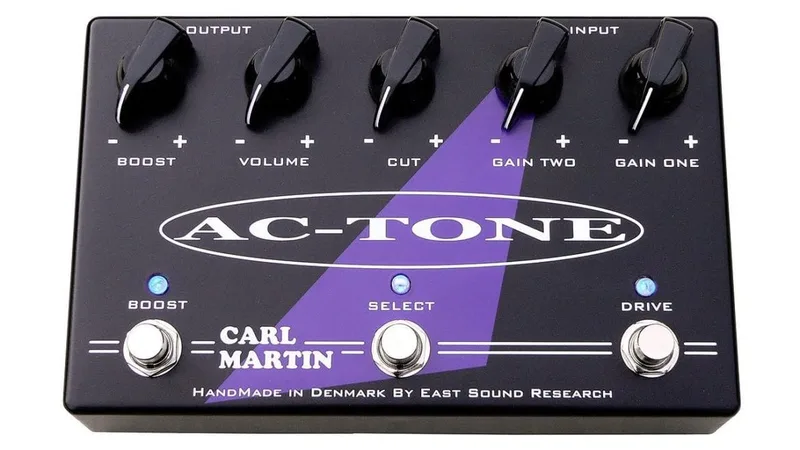
The original large-format unit carried "volume, tone, two gain controls, a boost, and three footswitches for a wide variety of tonal options," as the circuit-analysis site Guitar FX Layouts put it when tracing it6.
Controls and footswitches
| Control or switch | What it does |
|---|---|
| Crunch knob | Controls the crunch gain stage1 |
| High Gain knob | Controls high-gain saturation1 |
| Tone and Level | Shared by Crunch and High Gain channels1 |
| Drive footswitch | Activates the overdrive1 |
| Select footswitch | Toggles between gain stages1 |
| Boost footswitch | Activates the clean boost, up to +20 dB12 |
Power: from mains transformer to 9V DC
The power story changed a lot across the pedal's life. The first versions of the original large PlexiTone had an internal mains power transformer, so you plugged the pedal directly into AC12. Pete Thorn, demoing the pedal, noted that "the original plexitone needs AC power it's got a power cable coming out of it and that's part of the tone is the 12volt" supply7. Guitar FX Layouts confirms the stock unit ran an onboard transformer at plus and minus 12V6.
The 2012 version moved to a standard stompbox enclosure and standard 9V DC power, internally bumped up to 12 volts7. The current Version 2 uses an external regulated 9V DC supply at roughly 80 mA minimum, with an internal DC-DC converter generating ±12V rails for extra headroom1.
No version of the PlexiTone runs on a battery. Carl Martin states it directly: "In either case, you cannot use a battery with the PlexiTone"1. The Single and Lo-Gain versions are the same, because of their internal charge pumps and current draw82. Plan on a regulated 9V DC supply.
The versions: Single and Lo-Gain
Carl Martin has split the PlexiTone circuit into two compact single-channel pedals. The PlexiTone Single, sometimes called the Pete Thorn edition, captures the High Gain channel of the original in a compact pedal with one footswitch and three knobs: Gain, Tone and Level82. It has true bypass switching, a center-negative 9V DC input, and runs internally at ±12V via a DC-DC converter, just like the original AC-powered pedal8. Carl Martin says it has a tighter low end and smoother top end than the original, for consistent tones across different setups8.
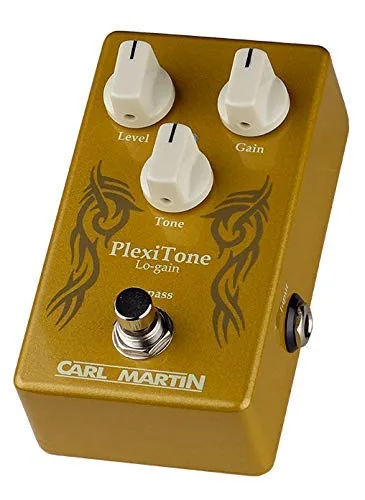
The PlexiTone Lo-Gain is a single-channel overdrive based on the PlexiTone but tuned for a lower gain range92. Its gain can be dialed down to almost clean boost with a touch of hair, or cranked for a thick classic-rock overdrive9. It uses the same DC-DC converter design, has a center-negative 9V DC input, and offers direct control over output, drive amount and high-frequency shaping with no switching layers or extra modes9.
| Version | Channels | Boost | Power |
|---|---|---|---|
| PlexiTone (original, 1994) | Crunch + High Gain | Yes, +20 dB | Internal mains transformer, AC123 |
| PlexiTone (2012) | Crunch + High Gain | Yes | 9V DC, internally boosted to 12V7 |
| PlexiTone V2 (current) | Crunch + High Gain | Yes, +20 dB | 9V DC regulated, ~80 mA min, ±12V internal12 |
| PlexiTone Single | One (High Gain channel) | No | 9V DC center-negative, ±12V internal8 |
| PlexiTone Lo-Gain | One, lower gain | No | 9V DC center-negative9 |
Pete Thorn's involvement
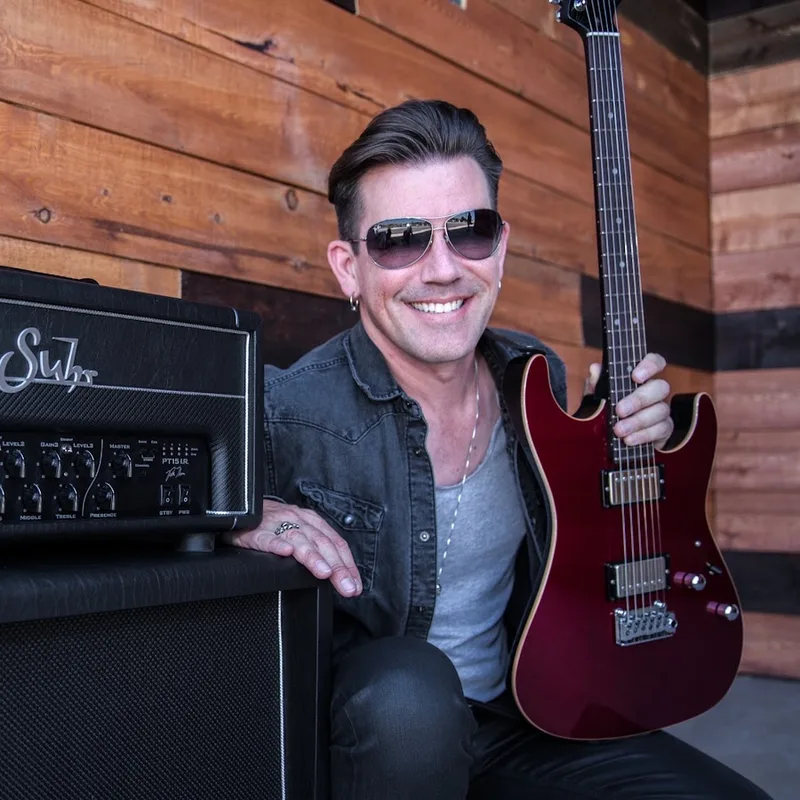
Pete Thorn did not design the original PlexiTone, but he designed the PlexiTone Single in collaboration with Carl Martin2, and he had a hand in voicing the 2012 version. In his demo he explained: "i actually had a hand in voicing that pedal they would send me prototypes and i would offer them some suggestions"1011. Of the 2012 model he found "a pretty close tone and feel to my PT 100's" channel 2, his signature amp, and noted it has a little more mid-range, a little less top and a little less bottom than the original7.
In his 2012 demo, Thorn described the 2012 model's character and how it compares to the original large-format pedal7:
In an earlier demo he highlighted how the pedal holds together on the low strings: "check out how well it tracks even on the neck pickup on the low strings so you can still play fast," unlike many overdrive and distortion pedals that get fuzzy and muddy there12.
What amp to pair it with
Premier Guitar's tone advice is that a Plexi-style pedal works "best with a neutral (not too much bass or treble) clean tone such as the normal channel of a Vox AC30"13. The idea is that the pedal supplies the Plexi voicing itself, so a flat clean amp lets that character through without stacking equalizers on top of it.
Who uses it
Carl Martin's artist pages list the PlexiTone in the rigs of Richard Z. Kruspe (Rammstein), Joe Hottinger (Halestorm), Andy Wood, Paul Nelson, Alberto Barrero and James Massi14. Pete Thorn and Johnny Hiland are listed as users of the PlexiTone Single14.
The Caline Englishman question
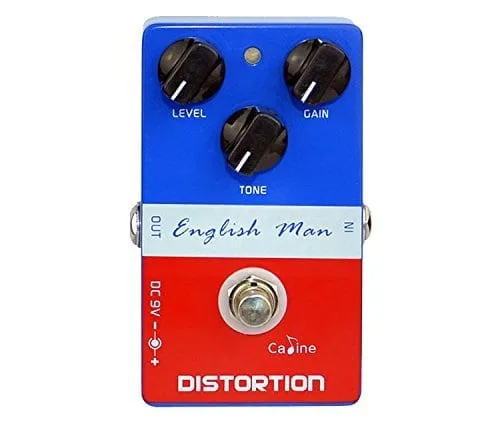
The budget Caline Englishman is widely discussed as a PlexiTone derivative, and the independent circuit analysis at Guitar FX Layouts backs that up. Tracing the circuit, the site concluded: "So it's a single channel c. martin plexitone"15. So yes, by that analysis the Englishman is a copy of the single-channel PlexiTone circuit.
Videos
Alberto Barrero
Questions
Does the Carl Martin PlexiTone run on a battery?
No. Carl Martin states plainly that you cannot use a battery with the PlexiTone. The current Version 2 runs on a regulated 9V DC external supply drawing around 80 mA minimum, which it converts internally to plus and minus 12V rails. The PlexiTone Single and Lo-Gain also do not take a battery.
Does the PlexiTone boost work when the pedal is bypassed?
Yes. The Boost sits after the drive circuit and works independently, so you can use it on its own to boost a clean tone or stack it on top of the Crunch or High Gain channels. The High Gain switch, by contrast, only does anything when the pedal itself is active.
What is the difference between the PlexiTone and PlexiTone Single?
The PlexiTone Single is a compact, single-channel pedal that captures the High Gain channel of the original dual-channel PlexiTone, with one footswitch and three knobs: Gain, Tone and Level. It has no boost and no channel switching, and Carl Martin says it has a tighter low end and smoother top end than the original.
Did Pete Thorn design the PlexiTone?
Not the original. Pete Thorn did design the PlexiTone Single in collaboration with Carl Martin, and he contributed voicing suggestions on prototypes of the 2012 version of the PlexiTone, but the PlexiTone itself is a Carl Martin design dating back to 1994.
What amp sounds best with a PlexiTone?
Premier Guitar's advice is that a Plexi-style pedal works best with a neutral clean tone, not too much bass or treble, such as the normal channel of a Vox AC30. The pedal is designed to supply the vintage Marshall Plexi character itself, so a flat, clean amp platform lets that voicing come through.
Is the Caline Englishman a PlexiTone copy?
According to the independent technical analysis site Guitar FX Layouts, the Caline Englishman is a close copy of the single-channel Carl Martin PlexiTone. The site's circuit tracing found it to be effectively a single-channel PlexiTone.
Sources (15)
- PlexiTone, Carl Martin (carlmartin.com), 2026
- Support - Carl Martin, Carl Martin (carlmartin.com), 2026
- 2024 Best Plexi Pedals & Marshall-Style Distortions: A Buyer's Guide, Delicious Audio, 2024-09-16
- Panama - Carl Martin, Carl Martin, 2026
- 3 Band Parametric EQ, Carl Martin, 2026-02
- Guitar FX Layouts: Madbean Boneyard, Guitar FX Layouts (tagboardeffects.blogspot.com), 2014-05-06
- Carl Martin Plexitone (new 2012 model), demo by Pete Thorn, YouTube (Pete Thorn channel), 2012-11-23
- PlexiTone Single, Carl Martin (carlmartin.com), 2026
- PlexiTone Lo-Gain, Carl Martin, 2026
- THE MOTHER OF ALL PLEXI PEDALS! Carl Martin PLEXIRANGER, YouTube (Pete Thorn channel), 2020-11-20
- Carl Martin Lo Gain Plexitone, demo by Pete Thorn, YouTube (Pete Thorn channel), 2016-01-08
- Carl Martin Plexitone demo, by Pete Thorn/ProGearDemos, youtube.com, 2010-12-23
- Guide to Overdrives, Distortions, and Boost Pedals, Premier Guitar, 2016-02-22
- Artists - Carl Martin, Carl Martin (carlmartin.com), 2026
- Guitar FX Layouts: Caline Englishman, Guitar FX Layouts (tagboardeffects.blogspot.com), 2017-05-04
 Pete Thorn