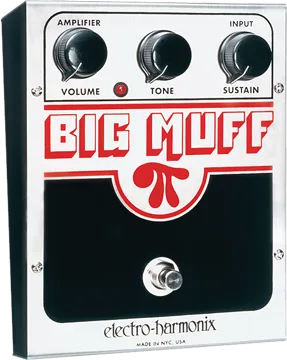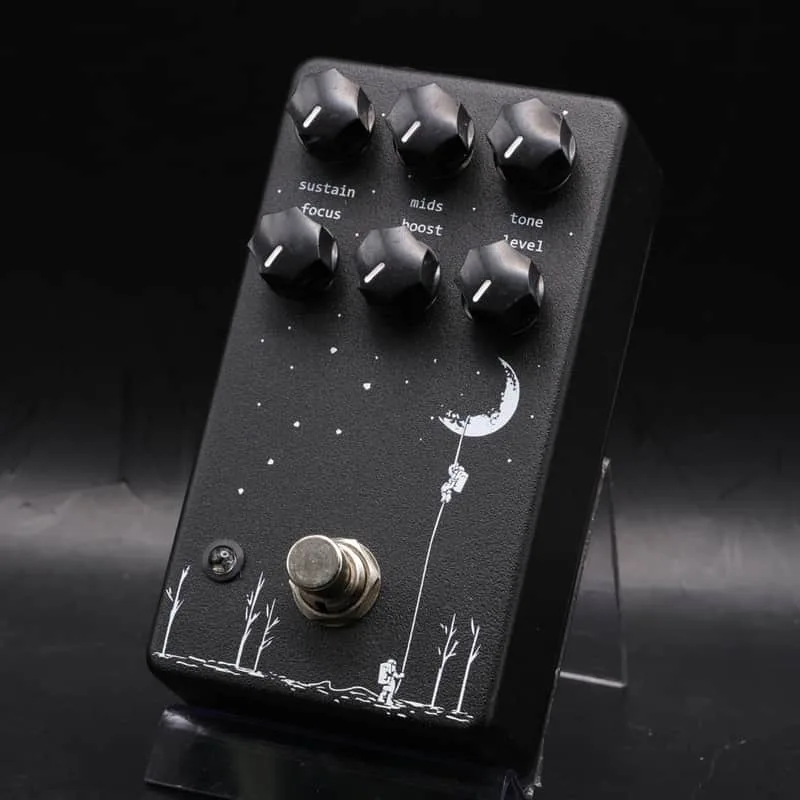


The D-Sound Orion is a fuzz/distortion pedal from D-Sound, a builder based in Saint-Petersburg, Russia. It was announced in July 2018 with a street price of $160.001. The circuit is based on the classic Russian Muff, the Russian-built version of the Electro-Harmonix Big Muff, but it goes beyond the original's control set with six knobs, including a midrange control the original never had213.
D-Sound announced the Orion as a fresh look at the Russian Muff tone, aimed at modern guitarists and bassists14. Pedal of the Day described it bluntly as "a Russian Big Muff on steroids"3.
A Russian Muff with extra controls
The Big Muff circuit, in its Russian civil-era form, is known for a scooped midrange: a heavy, thick fuzz that can disappear behind a band because the frequencies that help a guitar cut through are pulled back. The Orion keeps that lineage but adds controls to work around it. Delicious Audio, covering the pedal in May 2018, noted it "hosts a series of extra controls, including an ever useful Mid knob"2. Premier Guitar's announcement put the point in practical terms: "Orion has a midrange control so you can ensure that your guitar won't be lost in mix"1.
For a player, that is the Orion's main departure from a straight Muff clone. Where the original gives you Level, Tone and Sustain and leaves the midrange fixed, the Orion lets you push the mids forward and stay audible in a dense mix, or pull them back for the classic scooped sludge234.
The six controls
The Orion carries six knobs: Level, Tone, Sustain, Mids, Boost and Focus13. Premier Guitar summed up the design intent as "Six knobs for total control your sound"1.
| Control | What it does |
|---|---|
| Level | Output volume |
| Tone | Overall tonal balance |
| Sustain | Amount of sustain and compression from the fuzz |
| Mids | Midrange control, so the guitar won't be lost in the mix1 |
| Boost | Increases the input level of the signal for more sustain and power3 |
| Focus | Chooses the kind of distortion/fuzz, from well-focused fuzz to a fat, deep and saturated sound3 |
The two knobs a stock Muff does not have deserve the most attention. Pedal of the Day explained the Boost knob as a way to "increase input level of signal and achieve it with ease," meaning more sustain and power by driving the circuit harder at its input3. The Focus knob is the more unusual one: it "lets you to decide what kind of distortion/fuzz do you need," with a range from a well-focused fuzz to a fat, deep and saturated sound, with increments in between3. In effect it moves the pedal between tighter, more articulate distortion and looser, deeper fuzz character.
The Mids control, in Pedal of the Day's words, "gives you full control of the tonal frequencies, assuring you don't get lost in the mix"3.
Guitar and bass
The Orion is not guitar-only. Pedal of the Day reported it "working wonderfully with both guitar and bass as well"3, and Guitar.com noted its versatility "suits modern guitarists and bassists well"4. For bass players, the Mids control matters for the same reason it does for guitarists: fuzz circuits that thin out the low mids can make a bass line vanish, and a midrange knob lets you put body back into the tone. Players comparing options can also look at the wider range of bass pedals.
What reviewers said
Published coverage of the Orion has been positive. Delicious Audio introduced it as "a fuzz based on the Russian Muff (of course!)" with its extra controls2. Premier Guitar's announcement described the sound: "Orion delivers classic fuzz tone with added tweakability, and it's great for warm solos with tons of sustain, or powerful sludge chords"1.
Pedal of the Day's 2019 review went further, calling the pedal "full of options and soaring, raucous tones" and noting "it's not a shy pedal, it rips"3. Its overall verdict:
"the Orion is a well-rounded distortion and fuzz pedal, perfect for any musical situation"
The same review called the enclosure "this black gem"3, so the pedal ships in a black box.
Where it comes from and where to find one
D-Sound is based in Saint-Petersburg, Russia, and the Orion is hand-assembled in Russia1. When the pedal was announced in July 2018, it was available through the maker's own site, dsoundeffects.com, and through Reverb1. The street price at announcement was $160.001; a later news item gave the price as $1601, so the two published figures agree.
Videos
shnobel
Pedal of the Day
Questions
Is the D-Sound Orion based on the Big Muff?
Yes. Multiple published accounts describe the Orion as a fuzz based on the classic Russian Muff circuit, the version of the Electro-Harmonix Big Muff built in Russia. Pedal of the Day called it a Russian Big Muff on steroids, with extra controls beyond the original's three-knob layout.
Is the D-Sound Orion true bypass?
Yes. Premier Guitar's 2018 press announcement lists a true bypass switch among the Orion's features, so the pedal's signal path is bypassed entirely when the effect is off rather than running through its circuit.
What does the Focus knob do on the D-Sound Orion?
According to Pedal of the Day, the Focus knob lets you choose what kind of distortion or fuzz you want, ranging from a well-focused fuzz to a fat, deep and saturated sound, with increments in between. It shapes the character of the gain rather than the amount.
Where is the D-Sound Orion made?
The Orion is hand-assembled in Russia by D-Sound, a builder based in Saint-Petersburg. When the pedal was announced in July 2018 it was sold through the maker's own site, dsoundeffects.com, and through Reverb.
Does the D-Sound Orion work with bass?
Yes. Pedal of the Day reported that the Orion works wonderfully with both guitar and bass, and Guitar.com noted its versatility suits modern guitarists and bassists alike. The Mids control helps either instrument stay present in a mix.
What power does the D-Sound Orion need?
The Orion runs on a standard 9-volt DC input, the same supply as most compact effects pedals. No current draw figure has been published, and no battery operation has been documented.
Sources (4)
- D-Sound Introduces the Orion Fuzz Pedal, Premier Guitar, 2018-07-24
- D Sound Orion Fuzz, Delicious Audio, 2018-05-21
- D-Sound Effects Orion Distortion Fuzz, Pedal of the Day, 2019-07-22
- D-Sound unveils the Orion fuzz stompbox, Guitar.com, 2018-07-26