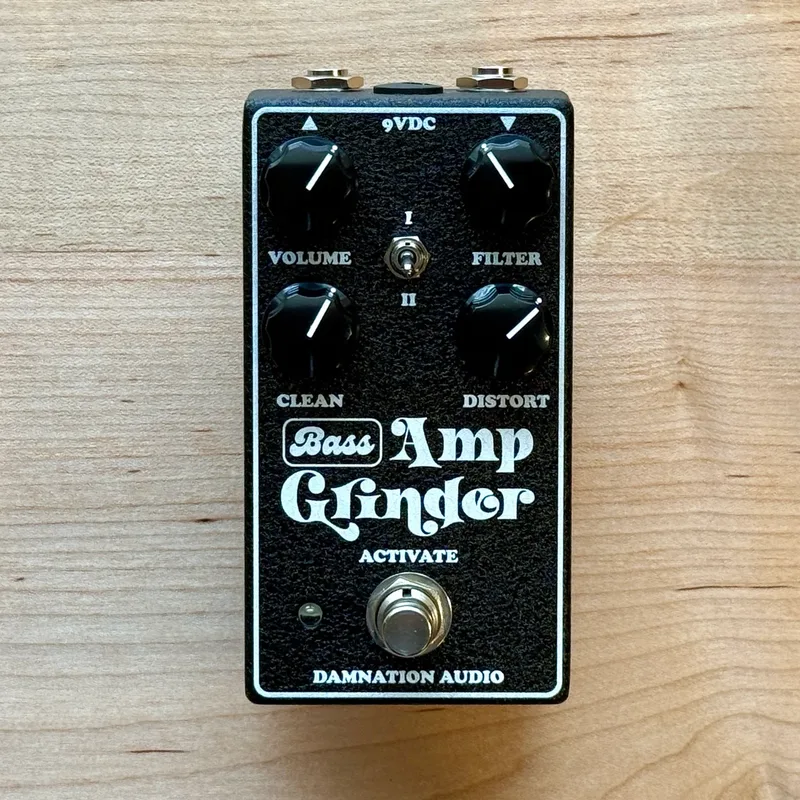

The Damnation Audio Bass Amp Grinder is a bass distortion pedal that the maker describes as "a ground up reinterpretation of the classic Rat distortion." Rather than simply voicing the familiar distortion circuit for low frequencies, Damnation Audio rebuilt it: the Distort circuit is redesigned for lower noise and a more usable range with bass guitar, and the maker says it "bandwidth limited a modern-ish precision op-amp to meet the performance specs of a lauded op-amp of yesteryear."1
Where it came from
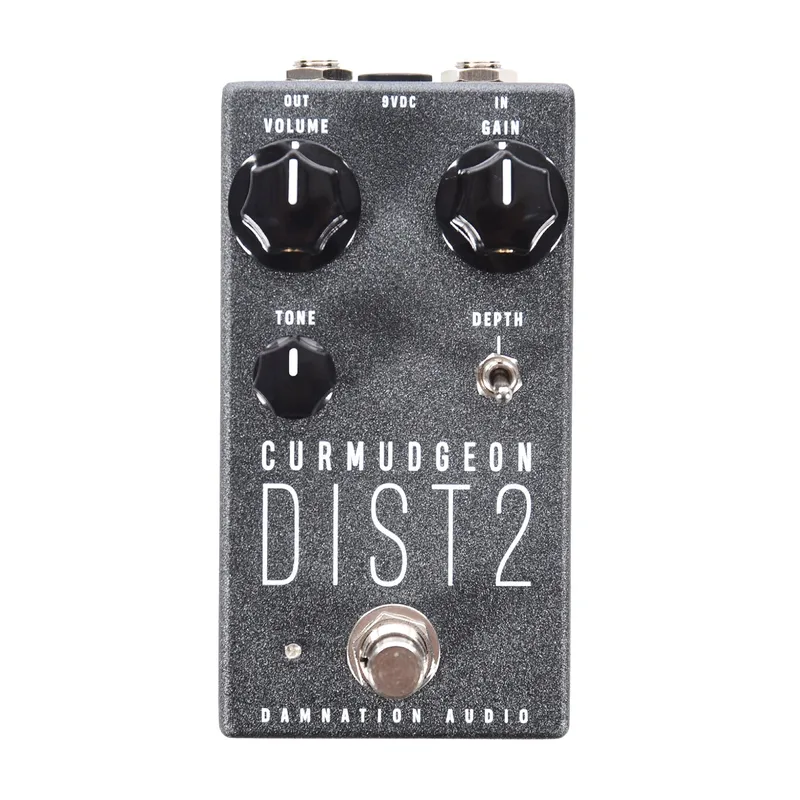
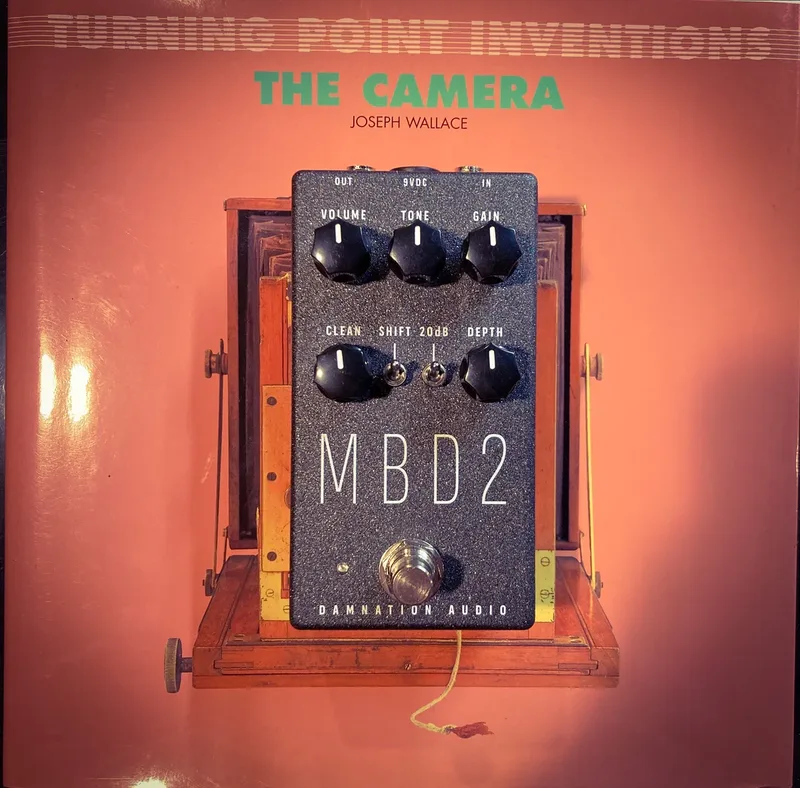
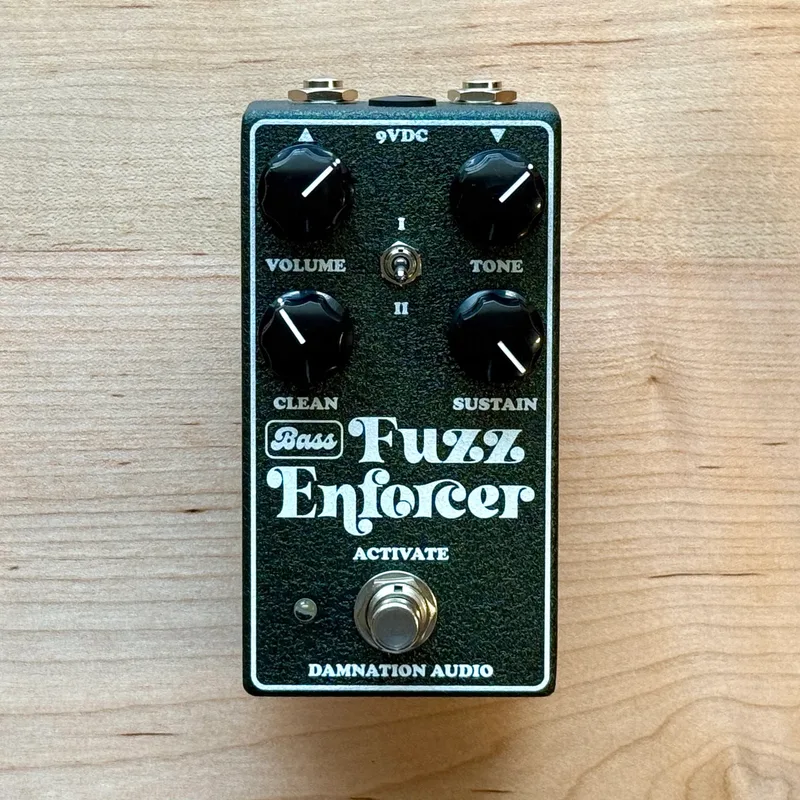
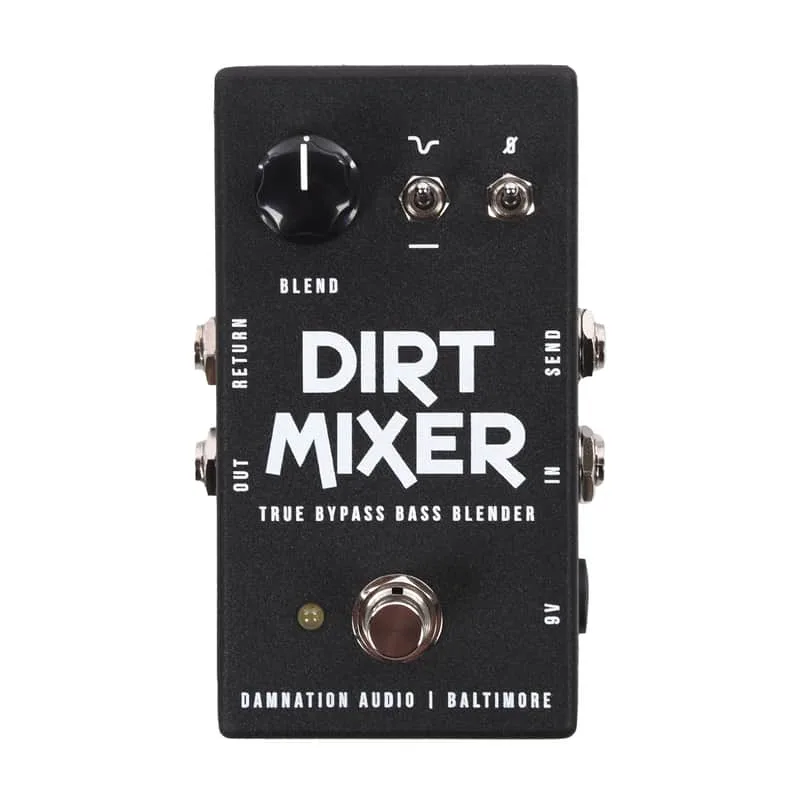
Damnation Audio builds a range of bass-oriented dirt pedals, including the Curmudgeon 2, the MBD2 MOSFET Bass Distortion 2, the Bass Fuzz Enforcer and the Dirtmixer. The Bass Amp Grinder sits in that lineup as the maker's take on the Rat design, a circuit many players know from guitar use, reworked from the ground up for bass.1
The controls: Distort, Filter, Volume, Clean and the I/II switch
The pedal carries four knobs and a two-position switch:
| Control | What it does |
|---|---|
| Distort | Distortion1 |
| Filter | Filter1 |
| Volume | Adjusts the distorted output only1 |
| Clean | Clean lows1 |
| I/II switch | Modern vs Vintage frequency response1 |
Two of these deserve a closer look, because they work differently from the knobs on a standard Rat-style pedal.
Clean. The Clean knob is not a blend control in the usual sense. Damnation Audio describes it as "not a blend or a mix but a parallel low-pass clean signal," inspired by parallel processing in modern studios. In practice, it adds a band of clean low end alongside the distortion rather than mixing a full-range clean copy with the dirty signal, which is how many bass distortion pedals handle keeping the low end intact.1
Filter. The Filter knob drives a custom circuit: "The custom FILTER circuit is a 2-pole variable lowpass filter. This allows for more treble attack with less unwanted noise," according to the maker.1
Volume. The Volume control adjusts the Grinder's distorted output only, so it does not touch the clean low-pass signal from the Clean knob. The two parts of the sound are set independently.1
Power
The Bass Amp Grinder takes a standard 9V DC negative tip power supply, the common center-negative standard shared by most pedal power supplies.1
Videos
calilil
Questions
What power supply does the Damnation Audio Bass Amp Grinder use?
The Bass Amp Grinder takes a standard 9V DC negative tip power supply, according to Damnation Audio's product page. That is the common center-negative barrel connector used by most pedal power supplies, so it should work with a typical pedalboard power brick or one-spot style adapter.
Is the Bass Amp Grinder based on the Rat?
Yes. Damnation Audio describes the Bass Amp Grinder as a ground up reinterpretation of the classic Rat distortion. The Distort circuit has been redesigned for lower noise and a more usable range with bass guitar, and the maker bandwidth limited a modern precision op-amp to meet the performance specs of an older, well-regarded op-amp.
What does the Clean knob do on the Bass Amp Grinder?
The Clean knob adds clean lows. Damnation Audio describes it as a parallel low-pass clean signal rather than a blend or a mix, inspired by parallel processing in modern studios. It sits alongside the distorted signal instead of mixing two full-range signals together.
What does the I/II switch do on the Bass Amp Grinder?
The I/II switch selects between Modern and Vintage frequency response, letting the player choose how the pedal shapes the bass signal's tonal balance.
Does the Volume knob affect the clean signal on the Bass Amp Grinder?
No. Damnation Audio states that the Volume control adjusts the Grinder's distorted output only. The clean low-pass signal added by the Clean knob is separate, so the two parts of the sound are set independently.
Sources (1)
- BASS AMP GRINDER, Damnation Audio