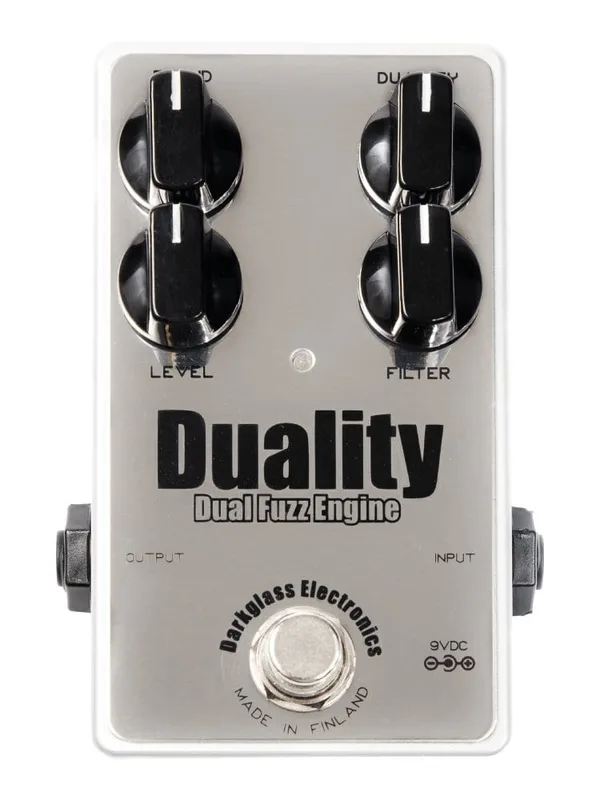


The Darkglass Duality is a fuzz pedal for bass that puts two separate fuzz circuits in one enclosure: what Darkglass calls "a gated saw-tooth wave and a raunchy high-gain sound," which can be mixed together in any ratio for a wide range of textures1. The idea is right there in the name. Instead of choosing between a thick, gated, classic-sounding fuzz and a tighter modern high-gain fuzz, one knob, called Duality, pans between the two circuits, with every blend in between available across its rotation234.
The original version, released in 2013 as the Duality Dual Fuzz Engine, was made by Darkglass Electronics and aimed squarely at bass players56. Premier Guitar's reviewer put it plainly: with its low-pass filter and blend control, "the Duality is very clearly built to address the shortcomings bass players encounter when adapting guitar fuzz to their own unique requirements"7. The pedal is now sold out at Darkglass, and in late 2022 the company released a more compact successor, the Duality DFZ18.
What the Duality does: two fuzz circuits in one pedal
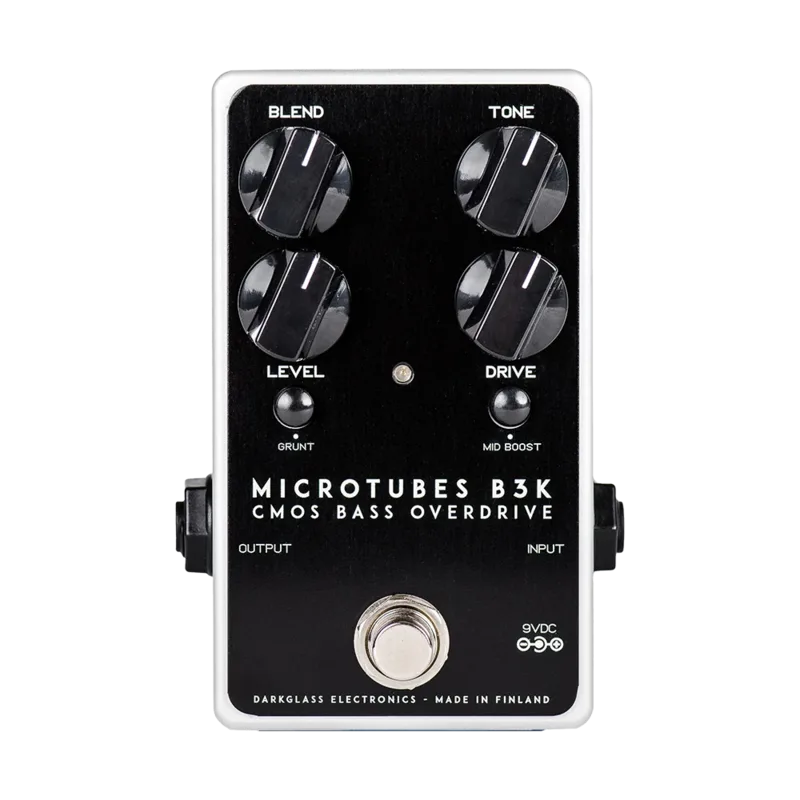
The core of the pedal is the pair of fuzz paths. One is the gated saw-tooth circuit, which MusicRadar's reviewers described as "a thick, classic sounding fuzz"11. The other is the high-gain path, which Darkglass describes as tighter7. Aion FX, which traced the circuit in 2021, characterized the two paths in more technical terms: the first sounds similar to Darkglass's flagship Microtubes B3K, "an aggressive but articulate and versatile drive tone," while the second is "all-out square wave mayhem, complete with heavily gated 'velcro' tones characteristic of misbiased transistors"12.
Under the hood, the two paths work quite differently. The first is a cascade of overloaded CD4049UBE hex inverter stages, three CMOS stages in a row, providing the distortion12. The second uses a single op-amp stage configured as a comparator, with the signal into the inverting input, the non-inverting input tied to a reference voltage, and no feedback path; the comparator is followed by a primitive two-diode noise gate to keep things quiet when no signal is present, and those diodes also add crossover distortion12. Aion FX notes the comparator concept is similar to Craig Anderton's "Ultra Fuzz," first published in Electronics Project for Musicians in 1978, though the Duality's comparator threshold is fixed rather than variable12.
On top of the two fuzz paths sits a clean blend, so you can mix fuzz with your untouched bass signal. MusicRadar found the Blend control runs from fully clean at one extreme to full fuzz at the other, with both clean and effected signals audible at once11. Aion FX's trace adds that the combination of the effect volume and the clean blend gives finer control over the mix than the blend knob alone, though it is not as flexible as two fully independent volume controls12.
Controls
| Control | What it does |
|---|---|
| Duality | Mixes the two discrete fuzz circuits. At minimum, a pure gated saw-tooth wave; cranked up, a tighter high-gain fuzz2 |
| Blend | Mixes the clean input signal with the overdriven signal. The clean signal stays at unity gain while Level sets the effected volume, for fine control of the ratio2 |
| Level | Sets the volume of the overdriven signal2 |
| Filter | Controls the amount of high frequency content in the fuzz signal2 |
Reviewers found plenty of range in those knobs. Pedal of the Day's Mike B called the Filter's range "broad and sweeping, allowing the player to cover a lot of ground musically with simple and slight variations of this knob's setting placement"6, and MusicRadar noted that the Filter increases resonance, top-end clarity and definition, while Level adds grit and distortion11. The pedal also uses soft footswitches that Pedal of the Day found notably quiet underfoot6.
Power and connections
The Duality runs on a regulated 9V DC adapter with a center-negative plug only, drawing roughly 40 mA2. There is no battery option; as Premier Guitar's reviewer put it, "You can keep those batteries in your kid's toys because the only way to power the Duality is with a 9V adaptor"7.
Darkglass warns to use only a regulated 9V DC center-negative adapter. Unregulated supplies or higher voltages may cause suboptimal noise performance and can damage the unit, voiding the warranty2.
Connections are a standard instrument input and output, with a 1MΩ input impedance and 100kΩ output impedance2. The enclosure measures 50 mm wide, 100 mm long and 45 mm high, and weighs 205 g2. Bass Musician Magazine listed slightly different figures for its review unit, 11.3 by 7.5 cm, so the two sources disagree on exact dimensions4. The bypass is a JFET flip-flop buffered design using the CD4049 chip rather than transistors; in bypass mode the fuzz path is disabled and the blend is hard-wired to 100%12.
What is under the magnetic bottom lid
The bottom lid of the enclosure is magnetic and comes off to reveal the pedal's internal controls2. Darkglass's manual simply instructs, "Open the magnetic bottom lid to access the controls"2, so anything beyond the four top-panel knobs lives inside the box. The warranty can be activated by registering the serial number on the back of the pedal at Darkglass's registration site2.
Where it came from and how it is built
The Duality Fuzz was announced in December 2013, described in the launch press release as "Designed in Helsinki Finland, built in Seattle USA"10. Darkglass Electronics is a Finnish company, and reviewers have consistently introduced the Duality as a pedal from Finland6. At launch it carried a MAP of $249 in the US and €195 in Europe10, and Bass Musician Magazine still listed $249 in 2015, placing it firmly in boutique territory4.
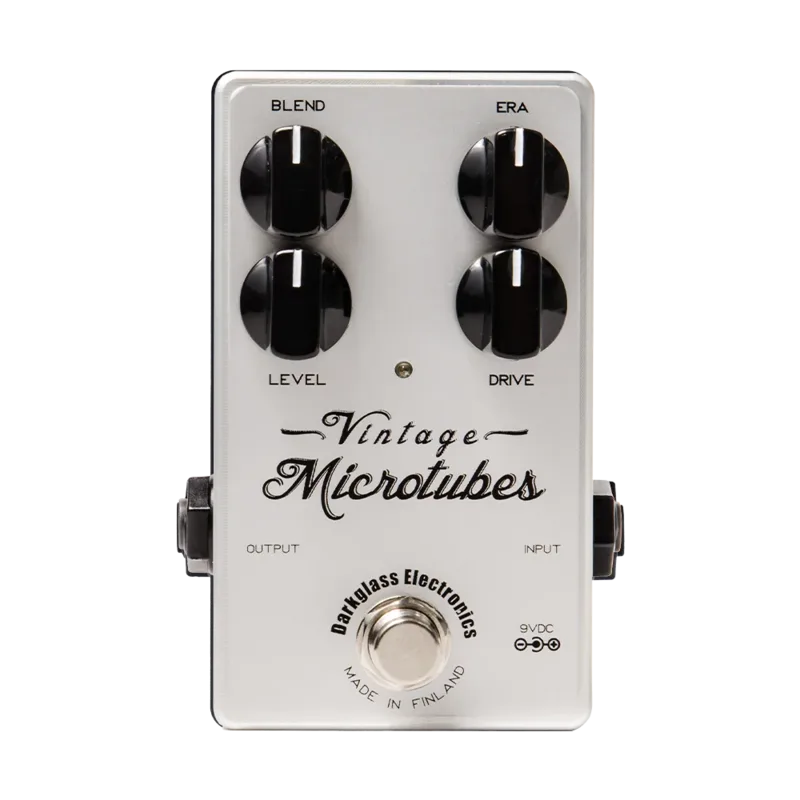
The enclosure styling mirrors Darkglass's Vintage Microtubes but in a darker hue, with dials Premier Guitar found somewhat cramped but logically arranged7. MusicRadar described it as "classily presented in a brushed silver matte finish with a mirror chromed top facing," with smooth-turning controls and a solid stomp button, concluding the whole pedal is "evidently built to last"11. Aion FX's traced unit carried a PCB marked Revision 4-K; a newer Revision 7 board was partially traced on Freestompboxes.org with only one apparent component difference, so the revisions appear to be mostly layout optimizations12. Revision 7 adds R11, a 1M bias resistor at the input of the op-amp buffer after the CMOS inverters, which Aion FX called an "editorial" change rather than a tonal tweak12.
Versions: Duality Dual Fuzz Engine and Duality DFZ
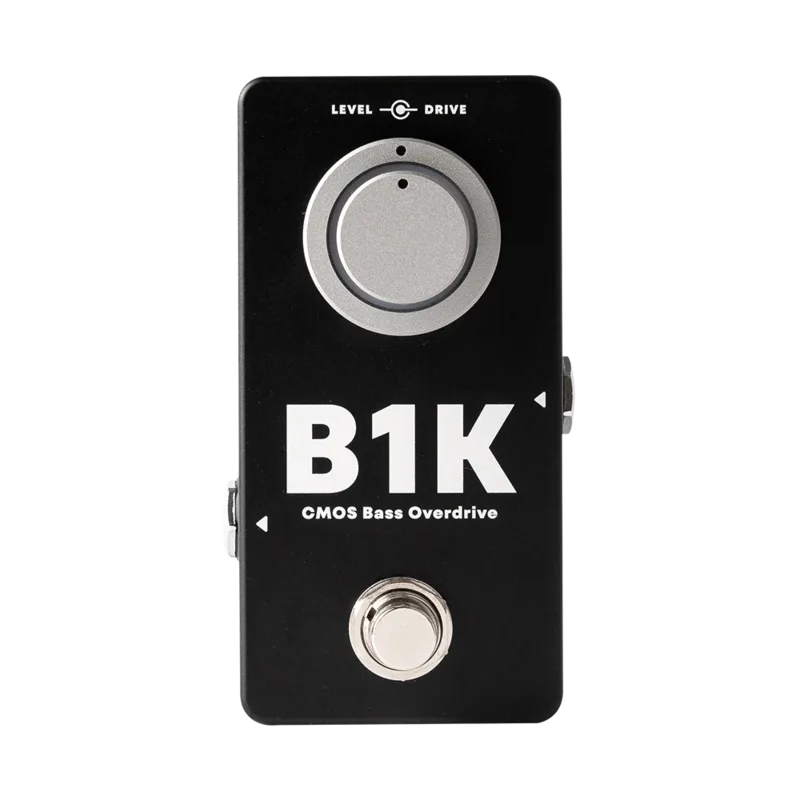
The original Duality Dual Fuzz Engine, released in 2013, is the four-knob version described above5. In November 2022 Darkglass launched the Duality DFZ, its successor8. Like the original, the DFZ packs two discrete fuzz circuits into one enclosure, the same gated saw-tooth wave and raunchy high-gain sound9. The differences are in the format and the controls: the DFZ is a compact pedal suited to a mini pedalboard, sharing the same design footprint as Darkglass's Microtubes B1K overdrive89. Its controls are significantly streamlined around a central rotary control, with a stacked rotary that tweaks the output and blends between the two fuzz circuits89. Guitar World reported it available at launch for £1429.
What reviewers said
Published reviews of the original were positive across the board. MusicRadar's verdict: "A real winner from Darkglass, impressively simple to use but very effective. We're impressed!"11. Premier Guitar's review summed up its pros as "Big and versatile fuzz tones in a small box"7, and the reviewer tested it with a Nash P-Style bass through an Epifani AL 112 combo, and with a 1964 Fender Jazz bass paired with a Boss OC-27. Bass Musician Magazine's Kilian Duarte rated construction 5 out of 5, calling it "incredibly durable and well put together with a solid chassis," and closed with "The Duality Fuzz Engine pedal is a fun pedal that was a joy to play"4.
"The Duality Fuzz Engine pedal is a fun pedal that was a joy to play."
Videos
Darkglass Electronics
Darkglass Electronics
Darkglass Electronics
Questions
Does the Darkglass Duality take a battery?
No. The Duality has no battery option and is powered only by a 9V DC adapter with a center-negative plug. Darkglass warns against unregulated supplies and higher voltages, which can cause noise problems and even damage the unit in a way that voids the warranty. Plan on a regulated pedalboard power supply or a quality wall adapter.
What is under the magnetic bottom lid of the Duality?
The bottom lid of the enclosure is magnetic and pops off to reveal the pedal's internal controls. Darkglass's manual instructs you to open this lid to access them, so the trimmers and any internal switches live underneath rather than on the outside of the box. It is a practical touch that keeps the top panel limited to the four main knobs.
Is the Darkglass Duality still in production?
The original Duality Fuzz is listed as sold out on Darkglass's product page, and the company followed it with the Duality DFZ in late 2022, a more compact successor with streamlined controls. So the original is effectively gone from the lineup, while the DFZ was reported available at launch for £142 in the UK.
Where is the Darkglass Duality made?
The launch press release described the original Duality Fuzz as designed in Helsinki, Finland and built in Seattle, USA. Darkglass Electronics itself is a Finnish company, and reviewers have consistently described the Duality as a pedal from Finland. The company's design work is centered in Helsinki.
Is the Darkglass Duality Fuzz Engine a bass pedal?
Yes. Darkglass markets the Duality as a bass fuzz pedal, and Premier Guitar's reviewer found it was clearly built to address the shortcomings bass players run into when adapting guitar fuzz to their needs. Its clean blend and low-pass filter are the bass-specific features that let you keep low end under heavy fuzz.
How much does the Darkglass Duality cost?
At launch in 2013 the Duality Fuzz carried a MAP of $249 in the US and €195 in Europe, and Bass Musician Magazine still listed it at $249 in 2015, calling it boutique range. Darkglass's current page shows £175 in the UK. The Duality DFZ successor launched at £142 in the UK in December 2022.
Sources (12)
- Duality Fuzz, Darkglass
- Duality Fuzz Manual, Darkglass
- Duality Fuzz, Darkglass
- Review - Darkglass Electronics Duality Fuzz Engine - Bass Musician Magazine, The Face of Bass, Bass Musician Magazine, 2015-10-01
- Binary Dual Fuzz / Darkglass Duality, Aion FX, 2021-11-12
- Darkglass Electronics Duality Dual Fuzz Engine, Pedal of the Day (www.pedal-of-the-day.com), 2015-05-14
- Darkglass Electronics Duality Dual Fuzz Engine Review, Premier Guitar, 2014-10-10
- The new Darkglass Duality DFZ pedal has two fuzz circuits, MusicRadar, 2022-11-29
- Darkglass revisits its Duality fuzz pedal as the Duality DFZ, Guitar World, 2022-12-01
- Darkglass Electronics Introduces the Duality Fuzz, Premier Guitar, 2013-12-11
- Darkglass Duality Dual Fuzz Engine review, MusicRadar, 2017-01-11
- Tracing Journal: Darkglass® Duality Dual Fuzz Engine, Aion FX, 2021-11-12