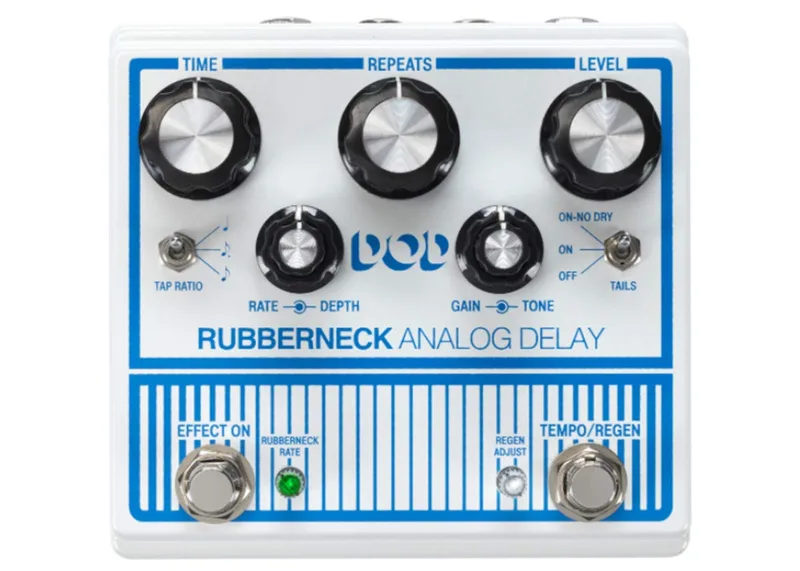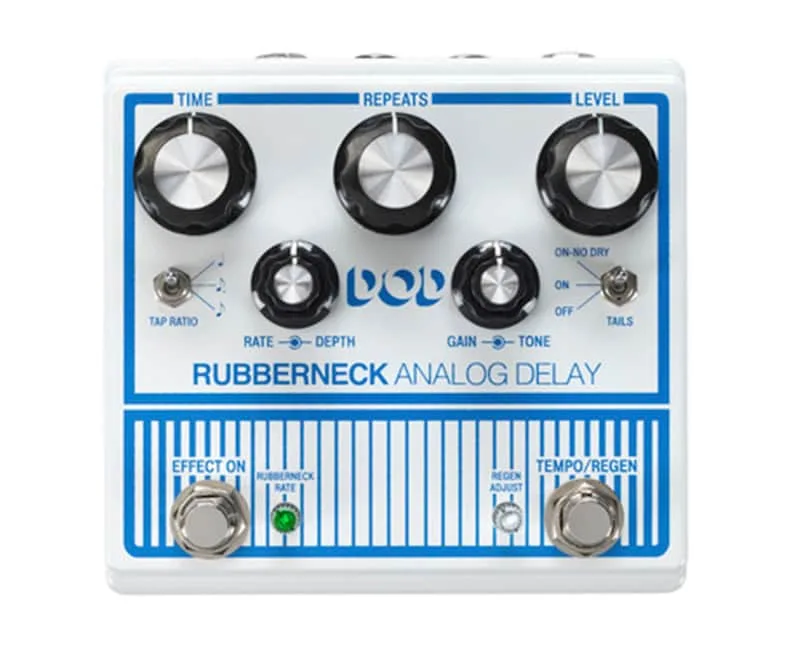


The DOD Rubberneck is an analog delay effects pedal made by DOD, DigiTech's brand, and it is built around one idea most delay pedals leave out: the repeats can be stretched or compressed in time while you play. DigiTech calls this Rubbernecking, and it is the feature the pedal is named for. Under the hood it is a digitally-controlled analog delay that uses bucket-brigade device (BBD) chips, the old-style analog delay circuit, and the design deliberately keeps their character rather than cleaning it up1.
What Rubbernecking does
On a normal delay pedal, the delay time knob sets the length of the repeats and that is where it ends. The Rubberneck adds a second footswitch action: press and hold the Effect On footswitch and the pedal modifies the delay time up or down, at a rate set by the Rubberneck Rate control. DigiTech describes the feature directly: "The Rubberneck's unique time stretching feature allows the delay repeats to be stretched or compressed in time"2.
Tom Cram, the DigiTech designer behind the pedal, has explained where the idea came from. "I thought of this as stretching out delays, and this was the source of the Rubberneck name," he said in DigiTech's own history of the pedal, adding that "we directly named this effect Rubbernecking"1. The design goal, in his words, was "a full featured analog delay that embraced the quirks and warts of BBD's, but also encouraged tweaking during live performance"1. That is why the pedal leans on footswitches as much as knobs: it was conceived as a performance delay, meant to be bent and pushed mid-song rather than set once and left alone1.
Controls
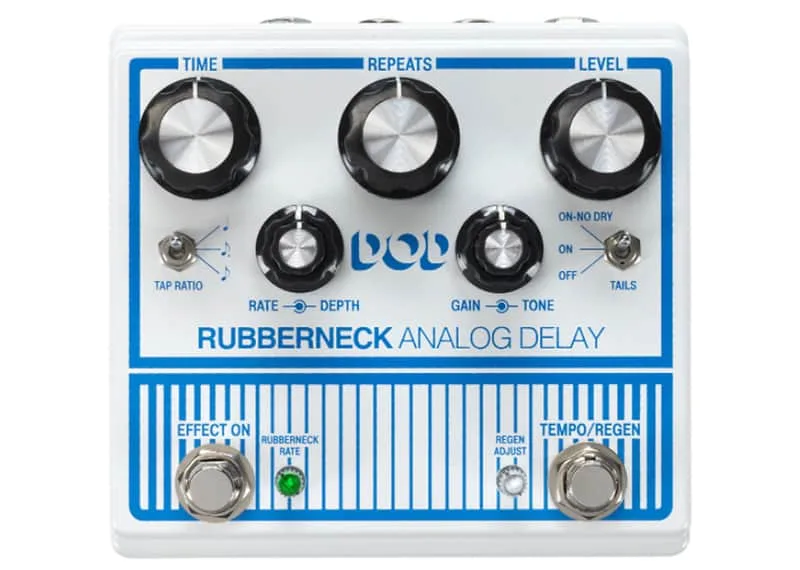
The pedal's controls split between knobs for the delay itself and two footswitches for performance moves2.
| Control | What it does |
|---|---|
| Effect On footswitch | Turns the delay effect on and off; pressed and held, it engages Rubbernecking, which shifts the delay time up or down at the rate set by the Rubberneck Rate control2 |
| Tempo/Regen footswitch | Taps in the delay time during performance; when the delay is enabled and pressed, it enables the secondary repeats regen control set by the Regen Adjust control2 |
| Level knob | Controls the output level of the delay signal2 |
Tap tempo is handled by the Tempo/Regen footswitch, with a Tap Ratio switch for subdivisions2.
Circuit and design
The Rubberneck is an analog delay, but not a purely analog design: Cram described it as a "digitally-controlled analog delay," and he noted that "taking on a digitally-controlled analog delay turned out to be a bigger project than we anticipated"1. The development took engineers from multiple divisions years of on-and-off work1.
The pedal also began, unusually, as a name and a sketch. "The Rubberneck started out as a name and a drawing on a 3×5 card," Cram said, a card that stayed pinned to his cubicle wall for the whole development and remained fundamentally unchanged in the finished design1.
Versions and related pedals
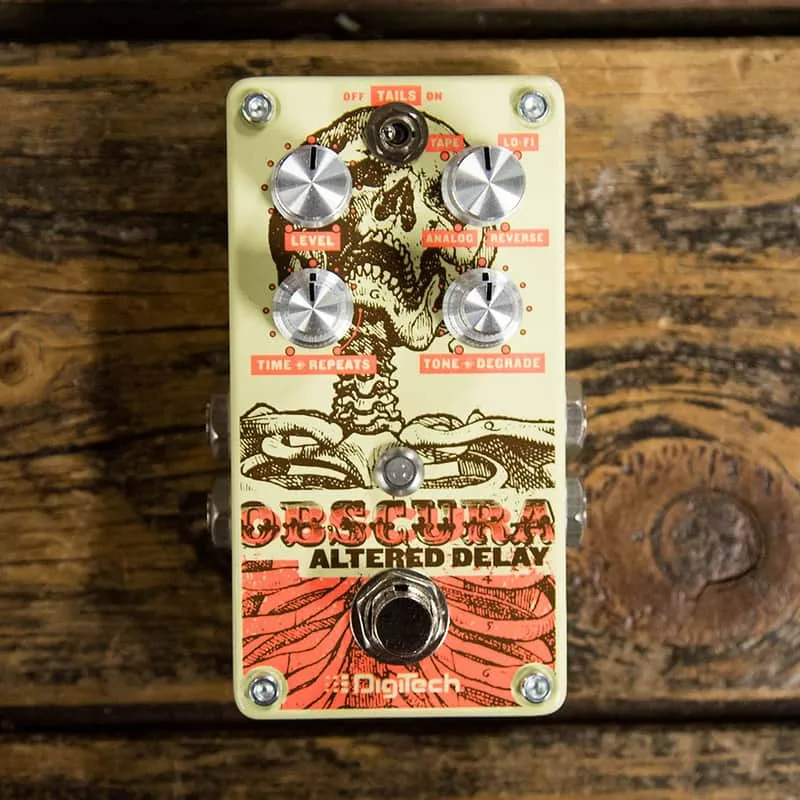
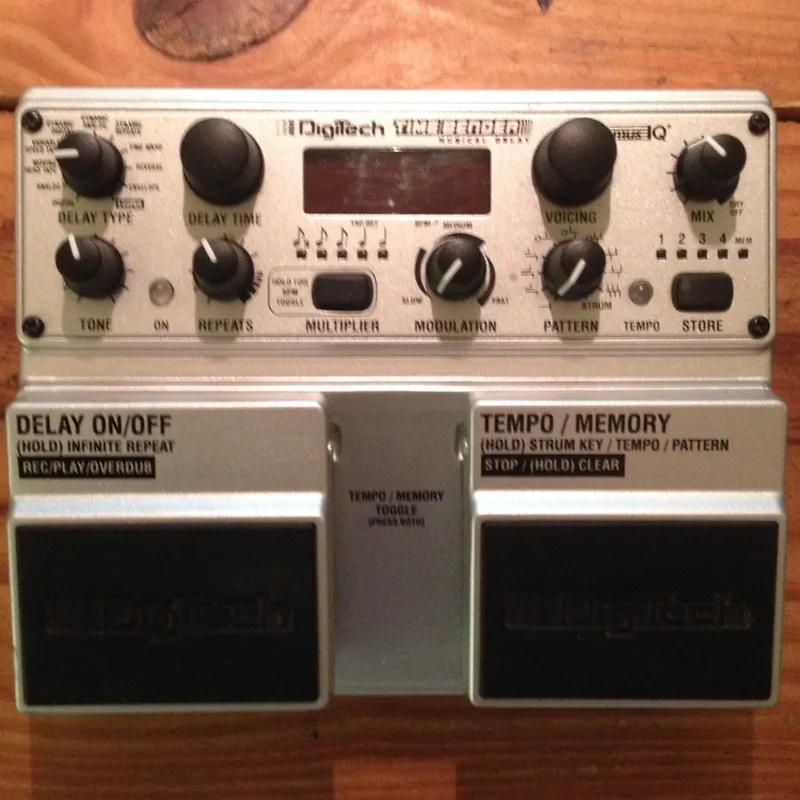
The pedal was designed by Tom Cram, and its origin stayed with the project the whole way through: "The Rubberneck started out as a name and a drawing on a 3×5 card," a drawing that remained pinned to Cram's cubicle wall for the entire development time and stayed fundamentally unchanged in the final design1. A separate page covers the DOD Rubberneck Analog Delay under that name. Within DigiTech's delay line it sits apart from the digital DigiTech Obscura Altered Delay and the DigiTech TimeBender; for the wider field, see Delay Pedals and the DigiTech brand page.
Videos
Knobs
ProGuitarShopDemos
Pete Thorn
Sources (2)
- Origin Stories, DigiTech, 2022-12-07
- DigiTech Rubberneck Analog Delay Effect Pedal, digitech.com, 2025-10-05