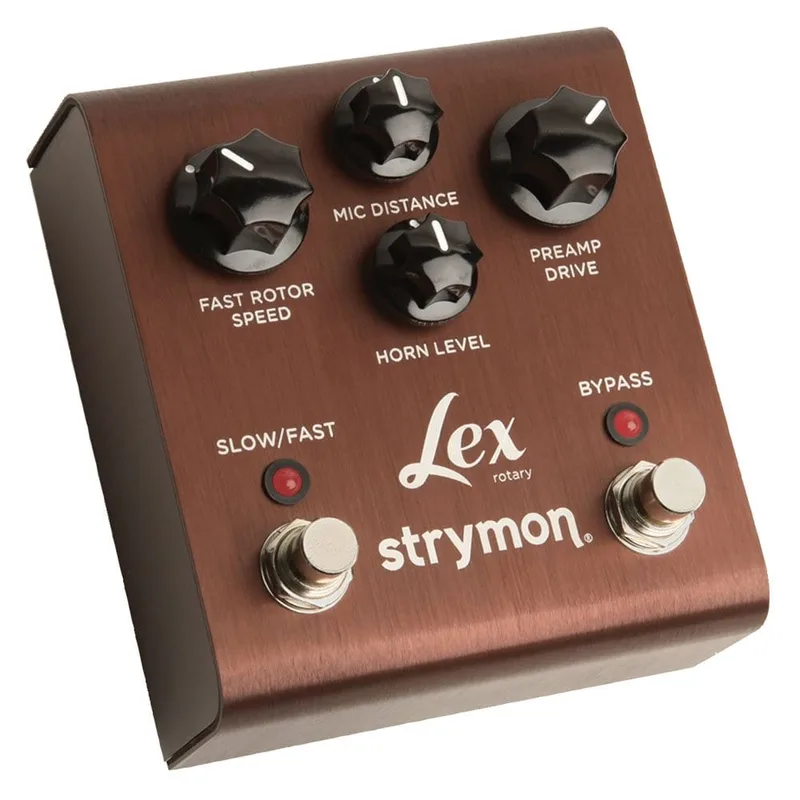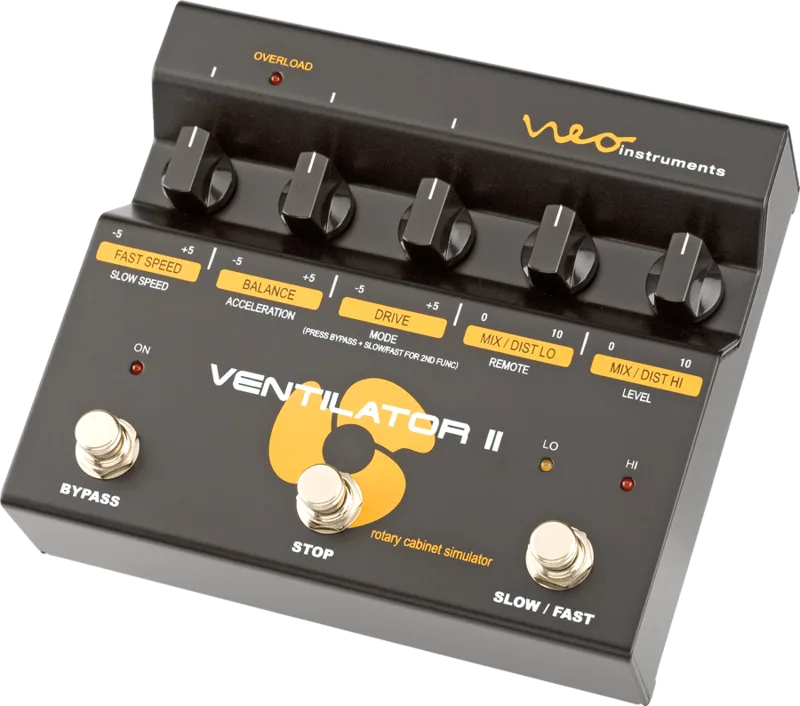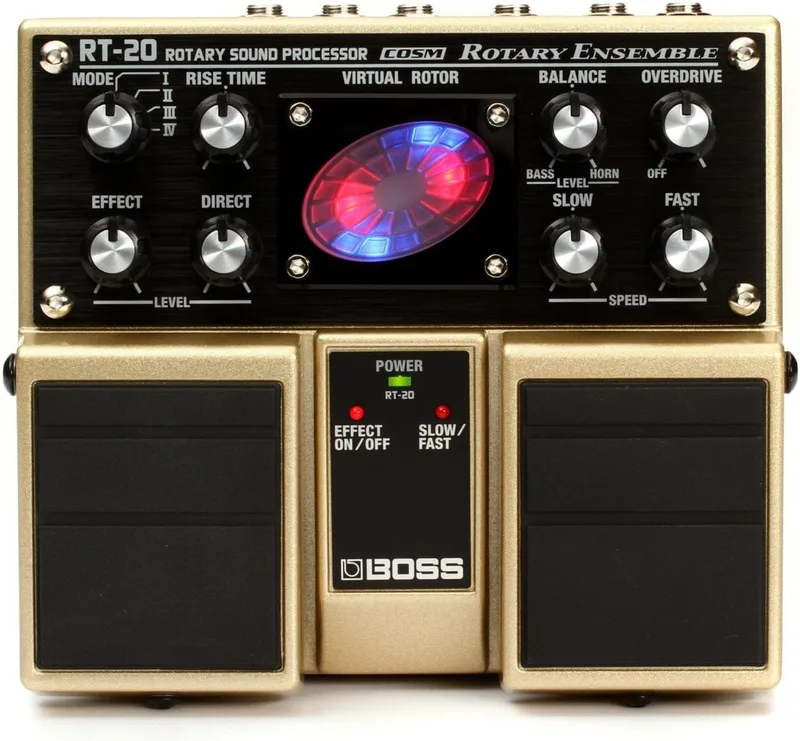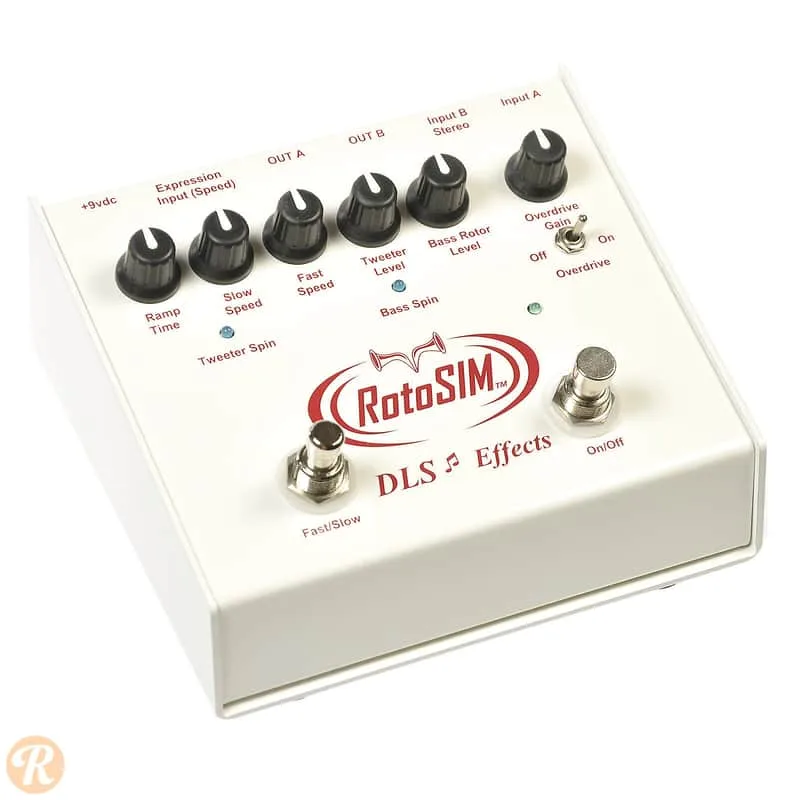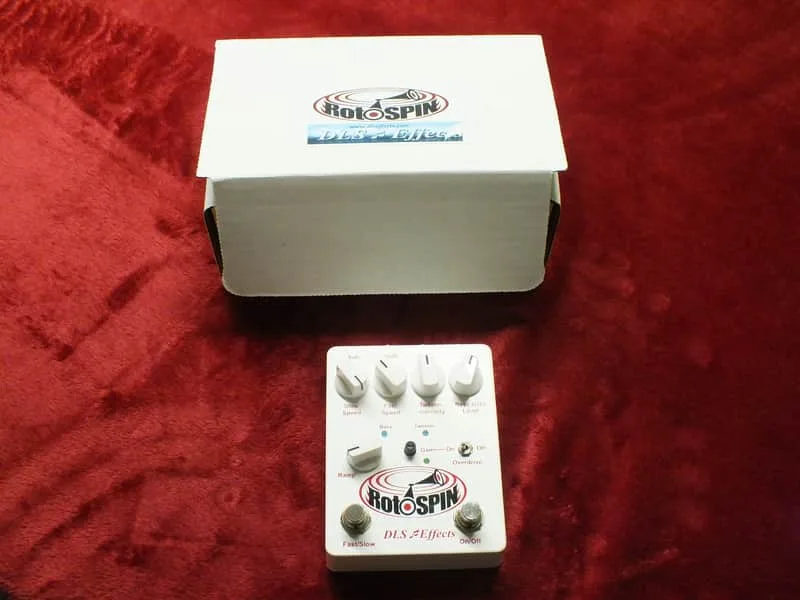


The DLS Effects RotoSPIN is an analog rotary speaker simulator pedal, built to recreate the swirl of a vintage Leslie or the SRV Vibratone in a stompbox. RockBoard's PedalPedia describes it as producing "ultra-real, vintage Rotary Speaker and SRV Vibratone sounds with dynamic speaker swirl, grind, and DopplerTM Effect"1. It sits among other rotary pedals such as the Strymon Lex Rotary, the Neo Instruments Ventilator and the Boss RT-20 Rotary Ensemble, and it is part of a wider family of speaker simulation pedals.
When it was announced in 2015, Delicious Audio described it as DLS Effects "offering the guitar world a new 'spin' on a classic and timeless guitar effect"2.
The controls: speeds, ramp, rotor and tweeter
Rotation speeds are set with the Fast, Slow and Ramp controls1. The Fast and Slow knobs are two separate pots, so each speed is dialed in independently2. The Ramp control sets the amount of transition time between the two speeds, which is what shapes how the rotor speeds up and slows down when you switch2.
Two further knobs shape the character of the speaker itself. The Bass Rotor control adjusts the amount of Doppler effect present, which Delicious Audio called "the feature that makes the rotary effect so cool in the first place"2. The Tweeter Intensity and Bass Rotor Level controls let you dial in multiple cabinet sounds and mic distances1.
| Control | What it does |
|---|---|
| Fast | Sets the fast rotation speed independently2 |
| Slow | Sets the slow rotation speed independently2 |
| Ramp | Sets the transition time between the two speeds2 |
| Bass Rotor | Adjusts the amount of Doppler effect present2 |
| Bass Rotor Level | Dials in cabinet sounds and mic distances1 |
| Tweeter Intensity | Dials in cabinet sounds and mic distances1 |
Footswitches, outputs and overdrive
The pedal carries the standard footswitches for on/off and for switching between fast and slow speed2. For outputs, you can use OUTA alone, which RockBoard's PedalPedia describes as thicker, or OUTB alone, which it describes as brighter, or both together for what RockBoard's PedalPedia calls a wide "DLS Stereo" output1.
A switchable overdrive is built in. RockBoard's PedalPedia says it "adds grit and edge like vintage rotary tube amps"1, so a player can get the driven rotary-amp sound without a separate overdrive pedal.
Power and practical notes
The RotoSPIN runs on 9V DC, center negative, and draws 90mA1. That current draw is worth noting when planning a board: it is above what many low-draw daisy-chain supplies comfortably share out, so a dedicated outlet on a pedalboard power supply is the safer assumption.
Delicious Audio's reviewer, comparing the RotoSPIN with DLS's earlier RotoSIM, wrote: "I cannot tell if the RotoSPIN is an improvement over the RotoSIM or a way to shrink down the size (and price) to gain a new market"2. The pedal uses a rugged enclosure with a smaller footprint than its predecessor2.
Videos
Premier Guitar
Premier Guitar
Alberto Barrero
Sources (2)
- RotoSPIN by DLS Effects, RockBoard PedalPedia, 2026
- New Pedals: DLS Effects' Rotospin, Delicious Audio, 2015-06-23