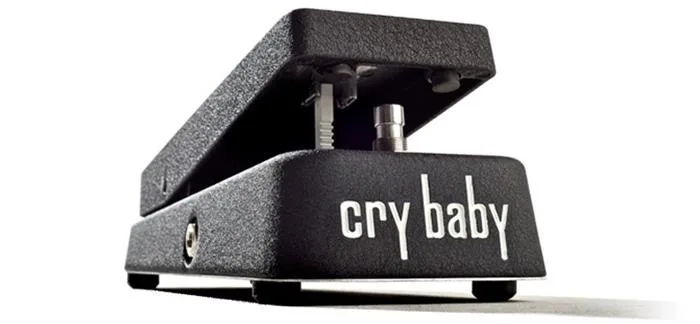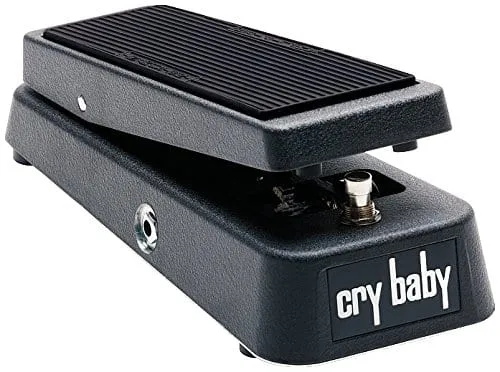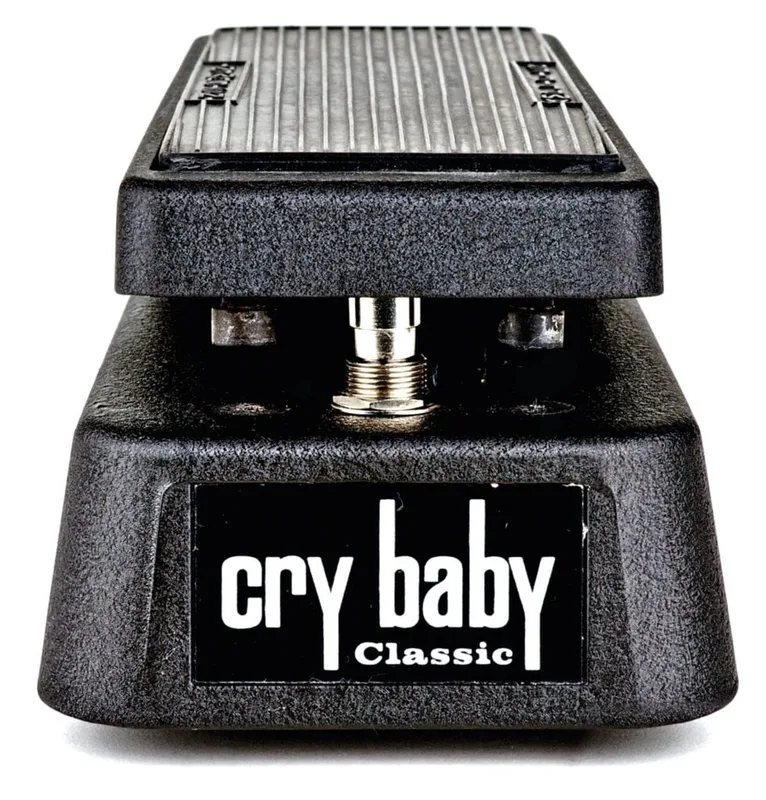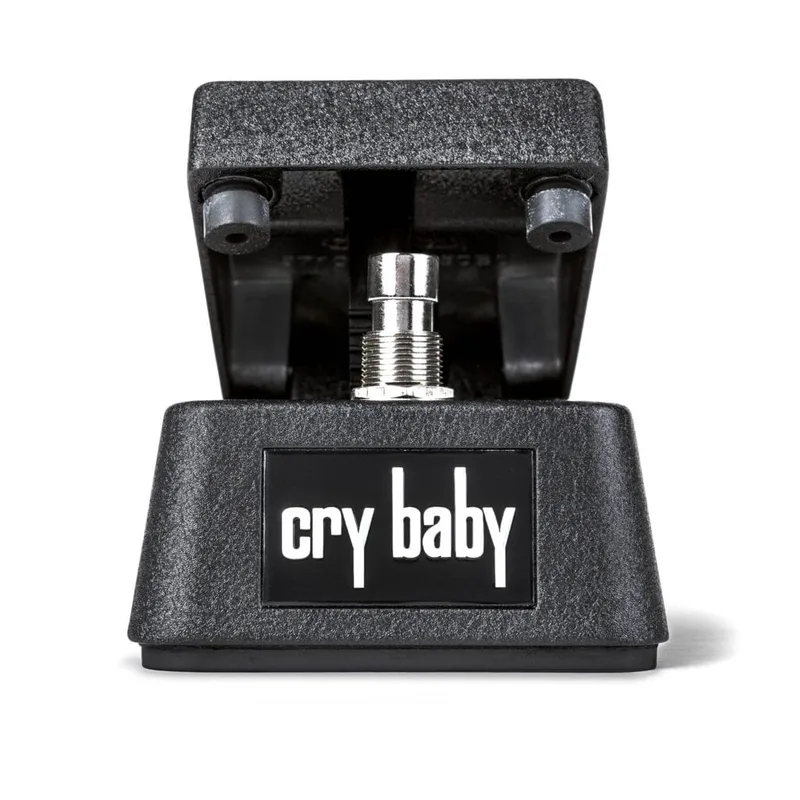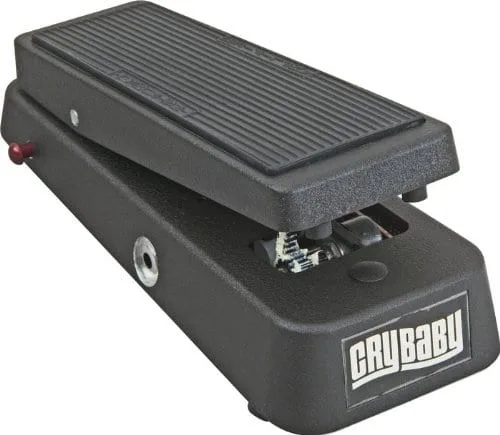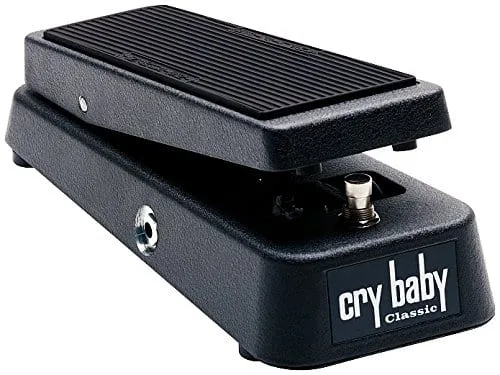


The Dunlop GCB95F, sold as the Cry Baby Classic, is a wah pedal from Dunlop that takes the familiar Cry Baby formula and re-voices it around a vintage part: an Italian-made red Fasel inductor. Dunlop released it in 20031, and the idea was to recapture the darker, more subtle sound of the early wahs. Dunlop's engineers lowered the pedal's frequency center and softened the response of the effect to give the Classic its own character1.
For a player, that means the GCB95F sweeps through a lower, rounder range than the standard Cry Baby GCB95. Dunlop's own buying guide sums up the split: the GCB95 Standard delivers an aggressive modern sound, while the GCB95F Classic offers a lower frequency range for a darker vibe2. MusicRadar's review points to the Fasel inductor as the reason to pick this model over the rest of the Cry Baby lineup, dangling the "vocal sweep and lush harmonics" that players get from it3.
What the GCB95F does: a darker, lower-centered Cry Baby
A wah pedal is a bandpass filter you control with your foot: rock the pedal back and forth and the frequency peak sweeps up and down, which is what produces the "wah" vocal effect. On the GCB95F, Dunlop set that peak lower and softened the response, so the sweep sits in a darker, more subtle register than the standard Cry Baby1. The red Fasel inductor inside is the same type of component found in the vintage Italian wahs players chase, and Dunlop credits it with the Classic's lush, vocal sound1.
Guitar World's buying guide flagged the same detail when the model was reissued, noting it features the much-sought-after Italian-made Fasel inductor under the hood6. MusicRadar, reviewing the pedal, homed in on exactly this: "we've picked out the Classic GCB-95F for one factor: the Fasel inductor that everybody bangs on about"3.
The pedal is built like the rest of the Cry Baby line. MusicRadar found it "physically, it's solid as a housebrick, and there's a real 'plunge' to the pedal action that bodes well for smooth tone sweeps"3.
Controls and how it works
There are no knobs to set. The GCB95F is played entirely with the foot4:
| Control | What it does |
|---|---|
| Toe-down click | Push the toe of the pedal down until you feel a "click" to turn the pedal on or off4 |
| Rocking the treadle | Rocking your foot back and forth changes the effect on your tone instantaneously4 |
Setup is a straight signal chain: an instrument cable from your guitar to the GCB95F's INSTRUMENT jack, then another cable from the AMPLIFIER jack to your amp4.
Power: 9V battery or adapter
The GCB95F runs on 9 volts DC4. It is powered by one 9-volt battery, accessed via the bottom of the pedal4, or by an AC adapter such as the Dunlop ECB003/ECB003E, or a Dunlop DC Brick power supply4. MusicRadar counted the dual battery and adapter option as a point in the pedal's favor, noting "it scores big-time by enabling either the use of batteries or Dunlop's ECB03 AC adaptor"3.
At 2.5 mA of current draw4, the pedal is easy on a battery, and its noise floor is rated at -102 dBV A-weighted4.
True bypass
The GCB95F is true bypass. The manual lists it plainly4, and Dunlop's history of the pedal frames the choice as aimed at tonal purists: "Finally, for tonal purists, the Cry Baby Classic Wah features true bypass switching"1. MusicRadar's review agrees, adding the practical caveat: "This pedal is true hardwire, so it shouldn't compromise your raw tone unless you've got a long daisy-chain of pedals"3.
GCB95F vs GCB95
The GCB95 Standard and the GCB95F Classic share the Cry Baby housing and foot action, but they are voiced for different players214:
| GCB95 Standard | GCB95F Classic | |
|---|---|---|
| Sound | Aggressive modern sound2 | Lower frequency range for a darker vibe2 |
| Inductor | Standard | Italian-made red Fasel1 |
| Bypass | True bypass4 | |
| Frequency center | Lowered, with softened response1 |
Dunlop's buying guide positions the Standard as the modern-voiced Cry Baby and the Classic as the vintage-voiced one2. The Classic's lowered frequency center and softened response come directly from the Fasel swap1.
Where it came from
Dunlop released the Cry Baby Classic in 20031. The pedal came out of Dunlop's ongoing work with the Cry Baby line, and the red Fasel inductor that defines it was later added to the GCB95 as well1. The Classic sits in a wide Dunlop range that now includes signature models from players like Slash, Kirk Hammett and Tom Morello, alongside variants like the Cry Baby Mini and the 535Q Multi-Wah.
What reviewers said
MusicRadar's review of the GCB-95F centers on the Fasel inductor as the pedal's trump card, with Dunlop, as the reviewer puts it, "playing this innocuous red nubbin as its trump card"3. The review credits the pedal with a vocal sweep and lush harmonics, praises its housebrick-solid build and the plunge of its pedal action, and notes the true hardwire bypass and the battery or ECB03 adapter power options3. Guitar World's earlier coverage pointed players to the same Italian-made Fasel inductor as the model's distinguishing feature6.
Videos
Sweetwater
The Guitologist
intheblues
Questions
What is the difference between the GCB95F and the GCB95?
Both are Dunlop Cry Baby wah pedals in the same style of housing, but the GCB95F Classic uses an Italian-made red Fasel inductor and has a lowered frequency center and softened response for a darker, more vintage sound. Dunlop describes the GCB95 Standard as having an aggressive modern sound. The GCB95F also adds true bypass switching.
Is the Cry Baby Classic true bypass?
Yes. The GCB95F manual lists true bypass, and Dunlop's own history of the pedal says the Cry Baby Classic Wah features true bypass switching for tonal purists. MusicRadar's review also notes it is true hardwire, so it should not compromise your raw tone unless you run a long daisy-chain of pedals.
What is a Fasel inductor?
A Fasel is the inductor at the heart of the wah's filter circuit, originally found in vintage Italian-made wah pedals. The red Fasel in the GCB95F is the part players associate with the lush, vocal sound of early wahs, and it is the component Dunlop added to set the Classic apart from the standard GCB95.
How much current does the GCB95F draw?
According to Dunlop's manual, the GCB95F draws 2.5 mA, which is low enough that a 9-volt battery is a practical way to power it. It can also run from an AC adapter such as the Dunlop ECB003/ECB003E or a Dunlop DC Brick power supply.
Sources (6)
- Evolution of the Cry Baby Wah at Dunlop, Dunlop (lifestyle.jimdunlop.com), 2017-04-27
- RANGE OF EXPRESSION: FIND YOUR CRY BABY® WAH, Dunlop (lifestyle.jimdunlop.com), 2021-10-08
- Dunlop Cry Baby Classic GCB-95F review, MusicRadar, 2012-03-05
- GCB95F.pdf, Jim Dunlop, 2020
- CRY BABY® DAREDEVIL™ FUZZ WAH, Jim Dunlop (www.jimdunlop.com)
- Totally Gnarly: Five Modern Effect Pedals That Recreate Gritty '80s Sounds, Guitar World, 2013-02-13