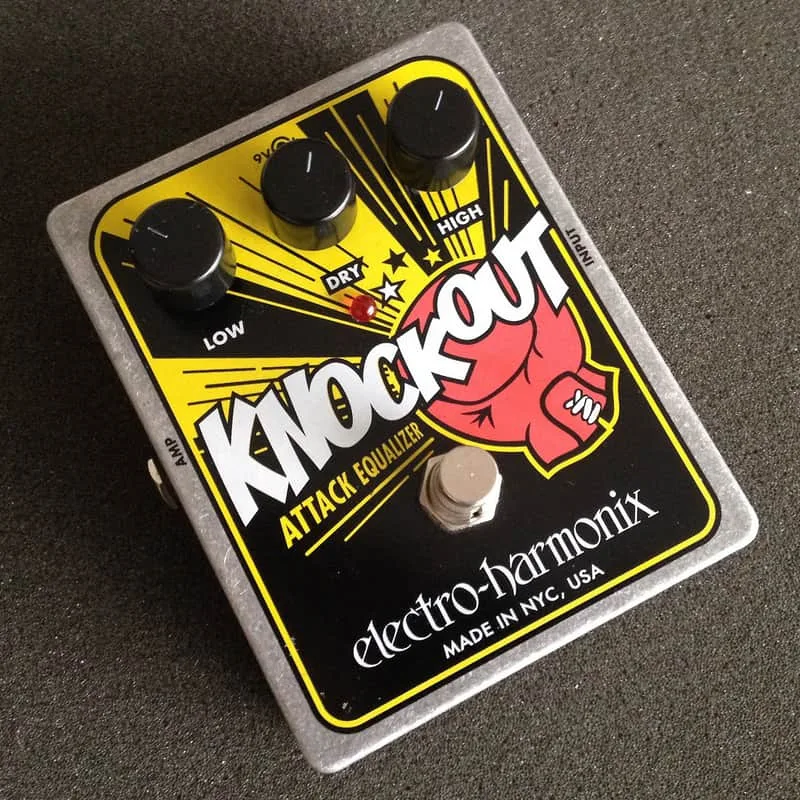


The Electro-Harmonix Knockout Attack Equalizer is a two-filter effect designed to help boost signal when used after a distortion box. Its main tool is a seven-pole filter for sculpting the low end of a guitar's mids, which makes it a shaping pedal rather than a conventional EQ with fixed bands: it carves the midrange in a way distortion pedals tend to need. Vintage Guitar announced the pedal as a reissue, built in a die-cast chassis with true-bypass switching, running on 9-volt or AC power1.
What it does and where it goes
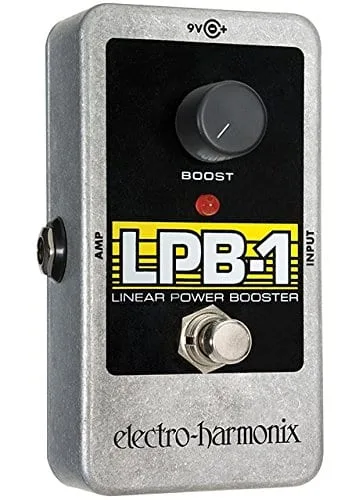
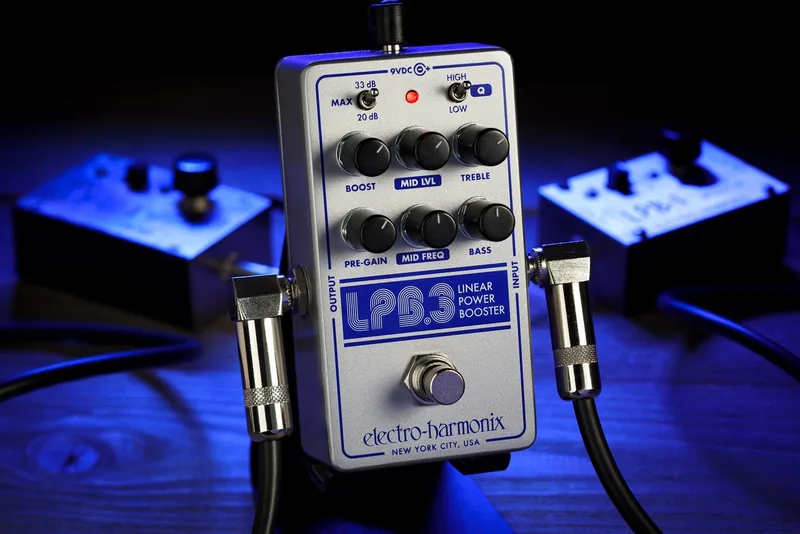
The Knockout is not a booster in the sense of an LPB-1 or LPB-3, which lift the whole signal. It is a filter pair aimed at the mids, and it is meant to be placed after your distortion or overdrive rather than before it. Electro-Harmonix's own description of the circuit, quoted by the DIY builder community at Tagboard Effects, puts it plainly12:
"This provides incredible tone shaping. Use after distortion to bring out the heavy weight punch of the metal masters."
That placement matters. A distortion pedal piles harmonics into the midrange, and the Knockout's seven-pole filter lets a player cut or shape the low end of that midrange after the fact, tightening the sound instead of adding gain. The same description notes it works on bass as well as guitar2.
The circuit
The pedal's filtering centers on that seven-pole low-mids filter1. Among DIY builders who have traced and rebuilt the circuit, a few details of the original design have surfaced:
- The schematic has no input or output capacitors, so DC voltage is present at both input and output as drawn2
- Builders report using BC558 transistors in their builds, with one reporting: "I built this and used bc558s. Works as advertised, really nails a strat sound with humbuckers."2
The absence of input and output capacitors in the original schematic means DC voltage sits at the jacks as drawn. That is a detail for anyone rebuilding the circuit rather than for players using the pedal as made.
Related pedals
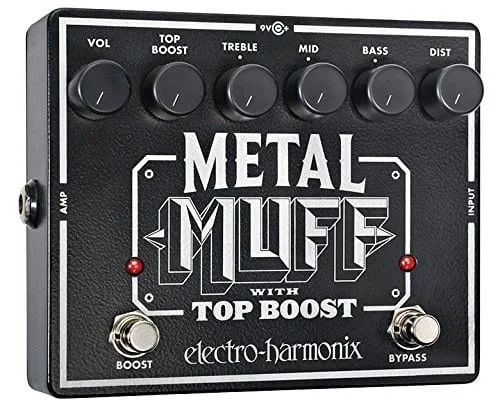
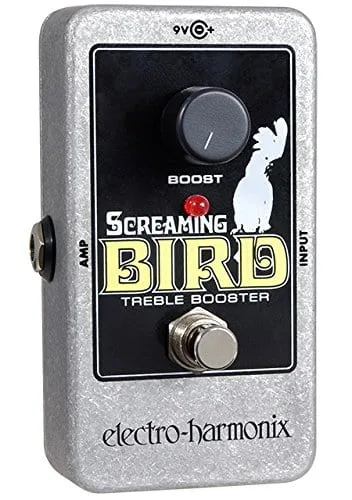
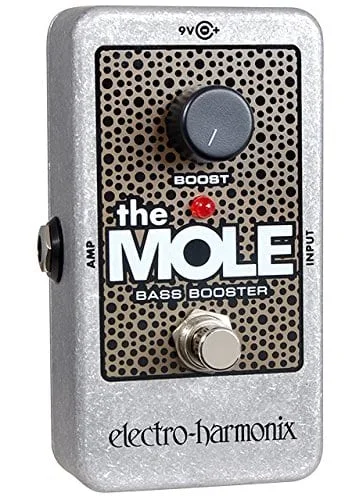
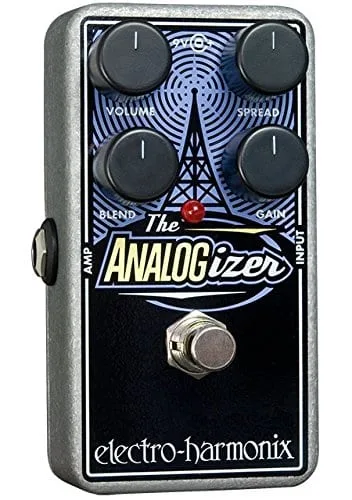
Electro-Harmonix's range includes several other tone-shaping pedals that sit near the Knockout in intent: the Metal Muff for high-gain tones the Knockout might follow, the Screaming Bird treble booster, the Mole bass booster, and the Analogizer. The Knockout differs from all of them in being a filter pair built specifically for post-distortion mid shaping12.
Videos
EHX
EHX
Isurus
Questions
Is the Electro-Harmonix Knockout Attack Equalizer true bypass?
Yes. Vintage Guitar reported on the pedal's reissue that it has true-bypass switching, so when the pedal is off your guitar's signal passes to the rest of the chain without going through the filter circuit.
What power does the Knockout Attack Equalizer take?
Vintage Guitar reports that the pedal runs on 9-volt or AC power, housed in a die-cast chassis. No current draw figure or battery detail has been published for this pedal.
Is the Knockout Attack Equalizer a reissue?
Yes. Vintage Guitar announced the Electro-Harmonix Knockout Attack Equalizer as a reissue of an earlier design, built in a die-cast chassis with true-bypass switching and a seven-pole filter for sculpting the low end of a guitar's mids.
What does the seven-pole filter do?
The seven-pole filter is for sculpting the low end of a guitar's mids. It is one of the pedal's two filters, and it is the reason the Knockout is used after a distortion box: it carves the midrange and low mid content that distortion tends to pile up, tightening the sound.
Where should the Knockout Attack Equalizer go in a signal chain?
After distortion. The pedal was designed as a two-filter effect to help boost signal when used after a distortion box, and Electro-Harmonix's own description says to use it after distortion to bring out the heavy weight punch of the metal masters. It is also described as working well on bass.
Sources (2)
- E-H Reissues Knockout Attack Equalizer, Vintage Guitar magazine, 2012-06-27
- Guitar FX Layouts: Electro Harmonix Knockout Attack Equalizer, tagboardeffects.blogspot.com, 2017-04-09