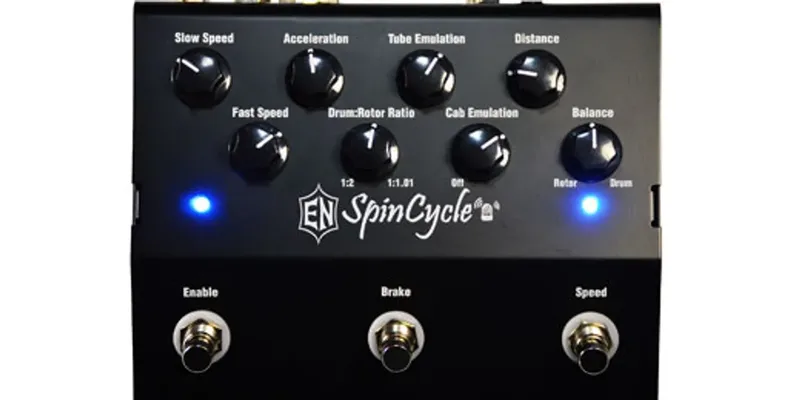


Experimental Noize released the SpinCycle on April 17, 2015, a rotary speaker effects pedal aimed at the guitar and keyboard market. It was the company's move into retail, announced from Culver City, CA with an MSRP of $449.991. The pedal emulates the two moving parts of a rotary speaker cabinet separately: the horn rotor and the drum. Alongside that, the press release lists cabinet emulation, tube emulation and selectable analog options1.
What it does
A real rotary speaker, the kind long associated with organ rigs and picked up by guitar players, produces its character from two things spinning at different rates: the rotor (the horn) and the drum (the lower baffle). The SpinCycle emulates each of these separately rather than blending them into one effect, which is what lets it cover the range of speeds and balances a player hears from an actual cabinet12.
The feature list from the release:
- Separate emulation of the rotor and drum1
- Cabinet emulation1
- Tube emulation1
- Selectable analog options1
Guitar Interactive's Jonathan Graham reported that the pedal is built on an Analog Devices Blackfin DSP with two MACs and two ALUs, paired with an analog signal boost stage2.
The Drum:Rotor Ratio control
The control that sets the SpinCycle apart is the Drum:Rotor Ratio. It adjusts the ratio between drum and rotor speeds to get the specific sound the user is looking for. In a rotary speaker cabinet the drum typically spins slower than the rotor, at a ratio of about 1 drum revolution to 1.4 rotor revolutions, so the control lets a player dial in the behavior of a particular cabinet rather than a generic rotary effect2.
Power and hardware
The SpinCycle runs on a standard effects pedal 9V DC power supply, which is included with the pedal1. It houses its circuitry in a custom metal enclosure1.
The SpinCycle was announced in April 2015. Coverage from the time describes it as a new release for guitar and keyboard players.
Where it sits among rotary pedals
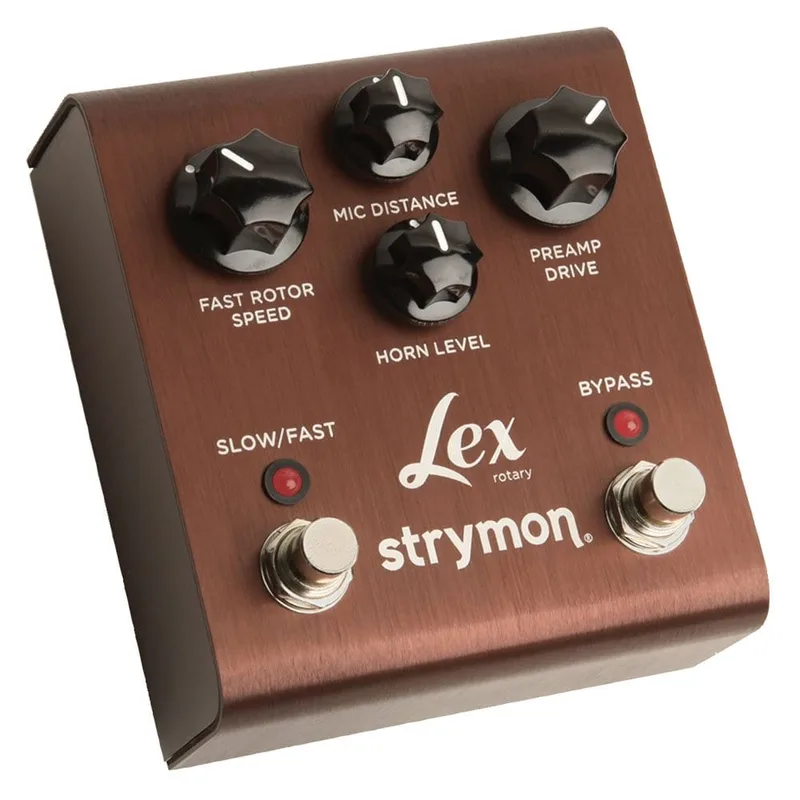
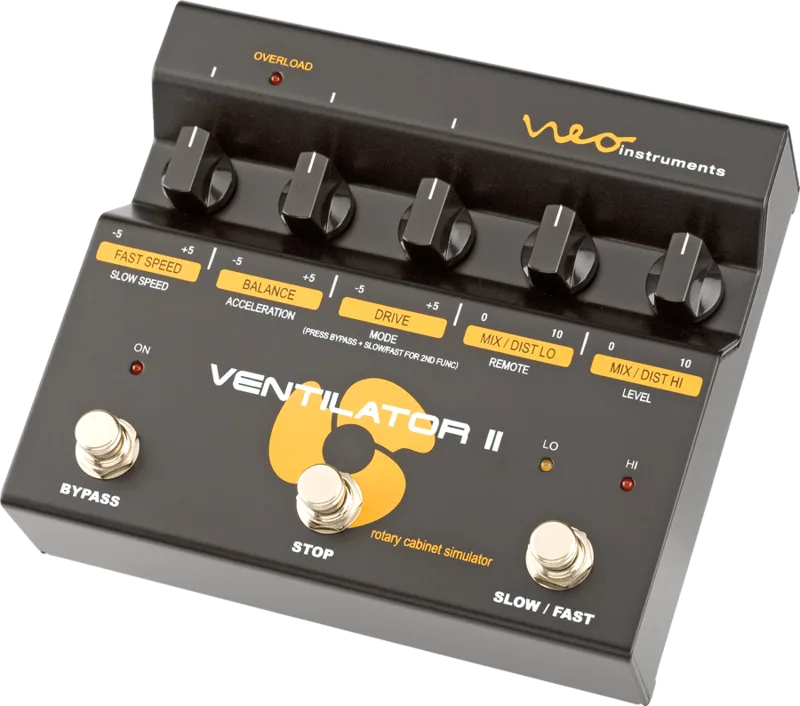
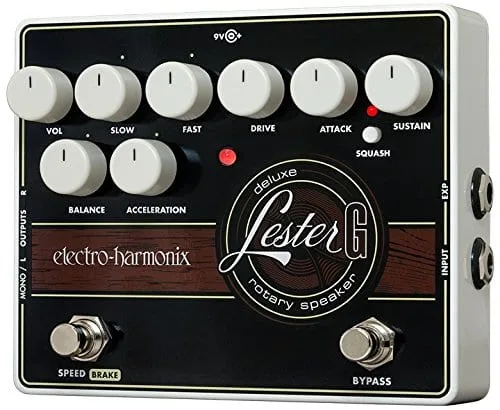
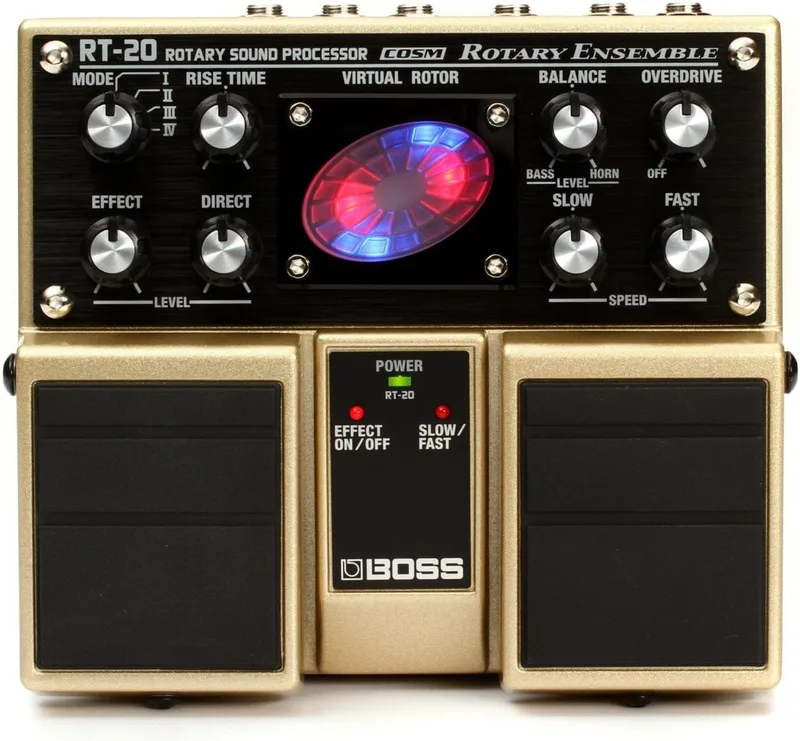
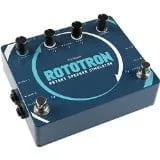
Rotary speaker emulation is a small corner of the speaker simulation field. Other pedals that take on the same job include the Strymon Lex Rotary, the Neo Instruments Ventilator, the Electro-Harmonix Lester G Deluxe, the Boss RT-20 Rotary Ensemble and the Pigtronix Rototron. For the wider picture, see the Speaker Simulation Pedals page.
Videos
ProGuitarShopDemos
Experimental Noize
Experimental Noize
Questions
Is the SpinCycle analog or digital?
The SpinCycle uses digital DSP processing with an analog signal boost. Guitar Interactive reported that it is built around an Analog Devices Blackfin DSP with two MACs and two ALUs, and the press release describes selectable analog options alongside its cabinet and tube emulation.
What power does the SpinCycle use?
It uses a standard effects pedal 9V DC power supply, and the supply is included with the pedal according to the release coverage from Premier Guitar and Guitar Interactive Magazine.
When was the SpinCycle released?
Experimental Noize released the SpinCycle on April 17, 2015, in Culver City, CA, as the company expanded its product offerings into the retail area.
How much does the SpinCycle cost?
The SpinCycle has an MSRP of $449.99, as stated in the April 2015 press release carried by Premier Guitar.
What does the rotor and drum ratio control do?
The Drum:Rotor Ratio control adjusts the ratio between drum and rotor speeds to get the specific sound the user is looking for. In a real rotary speaker cabinet the drum typically spins slower than the rotor, at a ratio of about 1 drum revolution to 1.4 rotor revolutions, so the control lets a player match a specific cabinet's behavior.
Sources (2)
- SpinCycle Rotary Speaker Pedal by Experimental Noize, Premier Guitar, 2015-04-17
- Experimental Noize Unveils SpinCycle Rotary Speaker Pedal, Guitar Interactive Magazine, 2015-04-20