

The Hartman Electronics Silicon Crystal Valve is a fuzz pedal whose voice Premier Guitar described as full, muscular, and aggressive, with less lower-octave overtone content than some Big Muffs1. It listed at a street price of $179 when the magazine reviewed it, and its LED is bright enough to leave no doubt whether the pedal is on or off1.
What it does to your sound
Hartman's press release describes the pedal's Gain control as unleashing "dense, driving Silicon fuzz that can be focused across the entire frequency range of the guitar using the Tone control"2. Premier Guitar's reviewer heard "a basic fuzz voice that's full, muscular, and aggressive, but not bogged down by too many lower-octave overtones the way" some Big Muffs can be1. The reviewer's summary of the pros: "Wide range of unique, silicon fuzz tones. Exceptional attention to construction detail."1
"the LED, while bright enough to blind you, eliminates any doubt about whether the pedal is off or on"
Controls
| Control | What it does |
|---|---|
| Gain | Sets the amount of fuzz; dense, driving silicon fuzz per Hartman's release2 |
| Tone | Focuses the fuzz across the entire frequency range of the guitar2 |
| Volume | Output level1 |
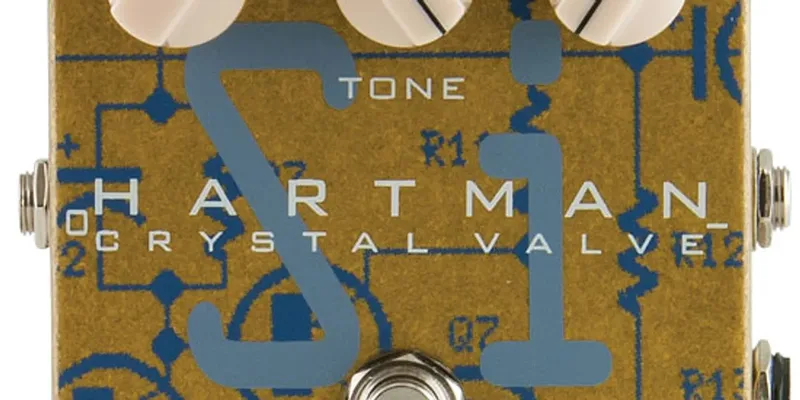
The reviewer noted that against the pedal's busy graphics, "it's a little hard to make out the gain, tone, and volume labels amid the clutter"1.
Build and enclosure
The Silicon Crystal Valve is dressed in contemporary graphics: a swatch of circuit schematic overlaid with silicon's periodic-table shorthand, over glossy gold-flake paint1. Inside, the reviewer found clean solders, components locked down tight and free of rattles or play, and the interior of the enclosure clear coated, calling the board around its four NPN silicon transistors "flawlessly put together"1.
The Supa Tone Bender circuit behind it
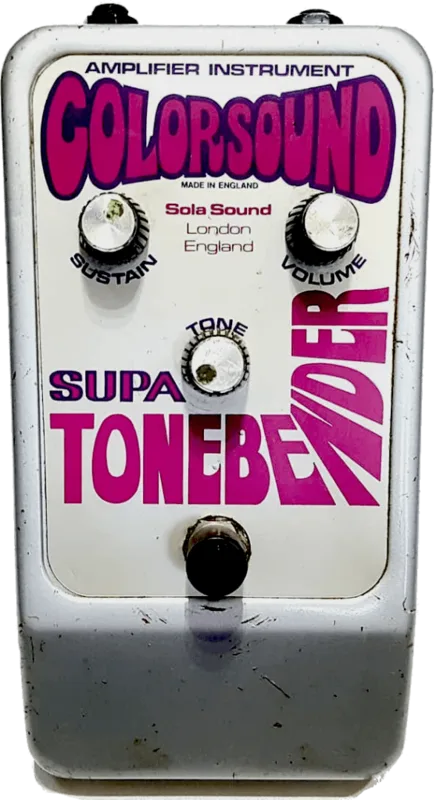
The Silicon Crystal Valve is based in significant measure on the Colorsound Supa Tone Bender1. That circuit has its own history: Sola Sound was the maker behind the Tone Bender fuzz boxes supplied to Vox, Marshall and Rotosound, as well as the Colorsound range3. TONEHOME notes that the Supa Tone Bender is different from the classic germanium transistor Tone Bender in the slim enclosure, featuring a silicon transistor circuit4.
Two technical points set the Supa circuit apart from its relatives:
- Skreddy Pedals' Marc describes the Supa Tonebender as "actually a variant of the Big Muff™ circuit, involving the deletion of the first set of clipping diodes"5.
- Guitar FX Layouts' technical analysis found "an extra capacitor added to the 9v for power filtering, not found on the original violet BMP circuits"6.
In other words, a player looking at the Silicon Crystal Valve is looking at a Big Muff family design with the first clipping stage removed, which is where the reviewer's observation about fewer lower-octave overtones than some Big Muffs comes from15.
The circuit behind the Silicon Crystal Valve traces to the Colorsound Supa Tonebender, which is itself a variant of the Big Muff circuit, involving the deletion of the first set of clipping diodes5. Versions of the design add an extra capacitor to the 9V line for power filtering, not found on the original violet Big Muff circuits6. Hartman's own build earned praise too: Premier Guitar found the solders clean, the components locked down tight and free of rattles, and the interior of the enclosure clear coated1.
Videos
Guitar Player Magazine
GAPcoPedals
Questions
What is the Colorsound Supa Tone Bender?
It is a silicon transistor fuzz originally built by Sola Sound, the London company behind the Tone Bender fuzz boxes supplied to Vox, Marshall and Rotosound and the Colorsound range. Unlike the classic germanium Tone Bender in the slim enclosure, the Supa Tone Bender uses silicon transistors, and it is described as a variant of the Big Muff circuit with the first set of clipping diodes deleted.
How many transistors does the Silicon Crystal Valve use?
Four. Premier Guitar's reviewer described the circuit board as built around four NPN silicon transistors and put together flawlessly, with clean solders and components locked down tight.
What is the difference between the Silicon and Germanium Crystal Valve?
Hartman Electronics announced both pedals in December 2012 as a pair of fuzzes. The Silicon Crystal Valve is a four-transistor silicon fuzz based on the SolaSound SupaTonebender, while the Germanium Crystal Valve takes its inspiration from the Vox Tonebender and uses germanium transistors. Silicon transistors generally run more consistently with temperature, while germanium designs are the older, softer-clipping approach.
How does the Silicon Crystal Valve compare with a Big Muff?
The circuit it is based on, the Colorsound Supa Tone Bender, is itself a variant of the Big Muff circuit with the first set of clipping diodes deleted, plus an extra power-filtering capacitor on the 9V supply. Premier Guitar's reviewer heard a basic fuzz voice that is full, muscular and aggressive, with fewer lower-octave overtones than some Big Muffs.
How many controls does the Silicon Crystal Valve have?
Three: Gain, Tone and Volume. The Gain control unleashes dense, driving silicon fuzz that can be focused across the guitar's entire frequency range with the Tone control. The reviewer noted the labels can be hard to make out against the graphic enclosure.
Sources (6)
- Hartman Electronics Silicon Crystal Valve Pedal Review, Premier Guitar, 2013-04-15
- Hartman Electronics Unveils New Fuzz Pedals, Premier Guitar, 2012-12-11
- Vox Tone Bender Professional MKII • Fuzzboxes, Fuzzboxes.org, 2021-05-20
- TONEHOME, TONEHOME - the World of Vintage Guitar Effects Pedals
- ToneBender variants, Skreddy Pedals
- Guitar FX Layouts: Colorsound Supa ToneBender, Guitar FX Layouts (tagboardeffects.blogspot.com), 2016-01-03