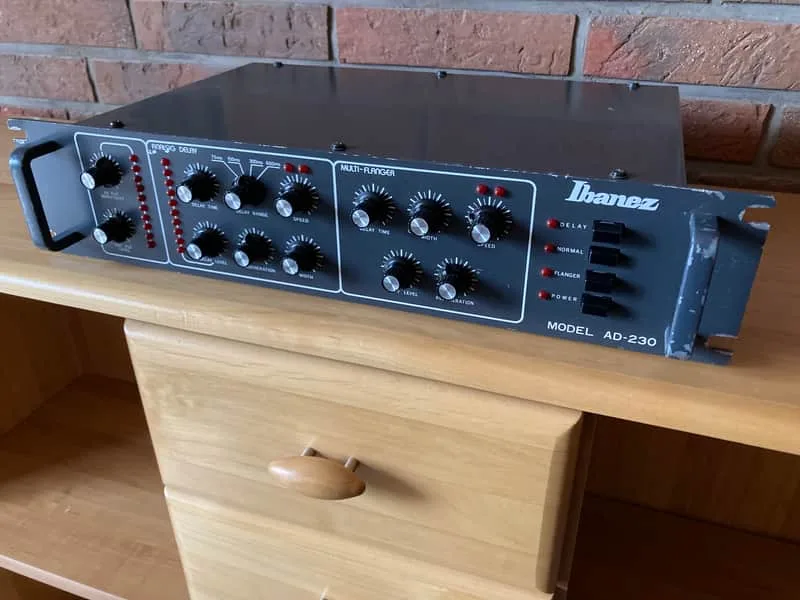


The Ibanez AD-230 is an analog delay unit with a built-in flanger, sold as the "Analog Delay & Multi Flanger"1. TONEHOME calls it "One of the finest analog delays ever built"1. It was produced from 1977 to 1979, and it has not been reissued since1. Today it is described as one of the most sought after vintage studio delays, with availability listed as very rare and collectibility as very high1.
Delay and flanger ranges
The delay side covers 10 to 600 ms, arranged as four delay ranges, and alongside them there is a modulation section1. In flanger mode the unit works over 1 to 13 ms1.
| Mode | Range |
|---|---|
| Delay | 10 to 600 ms |
| Flanger | 1 to 13 ms |
Can it delay and flange at the same time?
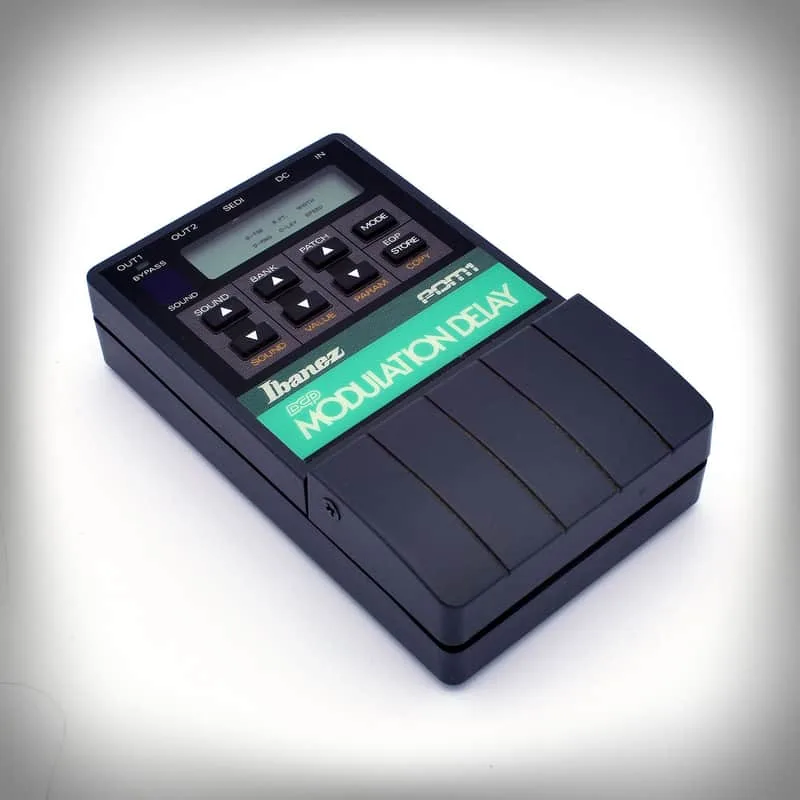
No. The delay is bypassed when flanging1. The AD-230 is either a delay or a flanger at any given moment, not both together. That is worth knowing if you are comparing it with later combination units such as the Ibanez PDM1 Modulation Delay.
Inputs and outputs
The AD-230 has one 1/4" mono input jack (100 kOhms, unbalanced) and one symmetrical low-impedance input (600 kOhms, balanced)1. On the output side there is a 1/4" mono jack (10 kOhms, unbalanced) and a low-impedance jack (600 kOhms, balanced), with the same arrangement again for the delay signal only1.
History and collectibility
The AD-230 was made by Ibanez from 1977 to 19791. Its 1977 list price was 2.500 DM1. It has never been reissued1, and TONEHOME lists its availability as very rare and its collectibility as very high1. Part of its reputation comes from its users: famous endorsers including Jerry Garcia and Bob Weir of the Grateful Dead, and Steve Miller, were using the device in the studio and on stage at that time1.
"Nowadays the AD-230 is one of the most sought after vintage studio delays."
"people realized that the analog delay had a certain character that wasn't easily replicated digitally"
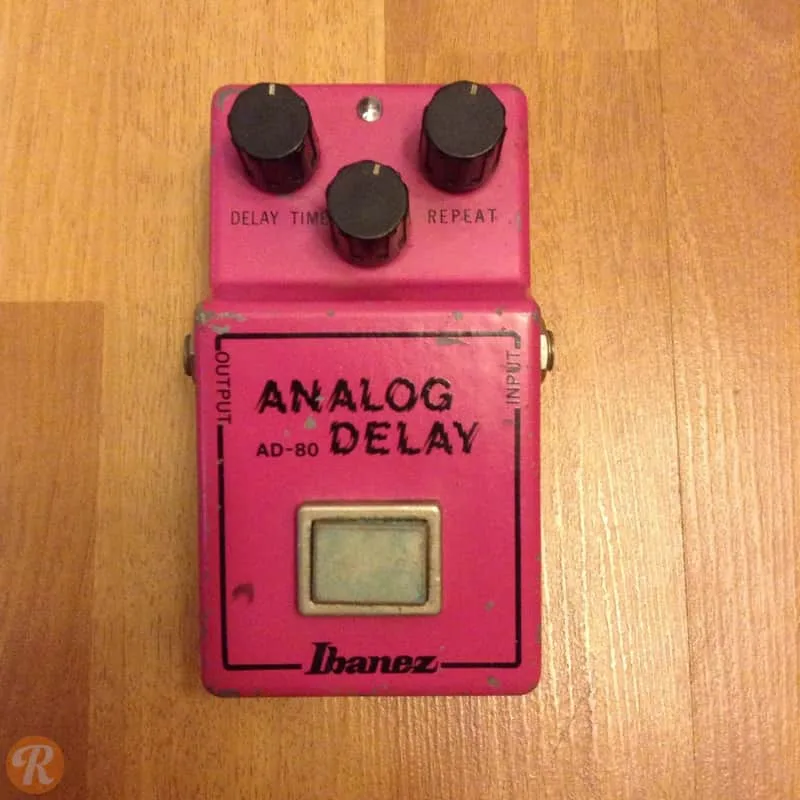
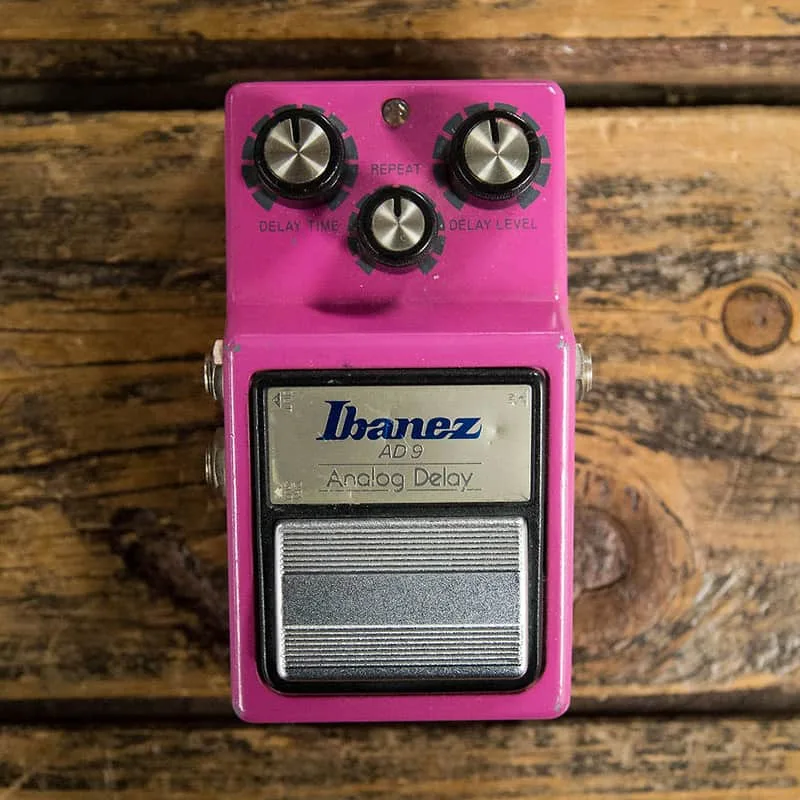
For players interested in Ibanez's later delay designs, the Ibanez AD-80 Analog Delay and the Ibanez AD9 Analog Delay are covered on their own pages, and the broader category is on Delay Pedals.
Videos
Low Pass Gatekeeper
foleytronics fx repair
WiFlTn
Questions
Is the Ibanez AD-230 analog or digital?
The AD-230 is an analog delay. TONEHOME calls it one of the finest analog delays ever built, and notes that people came to realize the analog delay had a certain character that was not easily replicated digitally. That character is a large part of why the unit remains in demand among players chasing vintage delay tones.
Was the Ibanez AD-230 ever reissued?
No. TONEHOME lists the AD-230 as never re-issued. It was produced only from 1977 to 1979, and the unit is described as very rare with very high collectibility, so players looking for one today are hunting a vintage original rather than a modern reissue.
Can the AD-230 delay and flange at the same time?
No. The AD-230 offers four delay ranges and a modulation section, but the delay is bypassed when flanging. The two effects do not run together: you are either in delay mode or flanger mode, not both at once.
How long was the Ibanez AD-230 made?
The AD-230 was produced from 1977 to 1979, a run of roughly three years. Its short production life is one reason the unit is described as very rare and highly collectible today.
Why is the Ibanez AD-230 so collectible?
TONEHOME describes the AD-230 as one of the most sought after vintage studio delays, with very high collectibility and very rare availability. It was never reissued, was made for only three years, and famous endorsers including Jerry Garcia and Bob Weir of the Grateful Dead and Steve Miller used it in the studio and on stage.
Sources (1)
- TONEHOME, TONEHOME (tonehome.de), 1977