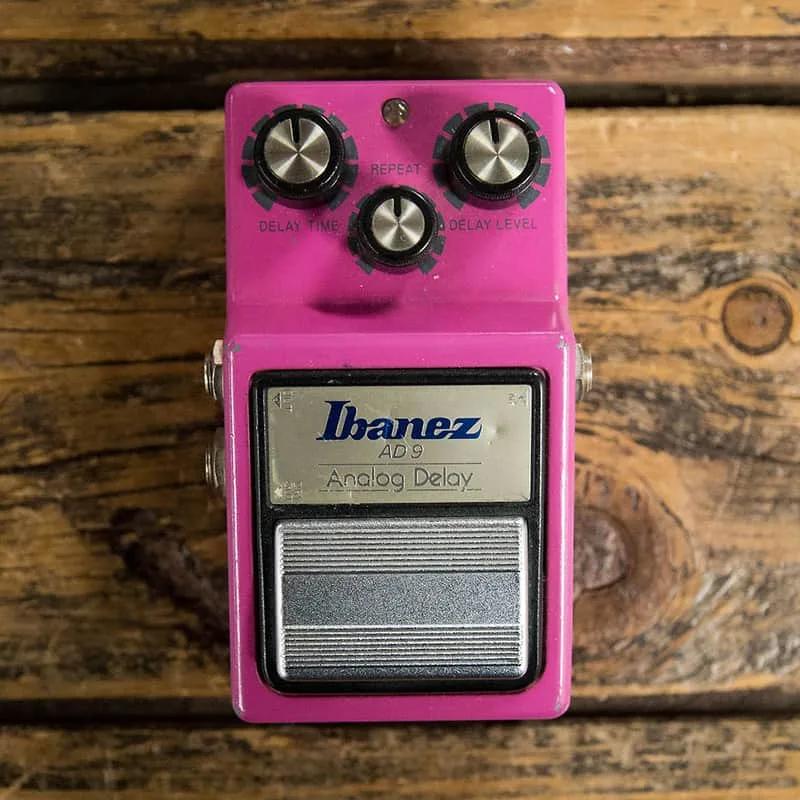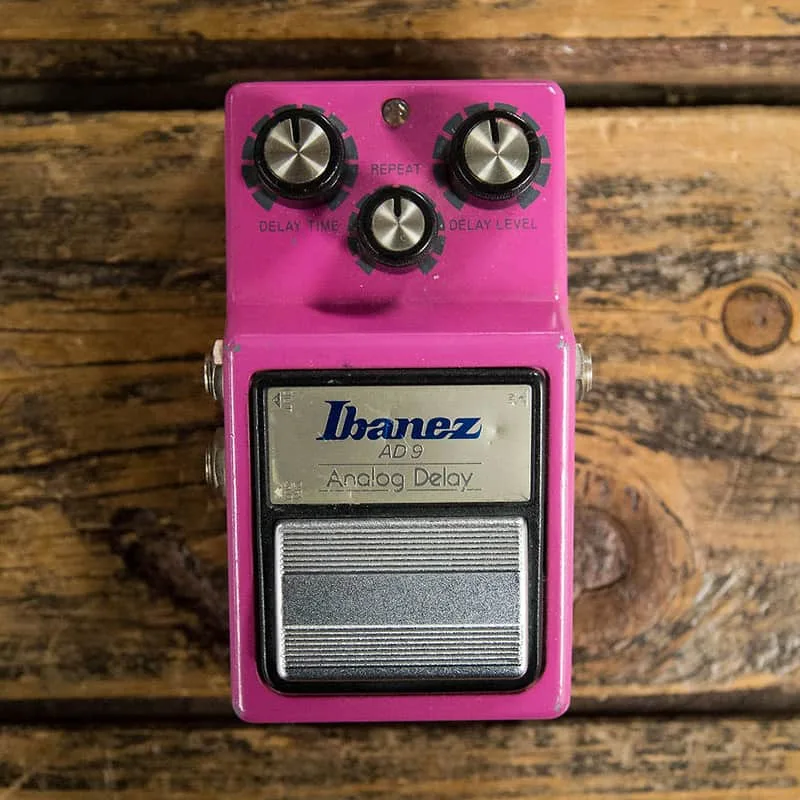


The Ibanez AD9 Analog Delay is a compact delay pedal made by Ibanez, produced in its original form from 1982 to 19841. It is a true analog delay, built on bucket brigade circuitry, with three knobs controlling delay time, delay level, and repeat, and a 300 ms maximum delay time2. Players prize it for warm, inviting echoes and its ability to self-oscillate when the repeats are pushed.
What it is and what it does
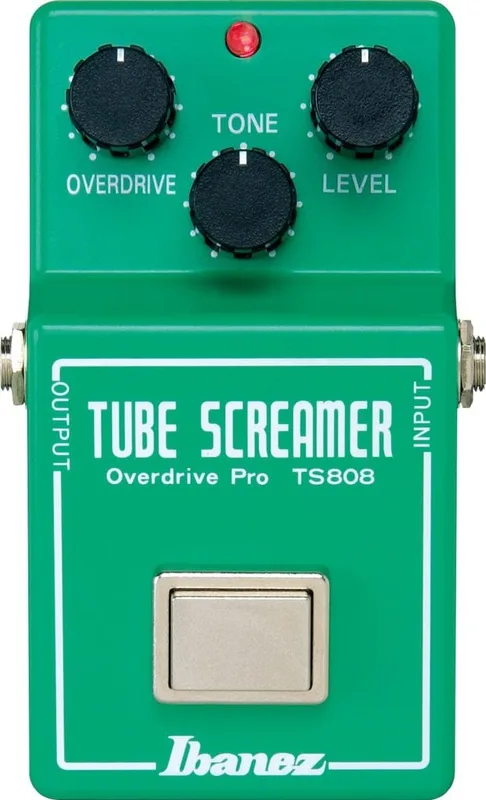
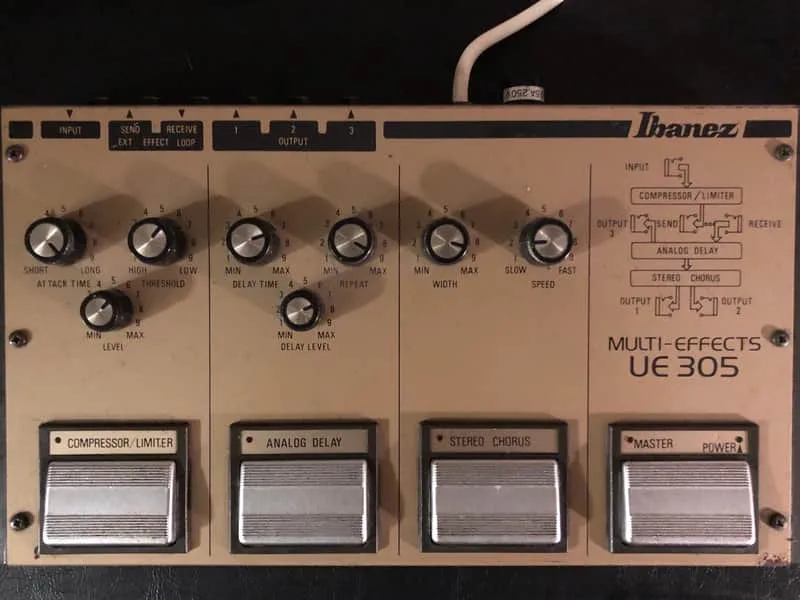
The AD9 sits in Ibanez's 9 Series, the same era of compact pedals as the TS9, and also appeared as the delay section of the UE 305 multi-effect unit5. RockBoard describes it as a high-quality analog delay effect pedal with a 300 ms time effect, allowing for a wide range of delay times and repeat settings2. Its three knobs give direct control over the delay time, the delay level in the mix, and the number of repeats2.
Because it is a bucket brigade design, each repeat darkens and softens slightly as it passes through the chip chain, which is the character analog delay fans chase. EarthQuaker Devices' Patrick Benson summed up the pedal's appeal in a beginner's pedalboard guide as "Bucket brigade analog goodness in hot pink!"4. Analog Man's David Szabados makes the same point from the repair bench: "the character of a good analog delay is thoroughly enjoyable and difficult to capture from anything other than a genuine" analog circuit6.
How it differs from other Ibanez delays
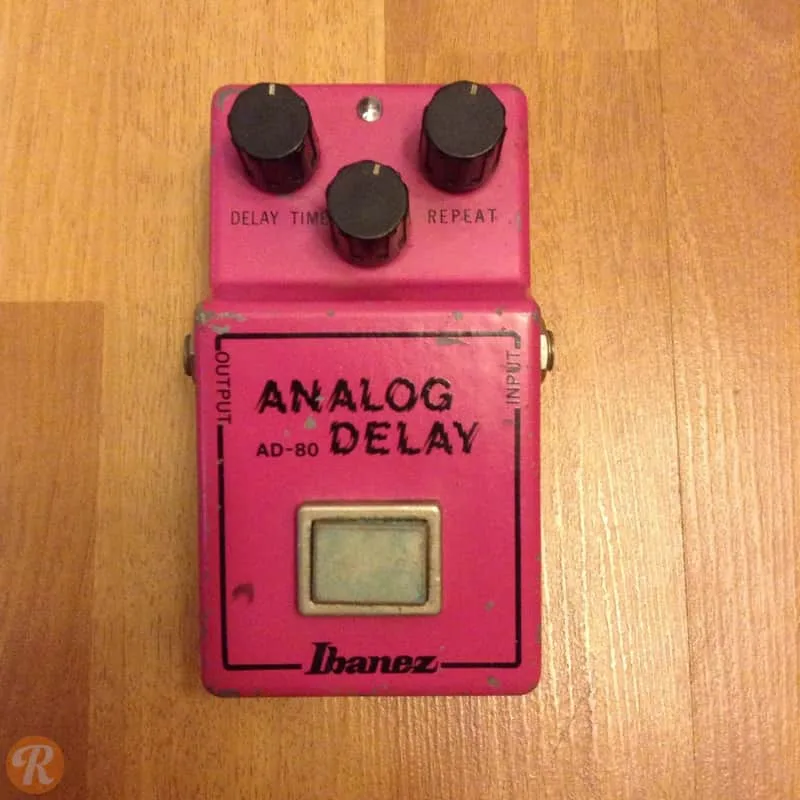
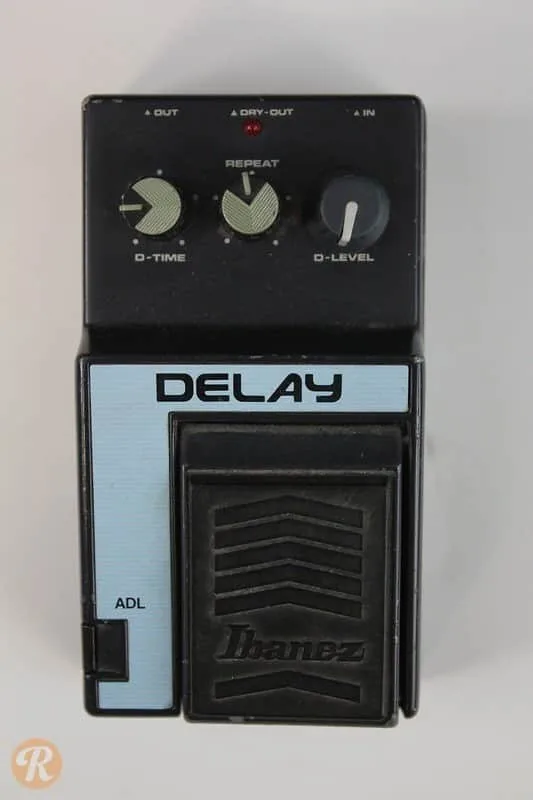
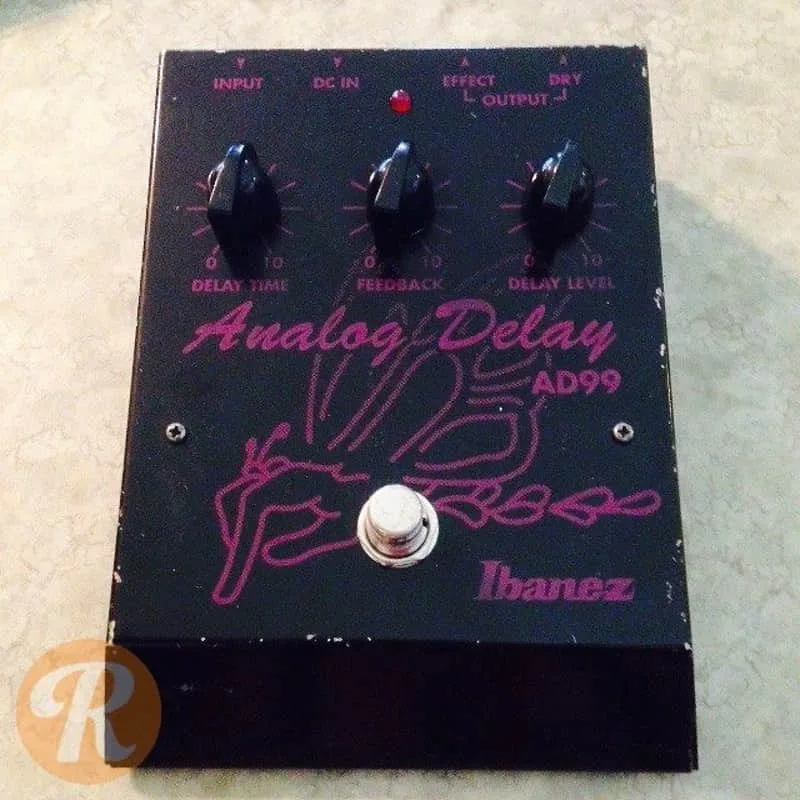
Ibanez has built many delay pedals over the decades, and the AD9 is the analog cornerstone of the line. Related models include the earlier Ibanez AD-80 Analog Delay, the Master Series Ibanez ADL Analog Delay, the 10 Series Ibanez AD99 Analog Delay, and later digital designs like the Ibanez DE-7 and the modern Ibanez LD303 Layer Delayer. The AD9's distinction is its short 1982 to 1984 run and its reputation among players as the one to have.
What reviewers and players said
Tim Mahoney, guitarist of No Use for a Name, named the AD9 his favorite delay in a Premier Guitar interview on his top five oddball pedals7.
"the best delay pedal I've played through is definitely the Ibanez AD9"
He described what it does for his sound: "I love how the notes decay into one another with an added shimmer, plus you can get crazy self-oscillation action"7. He uses it live to thicken his clean tones with a short delay, and pointed to "Made in the Shade" as an obvious song to hear its shimmer and warmth7.
Pedal of the Day's review called it "a fantastic echo effect, one that is revered by delay enthusiasts the world over," with "a lot of warm and inviting echoes waiting to be heard"5. On That Pedal Show, comparing a vintage AD9 against other analog delays, the presenters came down on the side of the old units: "I'm a sucker for the old stuff"3.
Self-oscillation and the analog character
Self-oscillation is the AD9's party trick: push the repeat control far enough and the echoes build on themselves into runaway feedback, a behavior Tim Mahoney highlighted as "crazy self-oscillation action"7. This trait, shared with other bucket brigade delays, is one reason players still seek out vintage units rather than digital emulations, and it makes the pedal usable as a sound-design tool as well as an echo.
Collectibility and finding one today
The original AD9 was produced for only about two years, and TONEHOME, a vintage effects specialist, rates its collectibility as high while noting availability of units as good as of October 20261. On That Pedal Show's demo of a vintage unit, the pedal was described as "Only available used"3.
The original 1982 to 1984 AD9 is discontinued and trades on the used market. TONEHOME lists a reissue produced from 2005 onward, so check which version a listing is for before comparing prices1.
TONEHOME also hosts free PDF downloads of the original documentation: the owner's manual, the service manual, and the schematics1.
Videos
ProGuitarShopDemos
Reverb
Pedal of the Day
Questions
Is the Ibanez AD9 analog or digital?
It is fully analog. The AD9 uses bucket brigade circuitry, the charge-coupled chip technology behind most classic analog delays, which is what gives its repeats their warm, darkening character. Reviewers and dealers consistently describe it as a genuine analog delay rather than a digital emulation.
How much delay time does the AD9 have?
The AD9 offers a 300 ms time effect, which allows for a wide range of delay times and repeat settings. That is short by modern standards but typical of bucket brigade analog delays, and it suits the short, thickening delays many players use the pedal for.
Can the Ibanez AD9 self-oscillate?
Yes. Tim Mahoney of No Use for a Name told Premier Guitar that you can get crazy self-oscillation action out of it, with notes decaying into one another with an added shimmer. Pushing the repeat control far enough sends the pedal into runaway feedback, a trait prized by analog delay fans.
Is the Ibanez AD9 still made?
The original 1982 to 1984 version is long discontinued and only available used. TONEHOME lists a reissue as produced from 2005 onward, so newer AD9 units exist, but the vintage originals are the ones collectors seek, and TONEHOME rates their collectibility as high.
When was the Ibanez AD9 made?
The original AD9 was produced from 1982 to 1984, a short run that helps explain its collectible status today. Its 1983 list price was 422 DM, and the 1984 list price was $189 USD. A reissue has been produced since 2005.
Where can I find the AD9 manual and schematics?
TONEHOME, a vintage effects specialist, hosts PDF downloads of the AD9 owner's manual, the service manual, and the schematics on its AD9 product page. All three documents are free to download from tonehome.de.
Sources (7)
- TONEHOME, TONEHOME, 1983
- AD-9 Analog Delay by Ibanez, RockBoard (www.rockboard.de), 2026
- TPS AB Comparisons, That Pedal Show, 2016-12-27
- A Beginners Guide To Pedalboards Pt. 1: Choosing Your Pedals, EarthQuaker Devices, 2021-12-06
- Ibanez UE 305 Multi-Effect, Pedal of the Day, 2016-12-13
- Ibanez vs. Maxon AD-9 Delay Comparison, Analog Man (analogman.com), 2015
- Tim Mahoney’s Top Five Oddball Pedals, Premier Guitar, 2014-10-20