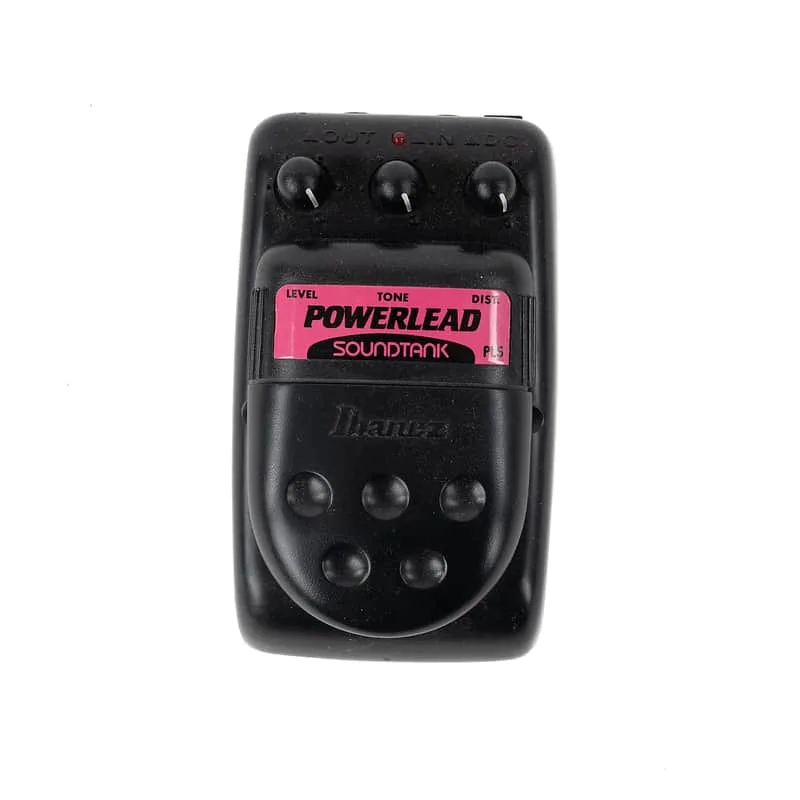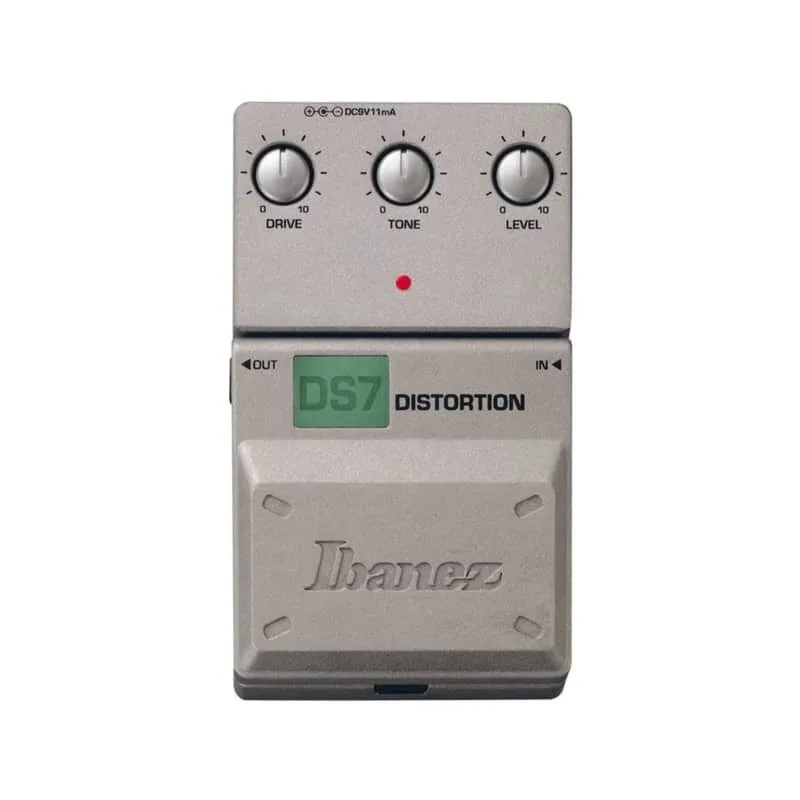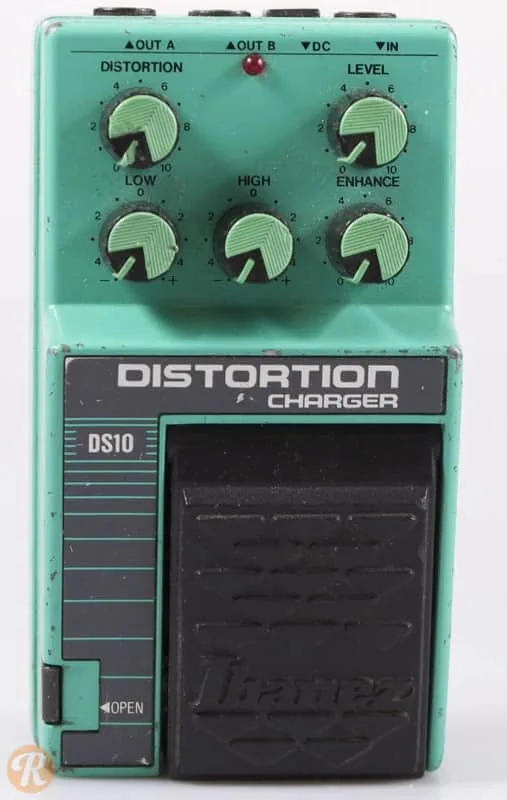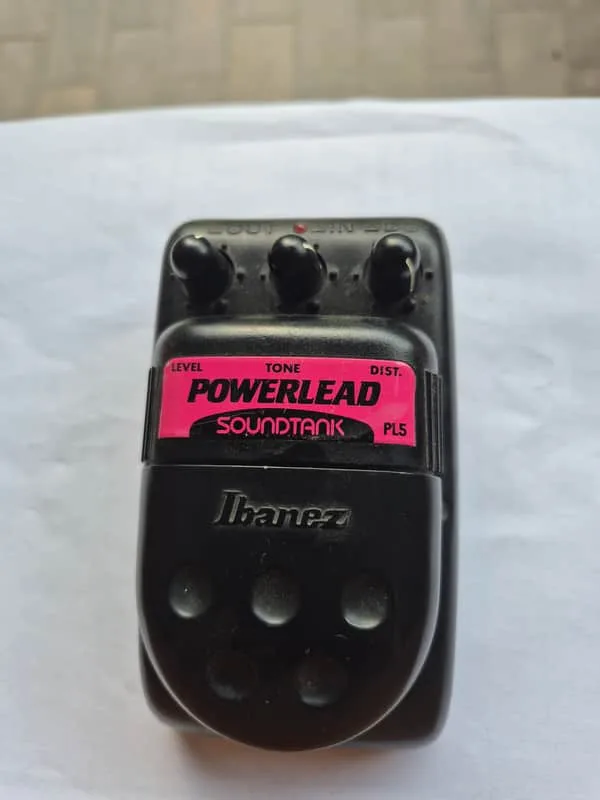


The Ibanez PL5 Power Lead is a distortion pedal from Ibanez's Soundtank series, produced from 1989 into the 1990s. TONEHOME describes it as "a very fat and powerful distortion that can almost do overdrive," and notes it is "great for sweep-picking and legato runs"1. It is no longer in production, and the early metal case version is considered collectible.
What it does to your sound
TONEHOME's description of the circuit is direct: "The Ibanez Power Lead PL5 is pretty much an MXR Distortion+ with a post-equalization emphazising the bass and low mids"1. That added low-end emphasis is what separates it from a plain Distortion+ style pedal, pushing it toward a fatter lead voice rather than a thin high-gain buzz.
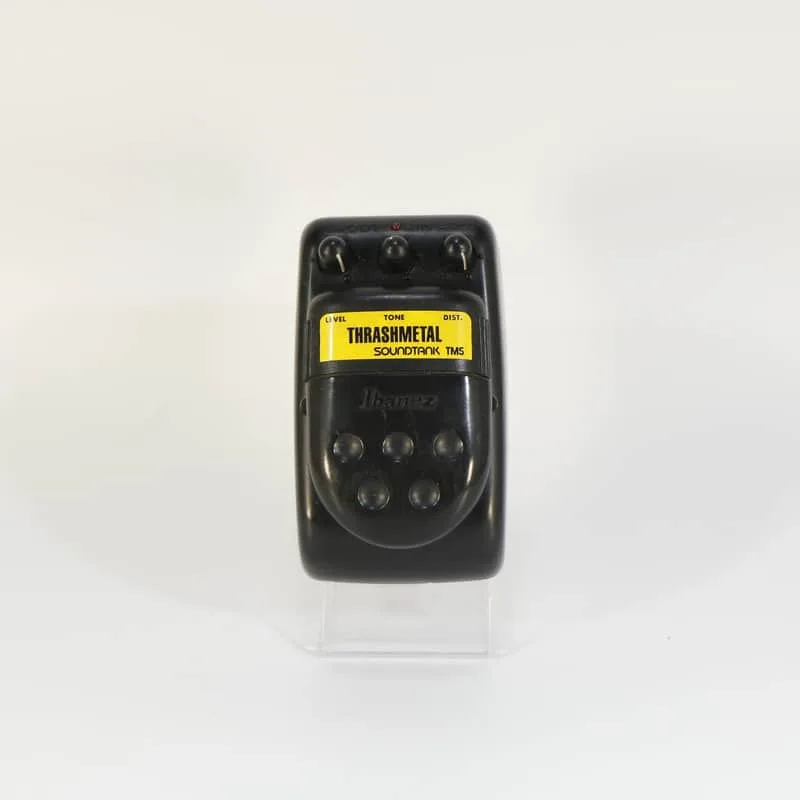
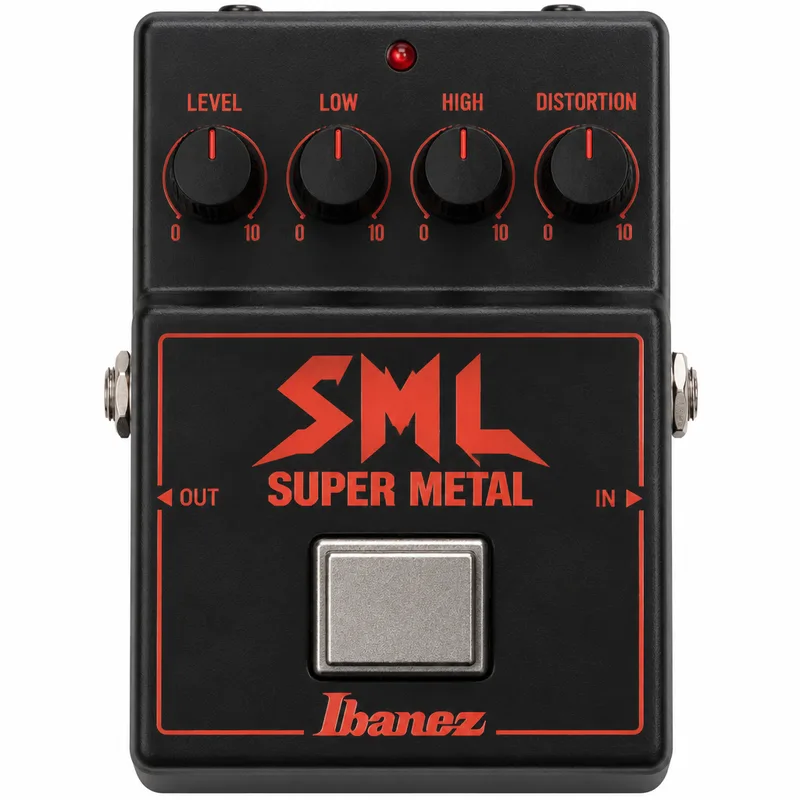
Guitar Pedal X's Stefan Karlsson, reviewing a revival of the circuit, heard it this way: "It kind of comes across as slightly fuzz-tinged, with an added sizzle to it," and described the pedal as a Distortion / Fuzzstortion with a singing lead line profile and a slightly Big Muff-y character on chords2. If you are comparing it within Ibanez's own range, it sits apart from the tighter, more metal-oriented pedals like the Ibanez TM5 Trash Metal or the Ibanez SML Super Metal, and closer in spirit to a fat lead distortion. For more on the category, see Distortion Pedals.
Versions and dates
The PL5 ran in two enclosures over its life:
Guitar Pedal X dates the pedal's full run slightly differently, saying it "was manufactured over a 10 year period from 1989 to 1999," and that it ran "for the first 2 years in a metal enclosure, before then being rolled out in plastic - which is what the Soundtank series" became known for2. The two accounts agree on the metal-first, plastic-later sequence; they differ on the end date, with TONEHOME ending the plastic reissue in 1998 and Guitar Pedal X extending the run to 1999.
The metal case version is the one collectors look for. TONEHOME rates its collectibility as high, while the pedal's general availability is described as average1.
Price when new
TONEHOME lists the 1991 list price as 98 DM, the German mark, which is where the pedal was cataloged at that time1.
The Leyland Pedals revival
Ibanez has not brought the PL5 back, so for players who want the original, the secondhand market is the route. What the pedal offers is a distinctive take on distortion: Ibanez describes the PL5 Power Lead as "a very fat and powerful distortion that can almost do overdrive. Great for sweep-picking and legato runs."21 That character, sitting between a full distortion and an overdrive, is what players chasing the circuit are looking for secondhand.
Videos
Teslaru
don felipe
hovercraft Artifact
Questions
What circuit is the Ibanez PL5 Power Lead based on?
TONEHOME describes the PL5 as pretty much an MXR Distortion+ with a post-equalization emphasizing the bass and low mids. Guitar Pedal X identifies the circuit as a 6 x Transistor + Opamp distortion. The result, per TONEHOME, is a very fat and powerful distortion that can almost do overdrive.
What is the difference between the metal and plastic case PL5?
The original PL5 was produced from 1989 to 1990 in a metal case. It was then reissued with a plastic case from 1991 to 1998, the plastic enclosure being what the Soundtank series became known for. Guitar Pedal X notes the pedal ran in metal for the first 2 years before being rolled out in plastic.
When was the Ibanez PL5 made?
TONEHOME dates the metal case version to 1989-1990, with a reissue in a plastic case running from 1991 to 1998. Guitar Pedal X says the Soundtank PL5 Powerlead Distortion was manufactured over a 10 year period from 1989 to 1999.
How much did the PL5 cost when new?
TONEHOME lists the 1991 list price as 98 DM, the German mark, which is where the pedal was catalogued at that time.
Has the Ibanez PL5 been reissued?
Ibanez has not reissued the PL5 itself, but in 2026 Leyland Pedals revived the discontinued Soundtank PL5 Powerlead circuit as the Peace Lily edition, in a vibrant etched enclosure. Guitar Pedal X reviewed it in August 2026.
Is the metal case PL5 collectible?
Yes. TONEHOME rates collectibility as high for the metal case version, and describes the pedal's overall availability as average.
Sources (2)
- TONEHOME, TONEHOME, 1991
- Guitar Pedal X, Guitar Pedal X, 2026-08-05