

The Ibanez Standard Fuzz, cataloged by Ibanez as the No.59 Standard Fuzz, is a Japanese fuzz pedal produced from 1974 to 19801. It is an octave-up fuzz: alongside the fuzzed note it generates overtones an octave above the input, a trait it shares with the wider family of mid 1970s Japanese octave-up fuzz pedals such as the Univox Super Fuzz2. TONEHOME describes its two octave fuzz settings as one with scooped mids and one with a really thick mid-range1.
The pedal has never been re-issued, so everything on the market today is original vintage stock or a modern replica from another builder1. Availability of originals is considered good and collectibility high1.
An up-octave fuzz from Japan
Octave-up fuzz works differently from the distortion and overdrive pedals most players start with. Instead of clipping the signal smoothly, the circuit forces the waveform through a stage that flips its polarity, and summing the flipped and unflipped versions produces a square-ish wave rich in harmonics an octave above what you play. The effect is strongest on single notes played high on the neck and weakest on chords, where the octave component turns harsh.
The Standard Fuzz sits squarely in the Japanese tradition of this circuit. Delicious Audio groups it with the Univox Super Fuzz as "the classic mid 70's Japanese octave up fuzz pedals"2, and SolidGoldFX places it in the same era of fuzz history as the Univox Super Fuzz, Ace Tone Fuzz Master and Shin-Ei Companion5. On JHS Pedals' fuzz history video, Josh Scott is direct about the lineage:
"the ibanez standard fuzz this thing's amazing it's a super fuzz clone"4
Tru-Fi's history of the circuit agrees, listing the Standard Fuzz alongside the Univox Super Fuzz and the Yamaha FY-6 as notable variations of the Super Fuzz circuit6. So while the Ibanez name is the one players know best, the design is shared across a family of Japanese pedals of the period.
Sliders and the Balance pot
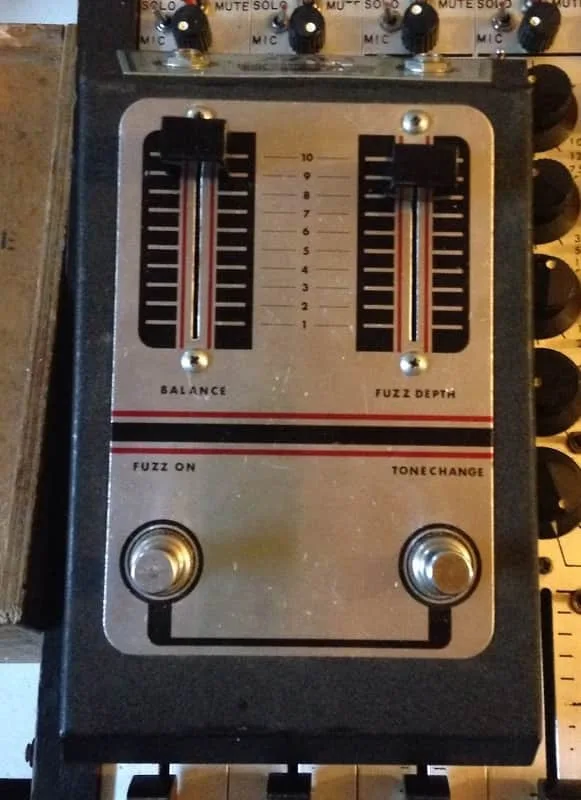
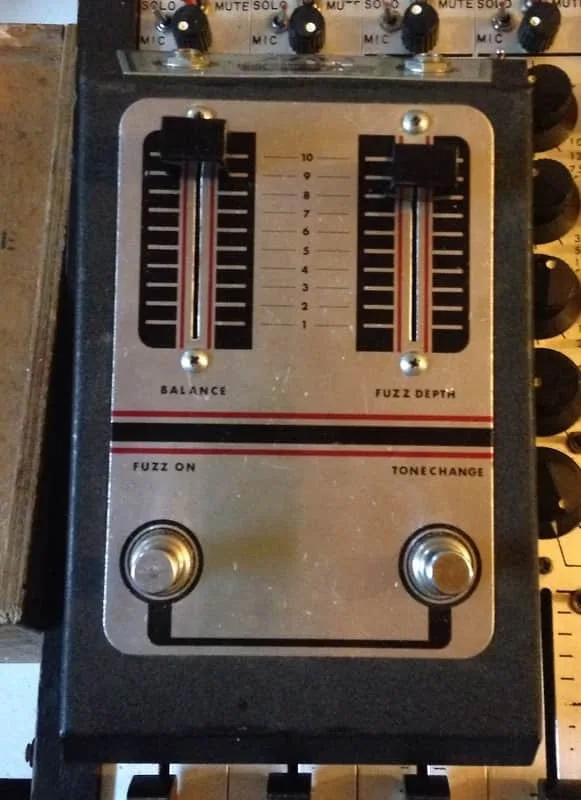
What makes the Standard Fuzz stand out on a pedalboard is its control surface. Instead of the rotary knobs typical of the era, it uses sliders, which Josh Scott highlights as part of "this incredible enclosure with sliders"4. The two octave fuzz settings, one scooped-mid and one thick-mid, are selected rather than dialed in1.
The Balance pot is the control that draws the most discussion among builders. On the Guitar FX Layouts project page for the circuit, the wiring notes direct builders to "wire the switch lug 2 directly to balance pot's lug 3"3. In practice the Balance control blends the two sides of the octave circuit, and on the Fredric Effects replica the balance control is described as one of the controls that "tweak the sound" alongside depth7.
Player reports on the controls vary with the unit. Clydicus, commenting on the Guitar FX Layouts build, reported that on his unit one tone mode was all bass and much quieter, and that "both the Balance and the Fuzz pots seem to be functioning as just volume"3. That is a report about one example rather than the design, but it is a fair warning that old sliders and pots can drift from their original behavior.
On bass, and what players say
The Standard Fuzz has an unexpected second life as a bass pedal. Carpe DM, another commenter on the Guitar FX Layouts page, was blunt about the split3:
"I wasn't too nuts about this as a guitar pedal, but it makes a mean bass pedal"3
Clydicus's finding that one tone mode was all bass and much quieter points the same way3. Arielultra96, who built the circuit from the layout, described the sound as "dirty, superdirty!" and confirmed the schematic matched online videos of the original3. For bass players shopping bass pedals, the vintage unit and its replicas are worth considering alongside purpose-built fuzzes.
Dan Auerbach of the Black Keys is named by TONEHOME as a user of the Ibanez Standard Fuzz1.
Other names, same pedal
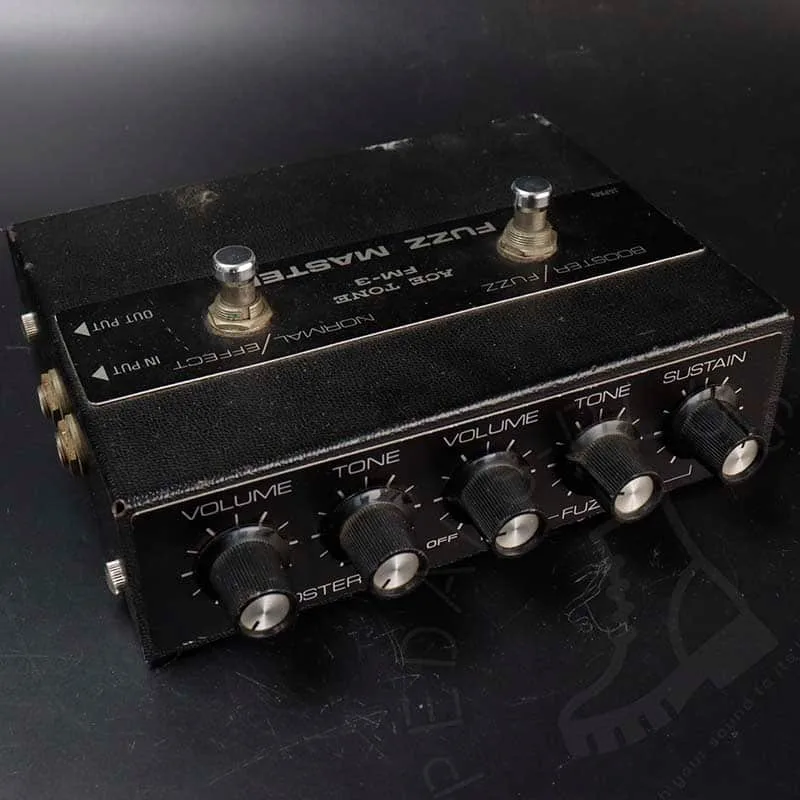
The Standard Fuzz was not an Ibanez exclusive. TONEHOME notes the unit "was branded under (and is identical to) a variety of names, including Mica Fuzz, Bruno Fuzz Machine, Aria Diamo[nd Fuzz]" and an unbranded Fuzz Machine1. On the JHS video, the branding list runs wider still: Ibanez, Micah, Bruno and Marlboro, with Ibanez the main name and Micah sold with slight differences4. MusicRadar and Fredric Effects both refer to the pedal as "the Ibanez Standard Fuzz, also known as the Bruno/Mica Fuzz Machine"78.
| Brand name | Notes |
|---|---|
| Ibanez No.59 Standard Fuzz | the best known name1 |
| Mica / Micah Fuzz | identical branded variant14 |
| Bruno Fuzz Machine | identical branded variant1 |
| Aria Diamond Fuzz | identical branded variant1 |
| Marlboro | named by JHS among the brands4 |
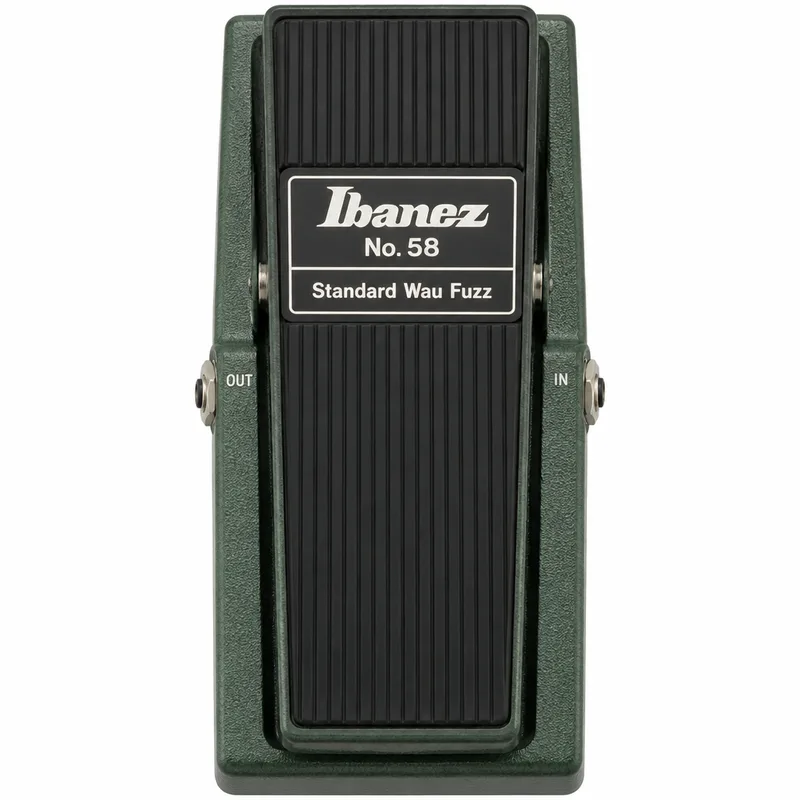
A related but different pedal is the Ibanez No. 58 Standard Wau Fuzz, a wah fuzz from the same 1974 to 1980 production period9. Builders on Guitar FX Layouts report that the fuzz channel in the Standard Wau Wau is different from the Standard Fuzz with the sliders, so the two should not be treated as the same circuit in a different box3.
The transistors inside
Modern replicas
Because the original has been out of production for a long time10, several builders keep the circuit alive:
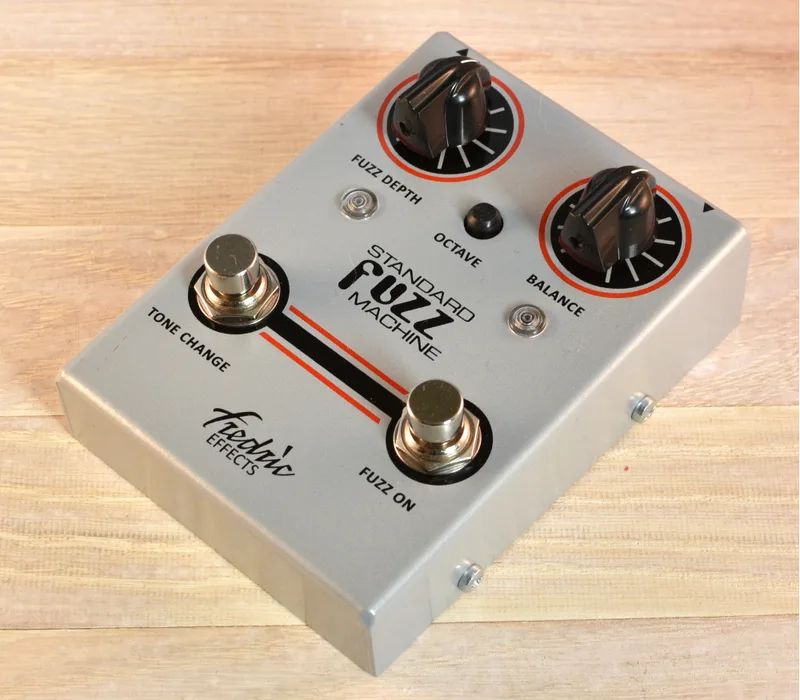
- Fredric Effects Standard Fuzz Machine: a new version of the classic Ibanez Standard Fuzz, with depth and balance controls that tweak the sound78
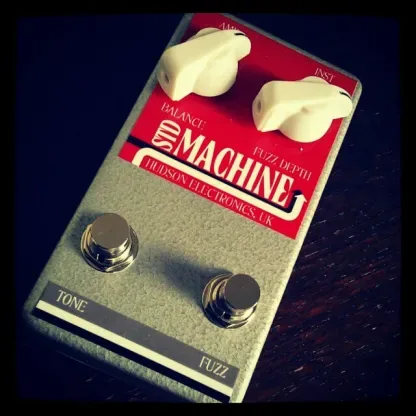
- Hudson Electronics Standard Machine: described by Hudson as "a sonic replica of the Ibanez Standard Fuzz"11
Both are worth a look for players who want the octave-up character without hunting vintage stock.
Videos
blackholeproductions
Coolpapabear
Yashir Henriquez
Questions
Is the Ibanez Standard Fuzz a Super Fuzz clone?
Yes, by most accounts. On JHS Pedals' video history of fuzz, Josh Scott calls it a Super Fuzz clone, and Tru-Fi's history of the circuit lists the Ibanez Standard Fuzz alongside the Univox Super Fuzz and Yamaha FY-6 as notable variations of the Super Fuzz circuit. It belongs to the family of mid 1970s Japanese octave-up fuzz pedals.
Is the Ibanez Standard Fuzz still made?
No. The No.59 Standard Fuzz was produced from 1974 to 1980 and has never been re-issued, so original units are vintage-only. Availability on the used market is considered good and collectibility high, and several builders including Fredric Effects and Hudson Electronics make modern replicas of the circuit.
What other names was the Standard Fuzz sold under?
The same unit was branded under several names, including Mica Fuzz, Bruno Fuzz Machine, Aria Diamond Fuzz and an unbranded Fuzz Machine. JHS Pedals also lists Micah, Bruno and Marlboro among the companies that sold it, with Ibanez the best known name.
Does the Standard Fuzz work well on bass?
Several builders report it does. On the Guitar FX Layouts project page, Carpe DM wrote that he was not impressed with it as a guitar pedal but that it makes a mean bass pedal, and Clydicus found one tone mode was all bass and much quieter than the other.
What transistor does the Standard Fuzz use?
The circuit uses Toshiba 2SC1815 transistors. These came in O, Y, BL and GR gain ranges, with the O and Y ranges covering gains of 70 to 240, which validates the typical gain of 100 used in the circuit. Builders advise keeping gains between 100 and 175 for best results.
Sources (11)
- TONEHOME, TONEHOME
- Pedal Update: SolidGoldFX 76 Mk II Octave Fuzz, Delicious Audio, 2022-10-11
- Guitar FX Layouts: Ibanez Standard Fuzz, Guitar FX Layouts (tagboardeffects.blogspot.com), 2013-12-29
- TNB: Big Muff, Elk Fuzz, Gretsch ContoFuzz, DOD Grunge, Guyatone, Super Fuzz, Ibanez Standard Fuzz, JHS Pedals (YouTube), 2022-02-04
- 76 MKII - OCTAVE-UP FUZZ | SOLIDGOLDFX - SolidGoldFX, SolidGoldFX
- The Super Fuzz, tru-fi.com
- Fredric Effects announces Standard Fuzz Machine pedal, MusicRadar, 2017-04-26
- Standard Fuzz Machine, fredric.co.uk
- TONEHOME, TONEHOME
- Fredric Effects Standard Fuzz Machine: Recreating vintage Ibanez fuzz magic, gearnews.com, 2017-04-25
- STANDARD MACHINE, Hudson Electronics UK