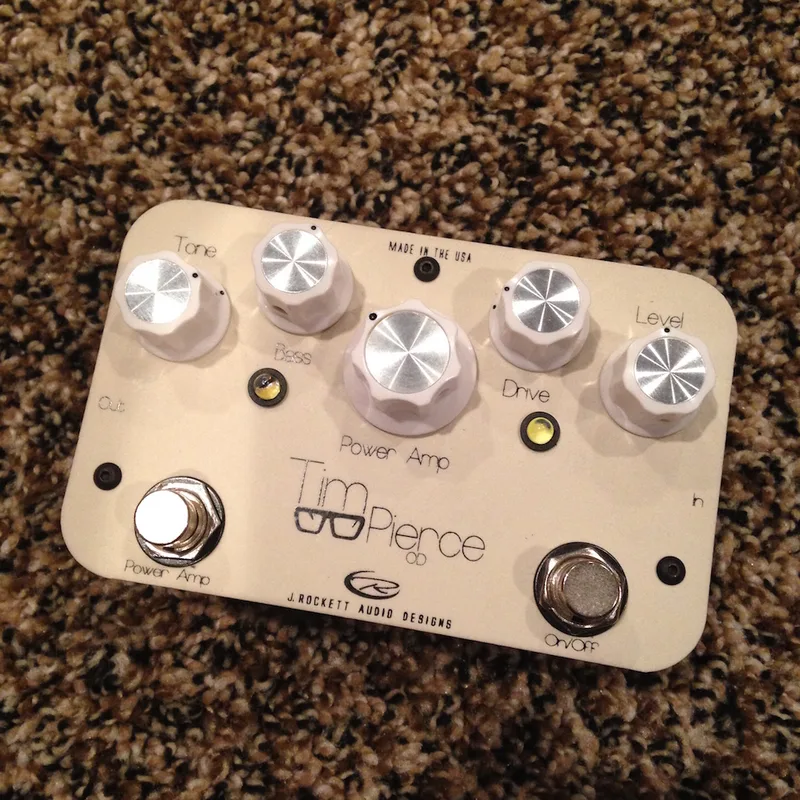


The Tim Pierce Signature OD/Power Amp is a collaboration between J. Rockett Audio Designs and session guitarist Tim Pierce, built as a re-creation of one of Pierce's favorite amp tones of all time, the Naylor Super Drive 601. It is a two-in-one pedal: an overdrive channel plus a separate power amp boost section, each with its own footswitch, so the two sides can be run independently or cascaded together1.
Premier Guitar described the design goal in plain terms: the pedal "delivers that rich, smooth tone with articulation and impact just a like a Super Drive" while "maintaining the inherent tone of any guitar"1. Pedal of the Day's Mike B called it "an overdrive with big punches and warm overtones, plus a power amp boost switch, making it a killer 2-In-1"2.
What it does and how it is controlled
The overdrive side is voiced to emulate a tube amp rather than a stompbox. Mike B at Pedal of the Day found the Drive control "isn't overbearing, but meant to emulate a great tube-driven amp, like the Naylor SD60"2. The EQ is more flexible than a single tone knob: the pedal carries separate bass and treble controls, which Premier Guitar noted "gives you extend EQ choices"1. Mike B singled out the Bass control in particular:
"I love that there's a Bass control as well, not just a Tone knob, as the ability to add and subtract the low end is key"2
The second footswitch powers on the Power Amp boost section, an approximately 15dB boost that Mike B described as adding "an even shinier spa[rk]" on top of the overdrive12. guitar.com's Chris Vinnicombe explained where that voicing comes from: "the power amp boost is designed to ape the big 5881 bottles in the SD60's power stage"3.
| Control or switch | What it does |
|---|---|
| Drive | Sets overdrive amount, voiced to emulate a tube-driven amp2 |
| Bass | Adds or subtracts the low end of the distorted signal2 |
| Treble | Upper EQ control, giving extended EQ choices alongside the Bass1 |
| Overdrive footswitch | Overdrive on/off3 |
| Power Amp footswitch | Powers on the power amp boost section, approximately 15dB13 |
Running the two sides together
Both sides of the pedal can be operated independently or cascaded together, and both are foot switchable in either arrangement, which Premier Guitar summed up as "extreme flexibility"1. In practice that means three usable sounds from one box: the overdrive alone, the power amp boost alone as a clean-ish volume lift, or both stacked with the boost pushing the overdrive harder. Mike B's take on the two channels working together:
"These 2 channel working together will make an amp sing sing sing, without coloring your signal at all"2
Where the circuit came from: the Naylor Super Drive 60
The pedal is a re-creation of the Naylor Super Drive 60, an amp Pierce used on numerous recordings and which Premier Guitar called "a signature tone that helped shape many hit songs"1. guitar.com's review framed the pedal the same way: "His signature Rockett pedal chases the tone of one of his favourite amps, the Naylor Super-Drive 60"3.
For players who want that sound without buying the amp itself, Pedal of the Day positioned the pedal as the practical route, noting that the Naylor amp itself would set you back $2,6742. On That Pedal Show, Mick and Daniel also identified the pedal's origin simply as "based on that the amp that Tim Pi[erce] likes"4.
What reviewers made of it
Published reviewers were positive across the board:
- Premier Guitar (2013): covered the launch as a collaboration pedal design with J. Rockett Audio Designs, highlighting the independent or cascaded operation and true bypass switching1.
- Pedal of the Day, Mike B (2015): called it "really a nice OD pedal" and a relatively inexpensive way to get the Naylor drive sound compared with the amp's price2.
- guitar.com, Chris Vinnicombe (2015): found it a versatile unit, writing "Throw in that power amp boost and this is a versatile unit"3.
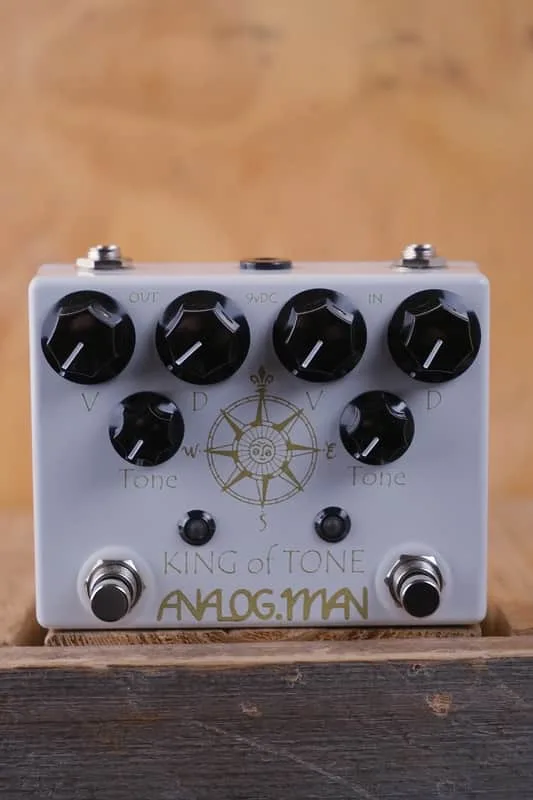
On That Pedal Show, the pedal appeared in the channel's video on alternatives to the Analog Man King of Tone, with the Tim Pierce Signature segment beginning at 32:32 in the video5.
Power, size and bypass
The pedal runs on 9V DC through a standard negative tip input sleeve, the same arrangement as most modern pedals, so ordinary pedalboard power supplies work1. guitar.com's review adds that it can also run on a 9V battery, with the adaptor not supplied3. Switching is true bypass13, and the enclosure is approximately 5" x 3", compact enough for a crowded board1.
The 9V input uses a standard negative tip sleeve1. guitar.com lists battery power as an option3, but the adaptor is not supplied with the pedal.
Tim Pierce and his signature pedal
Tim Pierce is a long-established session player whose association with overdrives goes beyond this signature model. On Nobels' artist pages, Pierce is quoted on the Nobels ODR-1: "The pedal I probably use most is the ODR-1, a very natural sounding overdrive"6. The J. Rockett collaboration chases a different target, the Naylor Super Drive 60 amp tone he used on numerous recordings13.
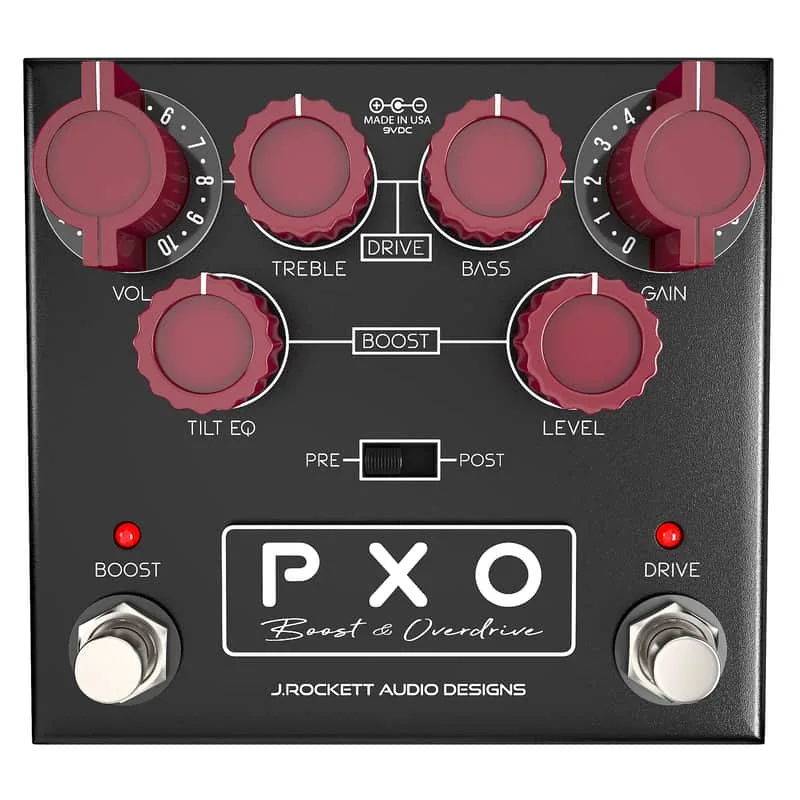
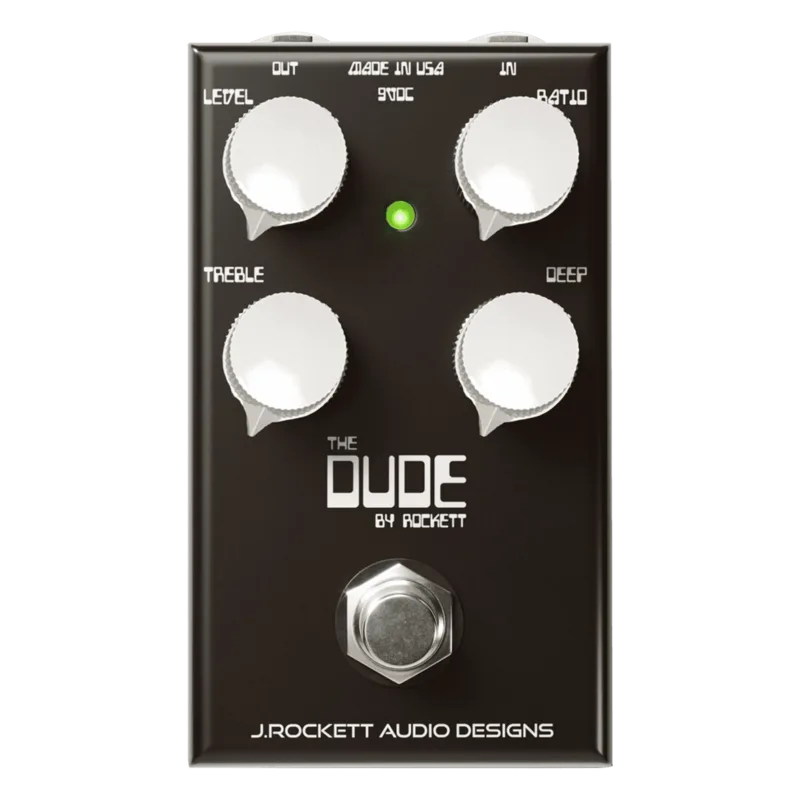
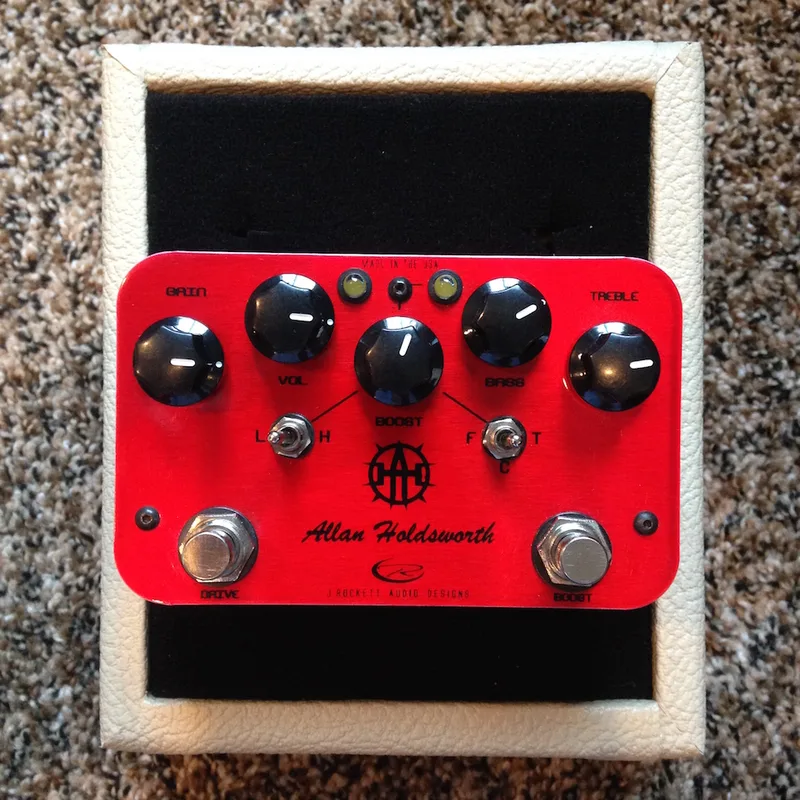
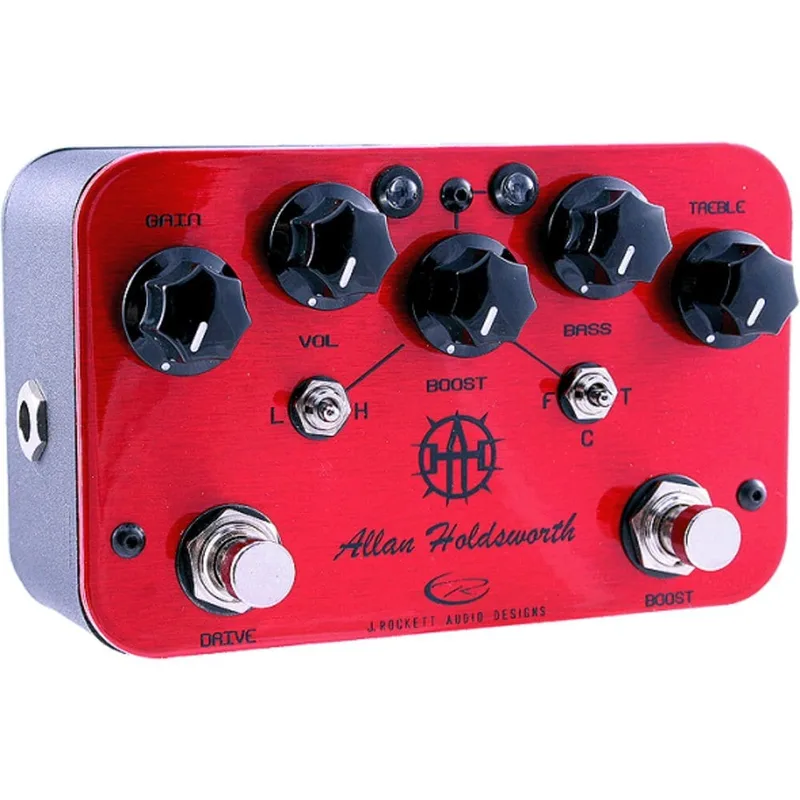
J. Rockett Audio Designs has since extended its signature line, including the PXO for Phil X, alongside pedals like the Dude and the Allan Holdsworth Overdrive/Boost234.
Videos
ProGuitarShopDemos
J. Rockett Audio Designs
Tim Pierce Guitar
Questions
Is the Tim Pierce Signature OD/Power Amp true bypass?
Yes. Premier Guitar's launch coverage lists true bypass switching among the pedal's features, and guitar.com's review confirms it. Both sides of the pedal, overdrive and power amp boost, are also footswitchable independently or cascaded together.
What power supply does the Tim Pierce Signature pedal need?
It runs on 9V DC with a standard negative tip input sleeve, so any ordinary boss-style pedal power supply works. guitar.com's review also notes it can be powered by a 9V battery, with the adaptor not supplied in the box.
How much boost does the power amp side give?
The power amp section delivers approximately 15dB of boost. It is designed to emulate the 5881 output tubes in the power stage of the Naylor Super Drive 60 amp the pedal is based on.
Can I run both sides of the pedal at once?
Yes. Both sides can be operated independently or cascaded together, and each side has its own footswitch, so you can run the overdrive alone, the power amp boost alone, or both stacked for extra flexibility.
How much does the J. Rockett Tim Pierce Signature cost?
At launch in September 2013 it carried a $259.00 street price in the US. guitar.com's 2015 review listed it at £209 in the UK. Pedal of the Day noted it was a relatively inexpensive route to the Naylor sound compared with the amp itself.
Sources (6)
- Tim Pierce Overdrive by J. Rockett Audio Revealed, Premier Guitar, 2013-09-27
- J. Rockett Audio Designs Tim Pierce Overdrive/Boost, Pedal of the Day (www.pedal-of-the-day.com), 2015-03-22
- J Rockett Audio Designs Pedal Reviews, guitar.com, 2015-07-14
- That Pedal Show, That Pedal Show (YouTube), 2016-03-25
- Analog Man King Of Tone Alternatives: Are There Any?, That Pedal Show, 2016-03-25
- Nobels - die Kultmarke unter den Overdrive Pedalen, Nobels, 2015-10-15