News
Battery Is NOT Found In Me: 4 Reasons Not to Use Batteries (And 2 Why You Might Anyway)
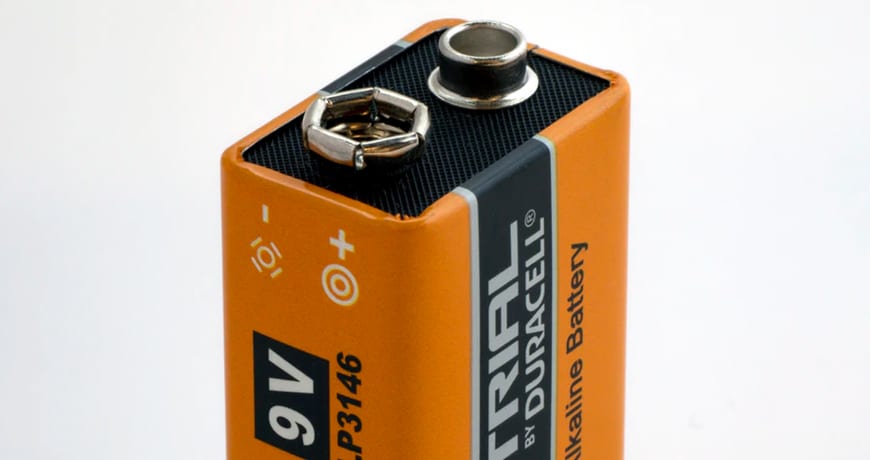
All-around guitar genius Eric Johnson once shared an anecdote wherein he said that he thought his guitar effect pedals sounded better to him whenever he used Duracell batteries to power them. Johnson himself has since clarified that it was a very short, one-minute anecdote that didn’t involve any A/B testing or deep-delving scientific experimentation. He just thought Duracells sound better. Of course, a single sentence is all anyone needs to create an urban legend, and so one about batteries and guitar pedal tone came to be born. Until now, there are probably still quite a few musicians out there who believe that specific battery brands make pedals sound better or worse. Maybe it’s true, or perhaps it’s confirmation bias (it’s more likely confirmation bias), but putting that controversial ongoing debate aside, there are a few very concrete reasons why you shouldn’t use individual batteries to power your stompboxes. Batteries do affect tone
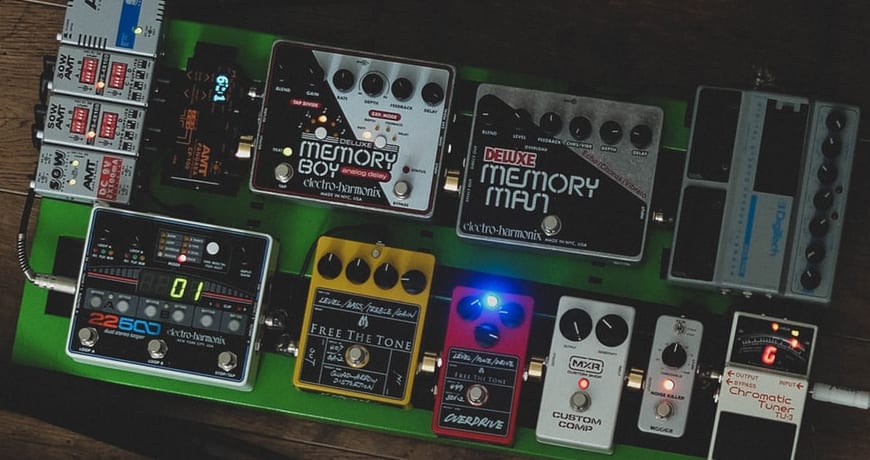
Yup, we’re tackling this one right off the bat immediately after intimating that battery brands don’t make a lick of difference. Why? Because while its brand really doesn’t matter, a battery’s voltage does. A fresh battery will have a pedal operating at maximum performance, but once it starts becoming unable to provide enough voltage, the pedal will likely also experience a corresponding drop in sonic quality. Even worse is when a pedal’s tone suffers due to lack of power, but the battery still has enough juice to power the LED light. It can be a chore trying to hunt down the culprit, and it’s definitely not something you’d want to deal with in the middle of a show. Plus, different pedals suck battery juice at different speeds. A good rule of thumb here is that the more fancy features a pedal has, the faster it’ll drain the life out of your battery. Jason Wilding of Wampler Pedals gives us the following formula for calculating roughly how long a battery will last in a given pedal:
Battery Life = Battery Capacity in mAh / Load Current in mA x 0.70
A standard 300mAh 9V battery, for example, can reliably keep a Boss SD-1 Super Overdrive continuously powered for around three and a half days. Put that exact same battery in a Boss DD-2 Digital Delay, and you’d only be able to get a little under nine hours out of it. A monster with an internal voltage doubler like Walrus Audio’s 385 Overdrive, which is rated at 100mAh minimum, will burn through that same battery in around four hours. And speaking of voltage doubling and other internal power shenanigans, Wilding also gives a more in-depth and authoritative example on the Wampler Pedals blog while noting that batteries don’t necessarily have to be completely empty before they start affecting tone:
With a pedal like the Tumnus, and other K styles (if the pedal is done properly) there will be some serious power shenanigans happening inside, it’s taking your 9v and bringing it up to about 25v. So that makes the pedal considerably more thirsty than if it was just taking the 9v… when you look at the Tumnus Deluxe you have the power coming up to about 25v, 3 band EQ, relay based switching, extra gain… so, that’s why it’s rated at 70mA draw which will chew up a regular battery in no time. Keeping with the Tumnus Deluxe, if you are using a regular Duracell battery, or even an Energizer, they are rated at about 310 mAh (milliamps per hour). So, if you were to put one in a Tumnus Deluxe, it will start to feel the effects of the draw within a couple of hours. If you are lucky, it will drop below the 9v required and start to flash at you before that point, so I would very much doubt you’d get a gig out of a standard 9v battery. An Energizer MAX is rated higher than the Duracell, so you might get 30-45 minutes longer. Still not enough, I would say, to warrant the cost of a single use battery.
It should also be remembered that some pedals will continue to draw battery power even when they’re in bypass mode. Those new batteries you put in a couple of hours before the show might not be as fresh as you thought by the time you’re onstage. It’s worth noting, however, that there are pedals that sound better with a dying battery. Case in point: analog fuzz pedals like the classic Fuzz Face. Pedal and power supply makers have already caught onto these little quirks, though, and some power supplies and pedals come equipped with features that simulate the characteristics of a dying battery. Saturnworks even has a dedicated dying battery pedal that lets you drop the power from 9V all the way to .75V linearly in order to simulate voltage sag. Batteries can get expensive fast

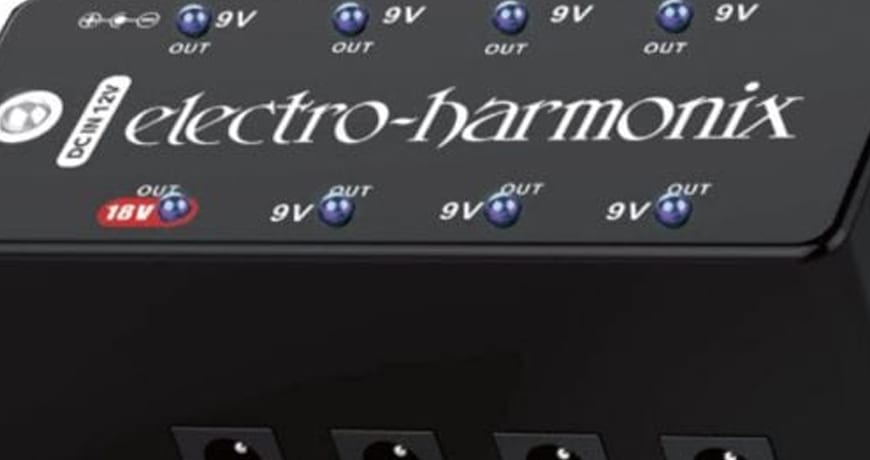
You can, of course, combat voltage-based tone issues simply by making a habit of replacing all of your pedal’s batteries with fresh ones right before a show, but that can quickly become a pretty expensive habit. It’s much more doable when you only stick to simple pedals with draws in the 5mAh to 10mAh range, but if you’re running multiple pedals with much higher current draws, especially high-end boutique ones, things can get ridiculous pretty fast. The expense becomes even more absurd when you start to consider the sheer glut of guitar pedal power supply options currently available on the market. Shelling out around $150 for an isolated power supply brick like the MXR M238 Iso-Brick or the Truetone 1 Spot Pro CS12 may sound expensive, but it’ll still save you money in the long run while giving you the reliability and security that you can’t get from batteries. Think of it this way. A 9v Duracell eight-pack costs around $20. If you buy one eight-pack every two weeks for a whole year, that’s gonna set you back around $540 total. That amount of money will let you buy two CS12s or Iso-Bricks (or one of each!) with more than enough left over to buy one or two new pedals, which, if you’re lucky, will come with their own AC adapters. Plus, if you go down the CS12 or Iso-Brick route, you won’t have to worry about spending another $540 on batteries in the next year. Plus, even if you don’t have the budget for an expensive power supply, there are a lot of much cheaper options out there. You can get a Caline CP-04 for around the same price as a dozen 9V Duracells. This brick can power up to 10 separate pedals—eight 9V pedals, one 12V pedal, and one 18V pedal. Want a more “branded” option? A Truetone 1 Spot wall wart combo pack costs about the same as 16 9V Duracells. Batteries are a pain
Yes, you can keep buying new batteries and keep removing and changing them before and after a gig or practice session. That’s just extra effort and expense that you don’t really have to deal with, though. Let’s put the price issue aside and just look at the effort side of things. Just like how not all pedals are created equal, not all battery enclosures are made equal either. Accessing the battery port can vary wildly from one brand to the next. A Boss or a Behringer pedal, for example, will have the battery access point under the footswitch, which is something one might miss if they’re used to looking for access at the bottom of the pedal. Even with bottom-access battery enclosures, there’s still a difference between brands. Some brands make them easy to access, requiring only a finger to open them. Some might have a little screw that can be turned with a coin or a hard pick. Others still, like the Red Witch Moon Phaser or TC Electronic’s Blood Moon, may require you to use a screwdriver and open the whole pedal enclosure up just to change the battery. You’ll always have enough time to do all that when you’re practicing or just noodling around on your guitar, but onstage, in the middle of a show? Not so easy. Oh, and let’s not even get started on those times when you accidentally forget leaving a battery in a pedal, stop using that pedal for a few months, and then take it out of the box again only to find that the battery left inside has melted down and leaked all sorts of gooey, metally goodness all over the pedal’s insides, because that’s always a very fun experience. Batteries hate our planet
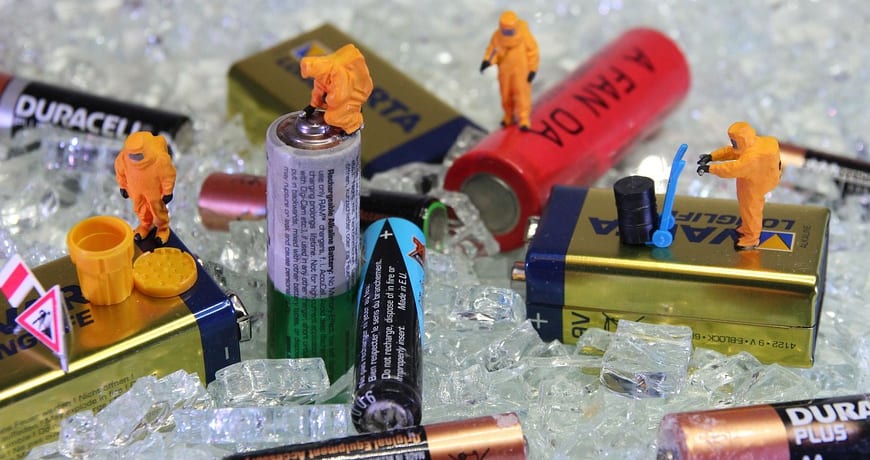
OK, that subheading there is just me being hyperbolic, but while batteries may not exactly be actively hostile to the environment (they don’t go around setting massive forest fires or denying climate change, for one), they really aren’t environmentally friendly, either. A lot of major cities around the world have recycling centers that can handle the recycling of old batteries, but not all battery users have easy access to these facilities. Or even if they do, they might think it’s just easier to throw the used old thing in the bin and call it a day. Because of the dangerous and toxic heavy metals inside of them, every battery that ends up in a landfill can contribute to everything from air pollution to ground and water pollution. The problem with batteries doesn’t just involve the hazardous chemicals they may release when they’re not disposed of properly, either. We use lithium-ion batteries all the time in a lot of different gadgets, so there’s a massive demand for lithium right now. This demand can easily lead to incidents such as the toxic chemical leak at the Ganzizhou Rongda Lithium mine, which wreaked havoc on the ecosystem of a local Tibetan town called Tagong. Some analysts also believe that our current high level of demand is putting us on a course that leads straight to a mineral crisis. There are already quite a few promising solutions being put forth to ease the mineral crisis caused by our hunger for lithium, but those will still take a long time to flourish. Battery IS found in me: Two reasons why you may want to use batteries anyway

I’ve talked about how batteries can be a straight-up pain in the ass just a few paragraphs ago, but one of the biggest reasons why you may still want to use batteries anyway is that they can also be very convenient. This convenience will usually only come into play when you’re onstage, where there are wires snaking around all over the ground. If you’re using batteries, you won’t have to worry about finding an available power outlet or making sure that your AC adapter’s cable is long enough to reach it. If you’re having an argument with your band’s bassist and the only spare outlet is right beside him and his bass amps, you won’t have a choice but to suck it up and plug in there. When you’re fully battery-powered, however, you can set yourself down wherever you want and leave him to stew while you break out some insane solos. The second, and perhaps more significant, reason is that batteries are inherently isolated power sources, meaning they will never cause ground loops. Ground loops occur when you daisy chain multiple pedals together and keep them connected to a single power source. This adds an annoying hum to your signal. You may not notice it when you’re drowning in high-intensity gain, but that hum can cause serious tonal issues when you’re running modulation and delay pedals. Fortunately, isolated power supplies like the Iso-Brick mentioned above eliminate the danger of ground loops by keeping each of its multiple outputs isolated. Even if you don’t have an isolated power supply, you can still use a bunch of wall warts plugged into a power strip; just use one wall wart to power one pedal. Of course, this makes for lousy cable management, which may also make you want to use batteries anyway. You shouldn’t, though, because didn’t you just read this whole article? Go invest in a good power supply unit.