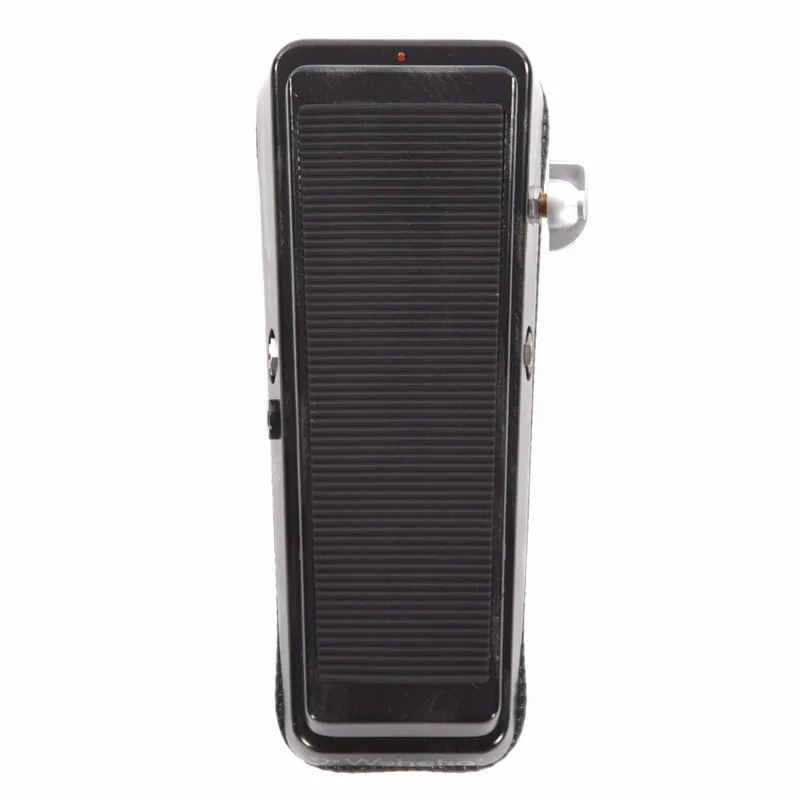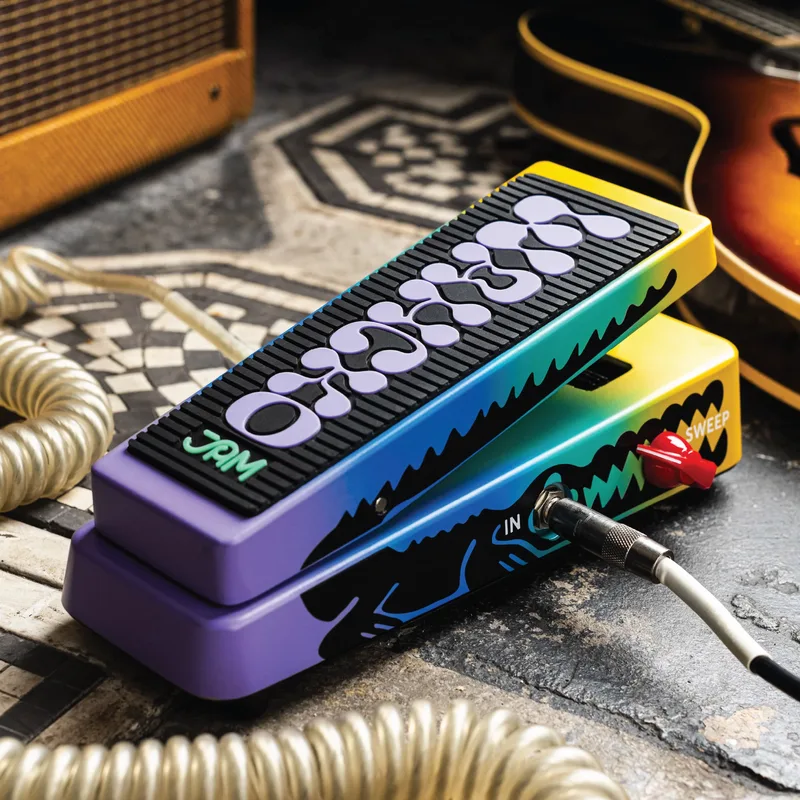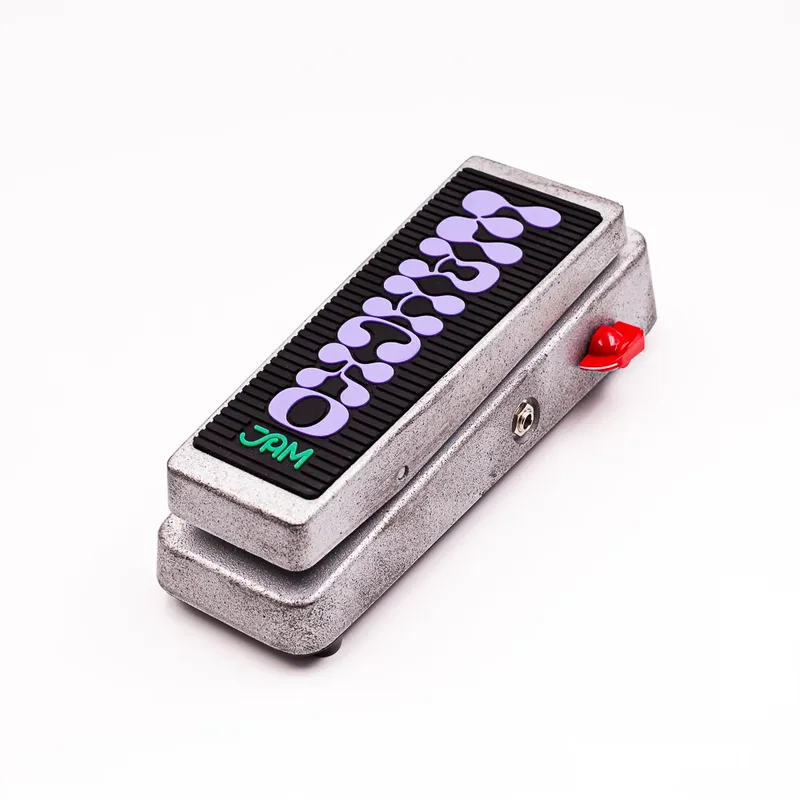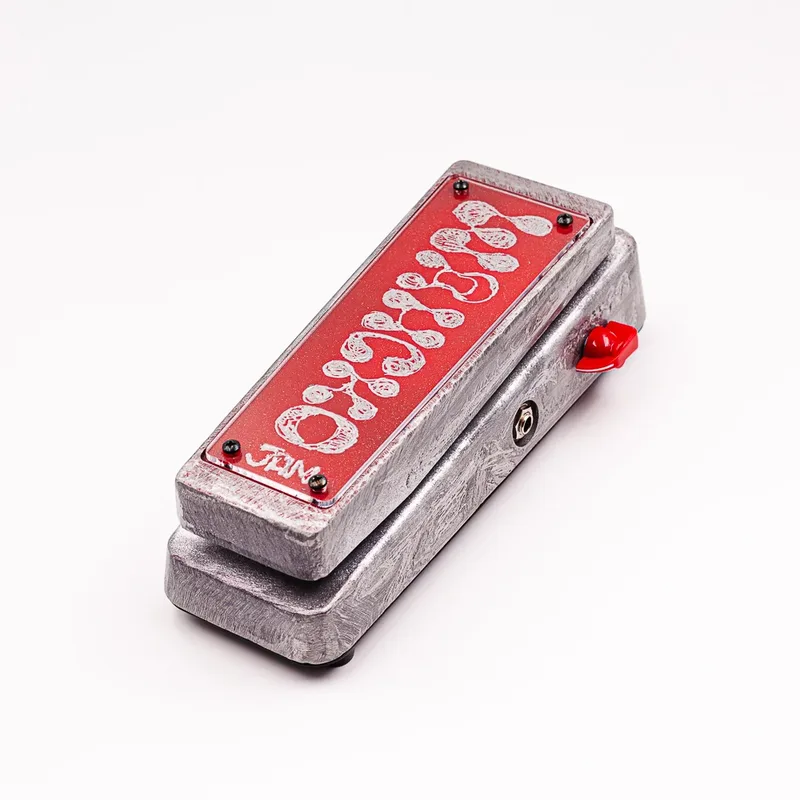
The JAM Pedals "Loading Dock" Wahcko is the hand-painted custom artwork version of the Wahcko mk.2, an expressive wah pedal for guitar and bass with six selectable frequency ranges and an adjustable wah sweep1. The Wahcko has been in the company's line since 2008, and JAM names Nile Rodgers, Mick Thomson and Mateus Asato among its players1. The Loading Dock version carries one-of-a-kind hand-painted artwork on the same circuit1.
What it does for your sound
A wah is a foot-controlled filter, and the Wahcko mk.2's twist is range selection. A side-mounted SWEEP rotary switch chooses from six distinct frequency ranges, so the pedal can be tuned to sit where the music needs it rather than working over one fixed band1. Guitar Pedal X's Stefan Karlsson lists the controls as the 6-Way Sweep, an internal Input Gain Trimmer, an internal Q-trimmer and internal Guitar/Bass DIP switches2. The Q-trimmer shapes how pronounced the filter peak is, and the input gain trimmer sets how hard the circuit is driven.
For bass players, internal DIP switches configure the pedal for guitar or bass, and bass mode extends the expressive sweep to lower-register instruments13. That is the difference between a guitar wah that only audibly moves on the upper strings and one that tracks the low end of a bass.
The guitar/bass selection and the trimmers are internal, so changing them means removing the bottom plate. Set the DIP switches for your instrument before the pedal takes its place on the board.
Controls at a glance
| Control | What it does |
|---|---|
| SWEEP (side-mounted rotary) | Selects from six distinct frequency ranges1 |
| Rocker treadle | Foot-controlled wah sweep, on a newly designed custom rubber tread1 |
| Internal Input Gain Trimmer | Sets input gain2 |
| Internal Q-trimmer | Adjusts the filter's Q2 |
| Internal Guitar/Bass DIP switches | Configures the pedal for guitar or bass; bass mode extends the sweep to lower-register instruments1 |
The Wahcko mk.2 and its artwork versions
The mk.2 carries the six-position sweep over from the original Wahcko. gearnews.com's Julian Schmauch wrote that "the gain control and six-position sweep remain, as does the colorful design" in his coverage of the mk.24. Guitar Pedal X covered the update as adding JAM's own custom inductor onboard along with the additional internal Q-trimmer2. At the heart of the circuit is that custom inductor, which JAM describes as inspired by the vintage TDK inductors found in classic 1960s Cry Baby and Vox wah circuits1.
JAM lists several custom artwork versions of the mk.2: "Loading Dock", "Metal" (covered on its own page as the Metal Wahcko), "Noiz R Us", "Silver Sky" and "Achenbach"3. Every custom artwork pedal is a one-of-a-kind hand-painted piece, and JAM says the pedal you receive will differ in detail from the photos shown1.
JAM ships the Loading Dock Wahcko DDP with 20% UK VAT and all duties included, with no extra charges on delivery, and offers a 30-day money-back guarantee with a refund no questions asked1. The listed price is £429.00 GBP1.
Where it sits on a board
With true bypass, a 10 mA draw and both battery and 9V center-negative adaptor power, the Wahcko fits any standard pedalboard supply and belongs at the front of the chain, where wahs traditionally sit before distortion and fuzz. Bass players pairing it with other JAM effects will find the maker's bass line includes the Dyna-ssoR Bass compressor, the Rattler Bass distortion and the Ripple Bass chorus, among others on the bass pedals page and the wah type page1.
Questions
Is the JAM Wahcko true bypass?
Yes. JAM Pedals lists the Loading Dock Wahcko with true bypass, so when the pedal is off your signal passes straight through without going through the wah circuit. That matters on a pedalboard where several effects in a row can dull the tone, and it is one of the reasons the Wahcko sits comfortably at the front of a chain alongside fuzz and overdrive pedals.
Does the Loading Dock Wahcko work with bass?
Yes. The Wahcko mk.2 is built for guitar and bass alike. Internal DIP switches configure it for either instrument, and bass mode extends the expressive sweep to lower-register instruments, so the pedal tracks the low strings instead of leaving them untouched while only the upper mids move. Switching between guitar and bass use is a matter of opening the pedal and setting the switches.
Can the Wahcko run on a battery?
Yes. JAM Pedals lists 9V battery operation alongside a 9V DC centre-negative adaptor, and the pedal draws only 10 mA, so a battery lasts a long time and any standard pedalboard power supply output can run it. That low draw is well below what digital pedals need, so it will not strain a daisy chain or a modest isolated supply.
What is the Loading Dock artwork on the Wahcko?
Loading Dock is one of JAM Pedals' custom artwork versions of the Wahcko mk.2. Every custom artwork pedal is a one-of-a-kind hand-painted piece, and the company says the pedal you receive will differ in detail from the photos shown. Other artwork versions in the line include Metal, Noiz R Us, Silver Sky and Achenbach.
What inductor does the Wahcko use?
At the heart of the Wahcko mk.2 is JAM's custom inductor, which the maker describes as inspired by the vintage TDK inductors found in classic 1960s Cry Baby and Vox wah circuits. The inductor is a central part of a wah's tone, and this one is JAM's own design rather than an off-the-shelf part.
Who plays a JAM Wahcko?
JAM Pedals names Nile Rodgers, Mick Thomson and Mateus Asato among the players who have used the Wahcko, which the company says has been a favourite in its line since 2008. Those are the players the maker itself lists, so the pedal has a track record with both studio players and heavy rock guitarists.
Sources (4)
- "Loading Dock" Wahcko, JAM Pedals (www.jampedals.com)
- Guitar Pedal X, Guitar Pedal X, 2026-09-24
- Wahcko, JAM Pedals (www.jampedals.com)
- JAM Pedals Wahcko MK2: The Classic Wah Gets an Update, gearnews.com, 2026-09-23
 Marc Ribot