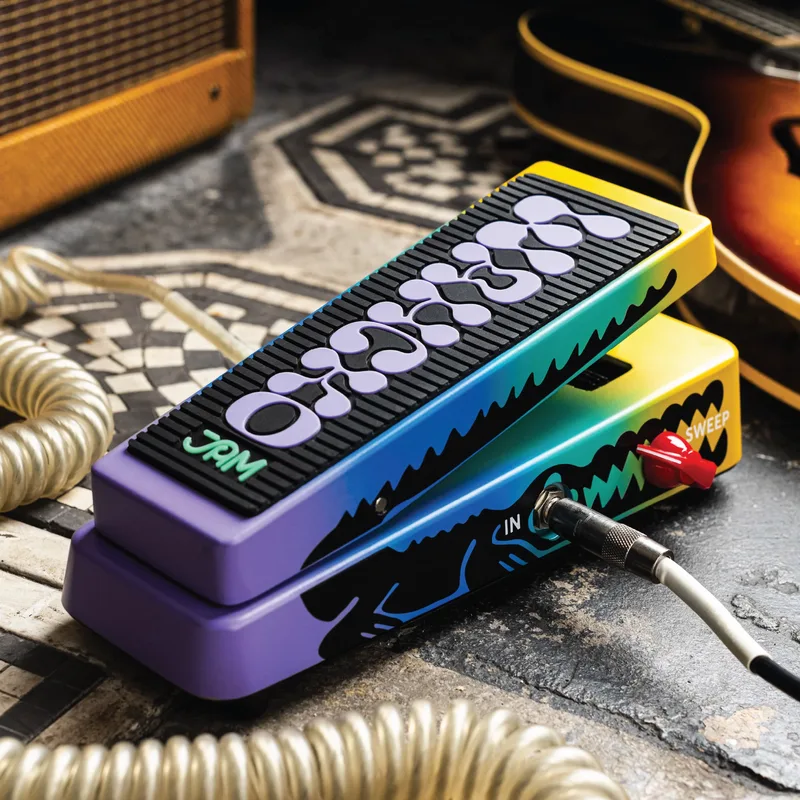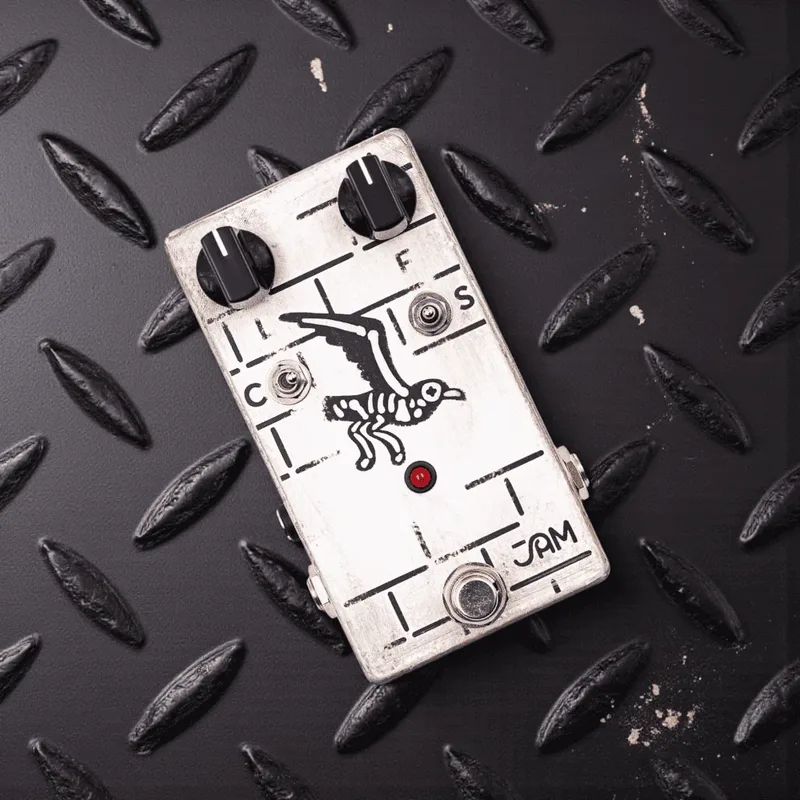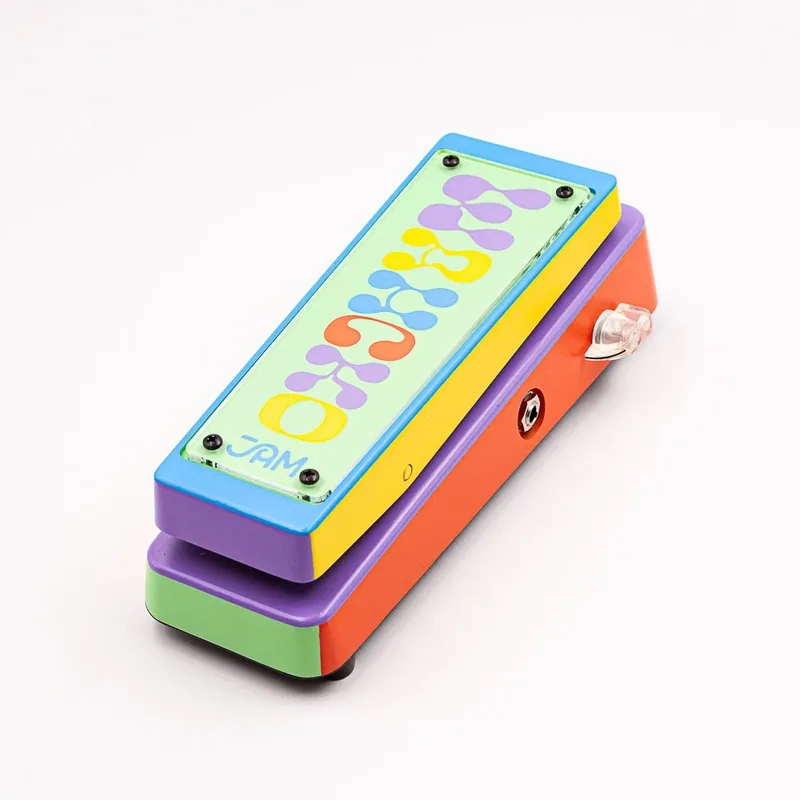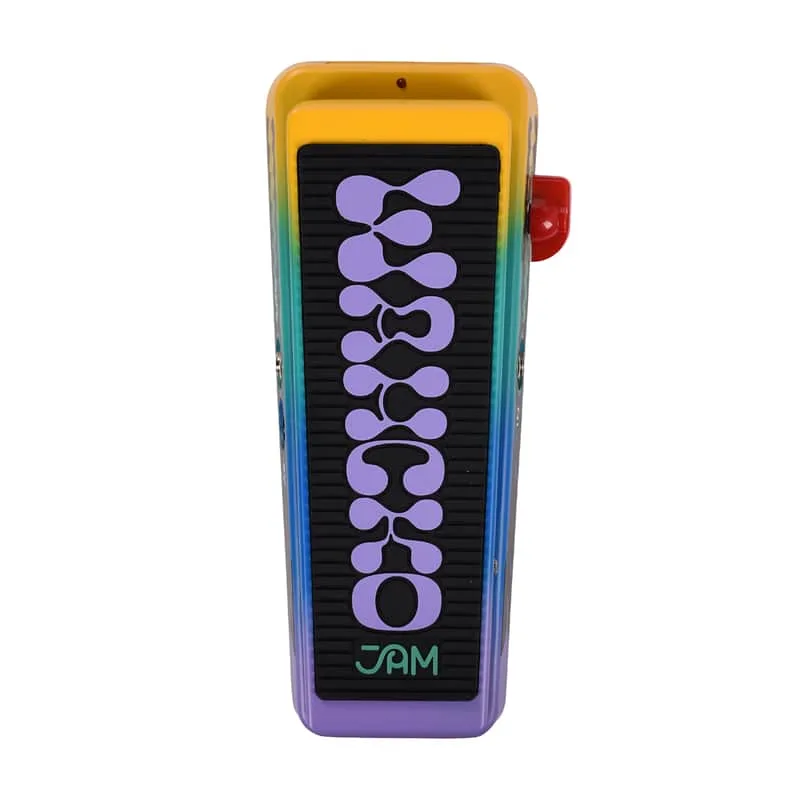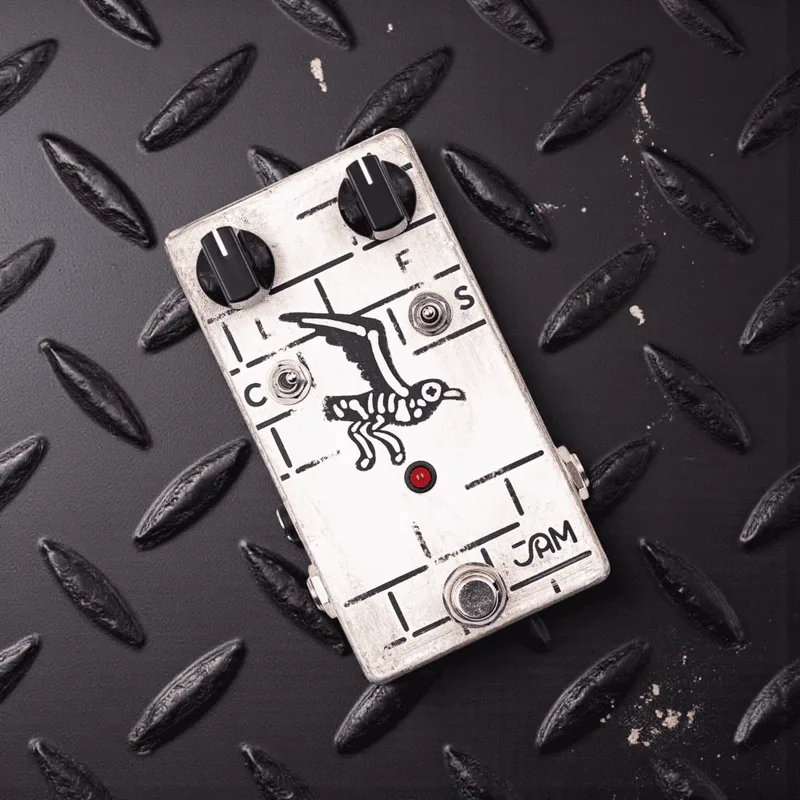


The JAM Pedals "Relic" Seagull is a two-in-one analog filter pedal that puts a fixed cocked wah and the Seagull effect in a single enclosure. The Seagull effect is a reversed wah, the crying, vocal filter sound associated with Pink Floyd, and JAM Pedals describes the pedal as turning the guitar's own controls into part of the effect, producing vocal, pitch-like sweeps and focused vintage midrange textures1. It sits among the company's filter designs alongside its Wahcko wah pedals, and it is one of the limited artwork versions of the Senegull.
What it does
The pedal has two modes, selected with a mode switch. In Seagull mode, the filter movement is controlled from the guitar, so the player shapes the sweep with the instrument's own volume and tone controls rather than a treadle. In Cocked Wah mode, the pedal provides a fixed wah filter, the midrange-heavy "cocked" position players often use for lead tones without rocking a wah pedal back and forth1.
JAM Pedals describes the result as "vocal, pitch-like sweeps and focused vintage midrange textures" with the guitar's own controls part of the effect1.
Setup in Seagull mode
Seagull mode makes demands on what sits in front of the pedal. The maker's instructions are specific1:
- Use passive pickups1.
- Place no buffered-bypass pedal between the guitar and the Seagull1.
- The guitar's tone control changes the pitch of the effect1.
- Pickup selection changes the fundamental frequency1.
Because the effect relies on the guitar's passive tone circuit, a buffer anywhere between guitar and pedal changes how the filter behaves. Players with true-bypass switchers or always-on buffered pedals at the front of the chain will want to keep the Seagull first in line.
Controls and footswitch
| Control | What it does |
|---|---|
| Mode switch | Selects Cocked Wah or Seagull1 |
| Level | Sets output1 |
| Frequency | Fine-tunes the filter1 |
| Sweep (three-position switch) | Selects the working range1 |
The footswitch works two ways: press and release quickly for standard on/off switching, or hold it for momentary engagement and release to bypass1. The input and output are in phase, which matters if the pedal is placed in a loop or a larger switching setup1.
Power and practical details
The pedal runs on 9V DC, center-negative, and JAM Pedals recommends an isolated supply. Maximum current draw is 45 mA1. At 300 g and 7.5 x 12 x 5.6 cm including jacks and controls, it is a compact enclosure by wah-family standards, since it has no treadle1.
The "Relic" Seagull is a limited artwork pedal: JAM Pedals states that every limited artwork pedal is a one-of-a-kind hand-painted piece, and each unit differs in detail from the photos on the product page1.
The Relic Seagull and the Senegull
The standard Senegull and the "Relic" version share the same circuit. JAM Pedals sums up the difference as "Same sound, different artwork"1. The Relic edition carries hand-painted artwork, which also accounts for its position in the company's limited artwork collection1.
Background
JAM Pedals builds its pedals by hand in Athens, Greece, where they have been hand-built and hand-painted since 20052. The "Relic" finish version of the Seagull carries a list price of £274.00 GBP1. The maker recommends powering the pedal from a 9V DC center-negative isolated supply, with a maximum current draw of 45 mA1.
Videos
gilmourish
Mike Hermans
Let's Play All
News
Sources (2)
- “Relic” Seagull, JAM Pedals (www.jampedals.com)
- Seagull Limited Artwork, JAM Pedals (www.jampedals.com)