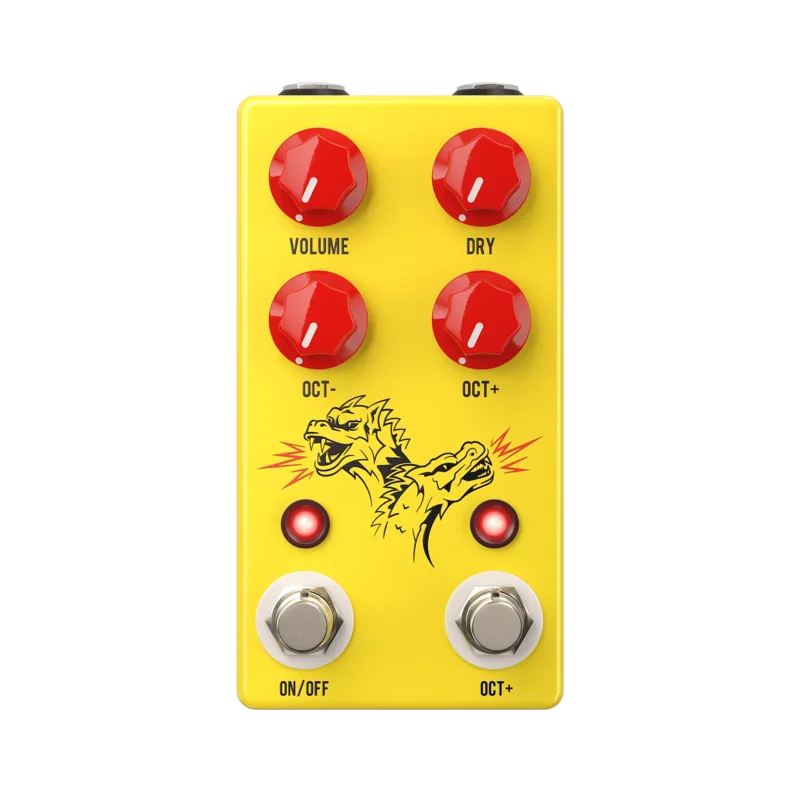


The JHS Double Dragon, officially the Lo-Fi Octave Device, is an all-analog monophonic octave-down and octave-up effect. It is JHS Pedals' first dedicated octave pedal, after years of the company building mostly overdrives and fuzzes, and it launched in late February 2026 at $17912. Two voices live inside: a lower sub-octave and a separate octave-up distortion, each with its own footswitch, so you can stack them or run one at a time13.
JHS describes the lower octave as the foundation: thick and analog, with the characteristic behavior that made vintage octave circuits loved. The upper octave is an octave-up distortion that lands somewhere between an Octavia and a Superfuzz, with a mid-range sting14. Because it is a monophonic divider circuit, it is built for single notes, not chords.
Built on vintage octave divider circuits
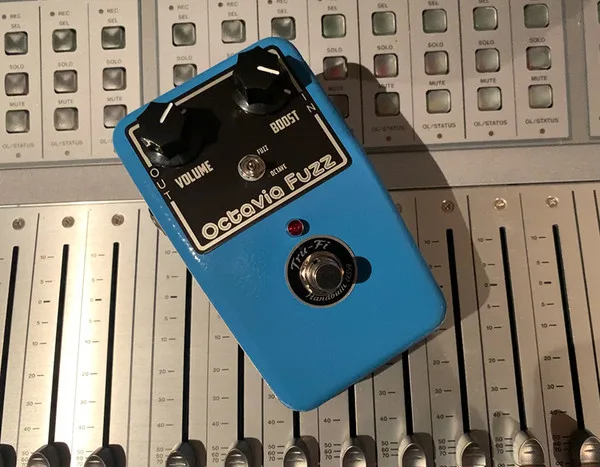
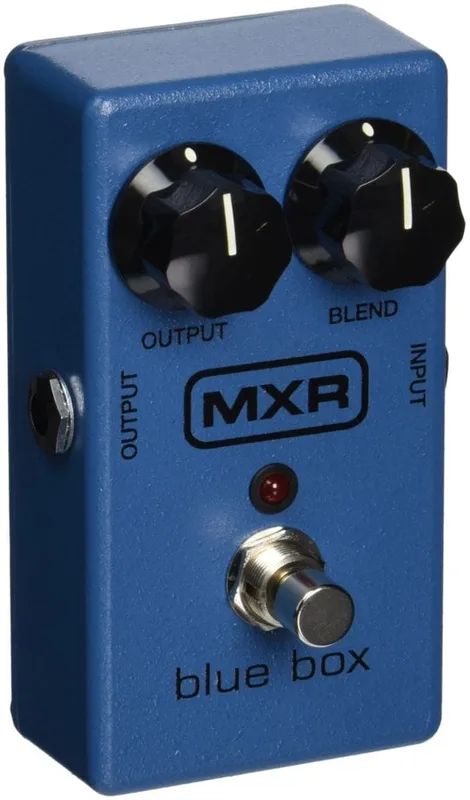
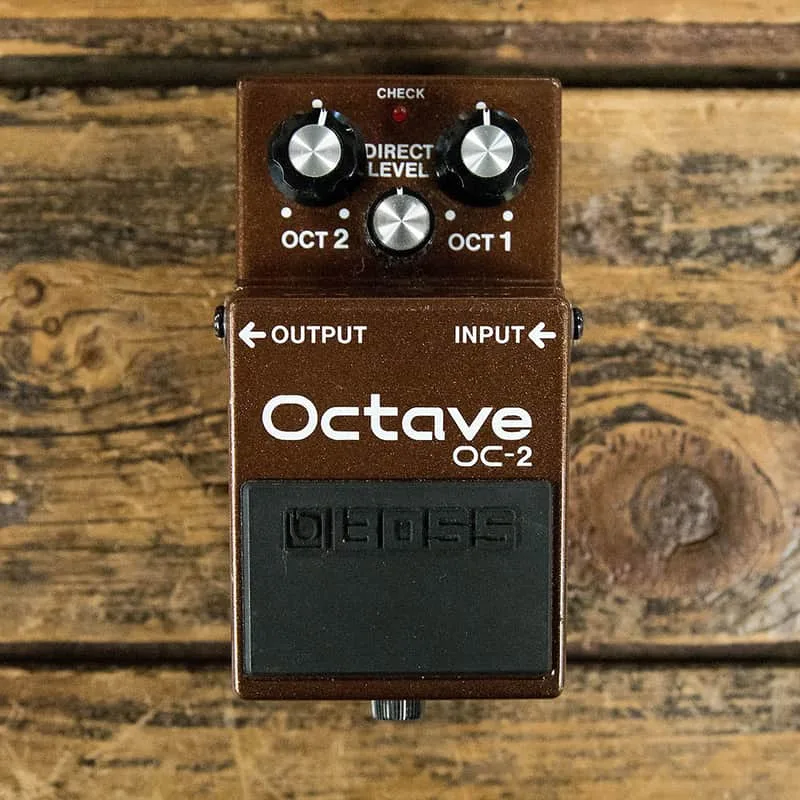
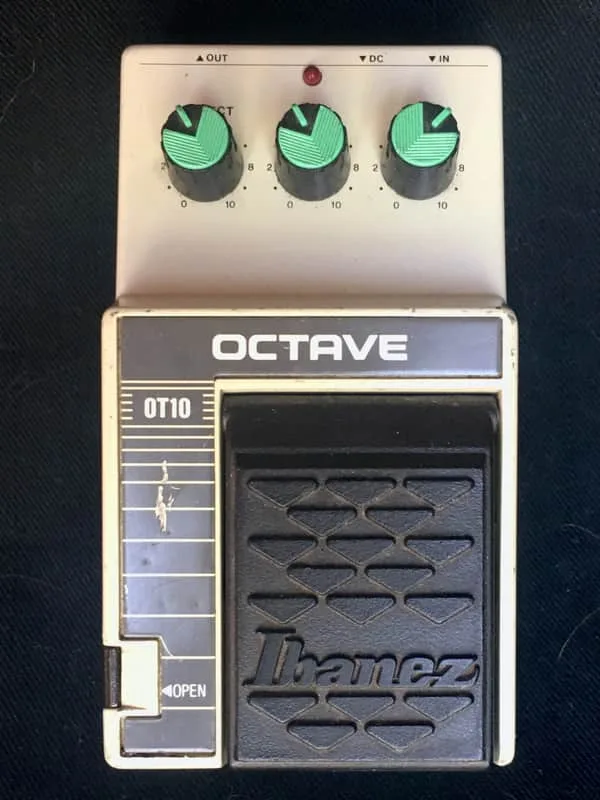
The Double Dragon is built on 40 to 50 year old analog octave divider technology, the same technology that gave us the MXR Blue Box, DOD Octaplus, Boss OC-2, Ibanez OT10 and Electro-Harmonix Micro-Synth1. That lineage matters for what to expect: these old divider circuits track one note at a time and have a lo-fi character, unlike modern digital pitch shifters that can handle chords cleanly.
Guitar Pedal X's Stefan Karlsson notes it can glitch when playing more than one note, with occasional glitches on single notes too3. That glitching is part of the vintage divider sound rather than a defect, and it is why JHS calls the pedal a Lo-Fi Octave Device. Gearnews describes it as a mono effect that straddles fuzz and distortion tones among the octave effects5.
The controls and footswitches
The layout is four knobs and two footswitches, in a bright yellow enclosure with bright red knobs5.
| Control | What it does |
|---|---|
| VOLUME | Master output level with extra boost available; with octaves off and Dry full up, works as an always-on preamp1 |
| DRY | Mixes in your clean signal; all the way up is the suggested starting point, all the way down goes fully wet for glitchy vintage synth textures1 |
| OCT- | Controls the lower sub-octave mix1 |
| OCT+ | Engages the octave-up distortion circuit1 |
The left footswitch is the master ON/OFF. The right footswitch engages the OCT+ circuit, and the main effect must be on for OCT+ to function1. Pedal of the Day's reviewer liked the second footswitch for adding that extra octave up and distortion when you want it4.
Two useful tricks come straight from the control set:
- Octave-up only: engage the effect and turn OCT- all the way down15.
- Clean preamp: turn the octaves off and Dry all the way up, and the Volume knob becomes an always-on preamp1.
Power and connections
The Double Dragon runs on a 9V DC center-negative supply and consumes 75mA1. JHS warns plainly: do not use more than 9V DC, as damage may occur and the warranty will be voided1. Jacks are top-mounted, which saves board width, and the effect is mono15. The buffered bypass means the pedal is not true bypass, but switching is silent15.
What reviewers said
Reviews across the press were positive about the pedal's flexibility. Pedal of the Day's reviewer called it one of the more versatile octave pedals they had played, crediting the second footswitch and the Dry knob's range4. Delicious Audio's Brent P. Gladless framed its appeal:
"It's for riff lovers. For players who want a collaborator in the chain, not just another tool6."
Brent P. Gladless, Delicious Audio6
Guitar World quoted JHS founder Josh Scott on the design intent: "This is a look backward at octavers"2. Gearnews listed it at Thomann for $198 / £175 / €199 at launch, against JHS's own $179 price51.
Videos
JHS Pedals
JHS Pedals
60 Cycle Hum and JHS Pedals
Questions
Can the JHS Double Dragon do octave up only?
Yes. Engage the right footswitch to turn on the OCT+ circuit, then turn the OCT- knob all the way down so no sub-octave is mixed in. The main effect has to be on for the OCT+ circuit to function.
Does the Double Dragon track chords?
No. It is a monophonic effect, built on vintage analog octave divider technology, so it is designed for single notes. Guitar Pedal X notes it can glitch when playing more than one note, with occasional glitches on single notes too.
Is the JHS Double Dragon true bypass?
No. It uses silent buffered bypass switching. That means a buffer keeps the signal path consistent when the effect is off, rather than a true bypass that disconnects the circuit entirely.
Can the Double Dragon be used as a boost?
Yes. The Volume knob controls the master output level and has extra boost on tap. With the octaves off and the Dry knob fully up, JHS says the pedal works as an always-on preamp.
Who designed the JHS Double Dragon?
The Double Dragon comes from JHS Pedals, the Kansas City effects maker, and Guitar World quotes founder Josh Scott describing it as a look backward at octavers. It is the company's first dedicated octave pedal.
Sources (6)
- DOUBLE DRAGON, JHS Pedals
- JHS Pedals launches first octaver pedal, the Double Dragon, Guitar World, 2026-02-27
- Guitar Pedal X, Guitar Pedal X, 2026-03-02
- JHS Pedals Double Dragon Lo-Fi Octave Device, Pedal of the Day, 2026-03-08
- JHS Pedals Double Dragon: Analog & Wild Octaver!, gearnews.com, 2026-02-26
- JHS Double Dragon Lo-Fi Octave Pedal, Delicious Audio, 2026-03-12