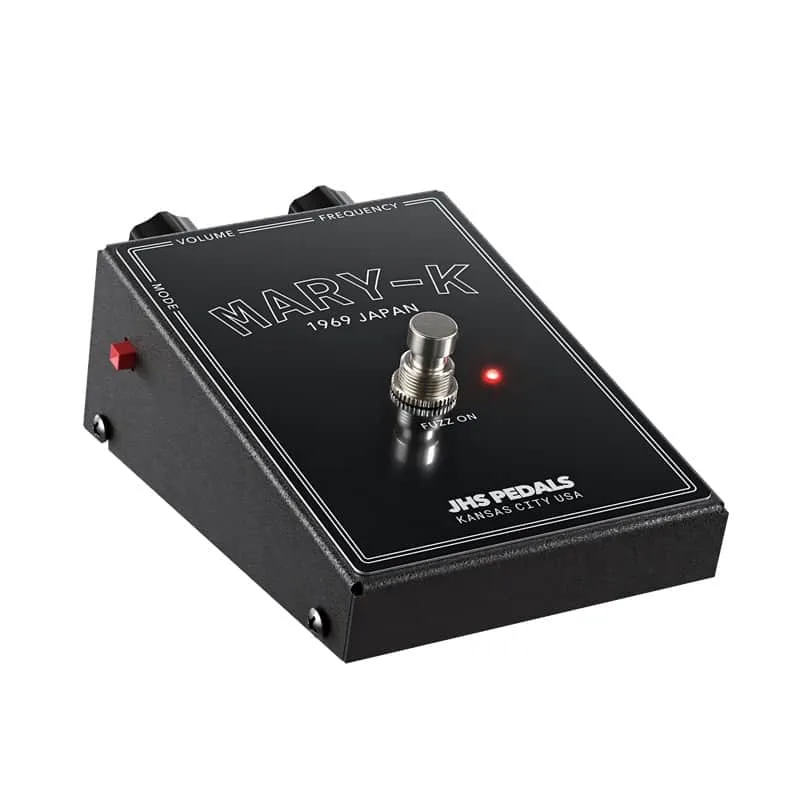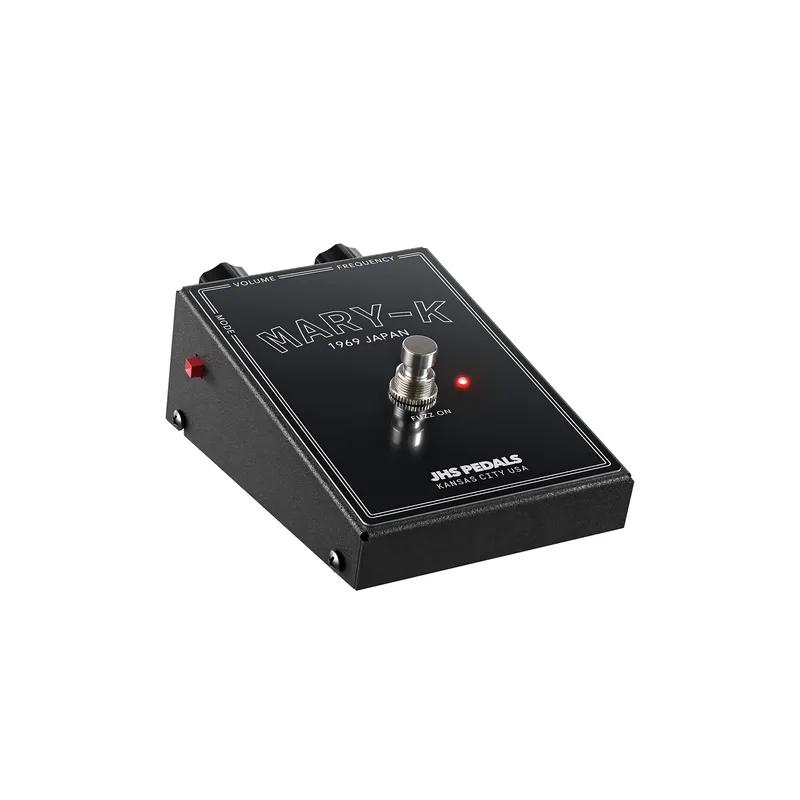


The JHS Mary-K is an analog fuzz pedal that reimagines the Kay Fuzz Tone, a little-known Japan-made fuzz circuit of the late 1960s. Where the original was a knobless treadle unit you worked with your foot, the Mary-K gives you real controls: a Volume knob, a Frequency knob, and a JHS clipping mode, plus an expression output so you can still sweep the fuzz with your foot as the original intended12.
JHS positions it in its Legends of Fuzz series, which the maker describes as "our tribute to the most important fuzz circuits ever made"1. RockBoard's PedalPedia entry calls it "JHS's modern reinterpretation of the classic Kay Fuzz Tone" and notes that, "unlike the original knobless design, the Mary-K includes robust controls"3.
What it does to your sound
The Mary-K delivers what RockBoard describes as "gritty, vintage-inspired fuzz tones with adjustable frequency and output, allowing musicians to dial in expressive textures ranging from classic spitty fuzz to more saturated sustain"3.
The Frequency knob is the heart of it. Delicious Audio explains that it "produces a shift in frequency that's comparable to a more subtle version of what you get placing a wah pedal after the fuzz"2. That comparison is worth sitting with: rather than a tone control that rolls off highs, you are moving a resonant peak around, the way a cocked wah pedal ahead of a fuzz would.
Controls
| Control | What it does |
|---|---|
| Volume | Sets the output level2 |
| Frequency | Shifts the fuzz's frequency focus, comparable to a subtle wah placed after the fuzz2 |
| Mode (JHS) | Adds parallel clipping from germanium diodes on top of the silicon diode clipping, for a more aggressive, mid-rangey version of the original24 |
| Expression output | Lets an expression pedal control the Frequency knob with your foot1 |
The JHS mode is the one addition that goes beyond replication. Gearnews describes it as a mode that "in addition to clipping from silicon diodes, adds parallel clipping from germanium diodes"4. Delicious Audio calls the mode "a more aggressively fuzzy and mid-rangey version of the original"2.
Power and expression: 9V, 4mA
The Mary-K runs on 9V DC, center negative, with a 4mA draw1. That is a light load, small enough that it shares comfortably with other pedals on a typical isolated supply. It also takes a single 9V battery, with a backplate that swings open via two rear screws on the back of the pedal1.
Do not run the Mary-K on more than 9V DC. JHS states plainly that doing so voids the warranty1.
The expression output is where the Mary-K earns its keep for players who want the original experience. JHS says it added "knobs and an expression pedal output for those who want to use it as it was originally intended," and that the Frequency knob can be controlled with an expression pedal1. Delicious Audio frames it the same way: "An Expression out allows using this pedal just like the vintage one, adjusting the Frequency setting using your foot"2. Pedal of the Day highlights it as "variable, hands-free control of one of the parameters"5.
JHS recommends the Nektar NX-P and Roland EV-5 expression pedals1. One caveat from Premier Guitar's demo: "some expression pedals may introduce a hum/noise into the signal chain in high electromagnetic interference environments." In those settings, plastic-chassis expression pedals with short cables are the safer choice6.
From the Kay Fuzz Tone to the Legends of Fuzz series
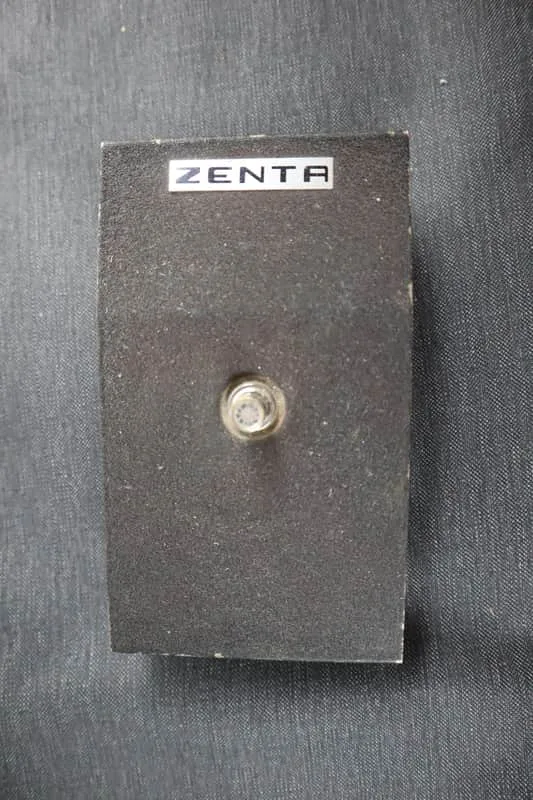
The Kay Fuzz Tone was a 1960s Japan-made fuzz that, as guitar.com reports, "was marketed in the late '60s as a low-cost alternative to the Shin-Ei/Univox Superfuzz"72. Premier Guitar's demo puts the timeline simply: "Fifty-four years later, JHS is releasing our spin on the Kay Fuzz Tone: the Mary-K"6. Delicious Audio calls the pedal a "1969 KAY FUZZ TONE REPLICA" and "a replica of an under-the-radar Japan-made fuzz circuit of the '60s"2.
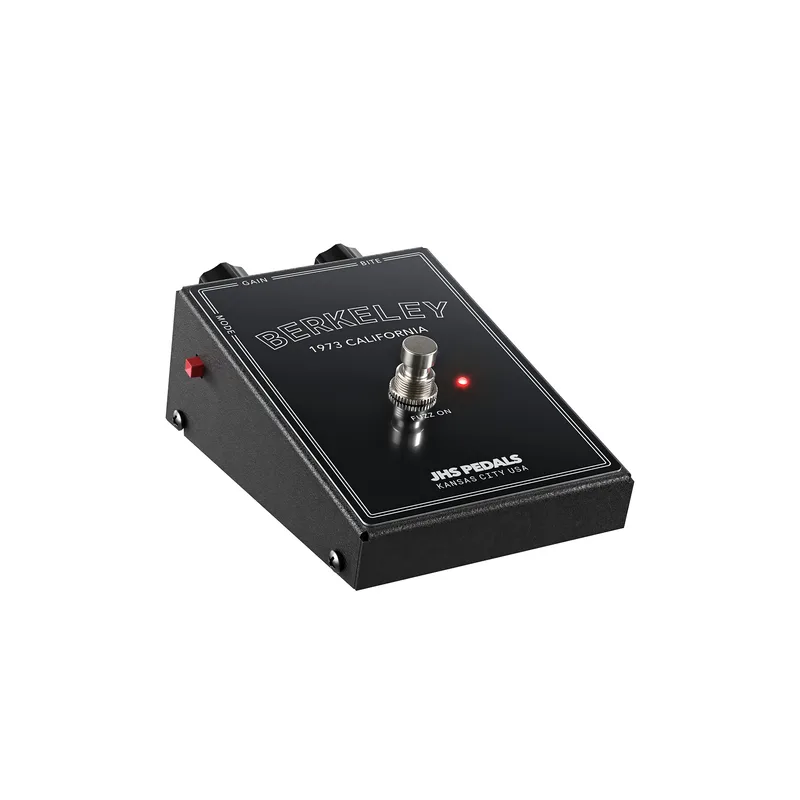
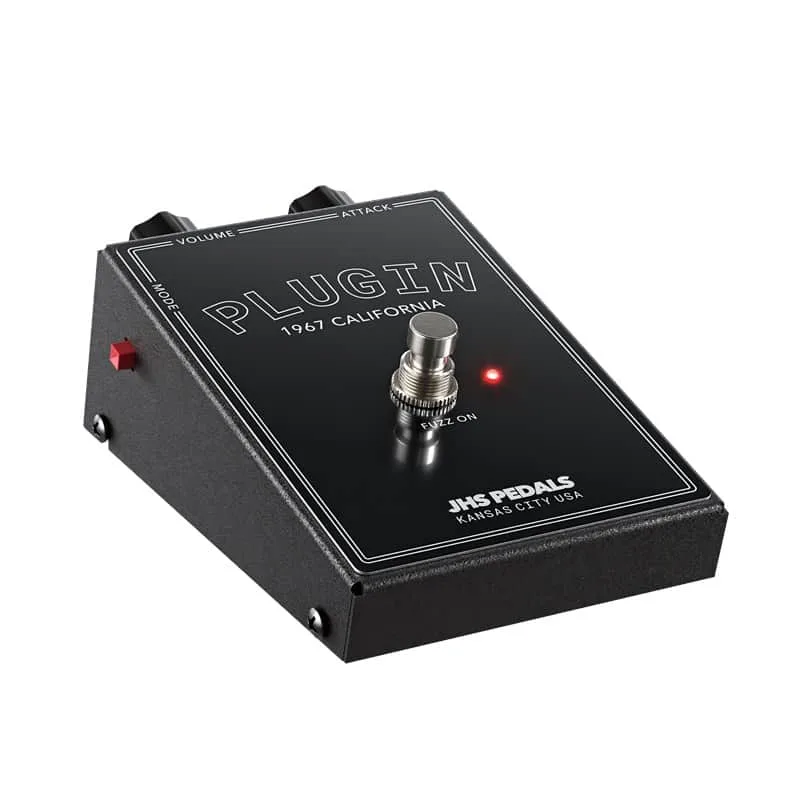
The Mary-K sits in the Legends of Fuzz series alongside pedals like the JHS Berkeley and the JHS Plugin, which Gearnews covered in the same launch coverage12. Pedal of the Day points players to the collection as a whole: "Head to the JHS website for more information on this and ALL the fuzzes in the 'Legends of Fuzz' collection"5.
Is it a Superfuzz clone?
Not quite, and the distinction matters if you are comparing circuits. The Kay Fuzz Tone was a budget alternative to the Shin-ei/Univox Superfuzz, not a copy of it76. The two families are related in era and in spirit, and circuit discussions around the Superfuzz family often note variants that are "similar in many respects, but not a clone"8. The Mary-K traces its lineage to the Kay circuit, with JHS's own mode and controls layered on top12.
Buying notes
The JHS product page lists the Mary-K at $89.50 USD1. At launch, Gearnews reported EU pricing of 239 euros at some stores, with a Thomann listing of $94.00 / £84.00 / 99.00€4.
The Mary-K is a final sale item on the JHS product page: no cancels, no returns, no exchanges1.
JHS also states that the pedal "is in no way affiliated with or endorsed by Kay Musical Instruments or Mary Kay Inc."1, a disclaimer worth knowing since both the circuit name and the pedal name borrow from other companies.
Videos
Sweetwater
Premier Guitar
JHS EXTRA
Questions
Does the JHS Mary-K run on a battery?
Yes. The Mary-K allows battery operation via a single 9V battery, with a backplate that swings open on two rear screws. It also runs on a 9V DC center-negative power supply drawing about 4mA. Do not feed it more than 9V DC, because doing so voids the warranty.
Which expression pedal works with the JHS Mary-K?
JHS recommends the Nektar NX-P and the Roland EV-5. The expression output controls the Frequency knob, letting you sweep the fuzz with your foot the way the original treadle fuzz worked. In environments with heavy electromagnetic interference, some expression pedals can introduce hum or noise; JHS suggests plastic-chassis expression pedals with short cables there.
Is the Mary-K a Superfuzz clone?
No. The Mary-K is based on the Kay Fuzz Tone, which was marketed in the late 1960s as a low-cost alternative to the Shin-ei/Univox Superfuzz, not a copy of it. The two circuits are related in spirit and era, but the Mary-K traces its lineage to the Kay, with JHS adding its own clipping mode.
Can I return a JHS Mary-K?
As listed on the JHS product page, the Mary-K is a final sale item: no cancels, no returns, and no exchanges. If you buy one, plan on keeping it, and buy from a retailer whose return terms you know if that matters to you.
Sources (8)
- MARY-K - JHS Pedals, JHS Pedals
- JHS Mary-K Fuzz (Legends Of Fuzz Boss Tone Replica), Delicious Audio, 2023-06-02
- Mary-K by JHS, RockBoard (PedalPedia), 2026
- JHS Legends of Fuzz Effect Pedals: Mary-K, Plugin and Berkeley, www.gearnews.com, 2023-02-28
- JHS Pedals "Legends of Fuzz" Mary-K 1969 Japan, Pedal of the Day, 2023-08-12
- JHS Pedals Legends of Fuzz Mary-K Video Demo, Premier Guitar, 2023-05-04
- JHS gets fuzztastic with three new pedals to its Legends of Fuzz lineup, guitar.com, 2023-02-27
- Guitar FX Layouts: Univox Super Fuzz, Guitar FX Layouts (tagboardeffects.blogspot.com), 2014-10-20
 The Edge