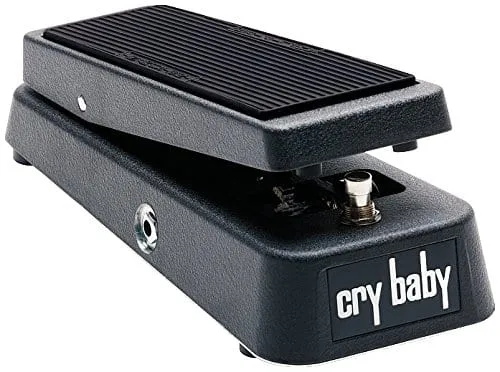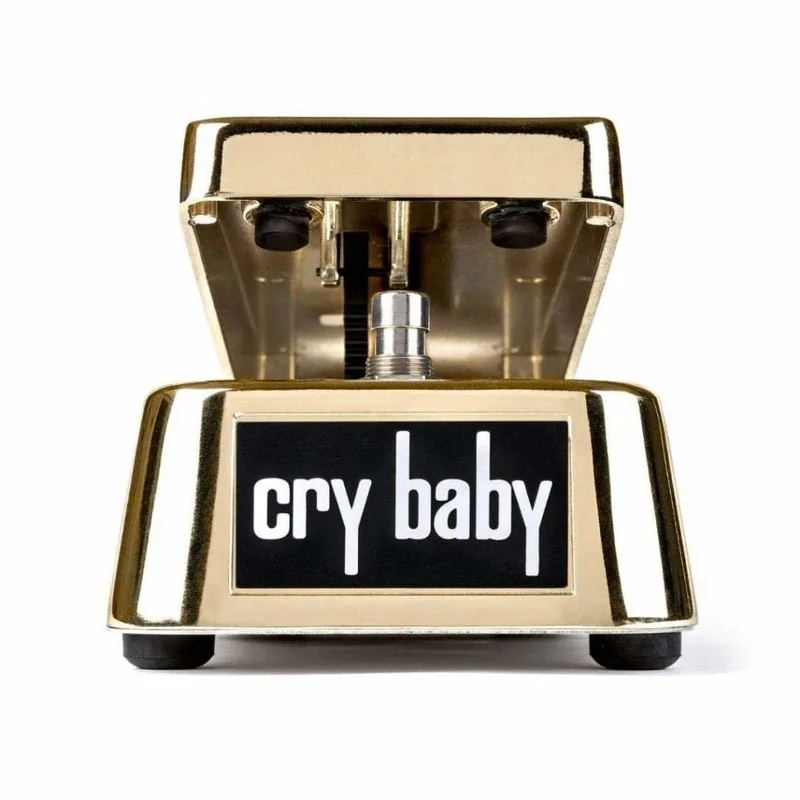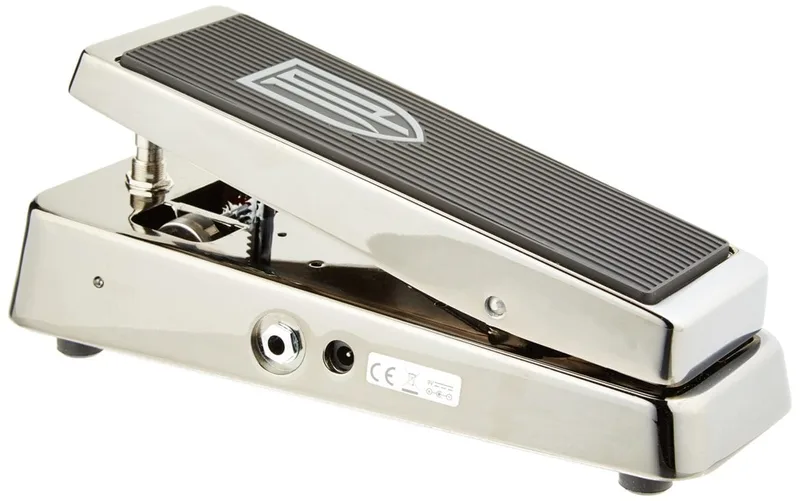


The Jim Dunlop John Petrucci Cry Baby, also sold as the JP95 John Petrucci Signature Cry Baby Wah, is a wah pedal from Dunlop designed in collaboration with the Dream Theater guitarist12. A wah is, as MusicRadar put it, "basically a tone knob you control with your foot": rocking the treadle sweeps a bandpass filter across the frequency range, producing the vocal, expressive tones the Cry Baby is known for32.
What sets the JP95 apart from a standard Cry Baby is where its controls live and what they are based on. For years Petrucci used the Dunlop Cry Baby Rack Wah system, tweaking its numerous parameters until he found the sound he wanted; the JP95's tone range is based on those settings, and the pedal combines the rack unit's fine-tuning abilities into a standard Cry Baby housing145. Petrucci and Dream Theater engineer Richard Chycki worked with the Cry Baby design team to replicate and further fine-tune that sound1. Petrucci has said of the design:
"For my signature wah, we designed it to have the same boost level, the same tonality, the same sweep as I use with my rack wah."
Dunlop describes the result as a pedal that "sounds huge and badass like an angry, screaming monster with the ultimate expressive range," suited to shaping single notes or manipulating heavy chords1.
What it does and how it is controlled
Underfoot, the JP95 works like any Cry Baby: push the toe of the pedal down until you feel a click to switch it on and off, then rock your foot back and forth on the treadle to sweep the filter2. Premier Guitar's reviewer found the treadle sweeps smoothly from toe to heel4. The sweep runs from a heel-down low pass of 200Hz to 240Hz to a toe-down high pass of 1.2KHz to 1.5KHz2.
All the sound-shaping controls are inside the pedal, reached by removing the bottom plate71. The pedal ships with Petrucci's own control settings as the factory default, so it reproduces his favorite rock wah setting out of the box28. Dunlop's buying guide summarizes the internal controls as an adjustable Q, an adjustable Volume, and a six-band EQ for tone-shaping9.
| Control | What it does |
|---|---|
| Q ADJ trimpot | Sets the width of the bandpass; clockwise narrows it and emphasizes higher harmonics, counterclockwise widens it and emphasizes lower harmonics2 |
| VOLUME trimpot | Sets overall effect volume; clockwise to increase, counterclockwise to decrease2 |
| Six EQ trimpots (100Hz, 200Hz, 400Hz, 800Hz, 1.6KHz, 3.2KHz) | Boost or cut each frequency by +/-18 dBV; clockwise to boost, counterclockwise to cut2 |
| TEST/NORM switch | For production testing only; leave it set to NORM for all controls to work2 |
Petrucci's own settings are printed in the manual: as Sweetwater's presenter Nick summarized them, he boosts the volume, rolls off the lows, boosts the mids and rolls off the very highs8. MusicRadar noted the pedal comes preset with Petrucci's favorite setting, a very vocal-sounding sweep, and that the Q pot alters the intensity of the wah effect3.
Every adjustment on the JP95 is internal. To fine-tune the sound to your own preference, you have to take off the bottom plate and tweak the trimpots there; there are no external knobs17.
Power, connections and specifications
Setup is conventional: run an instrument cable from your guitar to the JP95's INSTRUMENT jack, and another from its AMPLIFIER jack to your amplifier's input2. Power comes from one 9-volt battery accessed via the bottom of the pedal, a Dunlop ECB003 (or ECB003EU) AC adapter, or Dunlop's DC Brick and Iso-Brick power supplies, which are sold separately12.
| Specification | Value |
|---|---|
| Power requirements | 13mA @ 9VDC2 |
| Bypass configuration | True Hardwire2 |
| Nominal input | -8 dBV2 |
| Max output | +6 dBV2 |
| Noise floor | < -94 dBV, A weighted2 |
| Input impedance | 800K Ω2 |
| Output impedance | 5K Ω2 |
| Output gain | +33 dBV toe down, +19 dBV heel down2 |
Where it came from
Dunlop announced the JP95 on February 10, 2016, in a press release that positioned it as based on John Petrucci's Cry Baby Rack Wah settings, with Volume, Q and six EQ controls inside the pedal and a smoked chrome finish7. It had been demoed at NAMM 2016 a few weeks earlier10. Petrucci has been using Cry Baby wahs, Dunlop says, for as long as he can remember, and had also collaborated with the company on signature picks before the wah6. When Dunlop marked fifty years of the Cry Baby in 2017, the John Petrucci model was described as the most recent signature addition to the line, designed in conjunction with its namesake5.
What reviewers said
MusicRadar called it "the most tweakable Cry Baby yet" and concluded that it "nails the Petrucci sound," while also finding it usable well outside that context: "just the ticket for funky Jimi Hendrix stuff and classic porno soundtrack boom-chika fun"3. The review's overall verdict was that it is "a superb pedal that will do the job for Dream Theater fans and non-fans alike," though it noted the pedal costs £100+ more than the regular version, and argued that the JP signature justifies its price tag by letting players dial in their own unique wah sound3.
Premier Guitar's 2021 review was even stronger on the sound, calling the JP95 "the most gargantuan-sounding wah pedal I've ever heard," and praised the smoked chrome finish and the factory preset for Petrucci's sound, noting that the internal controls let you tune the wah very precisely4.
"this is the most gargantuan-sounding wah pedal I've ever heard."
Sweetwater's demo video walks through the pedal's background and controls, including where Petrucci's settings sit in the manual and how the internal EQ is laid out8.
How it fits among other Cry Babies
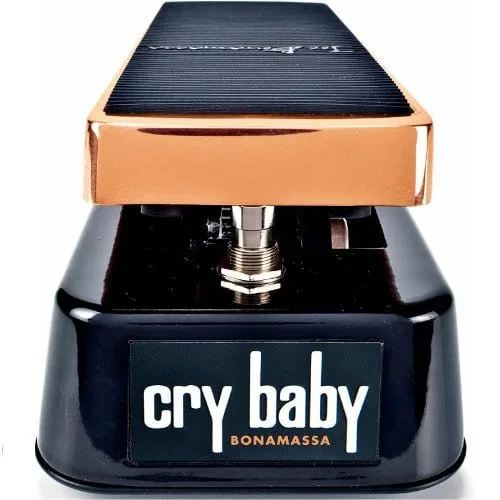
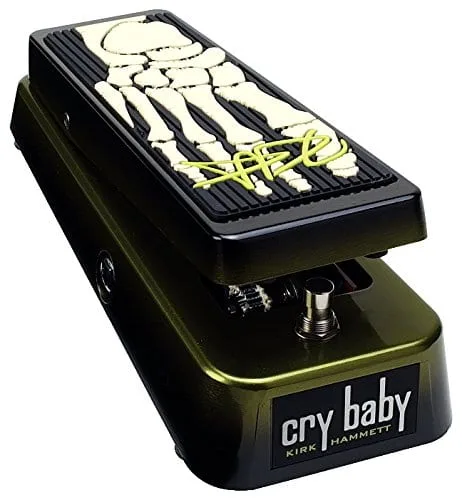
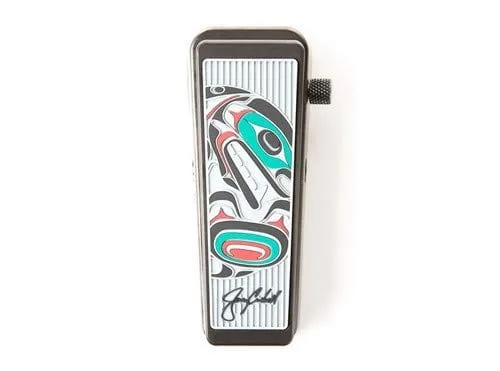
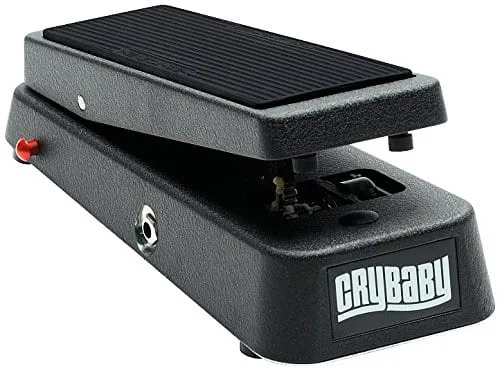
The JP95 sits in Dunlop's large signature Cry Baby lineup alongside models such as the Dunlop Joe Bonamassa Cry Baby, the Dunlop Kirk Hammett Cry Baby and the Dunlop Jerry Cantrell Cry Baby. Its distinguishing feature is the depth of internal adjustment: where most Cry Baby variants differ by fixed voicing or inductor choice, the JP95 puts a full six-band EQ, Q and Volume in the player's hands, preset to one player's rack wah settings19. Players who want external controls rather than trimpots might instead look at something like the Dunlop 95Q Cry Baby, while those who want a simpler, cheaper wah can compare it against the Dunlop Cry Baby Standard.
Videos
Pete Thorn
ProGuitarShopDemos
Guitar World
Sources (10)
- JOHN PETRUCCI CRY BABY® WAH, Dunlop (www.jimdunlop.com)
- JP95.pdf, Dunlop Manufacturing, Inc., 2019
- Dunlop John Petrucci Signature Cry Baby Wah review, MusicRadar, 2016-05-27
- John Petrucci JP95 Cry Baby Wah Pedal Review, Premier Guitar, 2016-09-19
- Celebrating Fifty Years of Cry Baby, Dunlop (lifestyle.jimdunlop.com), 2017-03-14
- John Petrucci is a Dunlop Artist., Jim Dunlop (jimdunlop.com)
- Dunlop Releases the JP95 John Petrucci Signature Wah, Premier Guitar, 2016-02-10
- Dunlop JP95 John Petrucci Signature Cry Baby Wah Pedal Review, Sweetwater, 2018-04-27
- RANGE OF EXPRESSION: FIND YOUR CRY BABY® WAH, Dunlop (lifestyle.jimdunlop.com), 2021-10-08
- NAMM 2016: Dunlop MXR, Mini Pedal & Signature Demos, Premier Guitar, 2016-01-27