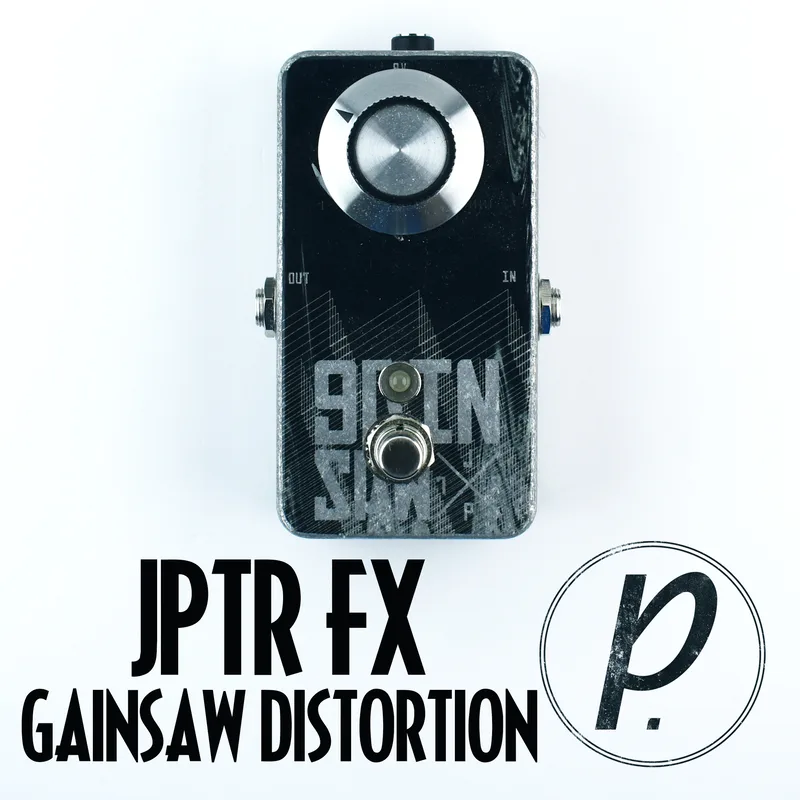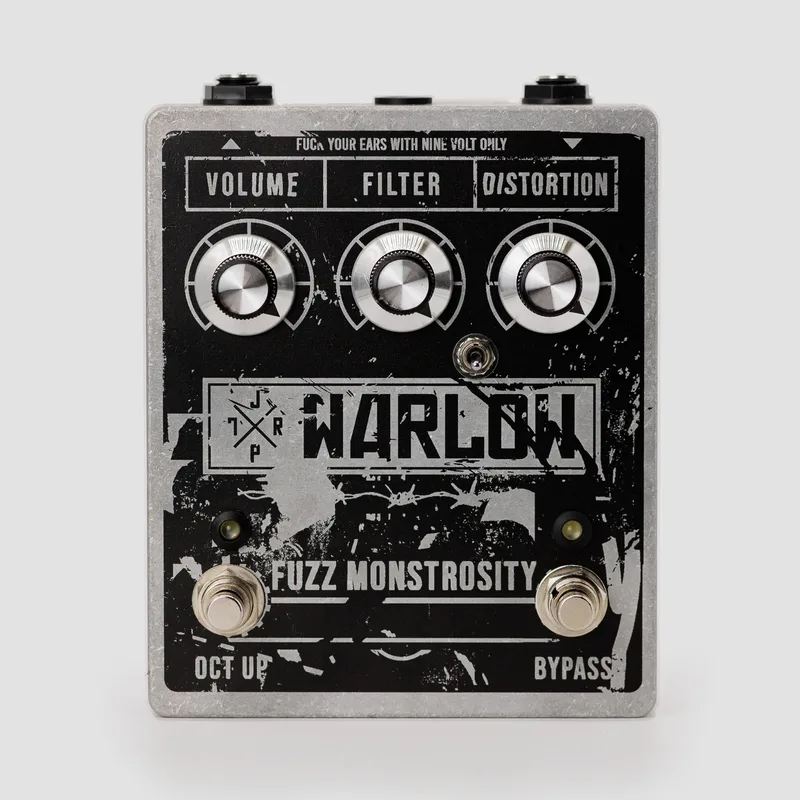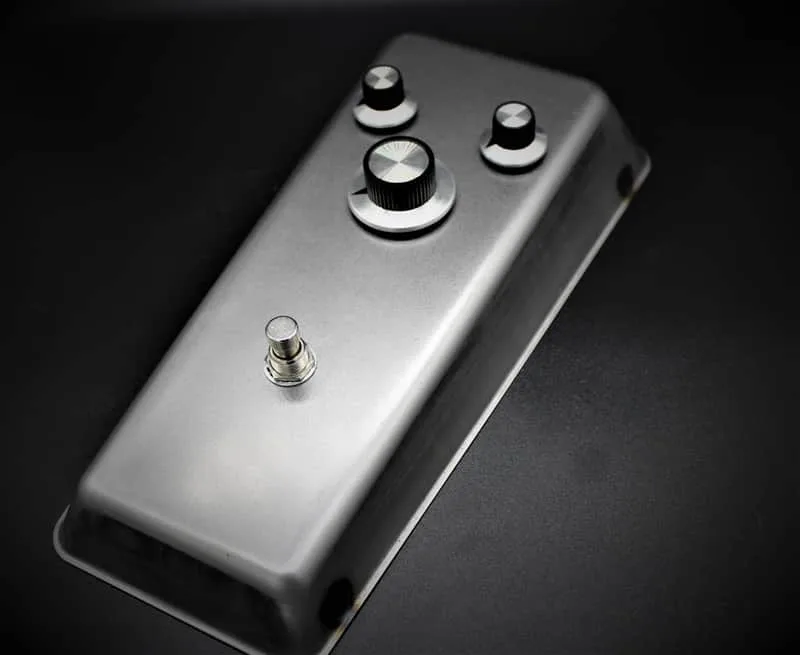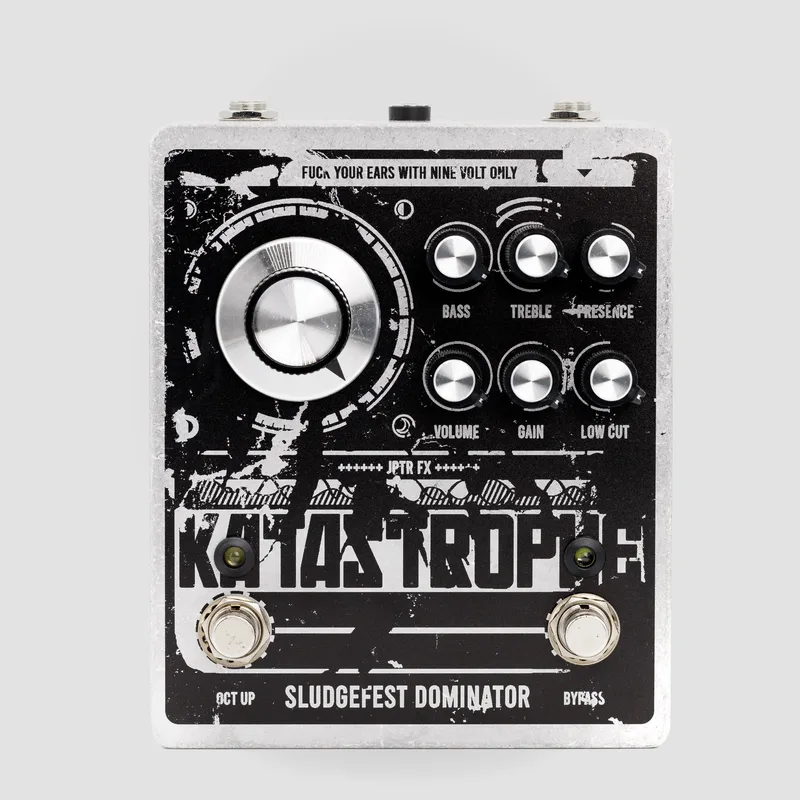


The JPTR FX Katastrophe is a high-gain distortion pedal from the German boutique builder JPTR FX that also works as a preamp. Its gain circuit is based on the sound of a highly modded British full stack, with an EQ section the maker says works on both clean and dirty amps alike, and it adds an analog octave-up section on its own footswitch1. Paolo De Gregorio, writing at Delicious Audio, categorized it as an octave up distortion and noted that the analog Octave Up section has more gain than the usual octave up circuits2.
The Katastrophe is no longer in production. JPTR FX's own site puts it plainly: "Katastrophe is gone, but the octave up stays," with the octave-up feature carried into the Deluxe Warlow3. The company produced every model in batches and sold direct from the manufacturer, so units appeared only when a batch was built1.
High-gain distortion with an analog octave-up
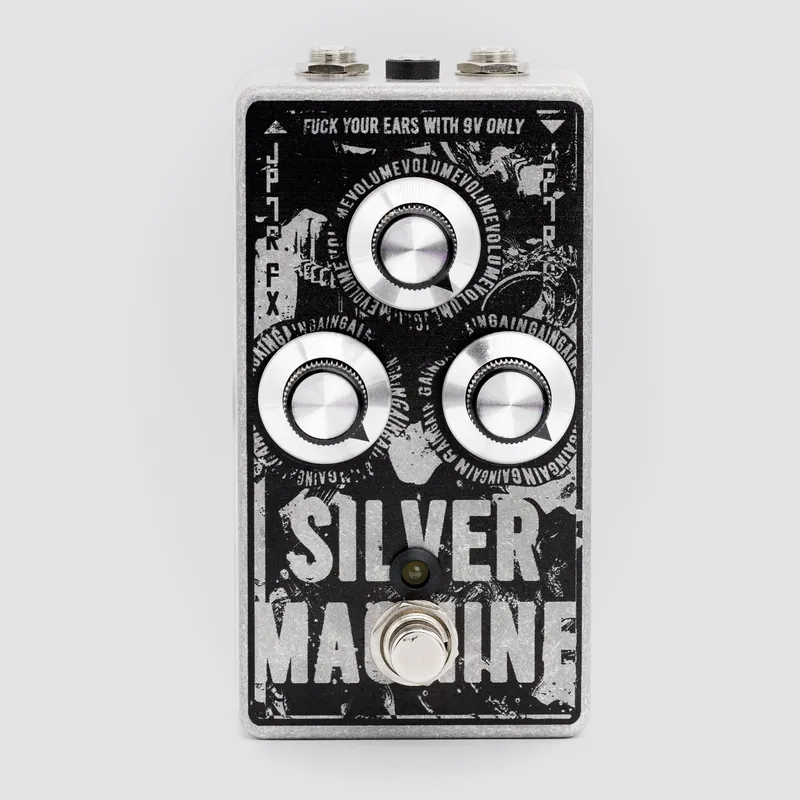
JPTR FX set out to create a pedal with its gain circuit based on the sound of a highly modded British full stack, with a more effective EQ section that works on both clean and dirty amps alike1. On top of that gain stage sits an analog octave-up section. The maker says it has more gain than the usual circuits of this kind and is identical to the one found in the company's Silvermachine1, the parallel two-stage fuzz distortion covered on the JPTR FX Silbermaschine Fuzz page.
An added footswitch engages the octave-up circuit on its own, which JPTR FX says offers players more flexibility and allows for more drastic changes while playing1. That makes the pedal effectively two sounds in one box: the full-stack-style distortion on its own, and the octave-up layer stacked over it when the second switch is pressed. For more on what an octave-up section does to a note, see Octave & Pitch Pedals.
The controls
The front panel carries a conventional amp-style control set plus the Low Cut knob and the octave footswitch1.
| Control | What it does |
|---|---|
| Gain | Gain control, described by the maker as pretty self-explanatory1 |
| Bass | EQ control for bass frequencies1 |
| Treble | EQ control for treble frequencies1 |
| Presence | EQ control for presence frequencies1 |
| Low Cut | Removes low rumble for more modern high gain sounds; untouched, the pedal goes to full doom with all the low end1 |
| Volume | Determines how hard you push the amp, or how loud the setup is when using the Katastrophe as a preamp1 |
| Octave footswitch | Engages the analog octave-up section1 |
Inside the enclosure, Highcut switches let you control the highs even more than the Treble and Presence knobs already allow1. They are set-and-forget shaping tools for the top end rather than something you adjust while playing.
Using it as a preamp
Because the Volume knob sets how hard you push the amp, or how loud the setup is when the Katastrophe is used as a preamp1, the pedal can be run into the front of an amp like a standard distortion or used as the gain stage of a rig driving a clean power section. The EQ section working on both clean and dirty amps alike1 is what makes that second use practical.
The Misprint Katastrophe
A limited variant, the Misprint Katastrophe, appeared as a run of 10 units priced at 120 Euro, with taxes included4. The Misprint carries stickers on the enclosure that the maker asks buyers not to peel off4. That variant is sold out4.
Videos
Riffs, Beards & Gear
We As A Company
EytschPi42
Questions
Can the JPTR FX Katastrophe be used as a preamp?
Yes. JPTR FX describes the Katastrophe as a distortion pedal that also works as a preamp. The Volume knob determines how hard you push the amp, or how loud you want your setup to be when using the Katastrophe as a preamp, so it can sit at the end of a chain driving a clean power section as well as in front of an amp's input.
What does the Low Cut knob do?
The externally located Low Cut removes low rumble from the signal if you prefer more modern high gain sounds. Left untouched, the pedal goes to full doom with all the low end intact, so the knob lets you dial between a tight, filtered bottom end and the full weight of the circuit.
What power supply does the Katastrophe need?
The Katastrophe runs on a 9 V DC power supply with a center negative, 2.1 mm plug, and draws less than 50 mA, according to Delicious Audio's specifications for the pedal. A standard 9 V pedal supply meets that requirement.
Is the Katastrophe still available?
No. JPTR FX's own site states that the Katastrophe is gone, but that the octave-up feature stays, carried into the Deluxe Warlow. The company produced every model in batches and sold direct, so remaining units appeared only when a batch was built.
What are the internal high-cut switches?
The Katastrophe has internal Highcut switches that let you control the highs even more than the external Treble and Presence knobs already allow. They are set-and-forget controls inside the enclosure for shaping the top end beyond what the front panel offers.
Does the Katastrophe share its octave circuit with another JPTR pedal?
Yes. JPTR FX states that the analog octave-up section, which has more gain than the usual circuits of this kind, is identical to the one found in the company's Silvermachine fuzz.
Sources (4)
- JPTR FX Katastrophe, JPTR FX
- JPTR FX Katastrophe Octave Up Distortion, Delicious Audio, 2022-11-29
- JPTR FX ULTRA Warlow, jptrfx.com
- JPTR FX MISPRINT KATASTROPHE, JPTR FX