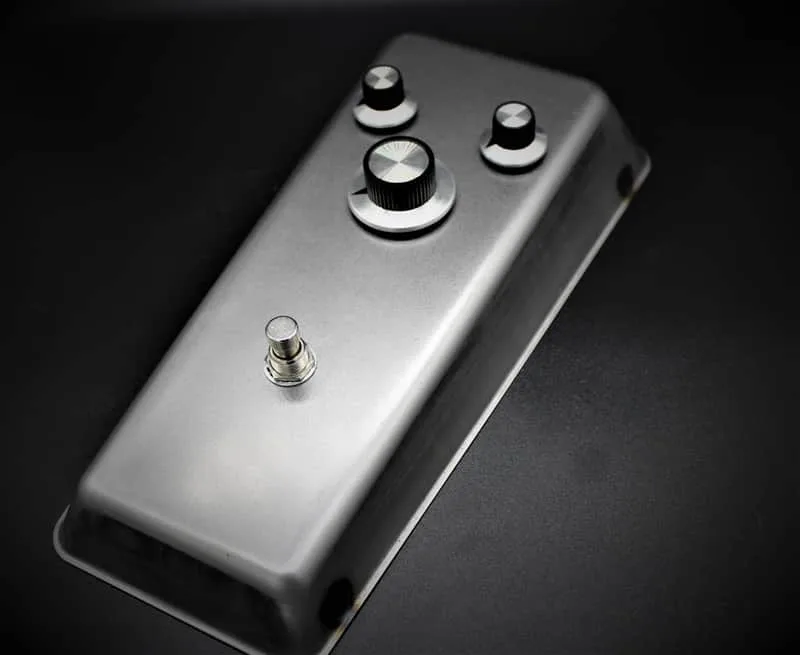


The JPTR FX Silbermaschine Fuzz is a fuzz distortion pedal that combines two gain stages in a parallel circuit, a design aimed at the tones of two classic fuzz machines: the Tone Bender and the Fuzz Face1. The connection runs deep: Delicious Audio notes that the Tone Bender Mk1.5 "made it the inspiration for the Fuzz Face," so the two circuits the Silbermaschine draws on are themselves related2.
What it does to your sound
Because the two gain stages run in parallel rather than in series, Pedal of the Day's reviewer found the sounds are "less compressed, resulting in a more open type of sound and feel"1. The overall character is vintage-leaning: the review describes "an unrefined and unbuffered vintage fuzz conquest" that "somehow brings a bit of modern touch along for the ride"1. The reviewer's verdict was a simple, powerful fuzz that "looks and sounds wicked bad ass overall"1.
Controls
| Control | What it does |
|---|---|
| Two smaller gain knobs | Each controls one gain stage; they also act as a filter, covering tones from sizzling drives to rich, dynamic fuzz, and maxing them out can coax out upper octave sounds1 |
| Giant knob | Shared master volume1 |
The layout keeps things simple. As Pedal of the Day put it, "The giant knob is a shared master volume, keeping it simple but never stupid"1.
Size and bypass
Two practical points for board builders:
- The Silbermaschine is a LARGE pedal with the look and feel of a classic unit, and it will not fit on a small travel board1.
- It is unbuffered, so it behaves like an old-school fuzz in the signal path1.
If your board is a compact travel setup, the Silbermaschine's large enclosure is worth planning around before you add it.
Where JPTR FX fits
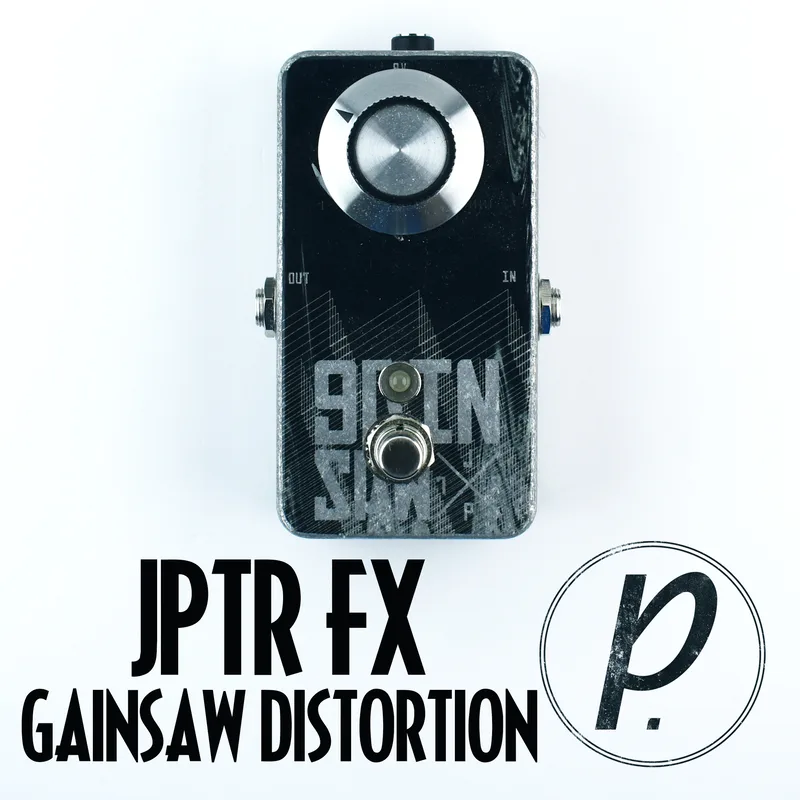
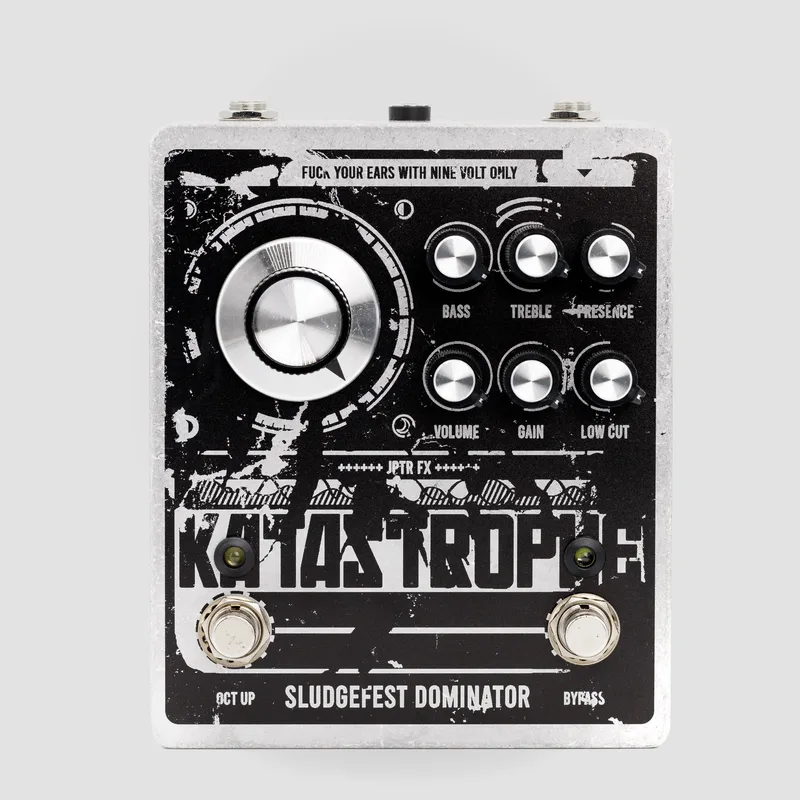
JPTR FX builds a range of drive and fuzz pedals, including the Gainsaw Distortion, a one-knob gated distortion, and the Katastrophe and Bleach. For more fuzzes in this territory, see the site's pages on Fuzz Pedals and Distortion Pedals.
Videos
Reverb
Pedal of the Day
Pedals & Friends
Questions
Is the JPTR FX Silbermaschine Fuzz true bypass?
Pedal of the Day's review describes the Silbermaschine as an unbuffered vintage-style fuzz, so it does not include a buffer in its signal path. That suits players who want the pedal to interact with their guitar and amp the way older fuzz circuits do, though long cable runs or large boards may call for a separate buffer elsewhere in the chain.
Will the Silbermaschine fit on a small pedalboard?
Probably not. Pedal of the Day describes it as a LARGE pedal with the look and feel of a classic unit, and notes it will not fit on a small travel board. Players with compact setups should plan its footprint before adding it.
How do the two gain knobs on the Silbermaschine work?
Each of the two smaller knobs controls one of the pedal's two gain stages. Pedal of the Day notes the gain knobs also act as a filter, delivering tones from sizzling drives to rich, dynamic fuzz, and that maxing them out can coax out upper octave sounds. The large knob is a shared master volume.
What is a parallel gain stage fuzz?
In the Silbermaschine, it means the pedal combines two gain stages in a parallel circuit rather than feeding one into the other. Pedal of the Day found the sounds this produces are less compressed, resulting in a more open type of sound and feel than a single-series fuzz design.
Sources (2)
- JPTR FX Silbermaschine Fuzz Distortion, Pedal of the Day, 2019-03-02
- New Pedal: Tampco All-Bender Fuzz, Delicious Audio, 2022-02-21