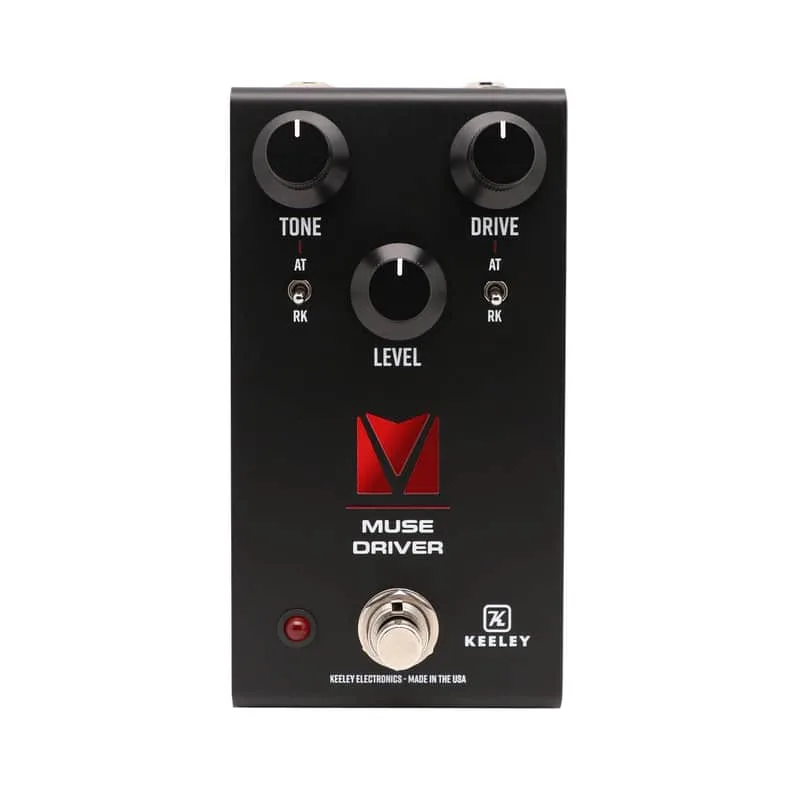


The Keeley Muse Driver is an overdrive pedal from Keeley Electronics, designed with Andy Timmons and released in January 2024123. It is a signature pedal in the classic sense: a modded blues driver circuit refined with decades of Keeley mod experience, arranged so a player can move between Timmons' voicings and Robert Keeley's with two small toggle switches4. Keeley positions it as an "overdrive workstation" that covers everything from a clean boost to treble boost, distortion, overdrive and even fuzz5.
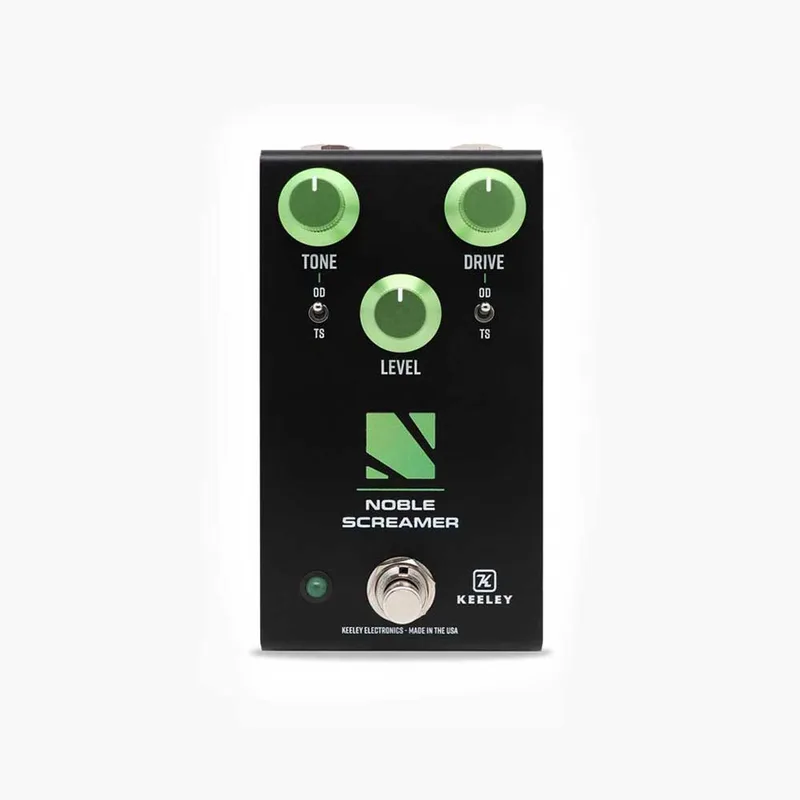
The circuit combines JFET saturation, diode clipping, and op-amp clipping to build its harmonically rich tone4. It is the second pedal in Keeley's line of overdrives that began with the Noble Screamer, with three more overdrives following in 20245.
What the Muse Driver does
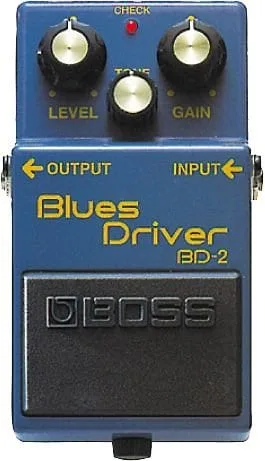
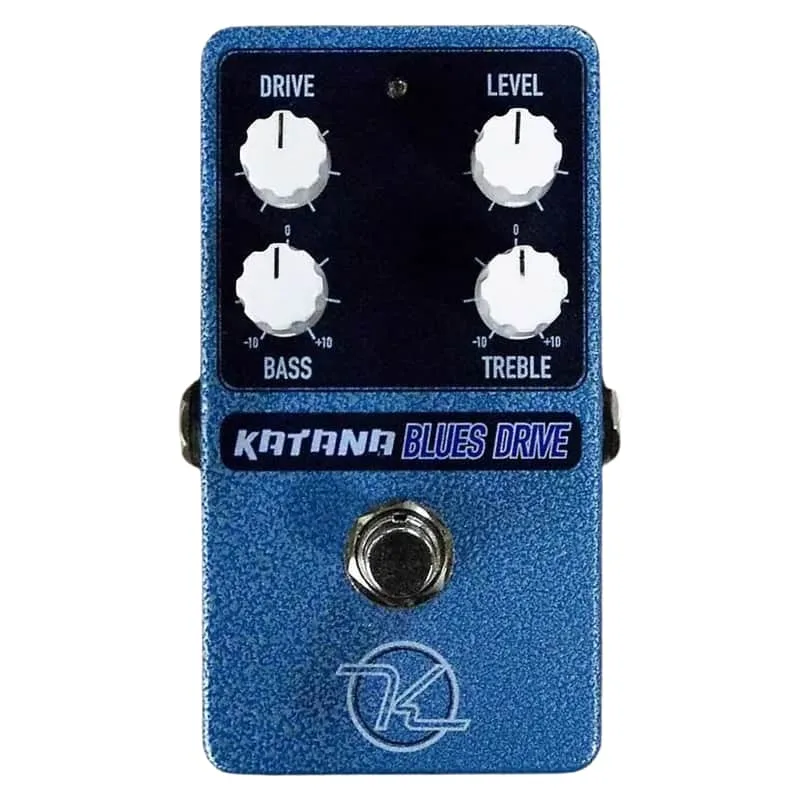
At its core the Muse Driver is a blues driver circuit that Keeley has spent years modifying. Guitar World describes what is underneath the hood as "a Keeley-modded, three-control [blues] driver circuit, and two germanium diodes"2. MusicRadar similarly notes it "draws upon Blues Driver DNA to fashion a drive sound"8. That lineage matters to players who know the Boss BD-2 family: Keeley built its reputation on mods to that circuit, and the Muse Driver is the latest expression of it.
The pedal is really four drives in one box. Robert and Andy developed the switches to give players a broad range of drive tones4, and the result is two selectable overdrive voices paired with two tone stack options5. In Andy's words, "it could do everything from a clean boost to distortion and overdrive and even fuzz"5.
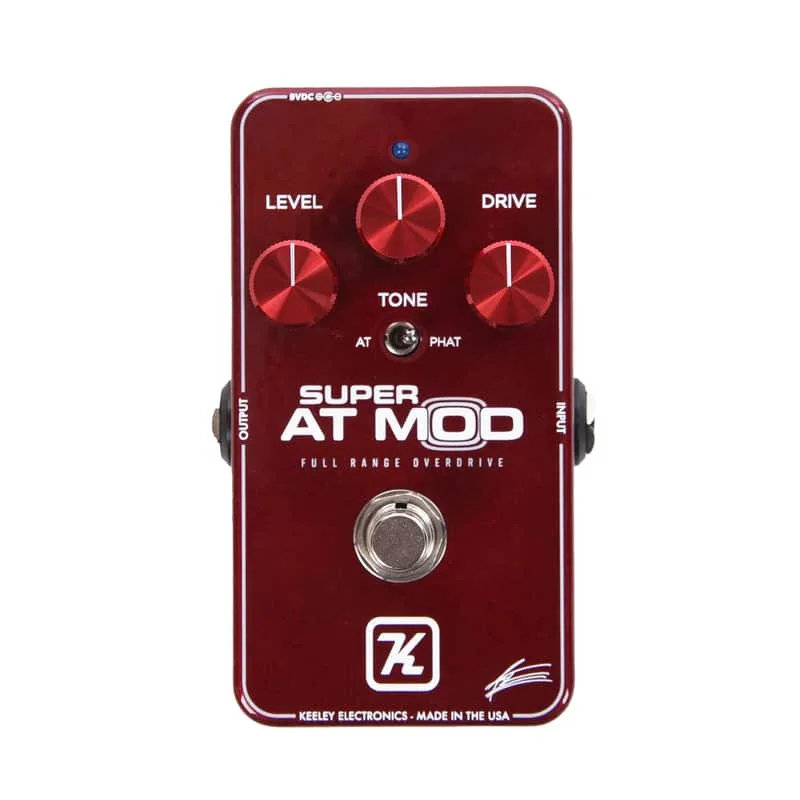
The Muse Driver is also an improvement on Keeley's earlier Super AT Mod, the first Timmons collaboration. Guitar Pedal X calls it "in essence an improvement of that circuit, with an extra 2-way toggle switch"6, and in a follow-up piece goes further: "The new Muse Driver does indeed make the very recent Super AT Mod obsolete, as it comes with two Mods, and that is one"9.
The controls and AT/RK switches
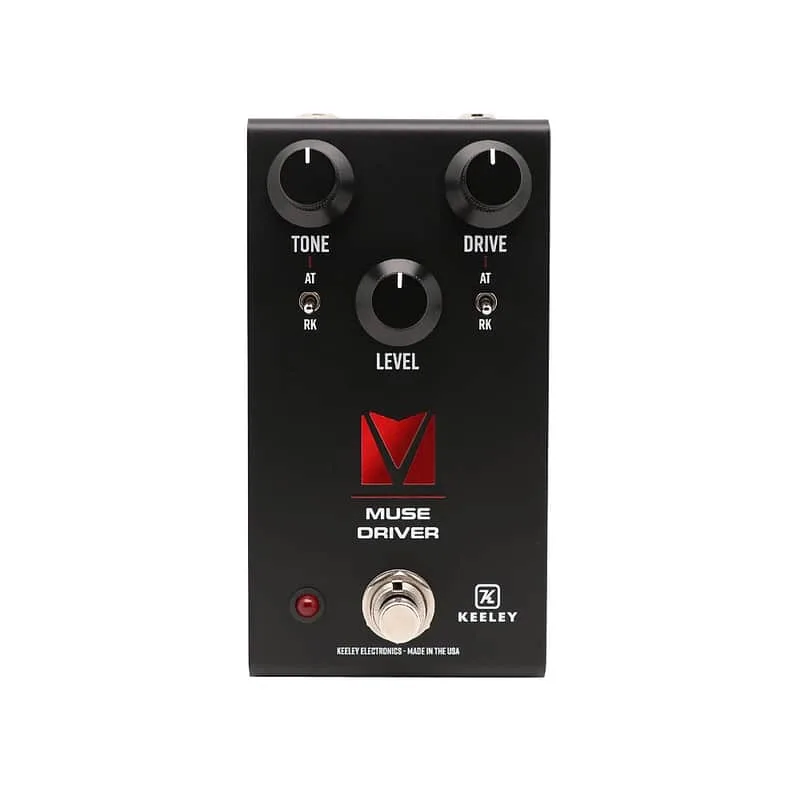
The front panel is a simple three-knob setup: Level, Drive and Tone8. The flexibility comes from the two mini toggles, each marked AT and RK.
| Control | AT position (up) | RK position (down) |
|---|---|---|
| Tone toggle | Low-cut, high-pass voicing, Andy's preferred low-end response | Low boost, the "Phat Boost," more low-end frequency response4 |
| Drive toggle | Asymmetrical LED and silicon diode clipping, the Super AT Mod sound | Dual germanium diode clipping, softer and smoother4 |
The names are straightforward: AT is Andy Timmons, RK is Robert Keeley7. The AT settings deliver smooth, singing distortion from symmetrical clipping, which GuitarPlayer's reviewer described as "a more Boogie-like presentation," while RK reduces edge and adds a bass boost at 100Hz for a heavier, thicker tone7. Keeley says of the RK clipping mode: "This mode can sound a bit like a vintage fuzz pedal with a softer, smoother feel"8. Andy Timmons notes the AT/AT mode "sounds great with the gain turned up, providing an incredibly cool Marshall-esque crunch tone"2.
The tone switch cuts lows for clarity or boosts low-end for power4. The RK position's Phat Boost is aimed at players pushing vintage or single coil pickups4.
Power: 9 to 18V
The Muse Driver runs on a regular 9 to 18V DC power supply, center negative, drawing about 27 mA26. Keeley highlights the 9 to 18V operation as giving "huge dynamic range and headroom"4, and Guitar World notes the pedal can switch between nine and 18-volt operation for diverse dynamic range and plenty of headroom42. There is no battery option; it is a power supply pedal.
The bypass mode is worth knowing before you set the pedal up: press and hold the footswitch for two seconds and the pedal switches between true bypass and buffered bypass4. Keeley describes its buffer as "industry-leading" and built for noise-free switching4.
What reviewers said
Reception was positive across the press. Gearnews called it "a super flexible, and very versatile drive effect," adding that "each voice has a valid reason for being there" and that it offers great value for money, especially for gigging guitarists10. Pedal of the Day found that the Muse Driver and Noble Screamer "both sound fantastic on their own, but stack 'em up and you've got a whole new powerhouse of sound to deal with"3.
Premier Guitar's piece with Robert Keeley and Andy Timmons praised the pedal's usability: "It retains the clear top end and it speaks well. And it has a surprising amount of gain, that's really usable. It doesn't get tubby or floppy" on the low end5.
Not every reviewer was fully satisfied. GuitarPlayer's Art Thompson liked the two distinct distortions but wished they were easier to reach mid-song: "These very distinct distortions would be even better if you could foot-switch between them"7.
Who uses it
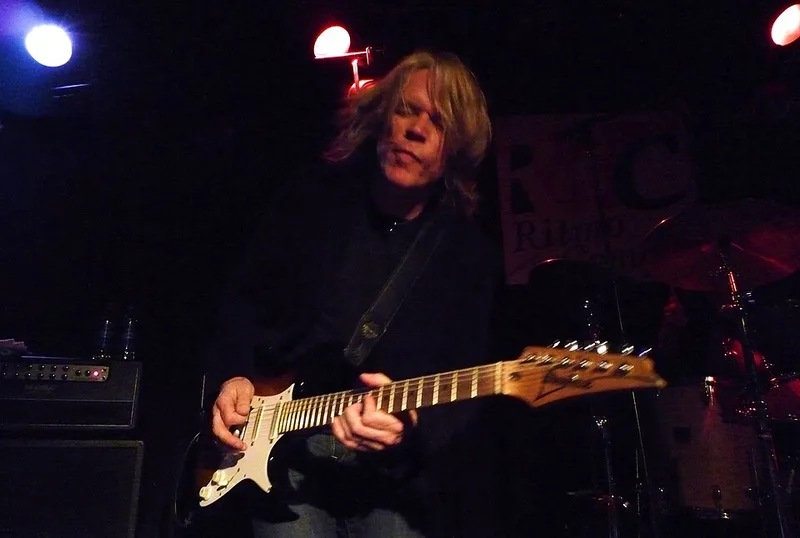
Andy Timmons is the player the pedal was built around. Gearnews notes he "put in all his years of experience playing live, touring, and recording" into shaping it10, and Guitar World quotes Keeley Electronics saying "everything about the Muse Driver is geared towards the professional musician and their quest for an inspiring tone when performance demands it"2.
The design team was Robert Keeley and Andy Timmons, with Aaron Pierce, a core member of the Keeley creative team, in the room with them5. It was their second collaboration8. The pedal is designed, engineered and manufactured in Oklahoma City26, which Guitar Pedal X lists as Edmond, USA2.
Videos
Sweetwater
Shawn Tubbs
Corey Congilio
News
Questions
Is the Keeley Muse Driver true bypass?
It can run either way. Press and hold the footswitch for about two seconds and the pedal toggles between true bypass and buffered bypass, so you can set whichever suits your pedalboard. Keeley describes its buffer as industry-leading and designed for noise-free switching.
Is the Keeley Muse Driver based on a Blues Driver?
Yes. Under the hood is a Keeley-modded, three-control blues driver circuit, refined with decades of Keeley mod experience. It is essentially an improvement on Keeley's earlier Super AT Mod circuit, adding a second two-way toggle switch for extra voicing options.
What do AT and RK mean on the Muse Driver?
AT stands for Andy Timmons and RK for Robert Keeley. The up positions select Timmons' preferred voicings, the down positions Keeley's. The Tone toggle switches between a low-cut (AT) and a low boost (RK), while the Drive toggle switches between LED/silicon clipping (AT) and dual germanium diode clipping (RK).
How much current does the Keeley Muse Driver draw?
Guitar Pedal X reports a current draw of about 27 mA, powered by a regular 9 to 18V DC supply with a center negative 2.1 mm barrel. That is modest by modern pedal standards and easy on most isolated power supplies.
Sources (10)
- “These three new pedals dip into Keeley's decades of experience in modding classic circuits”: Keeley Electronics unveils the 4-in-1 Series, offering legendary drive and distortion in hybrid configurations, MusicRadar, 2024-03-12
- Keeley Electronics releases Andy Timmons Muse Driver pedal, Guitar World, 2024-01-24
- Keeley Electronics Muse Driver & Noble Screamer, Pedal of the Day, 2024-02-01
- Keeley Muse Driver 4-in-1 Overdrive, Premier Guitar, 2024-01-23
- Keeley Muse Driver: Ultimate Overdrive Workstation, Premier Guitar, 2024-02-12
- Guitar Pedal X, Guitar Pedal X, 2024-01-23
- “You could be excused for glazing over yet another batch of pedals trumpeting different flavors of grind, but these new boxes from Keeley have a cool twist...”: Keeley Electronics Super Rodent, Muse Driver, Blues Disorder and Angry Orange review, GuitarPlayer (www.guitarplayer.com), 2024-06-12
- NAMM 2024: Keeley Electronics and Andy Timmons join forces once again for the Muse Driver, MusicRadar, 2024-01-23
- Guitar Pedal X, Guitar Pedal X, 2024-01-26
- Keeley Muse Driver, gearnews.com, 2024-01-24
 Andy Timmons