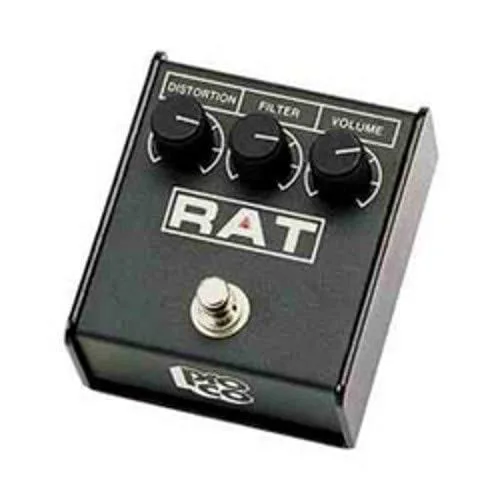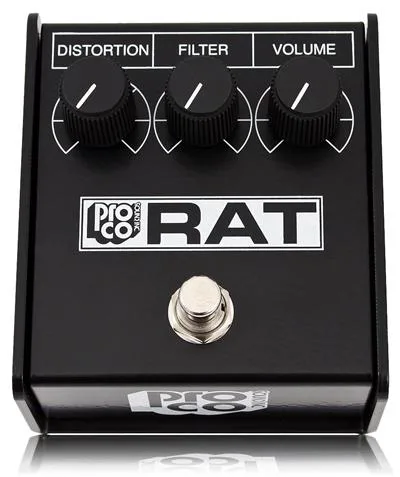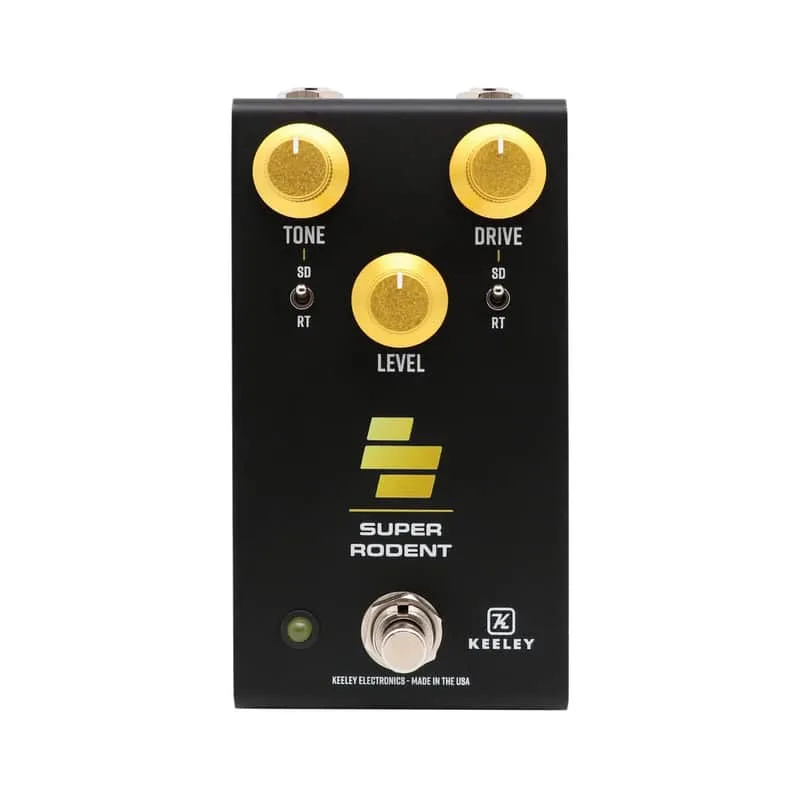


The Keeley Super Rodent is a 4-in-1 distortion pedal that puts two classic drive circuits in one box: the Boss SD-1 Super Overdrive and the Pro Co Rat. Two mini toggles let you run each circuit on its own, or mix the tone stack of one with the clipping stage of the other, giving four distinct sounds from a single overdrive-style footprint12.
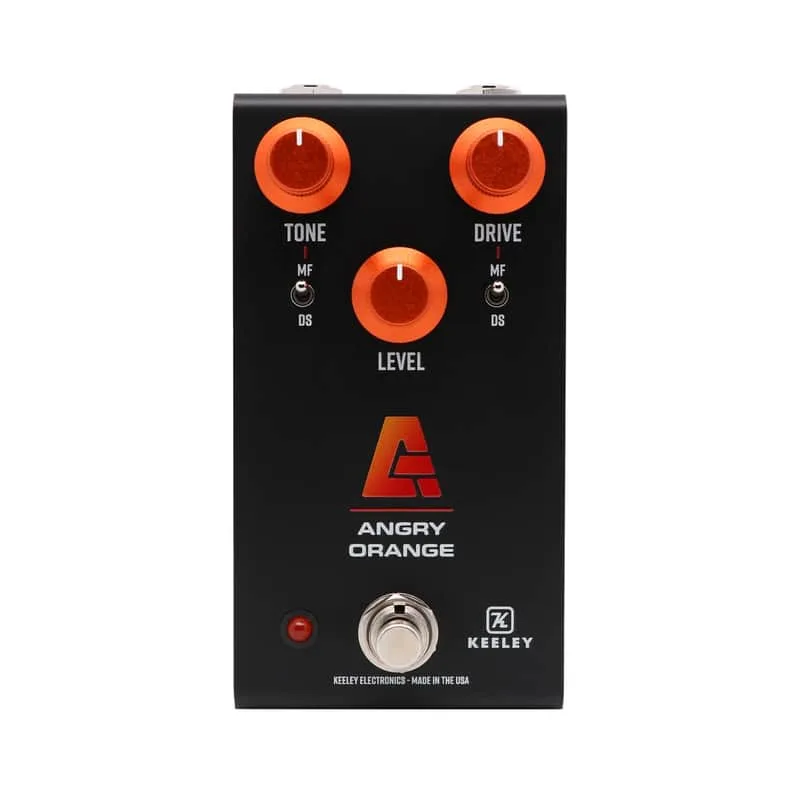
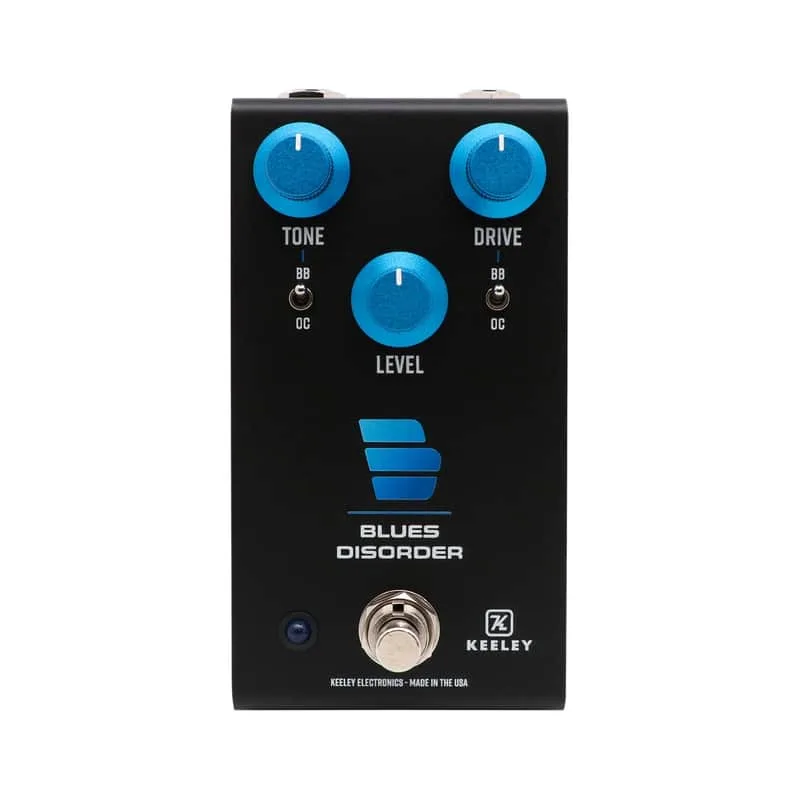
It launched on 12 March 2024 as part of Keeley Electronics' 4-in-1 Series, alongside the Keeley Angry Orange and the Blues Disorder32. Everything is analog: reviewers describe it as almost like pedal modeling, except the tone controls and clipping sections are 100% analog circuits you select yourself, all designed and manufactured by Keeley in a new aluminum enclosure2.
The controls: three knobs and two SD/RT toggles
The front panel keeps it simple: three knobs (Drive, Tone and Level) and two mini toggles, each with SD and RT positions61. The two toggles do different jobs, and understanding the split is the key to the pedal.
| Control | What it does |
|---|---|
| Drive | Sets the gain level |
| Tone | Shapes the frequency response, behavior depends on the Tone toggle |
| Level | Sets the output volume |
| Drive toggle | SD: soft diode clipping, tube-amp-like overdrive. RT: hard diode clipping, edgier and more aggressive57 |
| Tone toggle | SD: active low-pass filter with more bass and treble available. RT: passive tone control that rolls off high frequencies5 |
The Tone toggle picks which circuit's tone stack sits after the drive stage, and the Drive toggle picks which circuit's clipping character shapes the front end. Because the two sections are selected independently, the knobs behave differently depending on where the toggles sit: in SD mode the Tone control is an active filter with more high and low frequencies available, while in RT mode it works like the Rat's filter, rolling off highs58.
In Premier Guitar's demo of the series, Tom Butwin walked through exactly this: selecting SD on the drive toggle gives a soft clipping tube overdrive type of drive, and SD mode on the tone section gives active filters with more high and low frequencies available8.
The four modes, including two hybrids
With two toggles and two positions each, you get four combinations. Two are the classic circuits on their own; the other two are hybrids that borrow the tone stack from one circuit and the clipping from the other19.
| Mode | What it is |
|---|---|
| SD + SD | Boss SD-1 Super Overdrive classic1 |
| RT + RT | Pro Co Rat distortion classic1 |
| RT + SD | SD-1 soft clipping with a Rat-style "Filter" high-frequency roll-off1 |
| SD + RT | Rat hard clipping with an SD-1-style LPF tone stack, with added bass and treble1 |
Keeley's own framing, as reported at launch, was that by mixing the SD Overdrive and RT Distortion you create two unique hybrid distortions10. Pedal of the Day described the choice as playing through the classic yellow "Japanese Super O-Drive" or a "Rodentia Michigander" distortion circuit, or the two hybrids in between2.
What the modes sound like
What a pedal sounds like is a matter for the reviewers who played it, and they covered all four modes.
GuitarPlayer's Art Thompson found the two pure circuits the furthest apart. With both switches set to RT, the pedal goes right to saturated fuzz with tons of gain available, and the tone ranges from soft and buttery to bright and biting without becoming harsh. The SD setting combines a mid-focus tone circuit with a soft-clip drive stack: less gainy, thinner and more tubular, and excellent for organic overdrive tones6.
Guitar World's reviewer compared the drive settings at the top of the Drive knob's range, with the RT setting delivering smooth compression while the SD setting sounds more organic and dynamic. The same review found the midrange boost in both the RT and SD settings makes it a monster for blazing lead and solo tones that bite through the mix7.
On the hybrids, Guitar Pedal X's Stefan Karlsson went mode by mode:
"RT + SD : Beefed up SD-1 - more bass and treble, more edge"
That RT+SD hybrid was his favorite of the four, and he called the Super Rodent the most accomplished pedal of the 4-in-1 series so far, with all four combinations usable. In a later Rat-style distortion roundup he singled out the opposite hybrid too: "I love the SD-1 Tone Stack on the Rat Clipping - that delivers a more vibrant and full-on tone"1112.
The two launch prices conflict across reports. Guitar Pedal X gave the US MAP/RRP as $199 (with €249 in Europe and £215 in the UK at launch, later €259 in the EU), while gearnews listed $127 at launch.
Where it came from
The Super Rodent is one of the pedals in Keeley's 4-in-1 Series, and like the others in the series it is built in a new aluminum enclosure, entirely designed and manufactured by Keeley Electronics2. MusicRadar's launch coverage quoted Keeley promising "a modern, punchy array of dirt"9, and gearnews' Jef summed up the Super Rodent as having "some lovely Hybrid tones, and I can see it being a great addition to a pedalboard for many guitarists"4.
GuitarPlayer's overall verdict framed it as a do-it-all distortion pedal that blurs the line between fuzz and distortion, offering the best aspects of both6.
Videos
Sweetwater
Keeley Electronics
Keeley Electronics
Questions
How do you switch the Keeley Super Rodent to true bypass?
Press and hold the footswitch for two seconds. The pedal ships with a buffer engaged for silent switching with no tone loss, and holding the footswitch toggles it back to true bypass; the LED flashes twice to confirm the change.
Is the Keeley Super Rodent analog?
Yes. Reviewers describe it as 100% analog circuitry, entirely designed and manufactured by Keeley Electronics in a new aluminum enclosure. It works like pedal modeling in concept, but every tone stack and clipping section is a real analog circuit you switch between.
What does the RT+SD mode on the Super Rodent sound like?
RT+SD pairs the Boss SD-1's soft clipping with the Rat's style of high-frequency roll-off filter. Guitar Pedal X's reviewer called it his favorite mode, describing it as a beefed-up SD-1 with more bass, more treble and more edge.
Can the Super Rodent get a fuzz sound?
It gets close. With both toggles set to RT, the pedal goes right to saturated fuzz with tons of gain available, and the tone control ranges from soft and buttery to bright and biting without becoming harsh, according to GuitarPlayer's review.
Sources (11)
- Guitar Pedal X, Guitar Pedal X, 2024-09-10
- Keeley Electronics Super Rodent / Angry Orange / Blues Disorder, Pedal of the Day, 2024-03-12
- Keeley's 4-in-1 Series replicates classic circuits that can be mismatched to “Frankenstein monster tones”, Guitar World, 2024-03-13
- Keeley 4-in-1: Blues Disorder, Angry Orange, & Super Rodent, gearnews.com, 2024-03-13
- Guitar Pedal X, Guitar Pedal X, 2024-03-12
- “You could be excused for glazing over yet another batch of pedals trumpeting different flavors of grind, but these new boxes from Keeley have a cool twist...”: Keeley Electronics Super Rodent, Muse Driver, Blues Disorder and Angry Orange review, GuitarPlayer (www.guitarplayer.com), 2024-06-12
- Keeley Electronics Angry Orange, Blues Disorder and Super Rodent review, Guitar World, 2024-05-24
- Keeley 4-in-1 Pedal Series Demo of Blues Disorder, Angry Orange, Super Rodent & Noble Screamer, Premier Guitar, 2024-05-07
- “These three new pedals dip into Keeley's decades of experience in modding classic circuits”: Keeley Electronics unveils the 4-in-1 Series, offering legendary drive and distortion in hybrid configurations, MusicRadar, 2024-03-12
- Keeley Launches New Pedals: Angry Orange & More, Premier Guitar, 2024-03-13
- Guitar Pedal X, Guitar Pedal X, 2024-08-30