

The Keeley Angry Orange is a dual-circuit distortion and fuzz pedal that switches between a 1978 Boss DS-1 and a 1991 "Soviet" Big Muff, the version Electro-Harmonix players know as the Civil War Muff1. It is part of Keeley's 4-in-1 series, each pedal of which combines two classic drive circuits and lets you mix their tone stacks and clipping stages into two extra hybrid modes2. The Angry Orange was the fourth and final variant in the series as reviewed by Guitar Pedal X in September 20242.
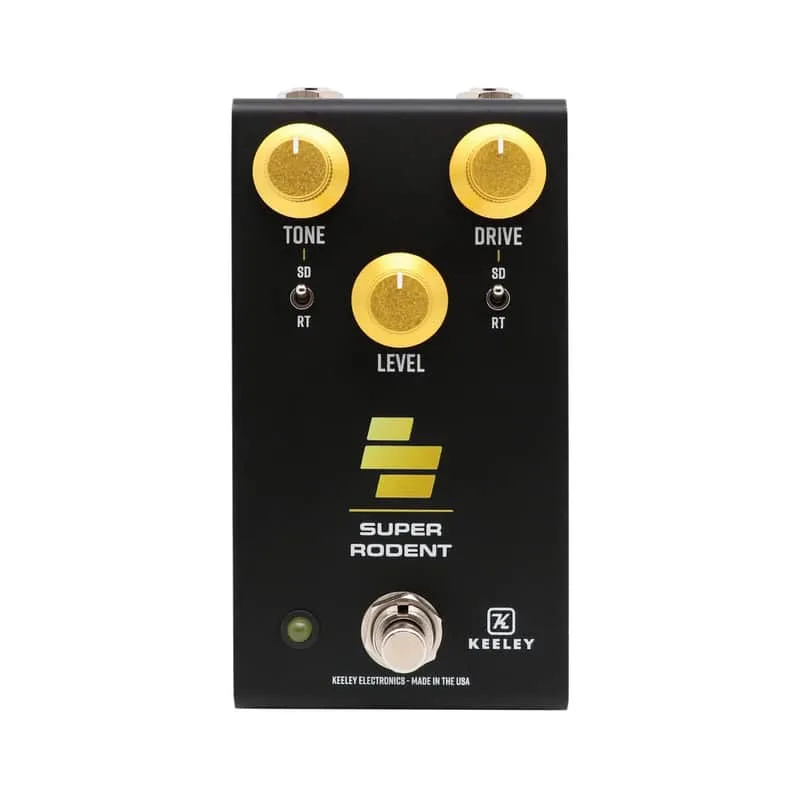
Keeley announced the Angry Orange alongside the Blues Disorder stablemates in the series on 12 March 2024, alongside the Super Rodent and Blues Disorder3. Pedal of the Day described the concept as "sort of like pedal-modeling except these are 100% old-school, analog circuits and you decide which tone control or clipping style you want"4.
A DS-1 and a Soviet Big Muff in one box
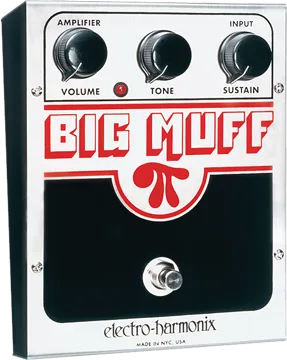
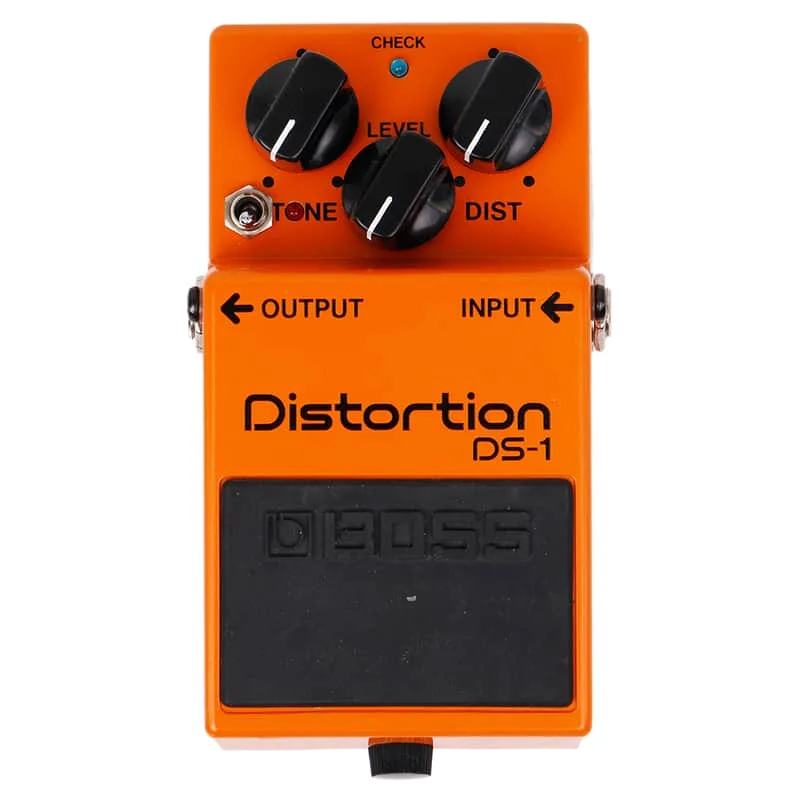
The two base circuits are a recreation of the 1978 Boss DS-1, which Pedal of the Day calls a "legendary '78 Japanese Orange Distortion," and the 1991 Soviet War Fuzz, the Civil War era Big Muff4. Each circuit contributes two switchable sections: a tone stack and a drive clipping stage. With both toggles in MF (Muff) position you get the EHX '91 Civil War Muff classic; with both in DS position you get the DS-12. Mixing them produces the two hybrid modes covered below.
The MF and DS sections are voiced differently at both stages. The clipping toggle selects between soft diode clipping in MF mode, described by Guitar Pedal X as "an edgier more aggressive muffled fuzz tone," and hard diode clipping in DS mode, "for softly overdriven tube-amp-like tones"3. The tone toggle selects between a scooped, passive tilt-style tone control in MF mode and a differently voiced passive tilt control in DS mode3.
The controls and the four modes
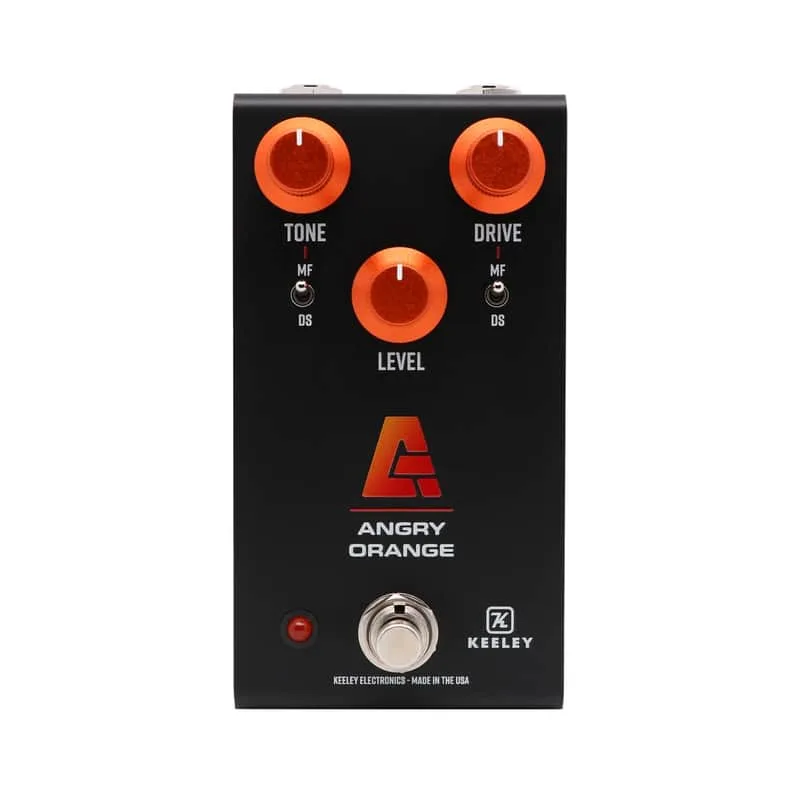
The front panel carries three knobs, Level, Tone and Drive, plus two mini toggles: one for the tone stack (MF/DS) and one for the drive character (MF/DS)16.
| Control | What it does |
|---|---|
| Level | Sets output volume |
| Tone | Passive tilt-style EQ, voiced differently in MF and DS modes3 |
| Drive | Sets the amount of gain |
| Tone mini toggle | Selects the MF (Muff) or DS (DS-1) tone stack1 |
| Drive mini toggle | Selects the MF or DS clipping stage3 |
The four toggle combinations give four distinct sounds2:
| Mode | Combination | Character |
|---|---|---|
| MF + MF | Muff tone stack, Muff clipping | EHX '91 Civil War Muff classic2 |
| DS + DS | DS-1 tone stack, DS-1 clipping | The 1978 DS-1 circuit21 |
| MF + DS | Muff tone stack, DS-1 clipping | More presence, tilted midrange-focused1 |
| DS + MF | DS-1 tone stack, Muff clipping | Hybrid with loads of grimy fuzz character but smoother and more rounded1 |
Guitar World's reviewer found the MF drive setting has more "bacon fry" sizzle, while the DS drive setting "delivers a distinct DS-1 growl," and called both settings great for heavy rhythms and riffs6. On the tone side, the same reviewer found the DS setting provides more midrange body and less dramatically boosted treble and bass than the scooped Muff setting6. In Premier Guitar's demo video, Tom Butwin noted that with the tone toggle in the MF position "you've got a very scooped sound," and that the MF drive mode produces "a muffled fuzz tone"7.
Guitar Pedal X's Stefan Karlsson ranked the MF + DS mode as his favorite combination, calling it "a more rounded DS-1 Distortion with extra low end punch (a little like the Ultra Mod)," a nod to Keeley's earlier Ultra Mod DS-1 mod. He also found the Muff clipping options have lower output than the DS-1 clipping, requiring the Level knob maxed at 5 o'clock versus about 3 o'clock for the DS-1 side2.
"the sounds were consistently good, and there was plenty of range on tap for heavier distortion and more output if I required them."
Bypass and switching
The Angry Orange ships with a buffered bypass as the factory default; Guitar Player lists the footswitch as "Mechanical, buffered bypass (factory default) or user-activated true bypass"1. Pedal of the Day called it an "amazing sounding buffer giving silent switching with no tone loss"4. To switch to true bypass, press and hold the footswitch for two seconds; the LED flashes twice to confirm, and holding again returns it to buffered bypass4.
Where it came from and what it costs
The Angry Orange is built entirely by Keeley Electronics, designed and manufactured in-house in a new aluminum enclosure14. It is a fully analog pedal: Keeley describes its circuits as "100% old-school, analog circuits," mixing the MF Fuzz and DS Distortion to create two hybrid fuzz distortions4.
On price, Guitar Pedal X and Guitar Player give $19913, while Gearnews listed $128.00 at launch5. Regional pricing was reported as €249 / £215 in March 20243, with Guitar Pedal X later citing €259 in the EU2.
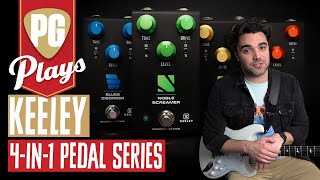
In Premier Guitar's demo of the series, Tom Butwin walks through the Angry Orange alongside the Blues Disorder, Super Rodent and Noble Screamer, showing how each pairs two classic circuits with two tone stacks and demonstrating the distortion and fuzz combination on the Angry Orange7.
Videos
Premier Guitar
Sweetwater
Questions
What circuits is the Keeley Angry Orange based on?
It recreates a 1978 Boss DS-1 distortion and a 1991 Soviet-era Big Muff, the circuit Electro-Harmonix fans call the Civil War Muff. Each circuit can be used on its own, or the two can be mixed into two hybrid modes by combining the Muff tone stack with the DS-1 clipping stage and vice versa.
How do you switch the Keeley Angry Orange to true bypass?
The pedal ships with a buffered bypass that gives silent switching with no tone loss. To switch to true bypass, press and hold the footswitch for two seconds; the LED flashes twice to confirm the change. Hold it again for two seconds to return to buffered bypass.
What are the hybrid modes on the Angry Orange?
Besides the straight Muff and straight DS-1 modes, you can pair the Muff tone stack with DS-1 clipping, or the DS-1 tone stack with Muff clipping. Reviewers found the DS tone stack with Muff clipping gives a smoother, more rounded distortion with fuzz character, while the Muff stack with DS clipping is more midrange-focused.
Is the Keeley Angry Orange made in the USA?
Yes. The Angry Orange is built in the USA, and the whole 4-in-1 series is designed and manufactured by Keeley Electronics in a new aluminum enclosure. It is available direct from the Keeley Electronics webstore and at leading dealers.
Sources (7)
- “You could be excused for glazing over yet another batch of pedals trumpeting different flavors of grind, but these new boxes from Keeley have a cool twist...”: Keeley Electronics Super Rodent, Muse Driver, Blues Disorder and Angry Orange review, GuitarPlayer (www.guitarplayer.com), 2024-06-12
- Guitar Pedal X, Guitar Pedal X, 2024-09-17
- Guitar Pedal X, Guitar Pedal X, 2024-03-12
- Keeley Electronics Super Rodent / Angry Orange / Blues Disorder, Pedal of the Day, 2024-03-12
- Keeley 4-in-1: Blues Disorder, Angry Orange, & Super Rodent, gearnews.com, 2024-03-13
- Keeley Electronics Angry Orange, Blues Disorder and Super Rodent review, Guitar World, 2024-05-24
- Keeley 4-in-1 Pedal Series Demo of Blues Disorder, Angry Orange, Super Rodent & Noble Screamer, Premier Guitar, 2024-05-07