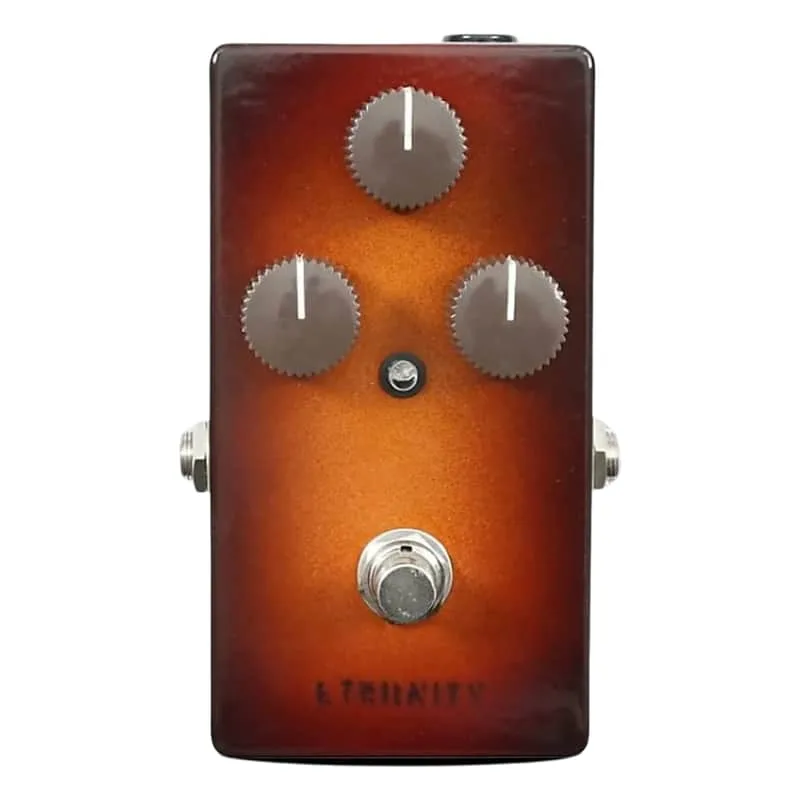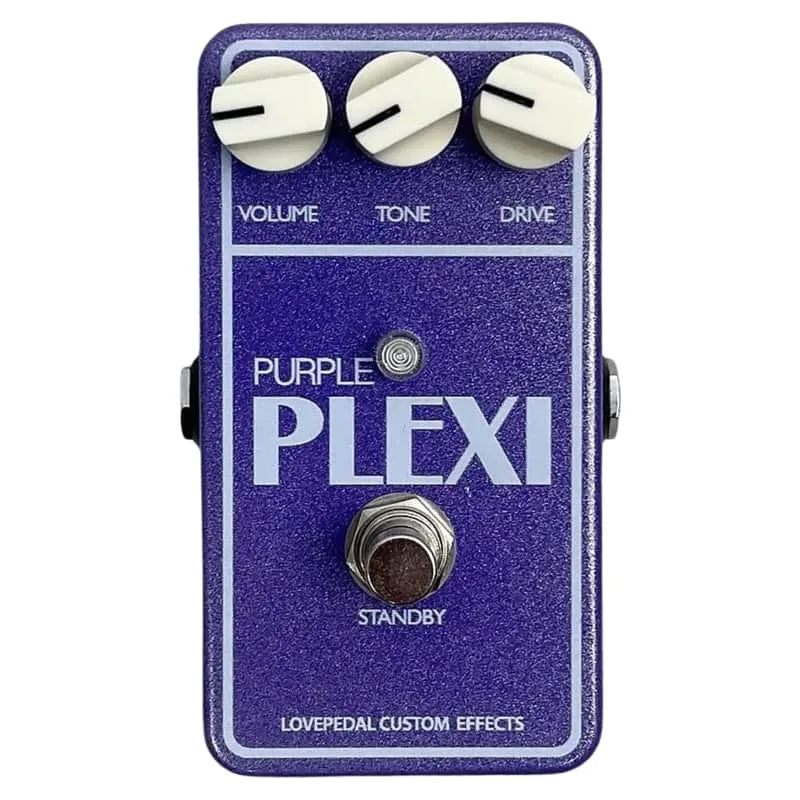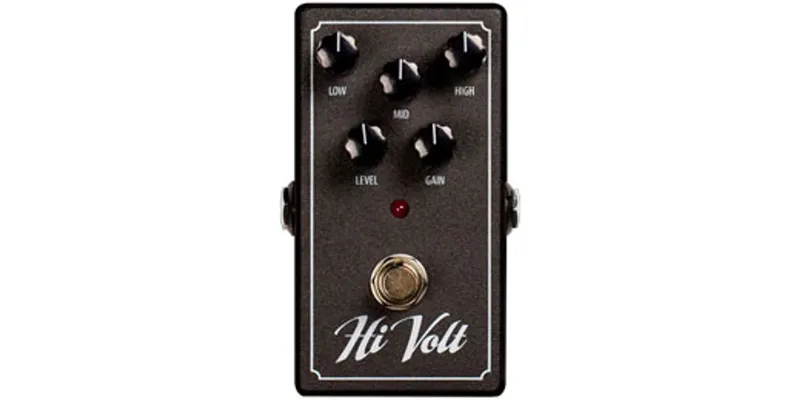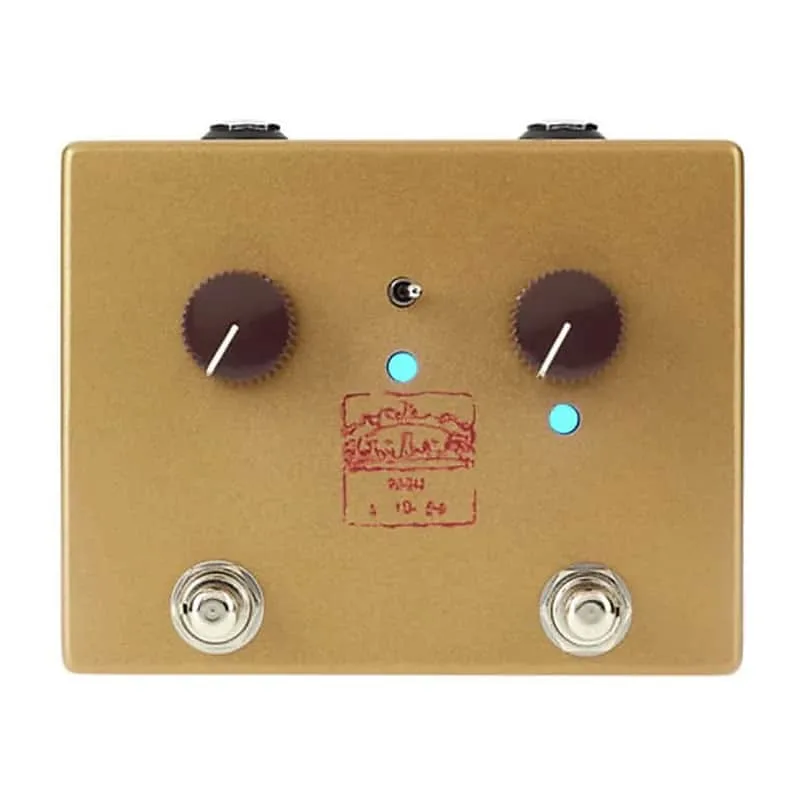


The Lovepedal Les Lius is a drive pedal designed to give you vintage Fender "tweed"-style tone, the kind of early breakup associated with late 1950s Fender amps. It is made by Lovepedal, whose range also includes the Lovepedal Eternity, the Purple Plexi and the Hi Volt. Under the hood it descends from the Lovepedal Electra circuit: the stripboard layout published at Guitar FX Layouts in April 2013 numbers it as the 159th Lovepedal Electra variation1.
What it does to your sound
MusicRadar's reviewer Trevor Curwen tested the Les Lius in front of a more modern Fender amp and found it delivers what the name promises: "In front of our more modern Fender, the pedal yields a lovely dirty tweed sound, which basically means dirtier, more urgent and mid-rich sounding"2. In other words, the pedal pushes a clean-ish modern amp toward the compressed, mid-forward character of an old tweed amp on the edge of overheating.
"Cranked, the Deluxe setting puts you in the mind of more compressed Neil Young territory"
Controls
The Les Lius keeps its faceplate simple, with the voicing work done by a toggle and the extra gain by a second footswitch2.
| Control | What it does |
|---|---|
| Three-way toggle switch | Provides tones based on late 50s Fender amps: a Deluxe, a Twin, and a combination of the two |
| Right-hand footswitch | Brings in another gain stage to crank it up, with a second knob to set that stage |
| Second knob | Sets the level of the extra gain stage brought in by the right-hand footswitch |
How it works inside
The technical analysis at Guitar FX Layouts settles a couple of points players often get wrong about this circuit. First, it is a single-stage circuit, not the two-stage design it is sometimes described as: the JFET acts only as a switch for the BJT stage, lowering the emitter resistor value for higher gain, and plays no part in distortion or tone shaping1. Second, the clipping is diode-based, with two 1N914 diodes and BAT46 Schottky diodes selected by the three-way switch as separate in-circuit components for different distortion characteristics1.
For builders, the published layout specifies a 2N5088 for the BJT stage; the original JFET part is unknown, but a 2N5457 was verified working in its place1. One contributor also noted a tweak worth knowing: replacing the linear drive pot with a reverse-log pot solves the problem of usable gain arriving only at the end of the knob's travel1.
The Les Lius runs on 9V negative center and draws next to nothing, maybe 10mA tops, so it is an easy load on any standard pedalboard supply1.
Where it sits in the Lovepedal range
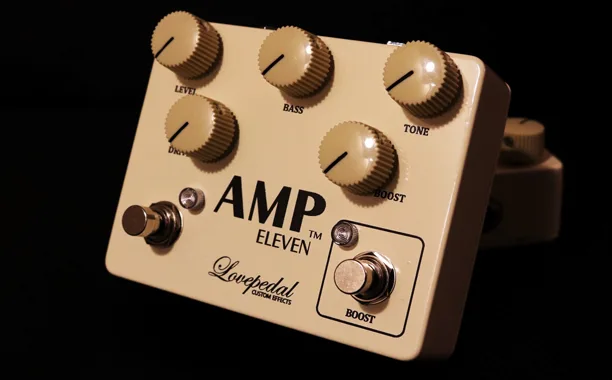
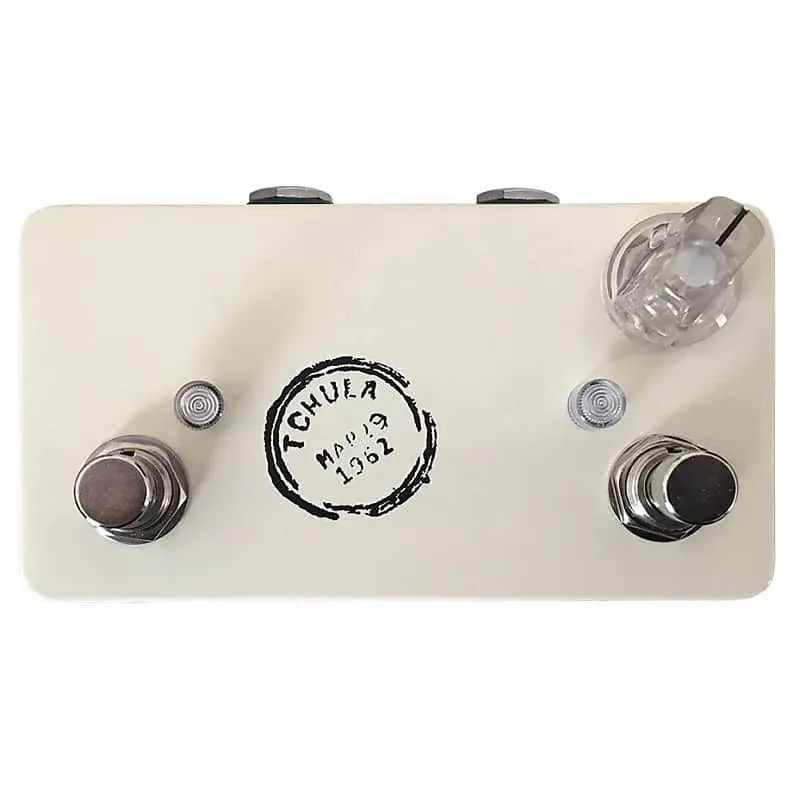
The Les Lius is the tweed-amp specialist in a maker's lineup that covers a lot of overdrive ground, from the long-running Eternity and Burst Eternity to the Amp Eleven, the Tchula, the COT 50 and the tube-powered Overdrive 11. If you are comparing low-gain drives generally, the site's overdrive pedal page and the Boss SD-1 vs Ibanez TS9 comparison cover the more common circuits2.
Videos
ProGuitarShopDemos
ProGuitarShopDemos
ProGuitarShopDemos
Questions
What diodes does the Lovepedal Les Lius use?
The Les Lius uses two 1N914 diodes and BAT46 Schottky diodes for clipping. According to the technical analysis at Guitar FX Layouts, the three-way switch selects between these diode options as separate in-circuit components, giving each toggle position its own distortion character. One commenter on the layout used BAT41 diodes in place of the BAT46s when building their own version.
Is the Les Lius based on the Lovepedal Electra?
Yes. Guitar FX Layouts, which published a stripboard layout of the pedal in April 2013, identifies the Les Lius as the 159th variation of the Lovepedal Electra circuit line. The same analysis describes it as a single-stage circuit rather than the two-stage design it is sometimes described as, with the JFET acting only as a switch for the BJT stage.
How much current does the Les Lius draw?
Very little. Commenters on the Guitar FX Layouts page describe the pedal as drawing next to nothing, maybe 10mA tops, and running on 9V with a negative-center supply. That low draw means it is easy on a pedalboard power supply.
What transistors are in the Lovepedal Les Lius?
The circuit uses two transistors: Q1 is a bipolar junction transistor, a 2N5088 in the published layout, and Q2 is a JFET whose original part is unknown, with a 2N5457 verified as a working substitute by the layout's builders.
Sources (2)
- Guitar FX Layouts: Lovepedal Les Lius, tagboardeffects.blogspot.com, 2023-02-28
- Lovepedal Les Lius review, MusicRadar, 2013-07-22