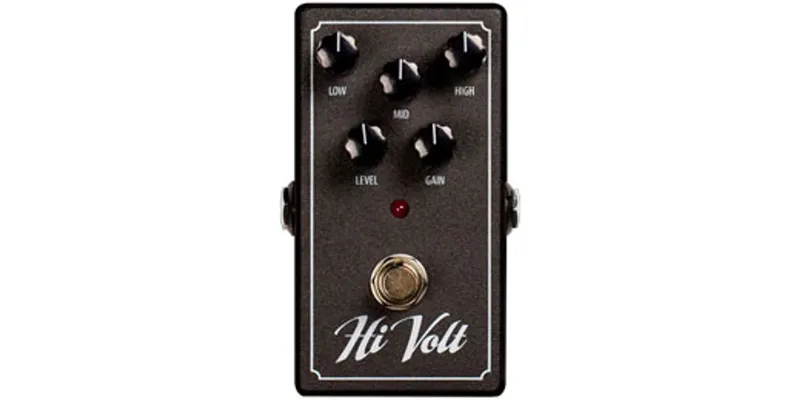


The Lovepedal Hi Volt is a mid- to high-gain dirt box from Lovepedal, announced in February 2014 as the company's newest original design and hand-built in the USA1. It pairs a gain stage with a 16-volt, high headroom, active three-band EQ, and it carries a street price of $22521. It sits on the heavier end of Lovepedal's range, well away from the low-gain Lovepedal Eternity, and there is also a related Lovepedal Hi-Volt Custom 1 in the family.
The controls
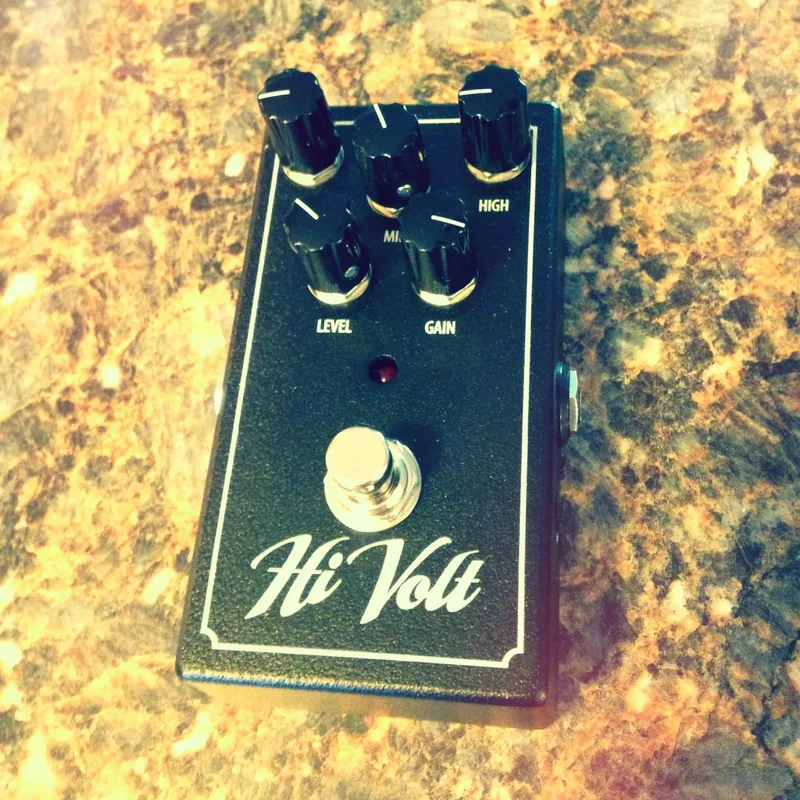
The Hi Volt has five knobs: Level, Gain, Treble, Mid and Bass1. The last three form the active EQ, which Lovepedal describes as custom-tuned and high headroom1.
| Control | What it does |
|---|---|
| Level | Sets the pedal's output volume1 |
| Gain | Sets the amount of dirt1 |
| Treble | Active EQ band for top end1 |
| Mid | Active EQ band for mids, added to the EQ design3 |
| Bass | Active EQ band for low end1 |
Premier Guitar's reviewer found the EQ useful for dialing out harshness: "The EQ controls let me tame the shrillness while maintaining plenty of definition."2 With the three-knob EQ and gain/level controls, the reviewer wrote, the pedal "can push you into the realm of Maiden and Metallica"2.
What it sounds like
Lovepedal's own release frames the gain knob as a wide sweep. At around 9 o'clock, the company says, "you get a tight, British clang that nails your favorite 70's classic rock riffs"; at 1 o'clock it delivers "more saturation from signing lead tones to 90's grunge riffage"; and around 3 o'clock it will deliver "some of the most brutal tones to ever come out of a stomp box"1.
Premier Guitar's reviewer heard the top of that sweep this way:
"As the gain eclipsed 4 o'clock, the tone was saturated and thick, though naturally a little bright."
Power: standard DC or battery, charged up to 16V inside
The Hi Volt runs from a standard 9-volt DC input or a 9-volt battery compartment1. Inside, the pedal is charge-pumped up to 16VDC3, which is what lets the active EQ run with high headroom1. That internal voltage step-up is worth knowing if you power a board: the pedal asks for a standard 9-volt supply, and the conversion happens on board.
The circuit
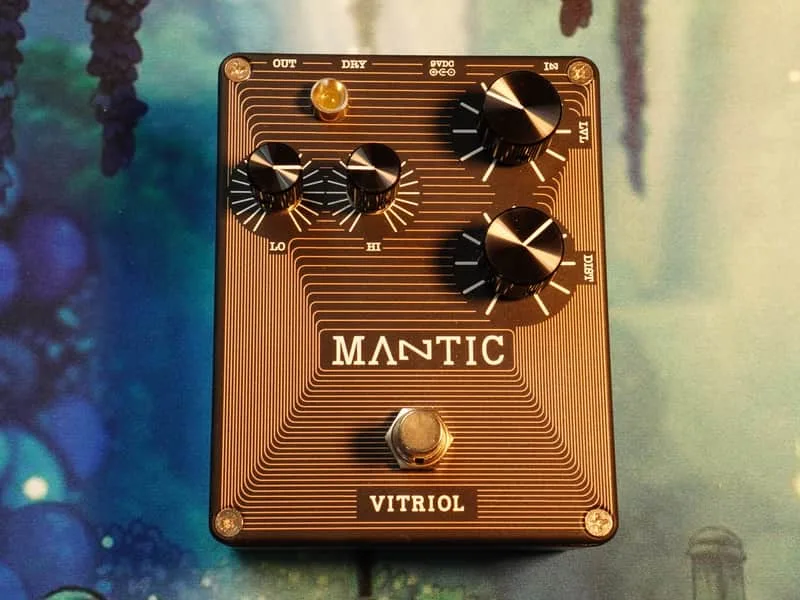
The technical analysis at Guitar FX Layouts traces the Hi Volt as a two-part design: "The front half is pretty much the front half of a BSIAB, the overdrive section. The back half is the EQ section based loosely on the FX86 and HM2," similar to the EQ section of the Mantic Effects Vitriol but with an added mid control3. The pedal uses J201 JFETs; on the traced layout, the first two pairs are arranged in the mu-amp configuration and need no bias adjustment, while the last single JFET is adjusted to around 7 to 10 volts on the drain3. Builders working from that layout should note it was updated on 14 April 2017, connecting D1 to pin 8 instead of 7 and changing an 820K resistor to 882K3.
Builders who have put the circuit together report mixed results. One commenter, Robert Marbun, wrote "Love the sound and the clean up," while another found the build had a muffled rather than tight sound and that the tone pots had weak action, especially in the mids section3.
How it fits Lovepedal's range
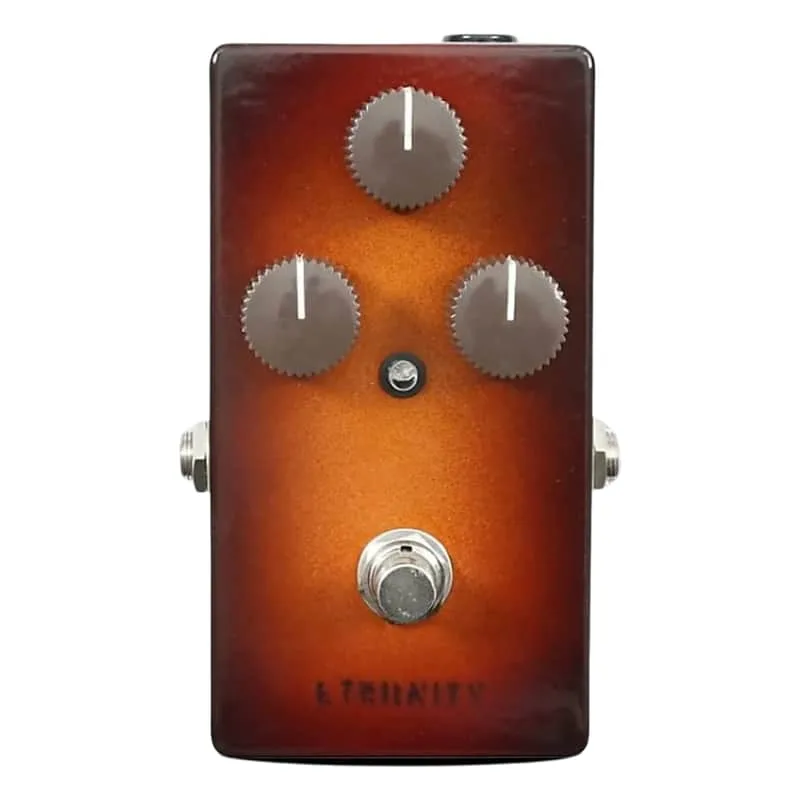
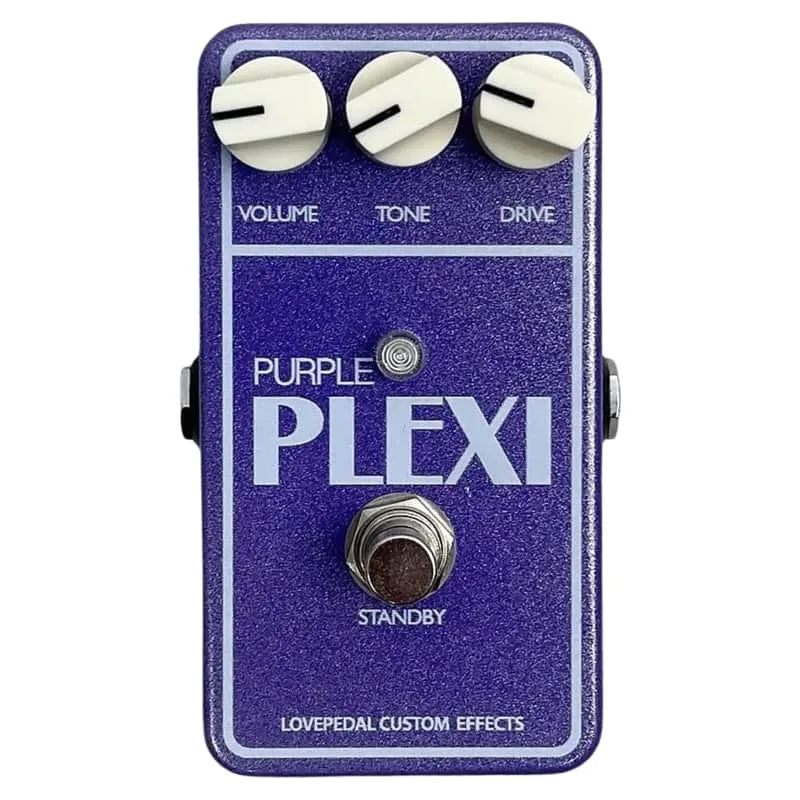
The Hi Volt is the high-gain bookend to Lovepedal's better-known lower-gain designs like the Lovepedal Eternity and the Lovepedal Les Lius. Players comparing it within the maker's line may also want to look at the Lovepedal Purple Plexi or, for the broader category, the site's pages on Overdrive Pedals and Distortion Pedals.
Videos
ProGuitarShopDemos
Sam Vilo
西尾知矢
Questions
Does the Lovepedal Hi Volt take a battery?
Yes. The Hi Volt has a 9-volt battery compartment and also accepts a standard 9-volt DC input, so it can run on either. Inside, the pedal charge-pumps that 9 volts up to 16VDC, which gives the circuit more headroom than a straight 9V design would.
Is the Lovepedal Hi Volt true bypass?
Yes. Lovepedal's press release for the Hi Volt describes it as having a true bypass on/off switch, so the pedal is out of the signal path entirely when switched off.
What circuit is the Lovepedal Hi Volt based on?
According to the technical analysis at Guitar FX Layouts, the front half of the Hi Volt is essentially the overdrive section of a BSIAB, while the back half is an EQ section based loosely on the Boss FX86 and HM2, similar to the EQ section of the Mantic Effects Vitriol but with an added mid control.
What transistors does the Lovepedal Hi Volt use?
The Hi Volt uses J201 JFETs. On the traced layout, the first two pairs are arranged in the mu-amp configuration, which needs no bias adjustment, while the last single JFET is adjusted to around 7 to 10 volts on the drain.
What amps was the Hi Volt tested with?
Premier Guitar's reviewer tested the Hi Volt with a Fender Telecaster and a PRS SE Zach Myers, plugged into Fender Twin Reverb Reissue and Orange TH30 amps.
Sources (3)
- Lovepedal Releases the Hi Volt, Premier Guitar, 2014-02-25
- Quick Hit: Lovepedal Hi Volt Review, Premier Guitar, 2014-07-11
- Guitar FX Layouts: Lovepedal Hi Vol, Guitar FX Layouts (tagboardeffects.blogspot.com), 2017-03-11