

The Mad Professor Hand-Wired Amber Overdrive is a hand-wired overdrive pedal from Mad Professor. Under the hood it is something unusual for an overdrive: independent circuit analysis identifies it as a modified Big Muff with JFET transistors doing the clipping, which pulls its sound toward fat, smooth, fuzz-tinged territory rather than raspy distortion1. Guitar Pedal X's Stefan Karlsson grouped it among his favorite fuzzy-drive pedals2.
What it does to your sound
The circuit analysis on Guitar FX Layouts characterizes the Amber as producing a very thick sound whether playing chords or single notes, fat and juicy with just a hint of fuzz1. It is also described there as offering a wide range of dynamics and expressive touch sensitivity1.
Stefan Karlsson, writing on Guitar Pedal X, called it:
"A smart dedicated Fuzzy-Drive circuit by Mad Professor - pretty much as simple as they come with just those 3 classic controls - really easy to dial in too for that maximum fuzzy-drive impact."
Controls
The pedal keeps things simple with three controls, which Karlsson describes as the 3 classic controls and really easy to dial in2. Builder reports on the published DIY layout indicate the pedal runs loud: one builder who used 2SK117 JFETs as the clipping elements noted it is very loud, with volume and gain set at 9:00 for unity gain1.
Where it goes in the chain
The Amber works best as the first pedal in the chain. It is a medium input impedance device that places a light load on your guitar pickups to produce a smoother tone, and a buffered pedal ahead of it will change the character, giving an increase in treble and upper midrange1.
Players who like a brighter, more cutting character can exploit that interaction; players who want the intended smoothness should keep it first in line, ahead of any buffers1.
The circuit: a Big Muff that does not sound like one
The Amber's lineage is a surprise given its name. The independent analysis identifies it as a modified Big Muff, though one that does not really sound like one1. The key modification is in the clipping stage: instead of silicon diodes, it uses 2N3819 JFET transistors as clipping diodes at positions D1 and D2, with JFET clipping in stage 2 of the Muff gain structure1. JFETs clip more softly than ordinary silicon diodes, which is consistent with the fat, smooth, slightly fuzzy descriptions the pedal attracts1.
The same analysis places the Amber within a small family of related Mad Professor circuits:
- The Fire Red Fuzz is almost identical to the Amber except for the tone stack1.
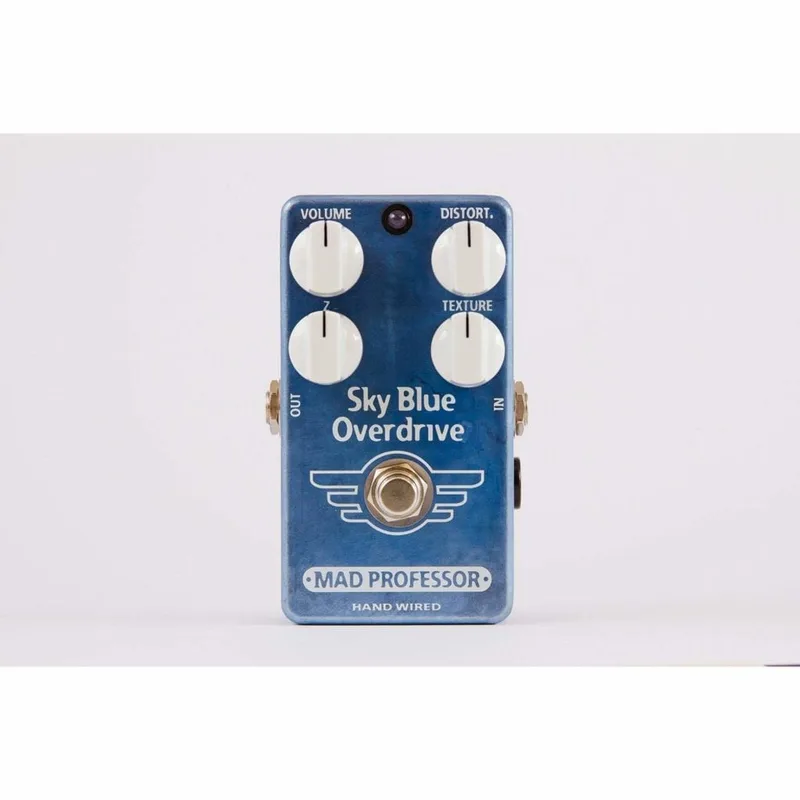
- The Sky Blue Overdrive also uses 2N3819s as clipping diodes1.
Versions and editions
A vero (stripboard) DIY layout for the circuit has been published on the Guitar FX Layouts blog, tagged to the BJF/Mad Professor circuit family, which is where much of the technical detail about the circuit comes from1.
In May 2020, gearnews.com reported a limited run of modded Mad Professor pedals that included an Amber Overdrive with a Midas Touch mod5.
For builders: substitutions and biasing
The DIY community around the published layout has worked out several practical substitutions:
| Position | Substitutes | Notes |
|---|---|---|
| Q4 (JFET) | J201, 2N5457 | Mind the pinout; bias by tweaking the 14.7k resistor from drain to +9V, or use a trimmer or pot to find the value1 |
| D1 and D2 (clipping) | 1N4148, 1N4001 diodes; BF245A and 2SK117 JFETs | Socket the positions and audition different components1 |
Builder reports on the layout have been positive. One wrote "Its verified and sounds awesome"1, and another: "Sounds great this. Used BF245As for D1 & 2. Its nice and loud."1. A third, who built it with 2SK117 JFETs as the clipping elements, preferred it to the Skreddy P19, citing more range to the dirt and a more vocal tone1.
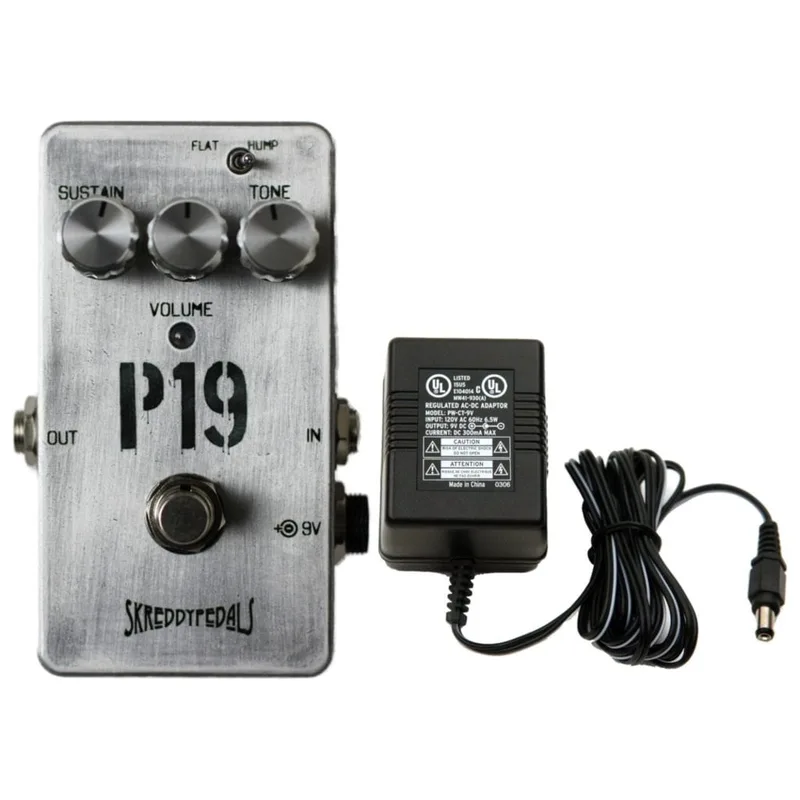
Amber Overdrive versus the Skreddy P19
Both pedals are Big Muff variants, so they are similar in broad family terms, but they differ in transistors and component values1. The one head-to-head opinion available is the builder quoted above, who found the Amber had more range and a more vocal tone than the P191. That is a single DIY builder's impression rather than a published review, but it lines up with the general picture of the Amber as a smoother, more touch-responsive take on the Muff topology1.
Videos
Mad Professor Amplification
Mad Professor Amplification
Mad Professor Amplification
Questions
Where should the Amber Overdrive go in the pedal chain?
It works best as the first pedal in the chain. The Amber is a medium input impedance device that places a light load on your pickups for a smoother tone, so a buffered pedal ahead of it will change the character, giving an increase in treble and upper midrange. Plugging straight in, or putting it before any buffers, keeps the intended feel.
Is the Mad Professor Amber a Big Muff?
Its circuit is a modified Big Muff, but by most accounts it does not sound like one. The modification is JFET clipping: 2N3819 JFET transistors are used as clipping diodes in the second stage, which softens the character. The result is described as fat and smooth, thick whether playing chords or single notes, with just a hint of fuzz.
How does the Amber Overdrive compare to the Skreddy P19?
Both are Big Muff variants, so they are similar in family, but they differ in transistors and component values. One builder who built the Amber with 2SK117 JFETs as the clipping elements reported liking it better than the P19, citing more range to the dirt and a more vocal tone. That is one builder's view rather than a settled verdict.
What JFETs can replace Q4 in an Amber Overdrive build?
Common substitutes suggested for Q4 are the J201 and the 2N5457, but mind the pinout. Any replacement JFET needs proper biasing: tweak the 14.7k resistor going from the drain to +9V, or use a trimmer or pot to find the right value. For the clipping positions at D1 and D2, builders have also used BF245A and 2SK117 JFETs successfully.
Sources (5)
- Guitar FX Layouts: Mad Professor Amber Overdrive, Guitar FX Layouts (tagboardeffects.blogspot.com), 2016-06-19
- Guitar Pedal X, Guitar Pedal X, 2021-08-23
- Mad Professor Amber Overdrive (Hand Wired), Hot Rox UK (www.hotroxuk.com)
- Mad Professor Amber Overdrive Hand Wired Dimensions, Specs & Details, Stompbox Garden
- Mad Professor adds four new "Lockdown Special" modded pedals, gearnews.com, 2020-05-19