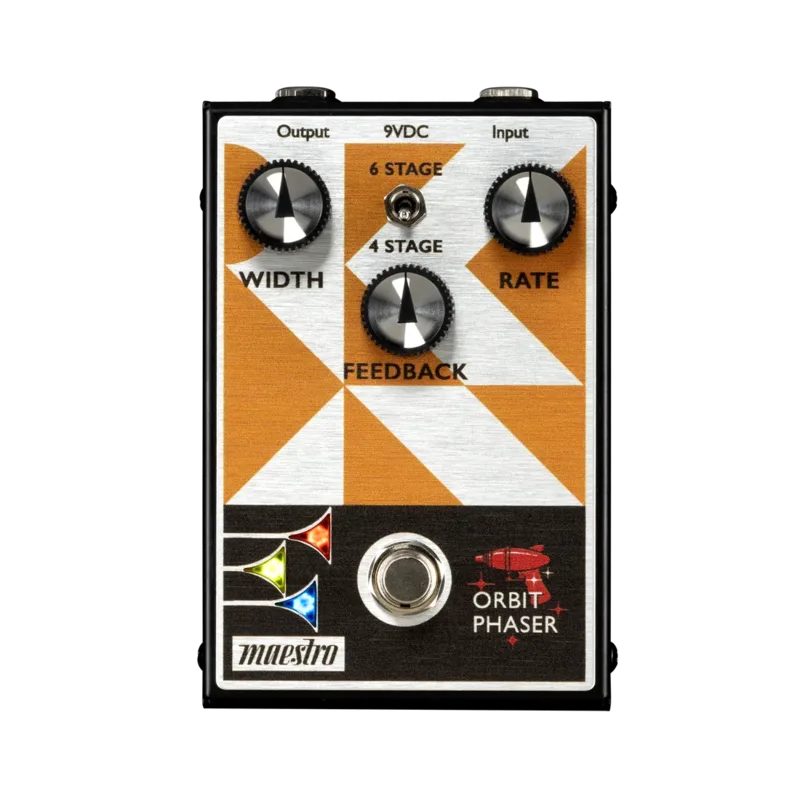


The Maestro Orbit is an all-analog phaser pedal from Maestro, the effects brand owned by Gibson. It offers a choice of four-stage or six-stage phasing through a two-position Mode switch, with three knobs, Width, Rate, and Feedback, for shaping the sweep1. Gibson describes it as warm and smooth, with the versatility needed to dial in phaser effects, and positions it as a direct descendant of the Maestro PS-1, the first phaser pedal ever produced1.
The Orbit is an all-analog phaser pedal with 4-stage and 6-stage modes and a three-control layout, priced at $149 / $15912. Maestro describes it as warm and smooth, with the versatility needed to dial in phaser effects1.
What it does: four- or six-stage analog phasing
A phaser splits your signal and shifts one copy's phase across a series of stages, then blends it back, creating the notched, sweeping swirl the effect is known for. More stages mean more notches and a smoother, lusher sweep. The Orbit's two-position Mode toggle gives you a choice of 4 or 6-stage phasing1.
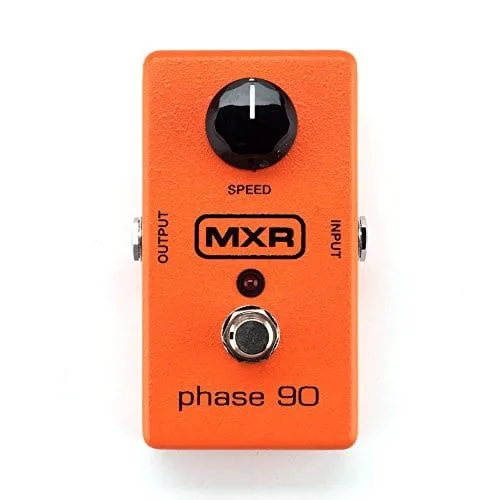
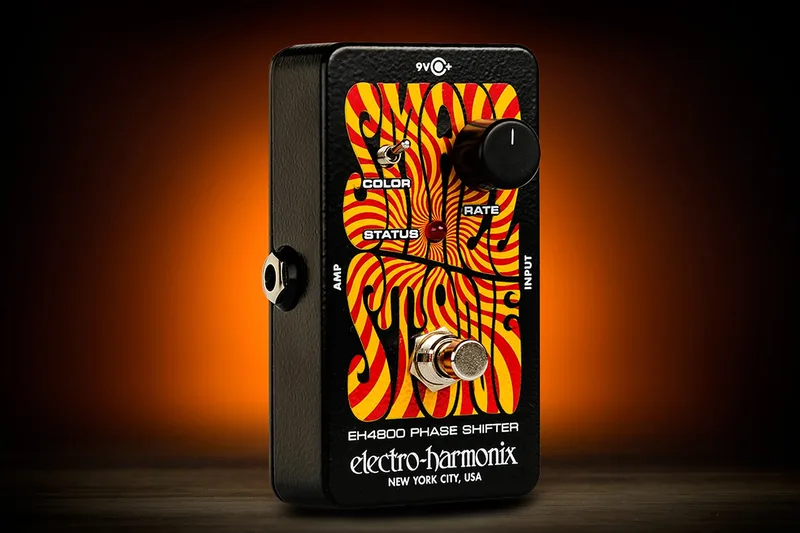
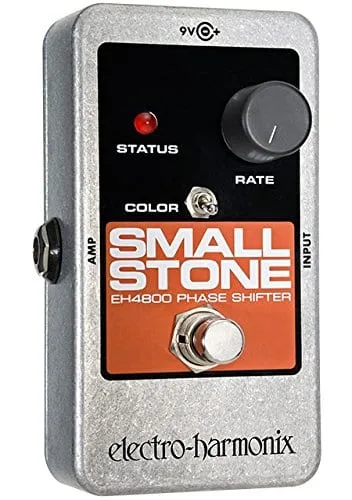
Guitar World's reviewer Alex Lynham framed the two modes as two different phasing sounds: a six-stage phaser, as found in the PS-1 series, and a four-stage phaser2. In four-stage mode, he found you can get sounds reminiscent of celebrated vintage four-stage phasers like the MXR Phase 90 and, especially, the Electro-Harmonix Small Stone, which has a similar tonal profile2. Guitar World's 2026 buying guide made the same point, noting the four-stage mode replicates phase tones similar to the MXR Phase 95 and the Nano Small Stone5.
| Control | What it does |
|---|---|
| Rate | Sets the speed of the phasing effect4 |
| Width | Sets the intensity of the phaser effect1 |
| Feedback | Sets the amount of "vowel" character in the phasing4 |
| Mode toggle | Selects 4-stage or 6-stage phasing1 |
| Footswitch | True bypass on/off1 |
The Feedback knob is the one that changes the effect's character most. Delicious Audio describes it as setting the amount of vowel-like quality in the phasing, so higher settings push the sweep toward a more vocal, pronounced swirl4. The true bypass footswitch triggers LED lights in the red, yellow, and blue bugles of the Maestro logo when the pedal is on, so you always know whether it is active16.
Power and connections
The Orbit runs on a 9V battery or a regulated 9V DC power supply with a 5.5 x 2.1 mm plug wired center-negative, drawing 27.5 mA1. The power-on switch is incorporated into the input jack, so unplugging the input when the pedal is not in use prevents battery drain1.
The Orbit is a mono pedal with a single input and output4. Players who need a stereo phaser will not find one here.
Input impedance is 280 kOhms and output impedance is 220 Ohms1. The jacks are top-mounted, which helps on tight pedalboards5.
History: a descendant of the Maestro PS-1
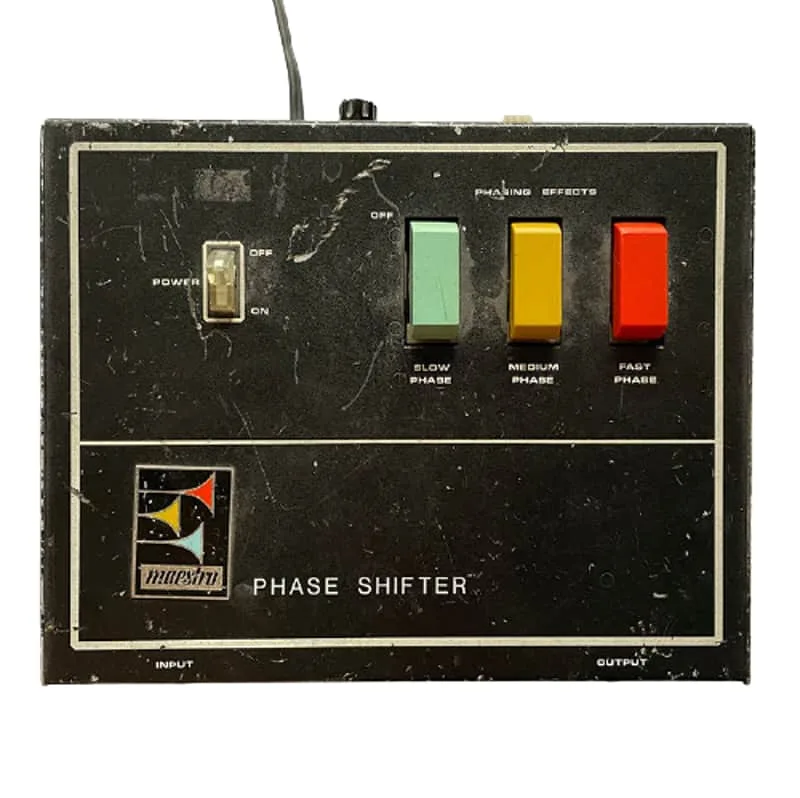
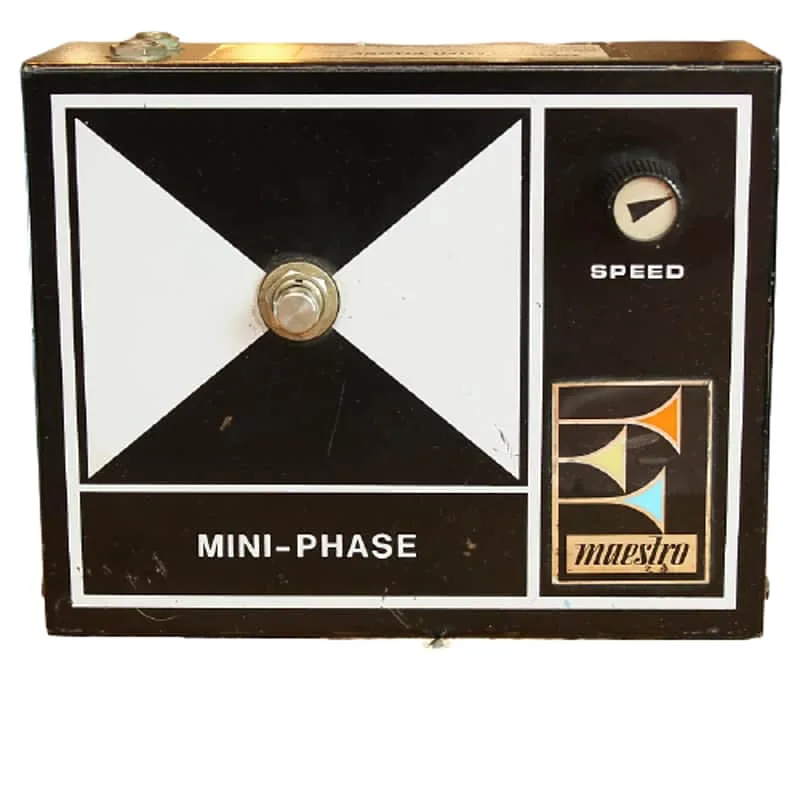
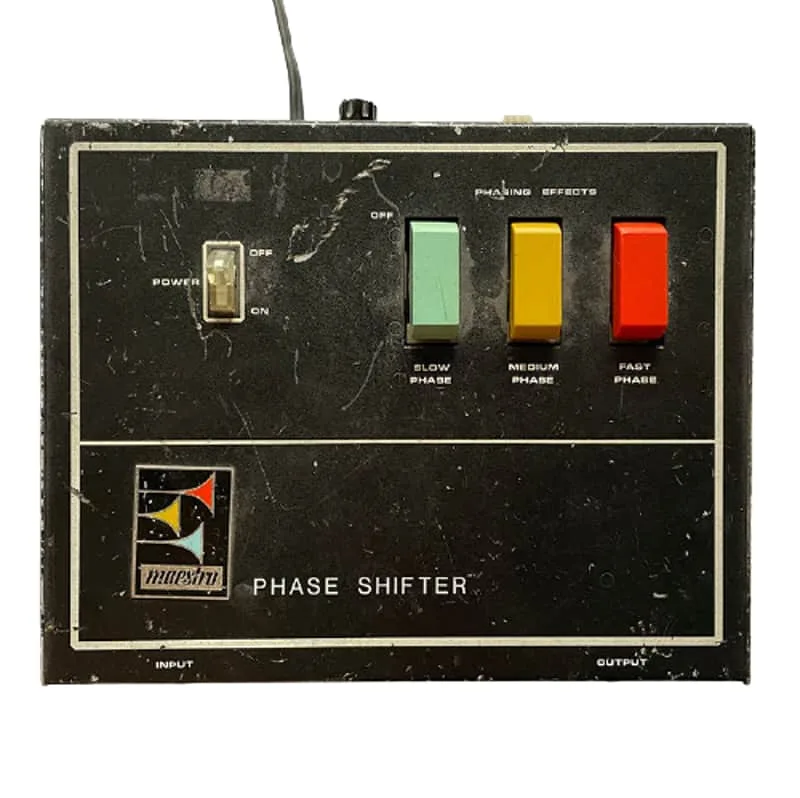
Gibson calls the Orbit a descendant of the very first phaser pedal ever produced, the Maestro PS-11. The original PS-1 was created by Tom Oberheim in 19717, and Guitar World calls it the first commercially available phase pedal5. Gearnews describes the early PS-1 as among the first dedicated phaser and shifter devices8. It was a three-speed unit, and Premier Guitar notes it was capable of ramping between speeds, a function that enhanced its Leslie-like character7.
Gibson teased the return of the Maestro brand at the start of 20229, and the Orbit shipped in the second wave of the revived line that December9. Delicious Audio noted the classic effect had been re-engineered and tailored to the needs of today's players4. On That Pedal Show, Mick and Dan demoed it as "a classic phaser reborn"10.
The PS-1's story reaches the Orbit directly: Maestro calls the Orbit a descendant of the PS-1, the first phaser pedal ever produced1. The original Maestro PS-1 was created by Tom Oberheim in 19717, and it was capable of ramping between speeds, a function that enhanced its Leslie-ness7. Maestro describes the classic effect as re-engineered and tailored to the needs of today's players4.
What reviewers said
"The Orbit Phaser is a good choice if your tastes lean in a vintage direction and you love the swirly coolness of this"
GuitarPlayer's Art Thompson found it delivers sweet-sounding phasing with a choice of 4- and 6-stage operation, and called it a good choice for vintage-leaning tastes overall11.
Videos
Pedal of the Day
Buddy Blues
American Musical Supply
Questions
Can the Maestro Orbit run on a battery?
Yes. The Orbit runs on a 9V battery or a regulated 9V DC power supply with a 5.5 x 2.1 mm plug wired center-negative. The power switch is built into the input jack, so you need to unplug the input cable when you are not playing to keep the battery from draining.
Is the Maestro Orbit true bypass?
Yes. The maker lists the switching type as true bypass, and the footswitch lights up the red, yellow, and blue bugles in the Maestro logo when the effect is on, so you can see at a glance whether it is active.
Is the Maestro Orbit stereo?
No. The Orbit is a mono pedal with one input and one output. Players who need a stereo phaser or flanger will have to look elsewhere, since the Orbit's analog circuit is built for a single signal path.
What does the Feedback knob do on the Maestro Orbit?
The Feedback knob sets the amount of vowel-like character in the phasing. Turning it up makes the effect more vocal and pronounced, while lower settings keep the sweep smoother and more subtle. It works alongside the Rate and Width knobs to shape the overall swirl.
Sources (11)
- Maestro Orbit Phaser, Gibson (gibson.com)
- Maestro Agena, Arcas, Mariner and Orbit review, Guitar World, 2023-02-08
- 5 New Maestro Pedals, Delicious Audio, 2022-12-06
- Maestro Orbit Phaser, Delicious Audio, 2022-12-27
- Best phaser pedals 2026: swirling guitar tones, Guitar World, 2022-04-08
- Maestro Orbit, Pedal of the Day, 2022-12-07
- Mojo Hand FX Mister-O Phase Shifter Review, Premier Guitar, 2021-09-24
- Best Phaser Pedal Guide: From Affordable Effects to Classics and Beyond, www.gearnews.com, 2025-11-10
- The Big Review: Maestro Original Collection pedals, Guitar.com, 2022-02-10
- New Pedal Day Origin Halcyon, Maestro Orbit, Latent Lemon Hurts, MAS Expanse, That Pedal Show, 2022-11-22
- Maestro Agena Envelope Filter, Arcas Compressor Sustainer, Mariner Tremolo, Orbit Phaser and Titan Boost Reviews, GuitarPlayer (www.guitarplayer.com), 2023-01-05