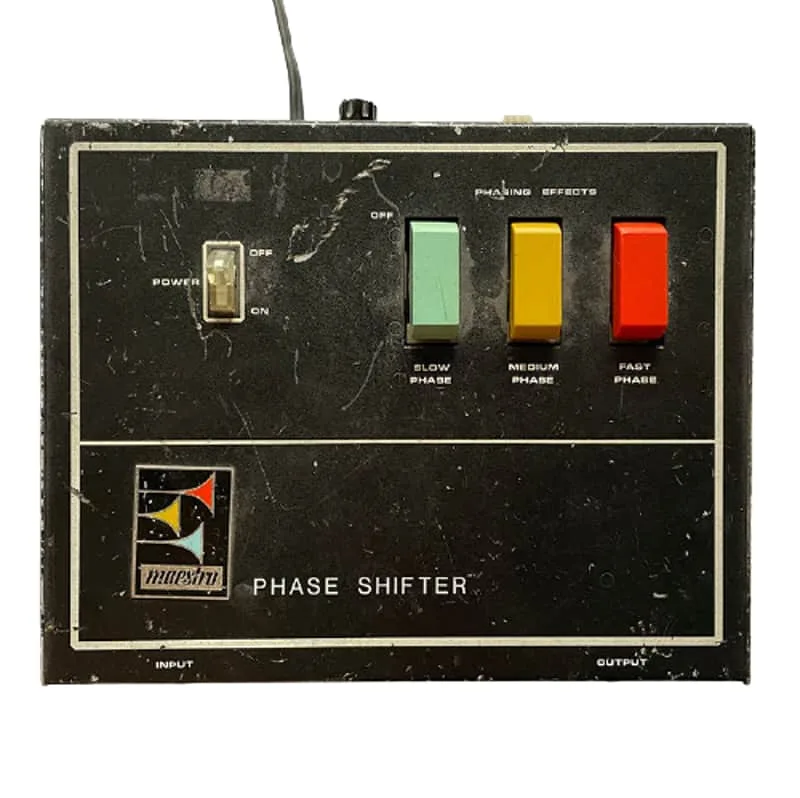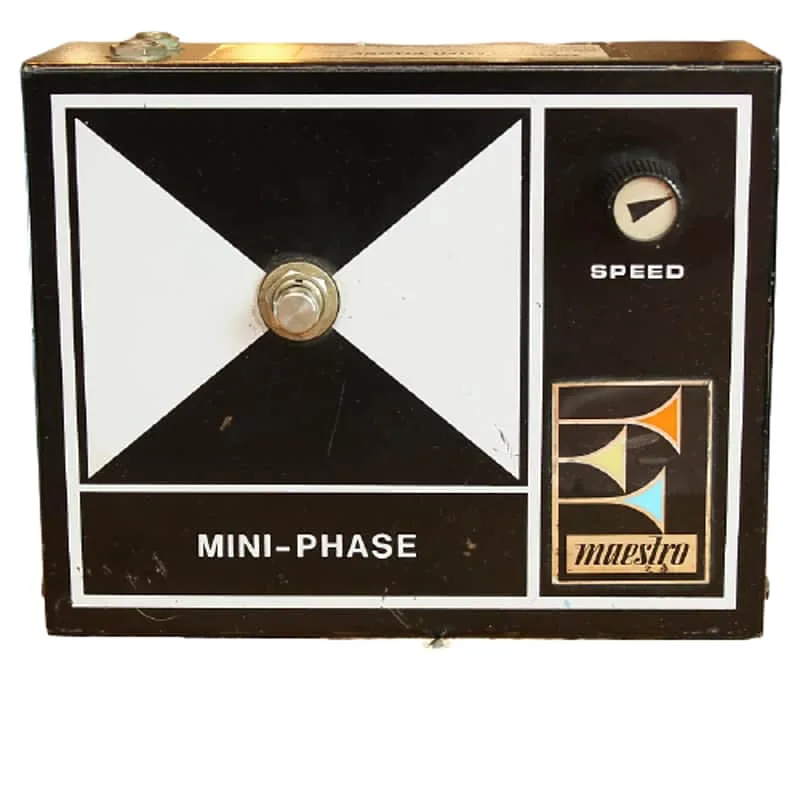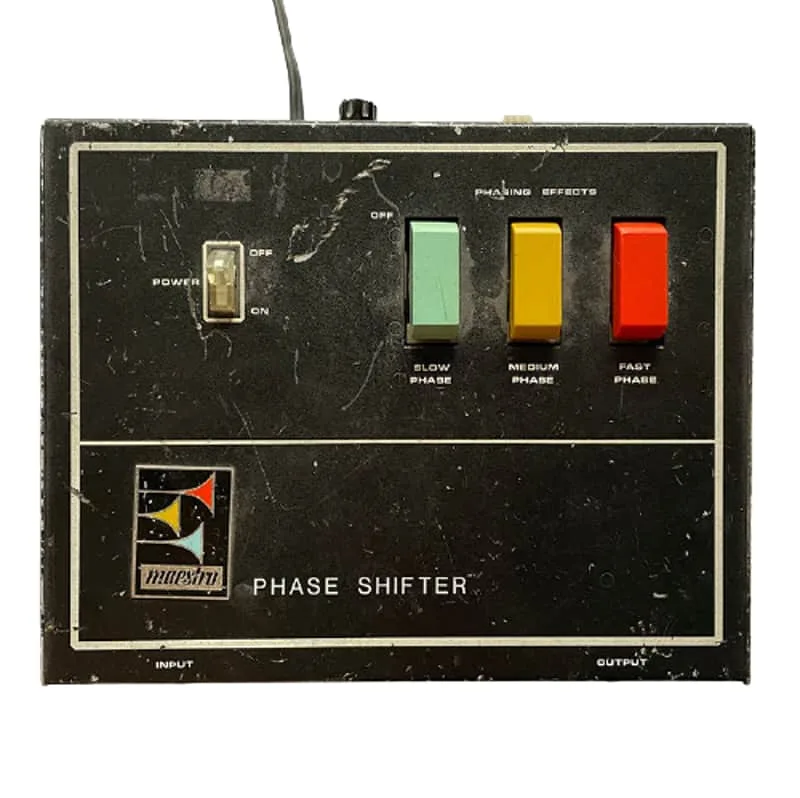


The Maestro Phase Shifter is an early 1970s phaser, one of the first phaser effects sold to musicians. It was built to replicate the sound of a Leslie rotary speaker, the spinning speaker cabinet long associated with organ rigs, and that intent helped turn the phase shifter into a widely popular effect1. Maestro, a name also behind classics like the FZ-1 Fuzz Tone, produced three versions of the pedal: the PS-1, the PS-1A and the PS-1B23.
What it does
The Phase Shifter is a six-stage phaser, meaning its audio passes through six phase-shifting stages to create the sweeping, swirling movement between the dry signal and the shifted one45. Maestro aimed the design squarely at the Leslie rotary speaker sound rather than at a generic sweep, and the effect caught on with players as a result1.
JHS Pedals, in a history of the era's effects, described the original this way6:
"It was the Maestro Phase Shifter, and it was huge. ... It has push buttons and it basically simulates a rotary speaker."6
Controls
The original kept its control set simple: three speed switches rather than a continuous knob, so the player chose between fixed sweep rates1. The PS-1A version used three paddle rocker knobs for its controls, a format very different from the footswitch-and-knob layout of a modern phaser pedal7.
Versions
| Version | Notes |
|---|---|
| PS-1 | The first version, released in the early 1970s21 |
| PS-1A | '70s version with three paddle rocker knobs; later re-created by other builders2879 |
| PS-1B | Third version in the series2 |
Legacy and recreations
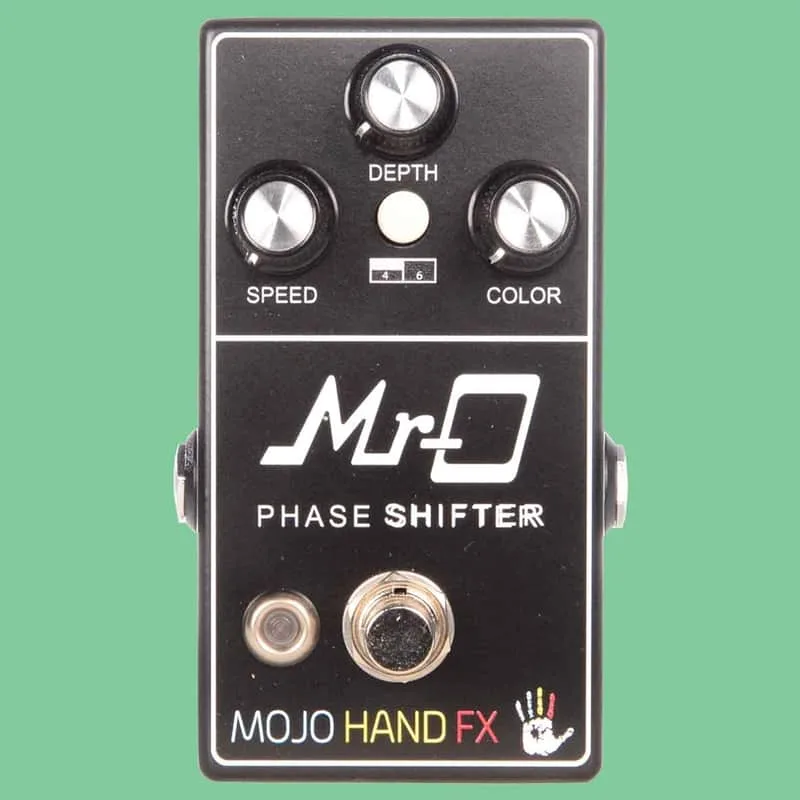
The original has a reputation among players and builders: gearnews called it Maestro's first ever phaser and noted that "The Maestro Phase Shifter has a great sound, but is not practical on a modern pedalboard," a reference to its large housing and push-button format8. That combination of admired tone and impractical form has made it a common target for recreations. The Mojo Hand FX Mister-O Phase Shifter is a modern six-stage phaser based on the Maestro circuit, adding Speed, Depth and Color controls where the original had only its three speed switches185.
The Maestro name is now a Gibson mark. Builder Mojo Hand FX states that it "does not want to associate with or disrupt the legacy and goodwill of Gibson's Maestro mark," which is why its recreation carries its own name rather than Maestro's5.
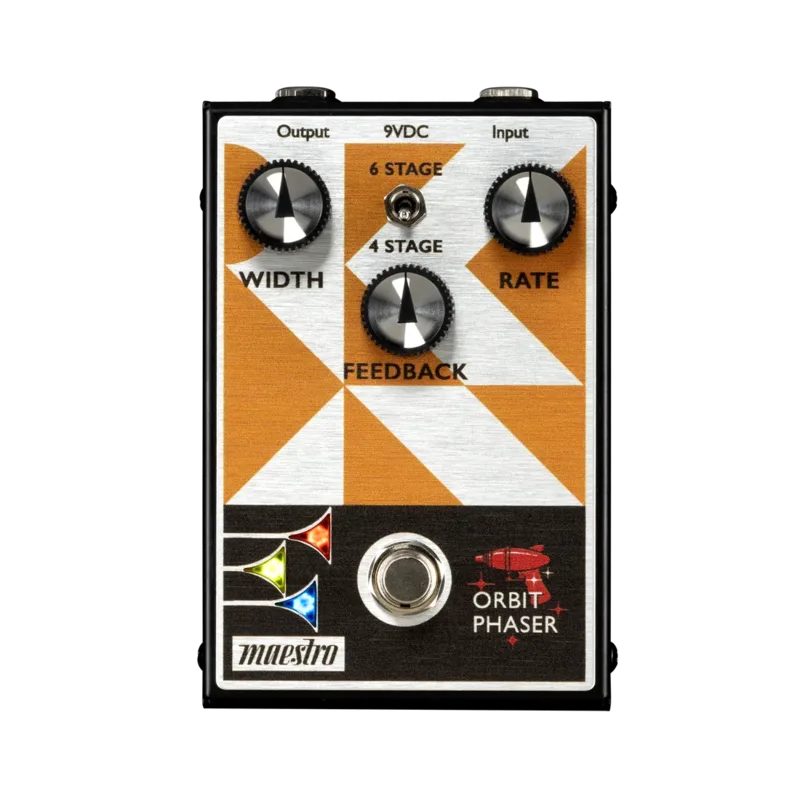
Maestro itself returned to pedals in the 2020s under Gibson, and the revived line includes the Maestro Orbit phaser alongside the historical designs2.
Videos
Marco Tiraboschi
Brad
Guitar Pedal Demos
Questions
What was the Maestro Phase Shifter designed to sound like?
It was built to replicate the sound of a Leslie rotary speaker, the spinning-speaker cabinet associated with organ tones. According to Pedal of the Day, that intent to put a rotary-speaker effect in front of guitarists helped turn the phase shifter into a widely popular effect, and the design used six phase stages with three speed switches to shape the sweep.
How many versions of the Maestro Phase Shifter were made?
Guitar World reports that Maestro produced three different versions of the Phase Shifter: the PS-1, the PS-1A and the PS-1B. The PS-1A is the version most often cited as the basis for modern recreations, including the Mojo Hand FX Mister-O.
Sources (9)
- Mojo Hand FX Mister-O Phase Shifter, Pedal of the Day (www.pedal-of-the-day.com), 2021-07-03
- How the Maestro PS-1 Phase Shifter changed popular music, Guitar World, 2026-07-03
- Maestro Original Collection pedals review, MusicRadar, 2022-05-25
- Mojo Hand FX serves up some old-school whoosh and swirl with the Mister-O Phase Shifter, MusicRadar, 2021-03-19
- Mr O - MojoHandFX, MojoHandFX, 1970
- HOW MXR PEDALS BECAME LEGENDARY, JHS Pedals
- 4 WAYS TO USE A PHASER PEDAL, JHS Pedals
- The new Mojo Hand FX Mister-O Phase Shifter is packed with classic '70s phaser tones, gearnews.com, 2021-03-18
- Heptode Line Expands with Virtuoso Phase Shifter, Vintage Guitar magazine, 2013-05-03