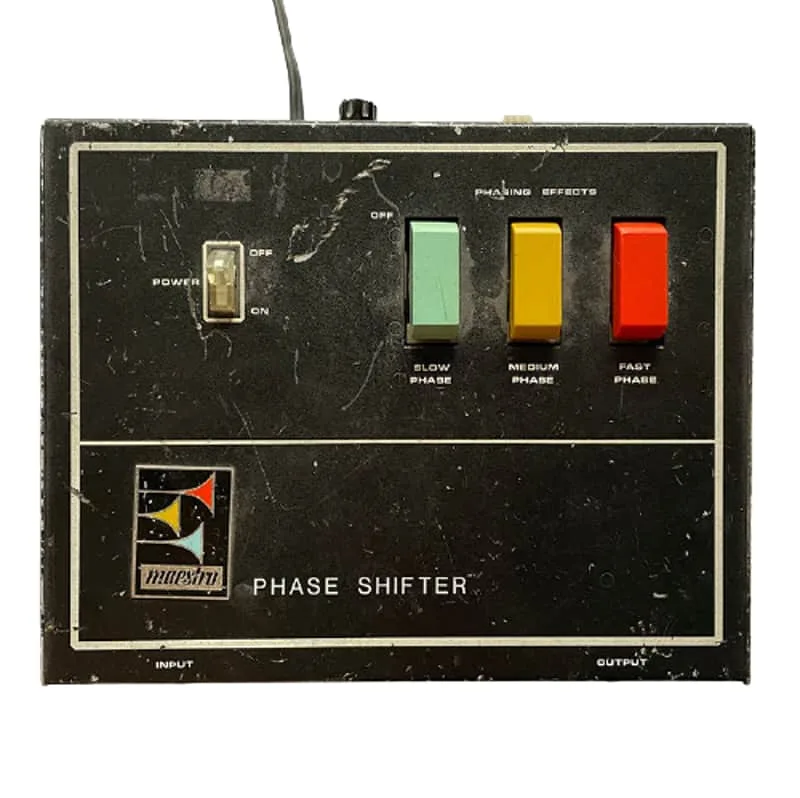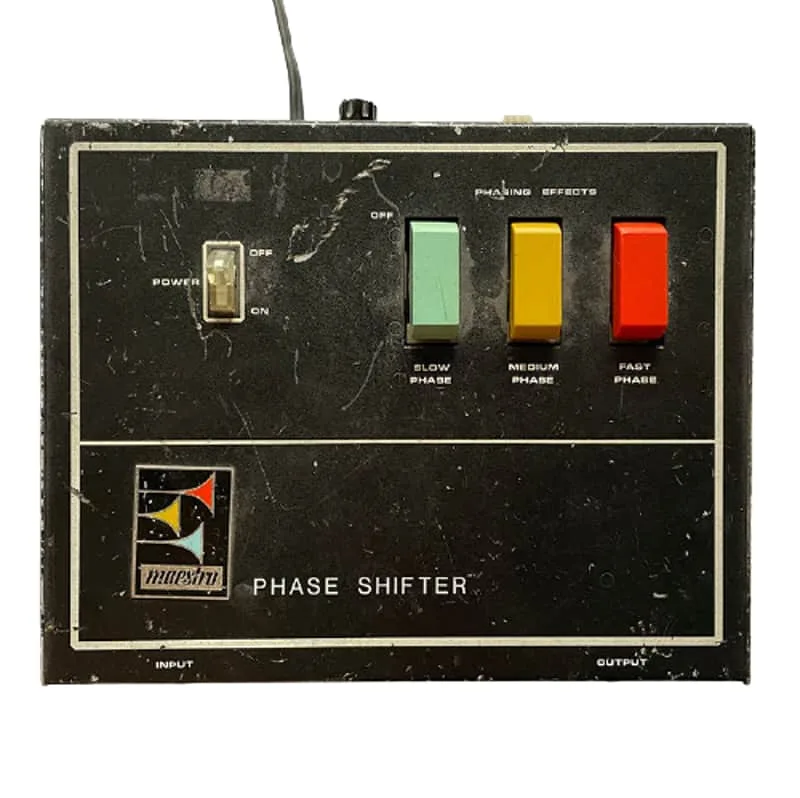


The Maestro PS-1A Phase Shifter, released in 1971, holds a specific place in effects history: Delicious Audio's Paolo De Gregorio calls it "the first effect to be named that way (although it was not a pedal yet!)"12. It was a six-stage phaser3, and it arrived at the very start of the phaser's run through popular music, alongside the original Maestro Phase Shifter PS-1 from the same year.
What it does
A phaser sweeps notches through a signal's frequency spectrum, producing the swirling, jet-like movement players associate with the effect type. The PS-1A did this with six stages3, the circuit design that defines the classic Maestro sound. Premier Guitar's reviewer described the moment it appeared: "Back in 1971, nothing made heads spin like the Maestro PS-1A phase shifter"5.
The PS-1A was not a stompbox. Premier Guitar describes it as "a bulky external unit with the large plastic switches of the era's home organs"5, a tabletop box you set beside an amp rather than something on the floor. That form factor is one of the clearest ways it differs from every phaser made since.
PS-1 to PS-1A
The PS-1A was the second version of the design. Guitar World's history of the line explains that "The PS-1A is basically an improved version of the PS-1 that fixed a flaw with the input buffer amplifier that produced popping noises"6. The original PS-1 was created by Tom Oberheim in 19714, and Premier Guitar notes it was "capable of ramping between speeds, a function that enhanced the PS-1's Leslie-ness"4, meaning it could glide from one speed setting to another the way a Leslie speaker does.
| PS-1 | PS-1A | |
|---|---|---|
| Released | 19714 | 197145 |
| Designer | Tom Oberheim4 | |
| Stages | 63 | |
| Key difference | Ramping between speeds4 | Fixed input buffer that popped6 |
Where you hear it
JHS Pedals puts it plainly: "You'll hear the Maestro Phase Shifter on a lot of classic recordings in the very early seventies"7. Guitar World notes Maestro sold an estimated 60,000 units to guitarists and keyboardists alike during its brief four-year lifespan6. Country players used it too: Premier Guitar's review of Fender's Waylon Jennings phaser refers to "his 6-stage PS-1A"3, documenting Jennings as a player of the unit.
Legacy
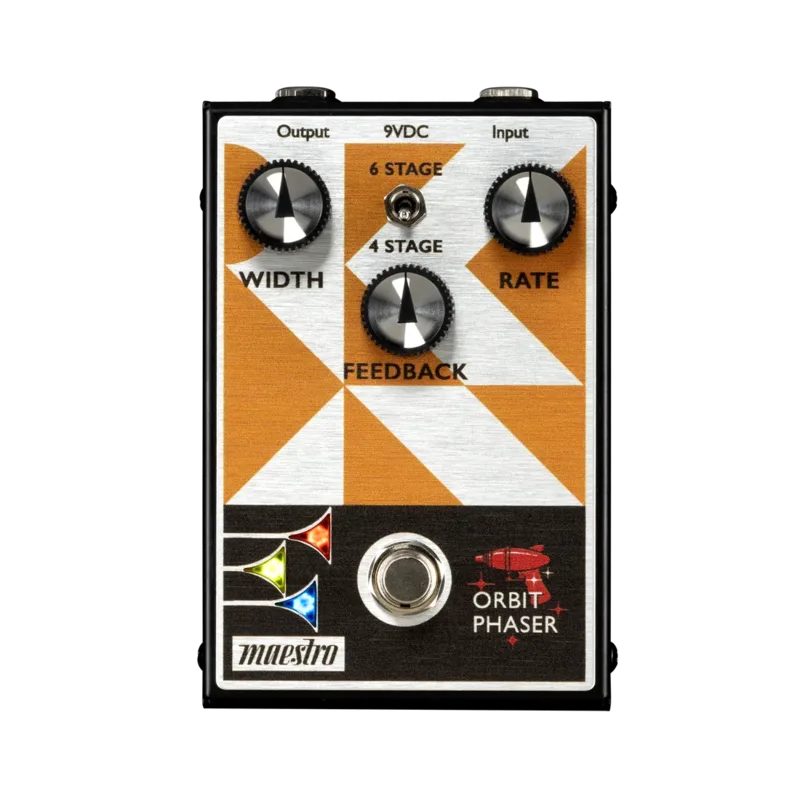
The PS-1A's design has been revisited repeatedly. MusicRadar dates the original to "the Maestro PS1-A that dates back to 1971" in coverage of Maestro's revival26. Guitar World's 2026 phaser guide notes "the Maestro Orbit is based on the first commercially available phase pedal, the PS-1"8, and the revived Maestro Orbit carries that lineage forward. Gearnews calls the early rack unit "among the first dedicated phaser/shifter devices"9. For more on the effect type it helped name, see Phaser Pedals.
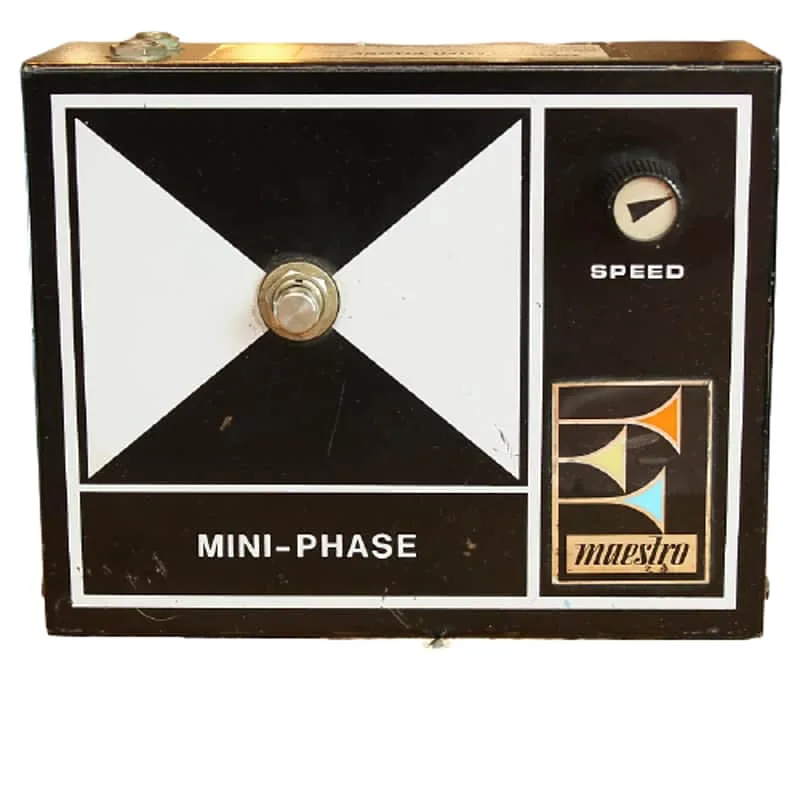
The PS-1A is long out of production. Modern phasers modeled on the Maestro design, such as the Maestro MPS-2 Mini Phase and the Orbit, are the current ways to get this circuit family.
Videos
Marco Tiraboschi
Brad
Guitar Pedal Demos
Sources (9)
- Best Phaser Pedals In 2024, Delicious Audio, 2024-09-16
- It sounds like Gibson's new Maestro pedals are good for grunge and alt rock tones, MusicRadar, 2022-11-09
- Fender Waylon Jennings Phaser Review, Premier Guitar, 2023-11-06
- Mojo Hand FX Mister-O Phase Shifter Review, Premier Guitar, 2021-09-24
- Heptode Virtuoso Phase Shifter Review, Premier Guitar, 2013-09-10
- How the Maestro PS-1 Phase Shifter changed popular music, Guitar World, 2026-07-03
- 4 WAYS TO USE A PHASER PEDAL, JHS Pedals
- Best phaser pedals 2026: swirling guitar tones, Guitar World, 2022-04-08
- Best Phaser Pedal Guide: From Affordable Effects to Classics and Beyond, www.gearnews.com, 2025-11-10