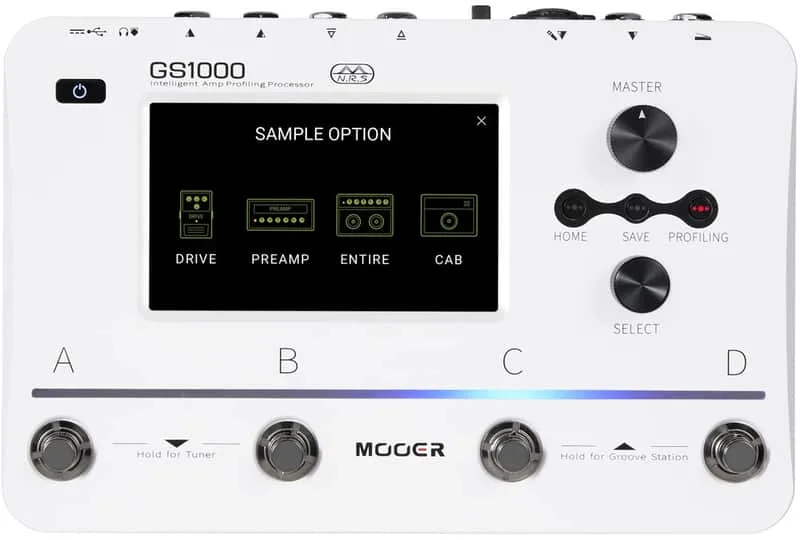


The MOOER GS1000 is what MOOER calls an "AI Intelligent Amp Sampling Processor": a floor unit that captures and emulates real gear rather than only modeling it. Built on the company's MNRS 2.0 sampling technology, it emulates distortion pedals, preamps, amplifier heads and cabinets, and MOOER describes the third-generation digital platform behind it as its most advanced guitar system yet1. Guitar World's news coverage of the launch put it in the maker's own words: it gives players the power to "emulate their favorite gear with immense precision"2.
What it does and how it captures gear
The GS1000's distinguishing feature is that the sampling happens on the unit itself. Guitar World's reviewer noted that it builds from the Mooer GE series of modelers, using the same effects models with the addition of the ability to create captures, "without the need for extra gear outside of a microphone"3. The XLR microphone input on the unit is what makes that possible1.
Captures are stored in 120 sampling slots, and MOOER states those slots support upload and download through the MOOER Cloud app, so a library of captures can move between the unit and the cloud1.
Controls and connectivity
The front panel is built around a 5-inch high-resolution touchscreen with ambient lighting, backed by four multi-purpose footswitches for live control and a tap-tempo control for timing effects1. MIDI controller compatibility covers managing presets and features1.
Connectivity, as listed by Guitar World's review3:
- Stereo effects loop
- USB-C
- Expression pedal connection
- Inputs: XLR and 1/4-inch
- Outputs: stereo 1/4-inch, plus a 1/8-inch headphone output
- Balanced TRS stereo outputs for long-distance signal transmission without quality loss1
The GS1000 draws 1A at 9V DC, center negative3. That is more than many compact pedal power supplies deliver per output, so plan your board power accordingly.
GS1000 vs GS1000 Li
The GS1000 comes in two editions. The standard GS1000 runs from the 9V DC supply, while the GS1000 Li adds a built-in 7.4V 4750mAh lithium battery offering up to six hours of continuous playtime1. Guitar World described the Li as the same product as the GS1000, with the battery added to minimize the cables that often clutter a stage3.
| GS1000 | GS1000 Li | |
|---|---|---|
| Sampling and effects | Identical hardware and features3 | Identical hardware and features3 |
| Power | DC 9V center negative, 1A3 | Built-in 7.4V 4750mAh lithium battery, up to 6 hours playtime1 |
Price and what reviewers said
Guitar World's review lists a launch price of £399/€449 in the UK and Europe3; the site's earlier news piece put the UK price at £449, approximately $550, as of January 20252. The two figures differ, so players may see either quoted depending on when and where the unit was listed.
Guitar World's reviewer came away positive overall: "An impressive range of features with self-contained capture tech leads the way in an affordable package. While there are some compromises, the sheer amount of tech stuffed into this unit, combined with some great sounds, will result in hours of fun."3
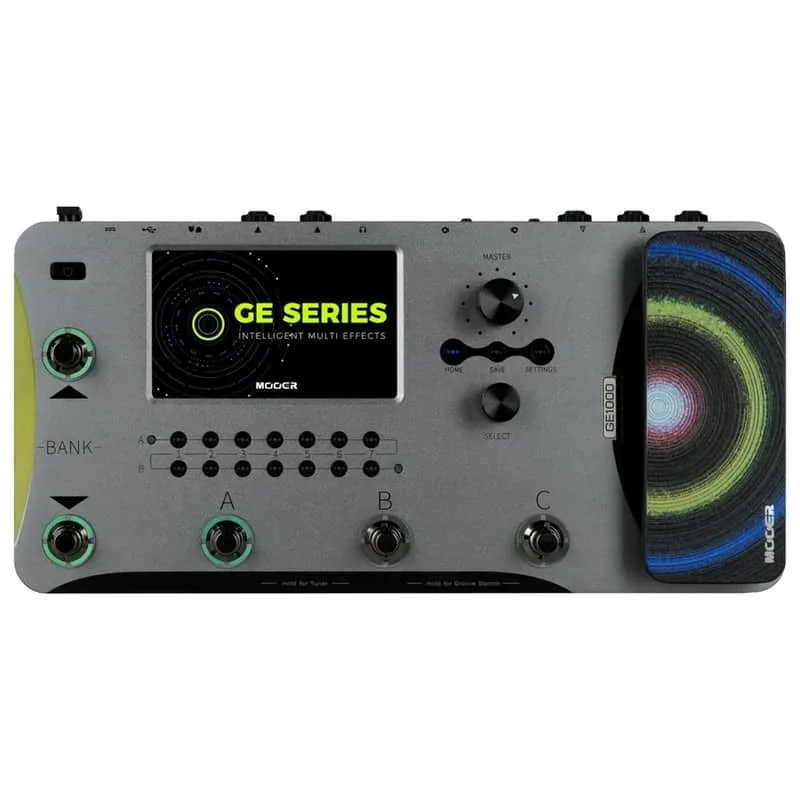
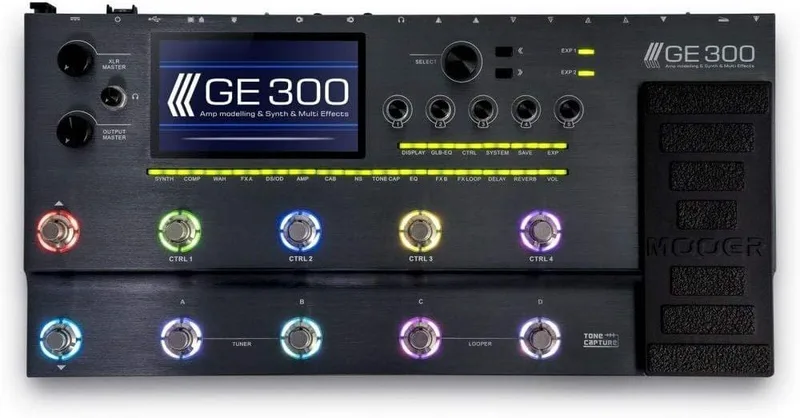
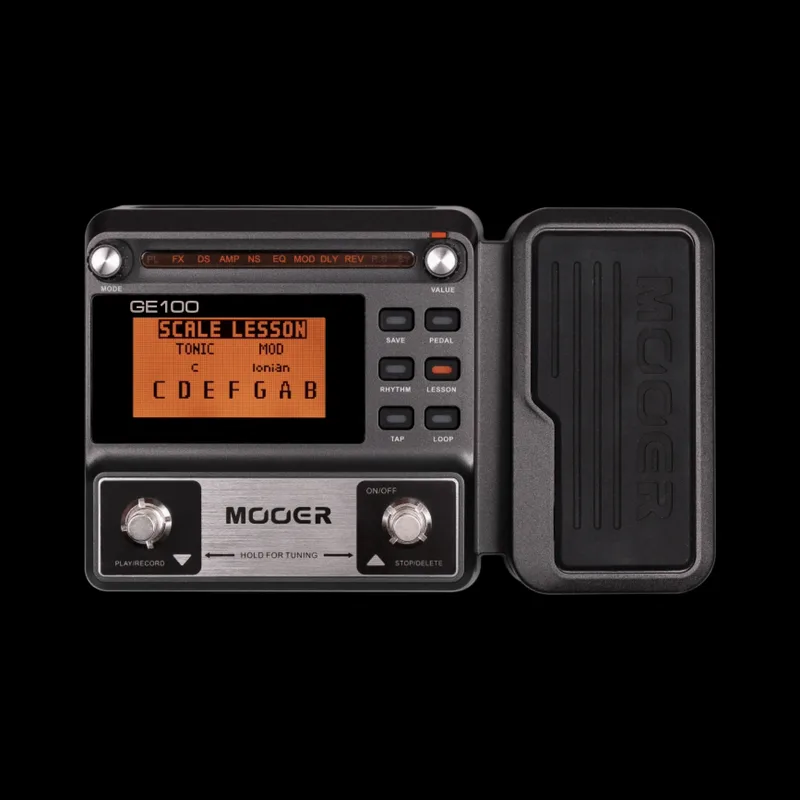
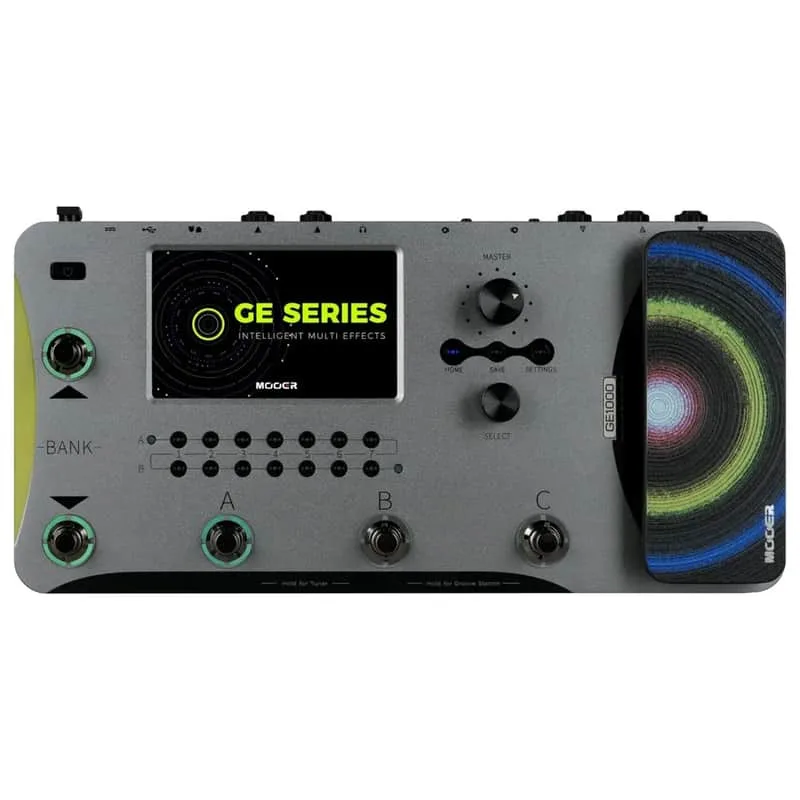
For context within MOOER's range, the GS1000 sits alongside the company's GE-series floor modelers such as the MOOER GE1000 and the Mooer GE300, which share the same effects-modeling family but approach amp tones through modeling rather than sampling. If you are weighing a capture-based unit against a conventional multi-effects floorboard, the multi-effects pedals page sets out the wider field.
Videos
Andertons Music Co
MOOER Audio
Mooer Mania
News
Questions
What is the difference between the MOOER GS1000 and the GS1000 Li?
The GS1000 Li is the same product as the standard GS1000, but with the addition of a built-in rechargeable lithium battery. MOOER specifies a 7.4V 4750mAh battery offering up to six hours of continuous playtime, which Guitar World notes is aimed at minimising the cables that often clutter a stage. The standard GS1000 runs from a 9V DC centre-negative supply at 1A.
How many sampling slots does the GS1000 have?
The GS1000 offers 120 sampling slots. MOOER states that these slots support upload and download through the MOOER Cloud app, so captures can be moved on and off the unit rather than living only on the processor itself.
Does the GS1000 have an XLR microphone input?
Yes. Alongside the 6.35mm instrument input, the GS1000 carries an XLR microphone input for expanded connectivity. That mic input is what lets the unit make its amp and pedal captures without extra gear beyond a microphone, according to Guitar World's review.
What power supply does the GS1000 need?
Guitar World lists the GS1000's power requirement as DC 9V, centre negative, at 1A. That current draw means a standard low-current pedal supply or daisy chain may not be enough, so a dedicated supply rated for 1A is the safe choice.
Does the GS1000 have an effects loop?
Yes. Guitar World's review lists a stereo effects loop among the unit's connectivity, alongside USB-C, an expression pedal connection, XLR and 1/4-inch inputs, stereo 1/4-inch outputs and a 1/8-inch headphone output.
How much does the MOOER GS1000 weigh?
Guitar World lists the GS1000 at 2.7lbs, or 1.2kg, with dimensions of 240 x 166 x 20mm. That is a slim floor unit by multi-effects standards, and the GS1000 Li version adds a rechargeable battery on top of the same hardware.
Sources (3)
- GS1000/GS1000 Li_MOOER Audio, MOOER Audio
- Mooer's GS1000 is an AI-equipped modeler that can profile gear, Guitar World, 2025-01-16
- Mooer GS1000 multi-effects and amp profiling pedal review, Guitar World, 2025-05-21