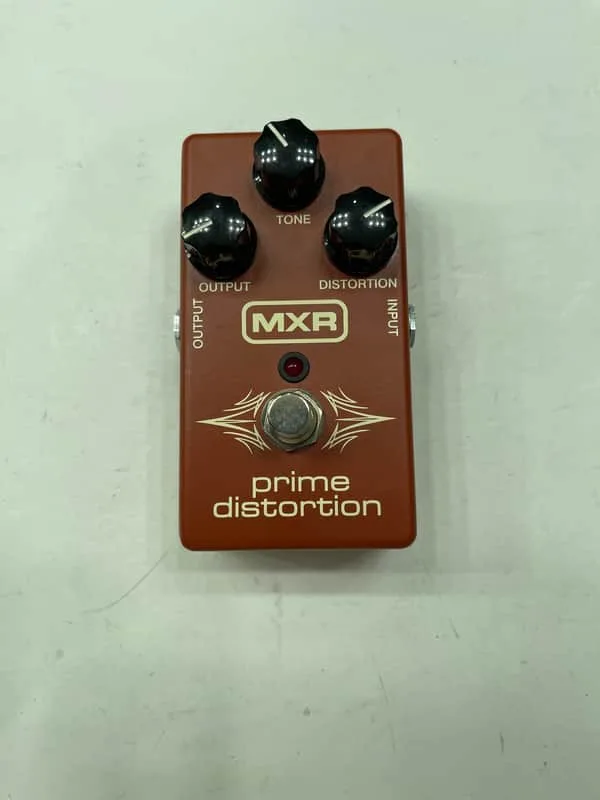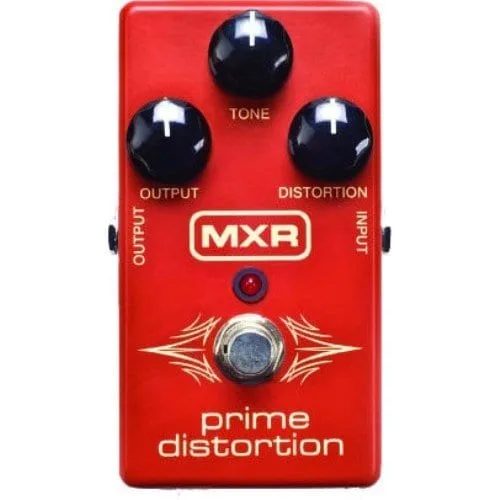


The MXR Prime Distortion, model M69, is a compact distortion pedal from MXR, made by Dunlop Manufacturing and introduced in partnership with Guitar Center in 20131. Dunlop describes it as a hard-clipping design in the vein of vintage stompboxes, aimed at players who want a big '80s arena rock sound with raw, punchy sustain23. It is a 100-percent analog pedal built around low-noise op amps, so the gain can be pushed hard without adding extra noise1.
The pedal is now a legacy product and no longer in production2. When it launched it carried a $49.99 street price and was sold exclusively through Guitar Center stores, Guitar Center online and Musicians Friend online1.
What the M69 Prime Distortion does
Dunlop positions the Prime Distortion as a classic hard-clipping distortion: the product page promises "rich warmth and clear articulation" even at high gain, along with amp-like sensitivity that responds to picking attack and to guitar volume and tone adjustments2. The company credits a low-noise circuit design for keeping leads and riffs clean as the gain goes up2. The manual sums up the intent as a "Big '80s arena rock sound" with "raw, punchy sustain"3.
Reviewers found similar character. At Pedal of the Day, Victor L described "nice vintage style hard clipping" and a "bluesy 70's rock tone"5. MusicRadar's Michael Astley-Brown found that with all three controls set to noon, "the pedal compresses and blooms like a cooking valve amp; reduce volume for a touch-sensitive overdrive with bite"6.
"With the Prime Distortion's three controls - output, tone and distortion - set to noon, the pedal compresses and blooms like a cooking valve amp; reduce volume for a touch-sensitive overdrive with bite."
Controls and setup
The pedal keeps things simple with three knobs and a footswitch63:
| Control | What it does |
|---|---|
| OUTPUT | Overall effect volume; clockwise increases, counterclockwise decreases3 |
| TONE | Color of the distortion signal; clockwise for a brighter sound3 |
| DISTORTION | Amount of distortion; clockwise increases, counterclockwise decreases3 |
| FOOTSWITCH | Toggles effect on/bypass; white LED indicates on3 |
Setup is the standard two-cable arrangement: run a cable from the guitar to the INPUT jack, then another from the OUTPUT jack to the amplifier3. The manual also prints three named sample settings, Tejas Heat, Seattle Sludge and Searing Shred, as starting points for different styles3.
Specifications
| Specification | Value |
|---|---|
| Input impedance | 1 MΩ3 |
| Output impedance | 6 kΩ3 |
| Nominal input | -22 dBV3 |
| Max output | -10 dBV3 |
| Distortion range | 27 dB @ 500 Hz3 |
| Tone control | +/- 4 dB @ 100 Hz, +/- 5 dB @ 2 kHz3 |
| Signal to noise | 85 dB, A-weighted (VREF = 1 VRMS)3 |
| Current draw | 4.0 mA3 |
| Power supply | 9 Volts DC3 |
| Bypass | Hardwire3 |
The 4.0 mA draw is modest by pedal standards, so the Prime Distortion is easy on batteries and on the current budget of a shared power supply3. Power comes from one 9 volt battery installed under the bottom plate, a 9-volt AC adapter such as the Dunlop ECB003/ECB003EU, or an MXR Brick Series power supply32.
The manual lists the bypass as hardwire3, while MusicRadar's review describes the pedal as having "true bypass, metal enclosure and MXR's distortion lineage"6. The two sources disagree on the bypass type.
Where it came from
Dunlop Manufacturing announced the Prime Distortion in partnership with Guitar Center, with availability starting May 22nd, 2013 at a $49.99 street price14. In the United States it was exclusive to Guitar Center stores, Guitar Center online and Musicians Friend online14. Dunlop's product page still carries the "Exclusive to Guitar Center" note alongside its legacy status2.
At launch, Guitar World published demo videos of the pedal: Tal Morris played a Jackson guitar with EMG active humbuckers through a Marshall Super Lead 100w and 4-12 slant cabinet, and James Deprato played a Fender Telecaster through a Carr Impala 6L6 40w amplifier1.
What reviewers said
MusicRadar's review highlighted the pedal's value, listing "great value and build quality" among its pluses6. The review also noted the £59 UK price alongside the metal enclosure and MXR's distortion lineage6. Pedal of the Day's Victor L, who bought the pedal used at a low price, came away with more than he expected, praising the vintage-style hard clipping and the bluesy '70s rock tone5.
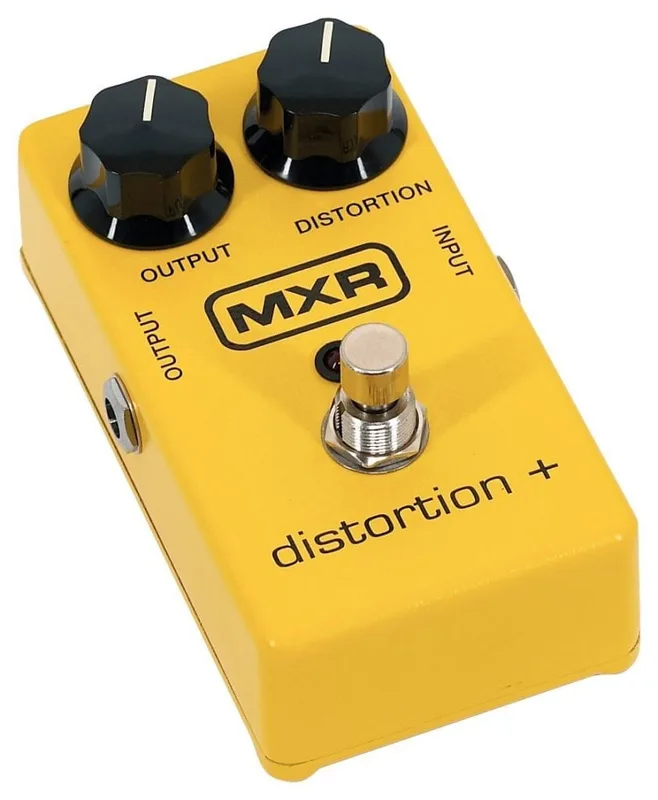
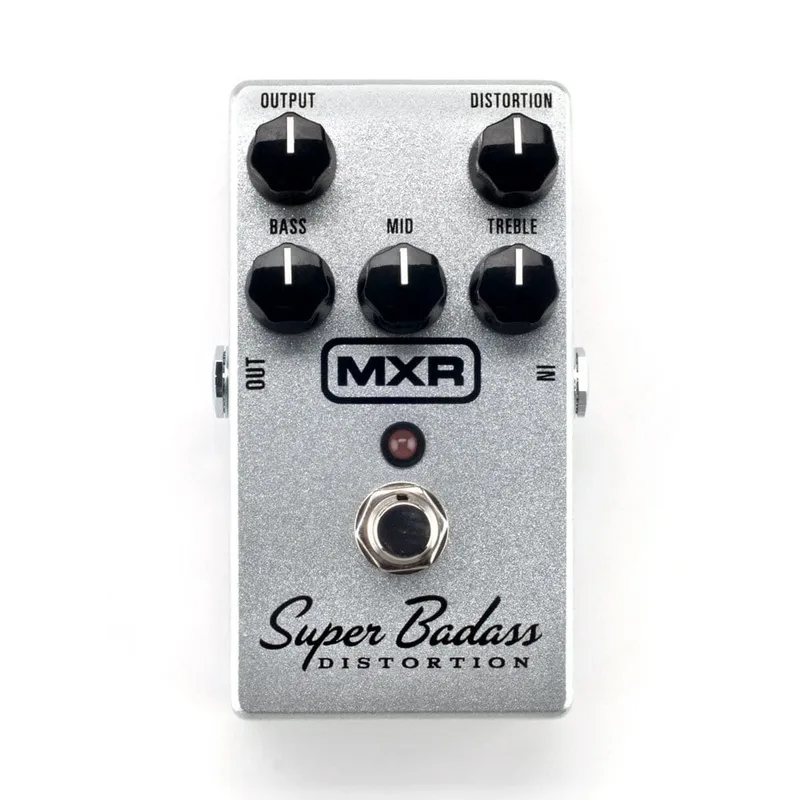
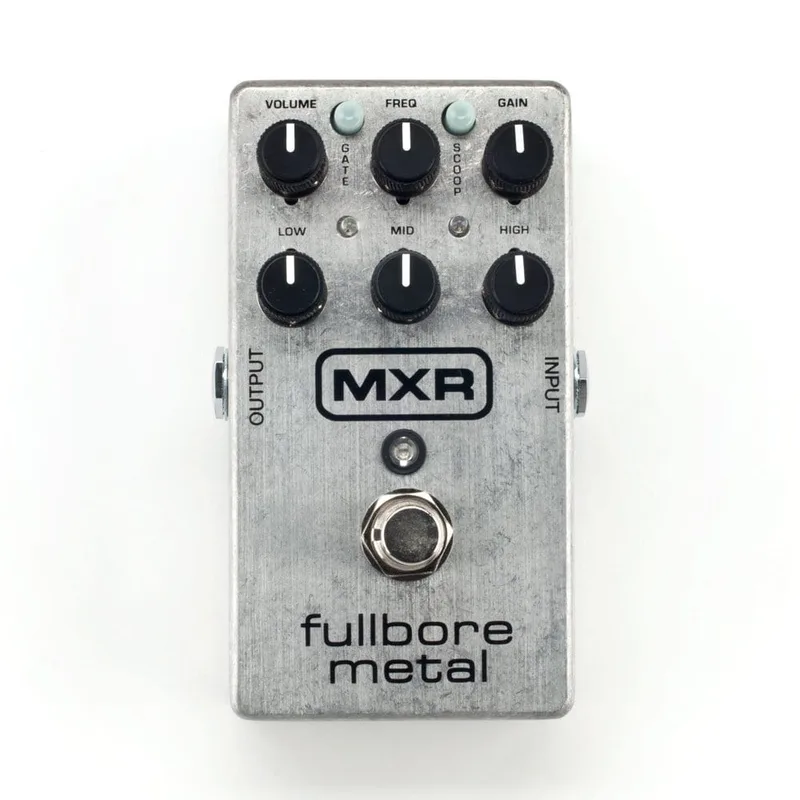
Within MXR's distortion lineup, the Prime Distortion sits alongside designs like the MXR Distortion +, the MXR Super Badass Distortion and the MXR Fullbore Metal, all of which take different approaches to the same hard-clipping territory the M69 covers3.
Videos
Andertons Music Co
jimdunlopusa
jimdunlopusa
Questions
Does the MXR M69 Prime Distortion take a battery?
Yes. The pedal is powered by one 9 volt battery, installed by removing the bottom plate. It can also run on a 9-volt AC adapter such as the Dunlop ECB003/ECB003EU, or on an MXR Brick Series power supply.
How much current does the M69 Prime Distortion draw?
The manual lists a current draw of 4.0 mA at 9 Volts DC, which is low enough that the pedal places very little demand on a shared or battery power supply.
Is the MXR M69 Prime Distortion true bypass?
The manual specifies a hardwire bypass rather than true bypass. MusicRadar's review described the pedal as having true bypass and a metal enclosure, so the two sources disagree on the bypass type.
What are the Tejas Heat, Seattle Sludge and Searing Shred settings?
They are three sample settings printed in the M69 manual, each a starting point for a different flavor of distortion. The manual lists them by name alongside the control descriptions, giving players suggested knob positions to try.
How many controls does the M69 Prime have?
Three knobs: Output for overall effect volume, Tone for the color of the distortion signal, and Distortion for the amount of distortion. A footswitch toggles the effect on and bypass, with a white LED indicating the effect is on.
Is the MXR Prime Distortion discontinued?
Yes. Dunlop's product page lists the Prime Distortion as a legacy product that is no longer in production. It was released on May 22nd, 2013 with a $49.99 street price, sold exclusively through Guitar Center and Musicians Friend.
Sources (6)
- Jim Dunlop Introduces MXR Prime Distortion Pedal, Guitar World, 2013-07-12
- MXR® PRIME DISTORTION, Jim Dunlop (jimdunlop.com)
- M69P.pdf, Dunlop Manufacturing, Inc., 2024
- Dunlop Announces MXR Prime Distortion Pedal, Guitar Interactive Magazine, 2013-05-17
- Dunlop MXR M69 Prime Distortion, Pedal of the Day, 2014-09-26
- MXR M69 Prime Distortion review, MusicRadar, 2013-08-30