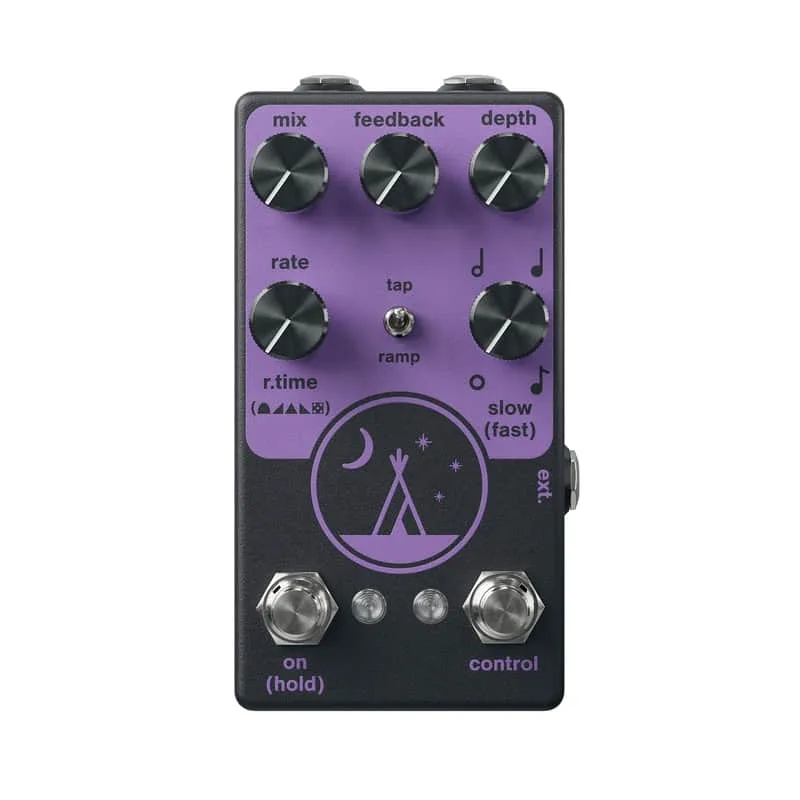


The NativeAudio Midnight is a phaser pedal from NativeAudio, currently at version 2.0. It is built as an analog JFET-based phaser with handpicked transistors that the maker says provide vintage phaser sounds, paired with digital control for features such as tap tempo. NativeAudio describes the result as a warm, analog phaser experience built around an intuitive interface with mix, feedback, and depth controls1. If you are new to the effect, a phaser sweeps notches through your signal; see the site's Phaser Pedals page for how the type works and how it sits among Flanger Pedals and Chorus Pedals.
A JFET phaser with digital control
The Midnight's audio path is analog: NativeAudio calls it an "Analog JFET-based phaser with handpicked transistors that provide vintage phaser sounds." JFET stages are a traditional way of building phaser circuits, and the handpicked transistors are part of how the maker frames its vintage character. Around that analog core, digital control handles the modern conveniences, which the maker summarizes as "Analog design, digital control"1.
The pedal measures 2.6 inches wide by 4.77 inches long, so it fits a compact pedalboard footprint1.
The controls and footswitch
The front panel carries three knobs, and the single footswitch does more than turn the effect on and off1.
| Control | What it does |
|---|---|
| Mix | Blends the effected signal with your dry signal1 |
| Feedback | Controls the amount of signal fed back into the phaser1 |
| Depth | Sets the intensity of the sweep1 |
The footswitch is listed as an On (Hold) Switch: a press turns the effect on and off, and when the effect is on, holding the switch accesses waveforms and fast settings1. Tap mode offers tap tempo functionality with four subdivisions, so you can set the rate by tapping and choose how the subdivisions fall1.
Power
The Midnight needs a 9V DC supply with a 2.1mm center-negative connector and draws 50mA1.
The Midnight uses buffered bypass rather than true bypass. That is worth knowing if you are matching it against true-bypass phasers or planning a long chain of pedals.
How it compares
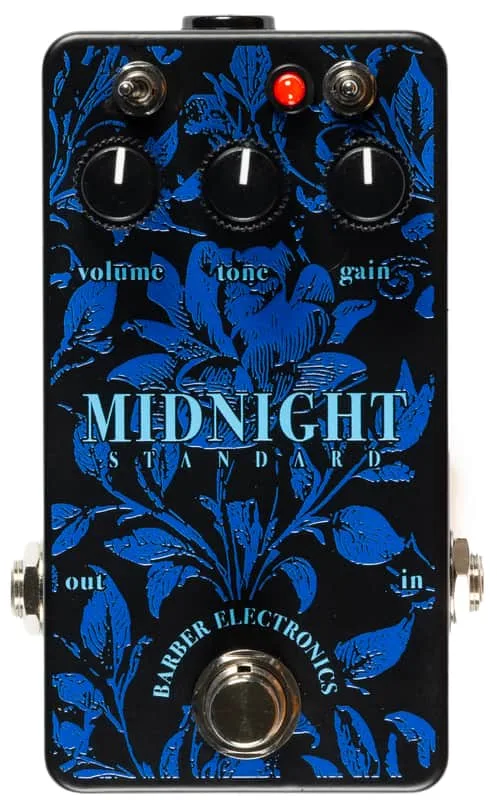
Other pedals carrying the Midnight name take different approaches. The R Weaver FX Midnight Vibe is a 100% analog circuit that uses true bypass to bypass the effect and preamp2, and the Barber Midnight Standard is also true bypass3. Neither shares the NativeAudio Midnight's analog-plus-digital-control design or its tap tempo with subdivisions.
Videos
NativeAudio
NativeAudio
NativeAudio
Questions
Is the NativeAudio Midnight analog or digital?
Both, in a sense. NativeAudio describes the Midnight as an analog design with digital control: the audio path is an analog JFET-based phaser with handpicked transistors, while the digital side handles the control functions such as tap tempo and waveform selection. The maker says the result is a warm, analog phaser experience.
Does the NativeAudio Midnight have tap tempo?
Yes. The Midnight has a Tap mode that offers tap tempo functionality with four subdivisions, so you can lock the rate to the song and choose how the subdivisions fall against your tapping.
Is the NativeAudio Midnight true bypass?
No. NativeAudio lists the Midnight with buffered bypass switching rather than true bypass. A buffer holds the signal's strength through long pedalboard chains, which some players prefer to true bypass in that situation.
What power supply does the NativeAudio Midnight need?
The Midnight runs on a 9V DC supply with a 2.1mm center-negative connector and draws 50mA. Use a standard center-negative pedal supply.
Is the NativeAudio Midnight mono or stereo?
The Midnight is mono. Its audio output is a single mono output, so it takes one input and returns one output to your amp or the next pedal.
Who designed the NativeAudio Midnight?
The Midnight comes from NativeAudio, and the maker's product page is signed by Mike Trombley, the company's founder.
Sources (3)
- NativeAudio: Native-owned effect pedal company, NativeAudio
- Midnight Vibe, R Weaver FX Handbuilt Pedals
- Midnight Standard, Barber Electronics