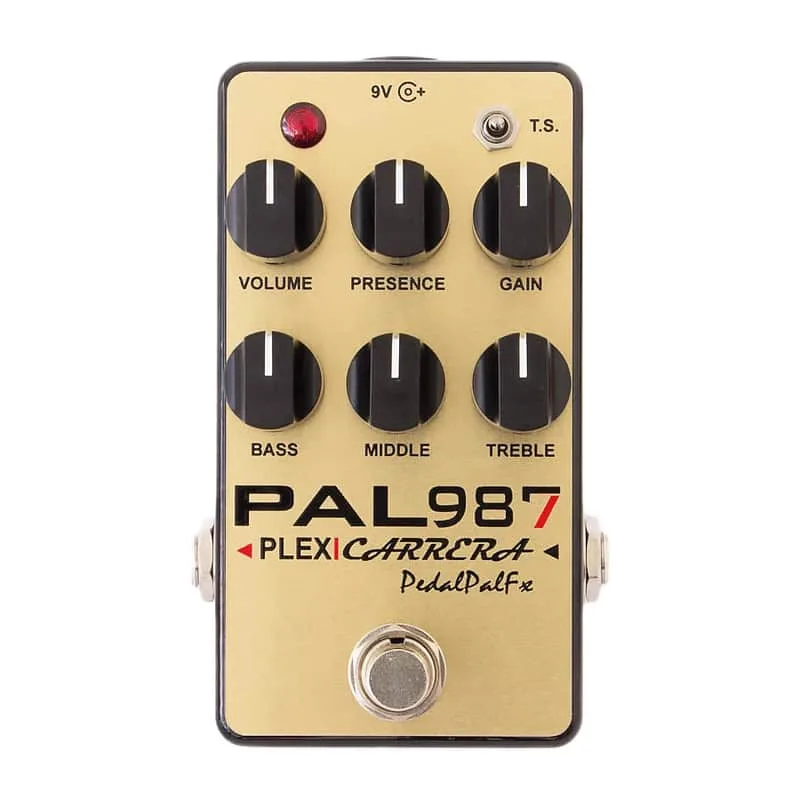


The PedalPalFx PAL987 PLEXI CARRERA is a hand-made overdrive pedal that puts the Marshall 1987X 50-Watt Plexi preamp circuit into a compact stompbox. Instead of the amp's vacuum tubes, builder Luis Pena uses transistors, carefully set up to perform the same way in each stage of pre-amplification1. Guitar Pedal X describes it as a Marshall-style preamp pedal, hand-made in Caracas, Venezuela, and reports that the circuit uses JFETs, including a JF8R4 JFET array of the builder's own design2.
The name carries the design intent. PedalPalFx says "CARRERA" stands for the pedal's mid-high gain performance, with a dedicated mid-range tone that emphasizes the high-mid frequencies where Marshall harmonic tones shine1. The builder also states that the circuit takes into consideration the mods that have been made on the 50-Watt Plexi and other models like the JCM800, aiming for increased attack, sustain and cut low frequencies for a custom mid-range response1.
A 1987X Plexi preamp in a pedal
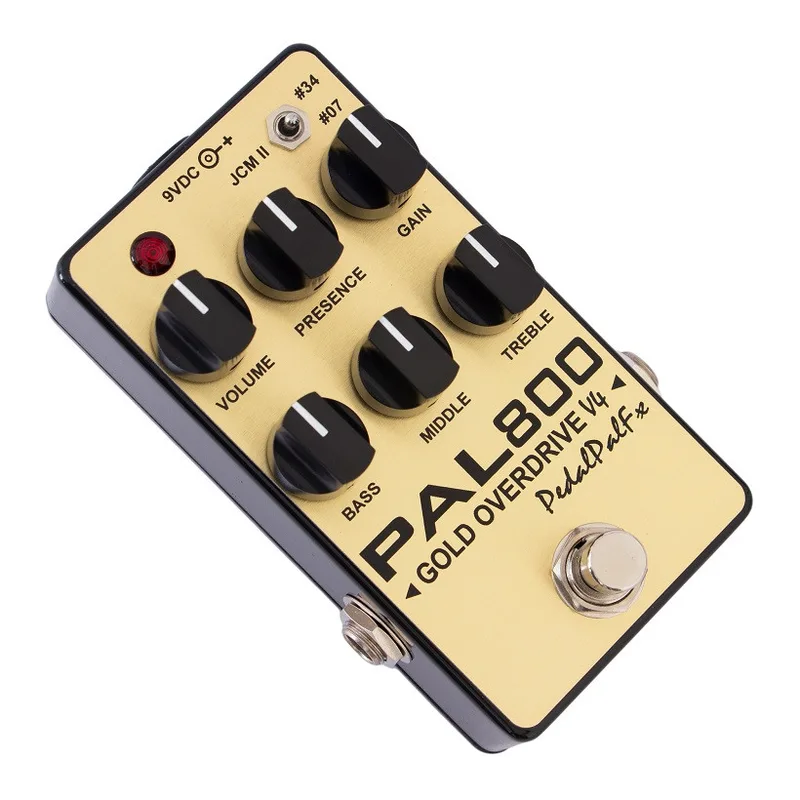
The PAL987 is one of a pair of Marshall-style pedals from PedalPalFx, alongside the PAL800-V4 Gold. Where the PAL800 follows the JCM800 style, the PAL987 is dedicated to the 1987X Plexi2. Guitar Pedal X's reviewer Stefan Karlsson frames the two as covering the classic Marshall bases:
"So if you're looking for dedicated Marshall 1987X Plexi style and JCM800 style pedals - with all the bells and whistles"
The pedal is built as a discrete transistor circuit with surface mount components, using what Karlsson calls "very smartly selected discrete Transistors to recreate the source amp" topology3. In his 2024 write-up he adds that Pena has developed what looks like his own JFET array to wholly recreate the amps' tube topologies2.
The controls and the Tone Structure switch
The front panel follows the amp it is modeled on, with a full EQ section and a voice switch132:
| Control | What it does |
|---|---|
| Gain | Dedicated gain knob; improved over the 800 and 959 series for a better tone structure response as gain changes1 |
| Master Volume | Sets the output level1 |
| Bass, Middle, Treble | Three-band EQ1 |
| Presence | Active presence control1 |
| T.S. (Tone Structure) | Three-way toggle: Standard Setup, Tight Setup, and Tight Setup With Extra Low-End Response1 |
The Tone Structure switch is the pedal's low-end shaping tool. Standard Setup is the full-fat default, Tight Setup firms up the bottom end, and the third position adds extra low-end response to the tight voicing1. Guitar Pedal X lists the same three modes: Standard, Tight, and Tight with Extra Low End Response3.
Inside the main circuit board there is also a Master Tone trim-pot1, an internal adjustment for setting the pedal's overall tonal balance once, rather than a performance control.
How it compares with the PAL800 and PAL959
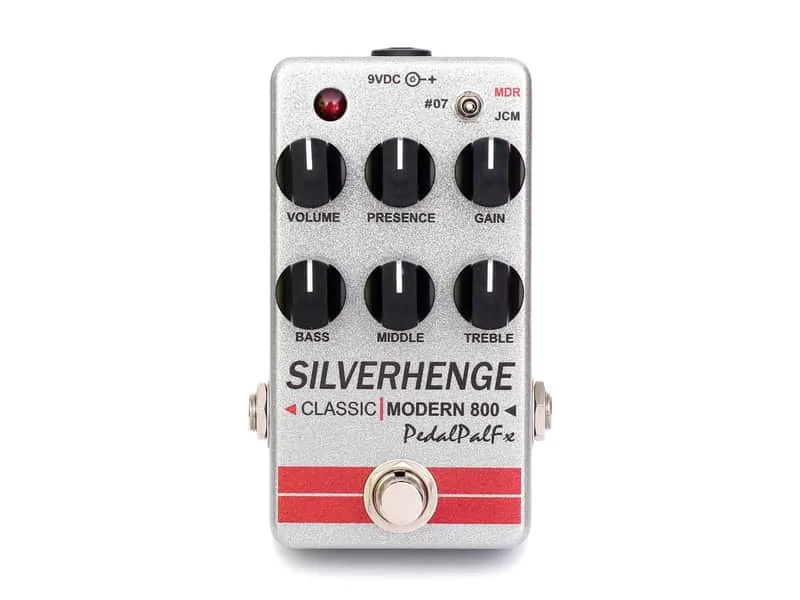
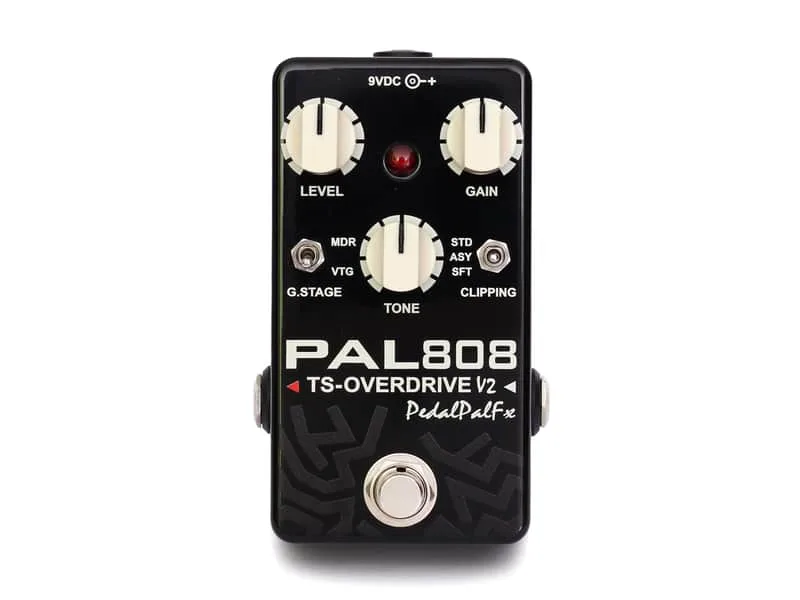
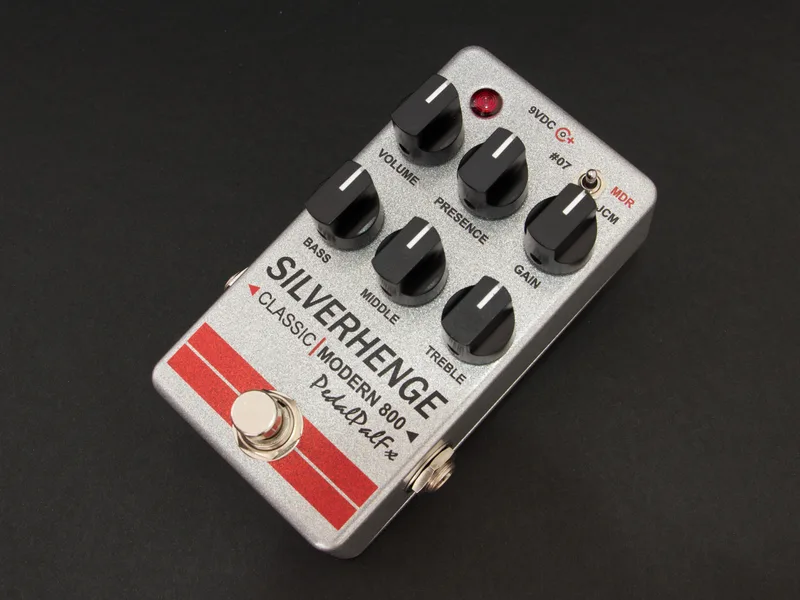
PedalPalFx positions the PAL987 against its own earlier Marshall-style pedals. Compared to the 800 and 959 series, the maker says the PAL987 has an improved Gain knob that gives a better tone structure response as the gain setting changes1. The family tree runs from the PAL800 JCM Emulator through the PAL959 PLEXI Emulator and its V2, with the PAL987 as the dedicated 1987X Plexi take.
Karlsson compared it directly against its siblings and competitors in his Reference Collection23:
"on this occasion this PAL987 was more instantly impactful for me"
He found it more instantly impactful than the PAL800, and more precisely dial-able than the Dawner Prince Red Rox, placing it in the top tier for Marshall Plexi style dial-in precision and instant impact2. His earlier verdict on the compact format was equally positive:
"Just a really versatile Extended Range classic Marshall Plexi style box - with intuitive and useful controls -"
Power and practicalities
The PAL987 runs on a regulated 9VDC supply through a 2.1mm coax plug with negative center, drawing 4mAh1.
An AC adapter is required and not included, and there is no battery option. The pedal needs a standard 9V center-negative power supply or pedalboard output.
With true bypass hardwire switching and a 1M ohm input impedance1, the pedal preserves the guitar's signal when bypassed. Its compact enclosure, 115mm deep by 70mm wide by 51mm high and 250 grs (8.8 oz)1, fits a crowded pedalboard, which Karlsson noted in his review of the compact formats1.
Videos
R.J. Ronquillo
PAL Effects (PedalPalFx)
PAL Effects (PedalPalFx)
Questions
Is the PAL987 Plexi Carrera true bypass?
Yes. PedalPalFx specifies True Bypass Hardwire switching, so when the pedal is off the guitar signal passes through without the circuit coloring it. The pedal also has a 1M ohm input impedance, which keeps the guitar's tone intact when it is first in the chain.
How is the Plexi Carrera different from the PAL800 and PAL959?
The PAL987 is based on the Marshall 1987X 50-Watt Plexi circuit, while the PAL800 series follows the JCM800 style and the PAL959 is a Plexi Emulator. PedalPalFx says the PAL987 also has an improved Gain knob compared to the 800 and 959 series, giving a better tone structure response as the gain setting changes.
Does the PedalPalFx Plexi Carrera use tubes?
No. PedalPalFx replaced the vacuum tubes of the 1987X Plexi circuit with transistors, carefully set up to perform the same way in each stage of pre-amplification. Guitar Pedal X reports the circuit uses JFETs, including a JF8R4 JFET array developed by the builder.
What does the internal Master Tone trim-pot do?
The Master Tone trim-pot sits inside the main circuit board and lets a player fine-tune the pedal's overall tone beyond the front-panel controls. It is an internal adjustment rather than a knob you turn while playing, so it is set once to taste.
Can the Plexi Carrera run on a battery?
No. The pedal requires a regulated 9VDC AC adapter, which is not included, using a 2.1mm coax plug with negative center. There is no battery option, so it needs a power supply or an isolated pedalboard power output.
Sources (3)
- PedalPalFx, PedalPalFx
- Guitar Pedal X, Guitar Pedal X, 2024-05-22
- Guitar Pedal X, Guitar Pedal X, 2023-11-28