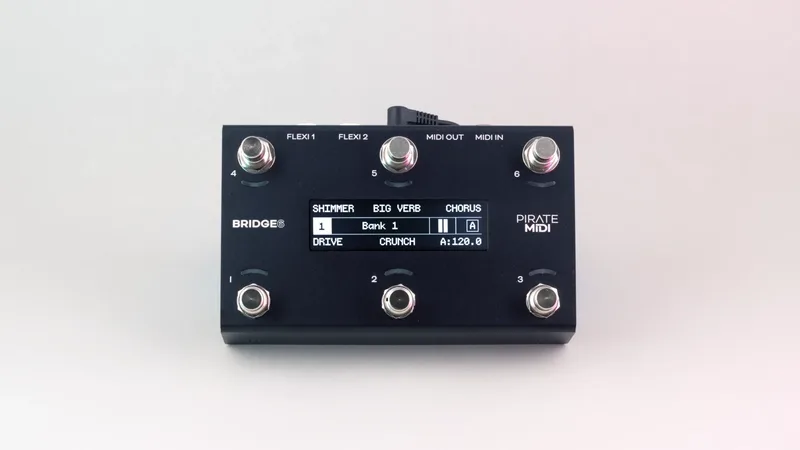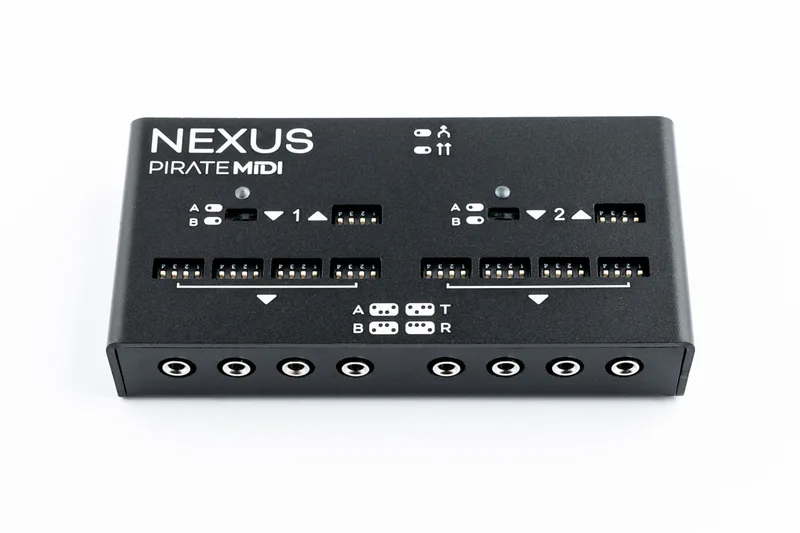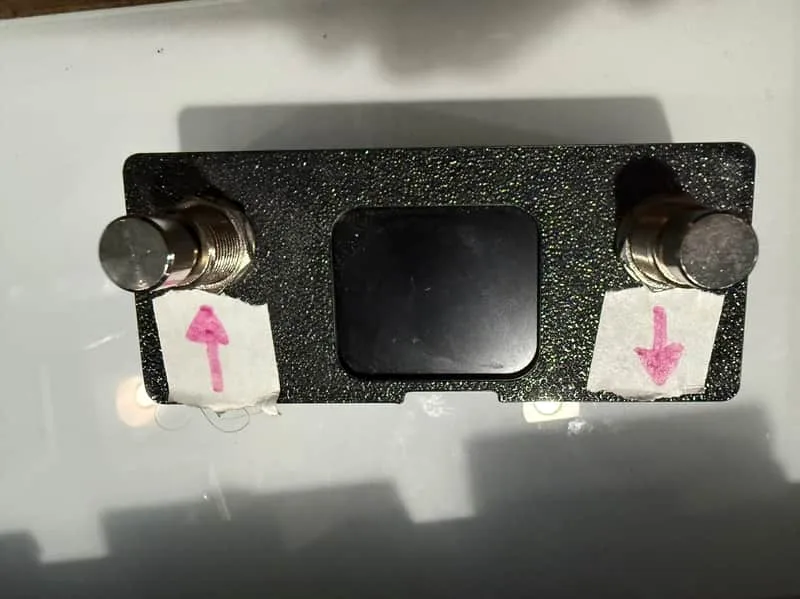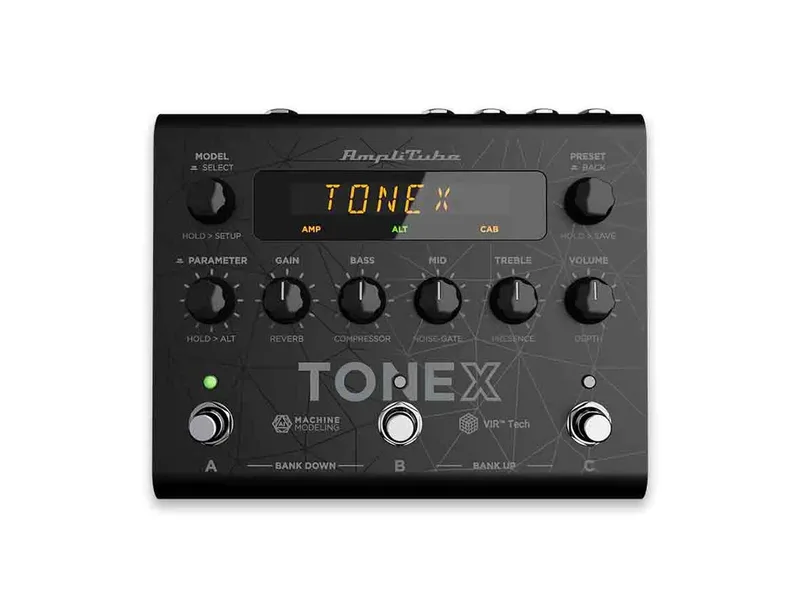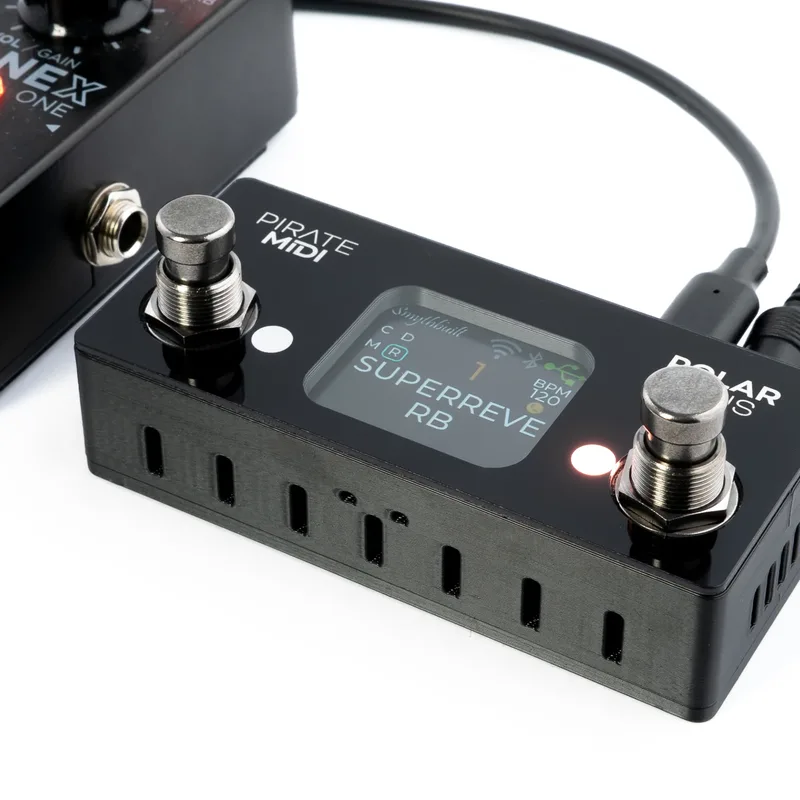


The PIRATE MIDI Polar is a family of small controllers built around one job: letting a player control pedals like the IK Multimedia ToneX One with MIDI. It powers the pedal and sends MIDI messages to switch presets, tweak settings and more over a single USB-C cable, and PIRATE MIDI describes the setup as truly plug and play1. The line is billed as "Polar // ToneX One USB, MIDI, and Wireless Controllers"1, and it sits among the maker's MIDI control devices alongside the PIRATE MIDI BRIDGE6 and PIRATE MIDI Nexus. For more on the wider category, see MIDI Pedals.
What it does
The Polar's main trick is combining power and control in one cable. It powers the pedal and sends MIDI messages to switch presets, tweak settings and more over USB-C, with no complicated setup required1. The PIRATE MIDI POLAR PLUS page on RockBoard's PedalPedia describes it the same way: "Just connect your ToneX One to this small, powerful box using USB-C, and you're ready to go. It powers the pedal an[d]"2.
There is one catch worth knowing before you buy into the idea.
The ToneX One doesn't officially support MIDI control, so the Polar works by translating USB messages. PIRATE MIDI states it can't offer returns or refunds if future ToneX updates make this control method stop working1.
Wireless and wired MIDI
Beyond the USB-C link, the Polar can cut the cables entirely. PIRATE MIDI says you can "control your pedal wirelessly via Bluetooth or WiFi using a compatible MIDI controller or app"1. For wired setups, the unit carries a 3.5mm TRS (Type A) MIDI input alongside the USB-C pedal connection, plus a 3.5mm TRS (Type A) MIDI Thru for passing MIDI onward1.
The four sizes: Pico, Mini, Plus and Max
The Polar comes in four sizes, and PIRATE MIDI says all four models offer the same core features and connections, differing in user interface options1. In practice that means you pick the footprint and the amount of physical control that suits your board.
| Model | Dimensions |
|---|---|
| Polar Pico | 59mm x 36.6mm x 15mm1 |
| Polar Mini | 57mm x 39mm x 17mm1 |
| Polar Plus | 100mm x 41mm x 46mm1 |
| Polar Max | 112mm x 90mm x 46mm1 |
The Pico and Mini are close in size and clearly meant for the tightest boards, while the Plus and Max step up in both footprint and height, which is where the larger user interface options live1.
Version 2 hardware and the firmware
In January 2026 PIRATE MIDI released version 2 hardware across the line, which the maker says makes the devices even more space efficient and adds its new optical switching technology to models with footswitches1. Because the switches are optical rather than mechanical, PIRATE MIDI says there are "no mechanical switches to wear out," meaning "almost endless life for your footswitches"1.
The firmware side is an open source project: PIRATE MIDI credits the open source firmware for these devices to Greg Smith1.
What players say
Beyond the ratings on its own page, PIRATE MIDI notes a few things worth knowing as an owner. The open source firmware for these devices was created by Greg Smith1. On models with footswitches, the optical switching means, in the maker's words, "almost endless life for your footswitches with no mechanical switches to wear out"1. One caveat: PIRATE MIDI states it "can't offer returns or refunds if future ToneX updates make this control method stop working"1.
Videos
Leon Brown Music
Hey Worship Leader
PIRATE MIDI
Questions
Does the PIRATE MIDI Polar power the ToneX pedal?
Yes. The Polar powers the ToneX One over USB-C and sends MIDI messages to it at the same time, so one cable handles both jobs. PIRATE MIDI describes it as plug and play with no complicated setup: connect the pedal and you can switch presets and tweak settings. The Polar Plus page from RockBoard's PedalPedia says the same, noting the box powers the pedal and gets you ready to go over a single USB-C connection.
What is the difference between the Polar Pico, Mini, Plus and Max?
All four models offer the same core features and connections. They differ in size and in user interface options. The Pico measures 59mm x 36.6mm x 15mm, the Mini 57mm x 39mm x 17mm, the Plus 100mm x 41mm x 46mm and the Max 112mm x 90mm x 46mm, so the range runs from a very small unit to a larger one with room for more controls.
Does the Polar support wireless MIDI?
Yes. PIRATE MIDI says you can control your pedal wirelessly via Bluetooth or WiFi using a compatible MIDI controller or app. The Polar also has wired MIDI connections, including a 3.5mm TRS Type A MIDI input and a 3.5mm TRS Type A MIDI Thru.
Does the ToneX One officially support MIDI control?
No. PIRATE MIDI states that the ToneX One doesn't officially support MIDI control, so the Polar works by translating USB messages instead. Because the control method depends on how the ToneX firmware behaves, PIRATE MIDI notes it can't offer returns or refunds if future ToneX updates make it stop working.
What power adapter does the Polar use?
The Polar runs on 9V DC, center negative, and uses a 2.1mm DC jack. A 1.1mm to 2.1mm DC adapter is included, so the supplied adapter fits the jack. Use a 9V DC center negative supply as with most pedals.
Sources (2)
- Polar // ToneX One USB, MIDI, and Wireless Controllers, PIRATE MIDI, 2026-01
- POLAR PLUS by PIRATE MIDI, RockBoard PedalPedia, 2026