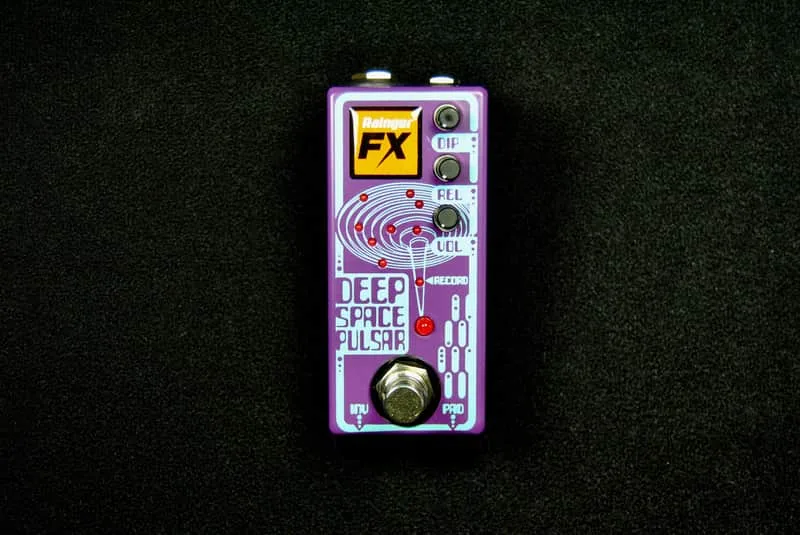


The Rainger FX Deep Space Pulsar is a sidechainer pedal: it ducks your guitar's volume in time with a rhythmic trigger, most often a kick drum, so the guitar and drums "pump" together. Premier Guitar's launch coverage described it as an effect that can do "anything from spring-loaded rock rhythm guitar to pulsing four-on-the-floor club sounds"1. Sidechaining a guitar, syncing it to dip in volume with each kick drum, is normally a recording-studio move; the Deep Space Pulsar brought it to a pedalboard.
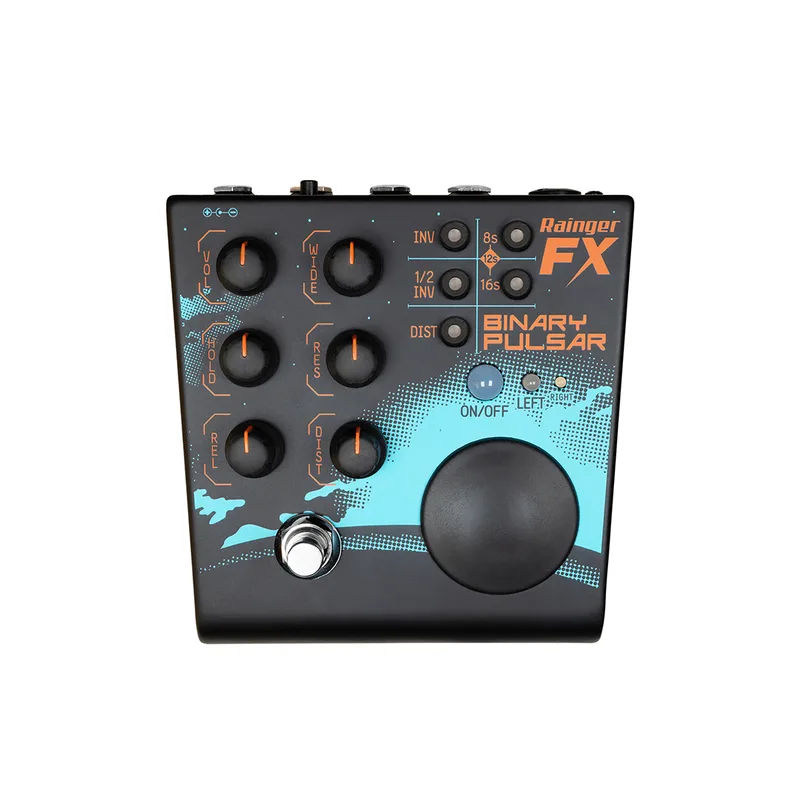
It arrived in 2017 as part of Rainger FX's series of custom mini-pedals, built in the UK, in the maker's own mini-pedal enclosure with no sockets on the sides1. Rainger FX now lists the mono Deep Space Pulsar mini-pedal as discontinued2, and the concept lives on in the stereo Binary Pulsar.
What it does: guitar volume that pumps with the kick drum
The core idea is inverse of what a compressor pedal does. Instead of smoothing your dynamics, the Deep Space Pulsar reads a rhythm and carves your guitar volume to match it, dipping with each kick drum hit so the two instruments lock together. Premier Guitar's reviewer found this goes beyond a novelty effect, listing "inspires riffs and songwriting" among the pedal's pros alongside the microphone input and the inverse side-chaining option3.
The pedal fits all of this into what the reviewer called "an effective, flexible control scheme that fits in a 'mini' pedal enclosure"3. On the side you'll find a 1/8" jack that is key to making it work: it receives input from your rhythmic "controller", whether that is a mic, a pad or a voltage3.
The controls
The front panel is deliberately small, and the controls cover the two things that matter most for a ducking effect: how deep the dip goes and how fast the guitar comes back1.
| Control | What it does |
|---|---|
| Dip amount | Sets how far the guitar volume drops with each trigger hit1 |
| Release speed | Sets how quickly the volume recovers after each dip1 |
| Invert switch | Reverses the ducking action, releasing a pulse of sound with each drum beat instead of a dip17 |
| Pad button | Changes sensitivity to live drums7 |
The Invert control is the one that turns the pedal inside out. In normal mode the guitar ducks on each beat; with Invert engaged, the pedal does "exactly the opposite (releasing a pulse of sound with each drum beat)"1. Delicious Audio's coverage noted the Invert button simply inverts the ducking action7.
Triggering it: mic, Igor pad, tap tempo and CV
The Deep Space Pulsar needs something to tell it when to dip, and it accepts several kinds of trigger56:
- The included pressure-sensitive footswitch5
- A microphone, for example placed in front of a kick drum5
- CV (Control Voltage) from a sequencer or drum machine5
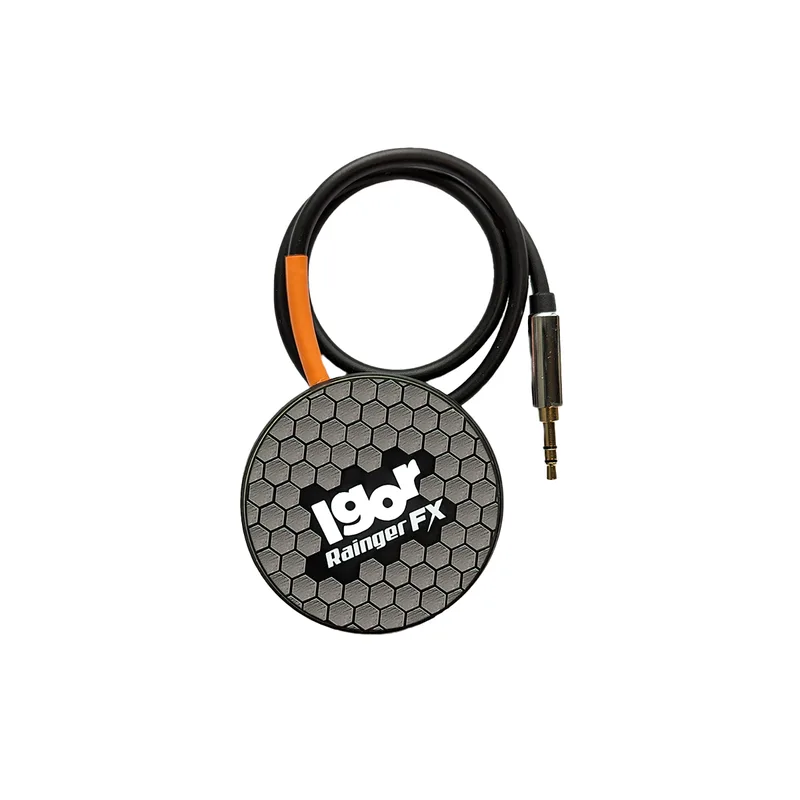
- The included Igor mini pedal, for tapping in the pulse by hand or foot5
The Igor pressure pad also drives the tap tempo. Premier Guitar described it as "correctable tap tempo capable of syncing for minutes at a time, tempo input via a Rainger FX 'Igor' pressure pad"1, and MusicRadar confirmed that tap tempo is available to input the time via the included pad6. Gearnews pointed out the practical upshot: because the Igor mini pedal is included to let you tap in the pulse, "you can even use it without a drummer"5. Beyond a live drummer, the pedal can be synced to a drum machine, a DJ or a CV pulse6.
History and versions
Rainger FX, run by designer David Rainger, has a reputation for inventive approaches to interfacing with effects3. The Deep Space Pulsar launched in 20174 at £164 RRP in the UK5 and a $182 street price in the US456. Premier Guitar's 2021 review still listed it at a street price of $1823.
The pedal is now discontinued. Rainger FX's own product page for its successor refers to "our mono Deep Space Pulsar mini-pedal (now discontinued)"2.
What reviewers said
Premier Guitar's 2021 review was positive on the concept and the execution, listing as pros the "clever compact interface", the way it "inspires riffs and songwriting", the microphone input and the inverse side-chaining option3.
"Clever compact interface. Inspires riffs and songwriting. Microphone input. Inverse side-chaining option."
The pedal also got a well-known demo from Knobs, the video channel whose close-up pedal films became a reference point for gear demos; Delicious Audio highlighted it in April 2017, a few weeks after first covering the pedal8.
Videos
Knobs
Pedals and Effects
Dennis Kayzer
Questions
Is the Rainger FX Deep Space Pulsar still made?
No. Rainger FX lists the mono Deep Space Pulsar mini-pedal as discontinued on its own product pages. The concept carries on in the Binary Pulsar, a stereo sidechainer, panner and tremolo launched in 2026 as an evolution of the 2017 original.
Can you use the Deep Space Pulsar without a drummer?
Yes. The included Igor mini pedal lets you tap in the pulse yourself, and the pedal can also be synced to a drum machine, a DJ or a CV pulse. A microphone in front of a kick drum is the classic setup, but it is only one of several trigger options.
Is the Deep Space Pulsar analog or digital?
It is an analog audio pedal. Premier Guitar's launch coverage described it as a tiny but revolutionary analogue audio pedal, and the audio path stayed analog even though the triggering and tap tempo logic handle the timing.
What comes in the box with the Deep Space Pulsar?
The pedal ships with an Igor pressure pad, used for tap tempo and tapping in the pulse, plus a bass drum mic for triggering from a live kick drum. The pedal itself uses Rainger FX's mini enclosure with no sockets on the sides.
How much did the Deep Space Pulsar cost?
At launch in 2017 it carried a UK RRP of £164 and a US street price of $182. Premier Guitar's 2021 review still listed it at a street price of $182.
What is a sidechain pedal for guitar?
Sidechaining is a studio trick where one signal ducks another in volume. A sidechain pedal for guitar does it live: the Deep Space Pulsar syncs your guitar volume to dip with each kick drum hit, so the guitar and drums pump together instead of the effect being applied later in a recording.
Sources (8)
- Rainger FX Releases the Deep Space Pulsar, Premier Guitar, 2017-03-20
- Binary Pulsar, Rainger FX
- Rainger FX Deep Space Pulsar Review, Premier Guitar, 2017-09-21
- Guitar Pedal X, Guitar Pedal X, 2026-06-11
- Rainger FX Deep Space Pulsar: An eccentric new pumping effects pedal, gearnews.com, 2017-03-21
- Make your guitar throb in time with Rainger FX's Deep Space Pulsar mini pedal, MusicRadar, 2017-03-21
- New Pedals: Rainger FX Deep Space Pulsar, Delicious Audio, 2017-03-29
- Rainger FX Deep Space Pulsar, Delicious Audio, 2017-04-19
 Noel Gallagher