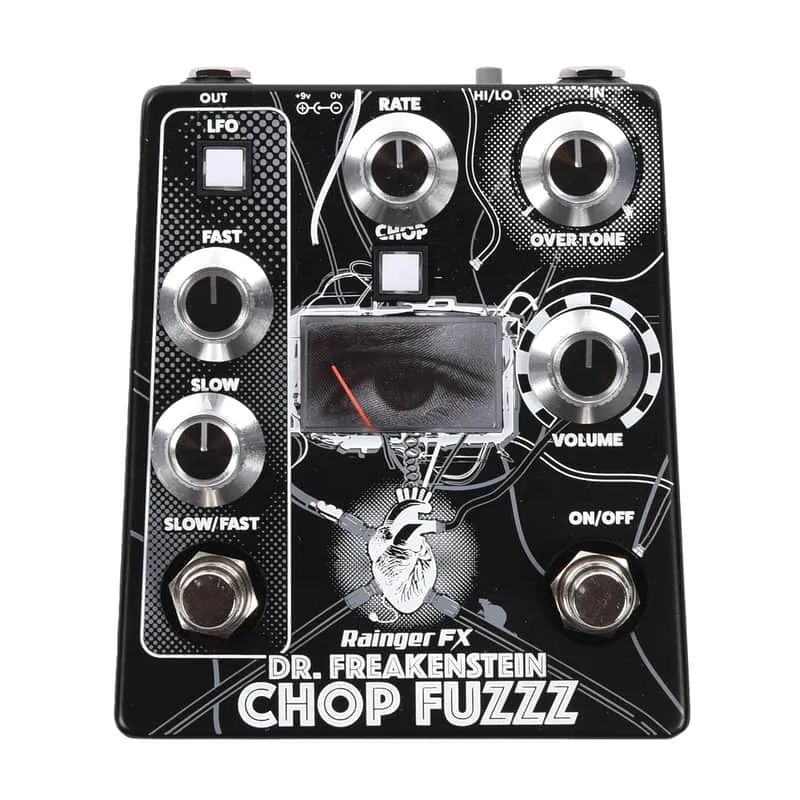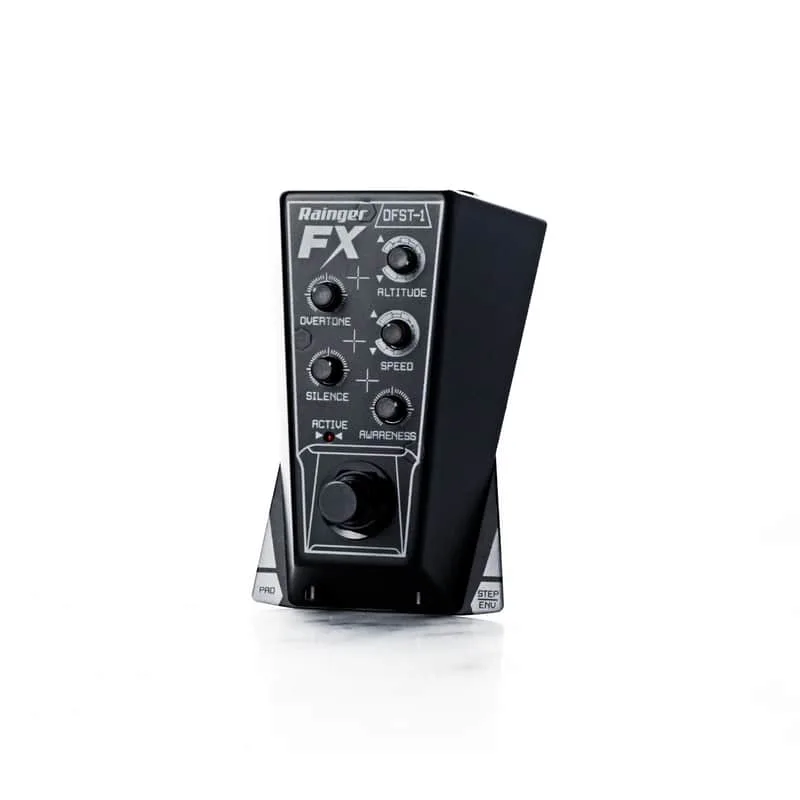


The Rainger FX DFST-1 Stealth Distortion/Fuzz is an extreme fuzz-plus-filter mini-stompbox from London maker Rainger FX, released in December 2021 as a limited edition of only 240 units1. It is the latest in the company's line of pedals using the Dr. Freakenstein fuzz circuit, and the first of that line in the mini format1. Guitar Pedal X's Stefan Karlsson described it as "essentially a limited miniature variation on the Dr Freakenstein Chop Fuzz - but with its own quirks"2.
The enclosure is a custom-designed expanded Rainger FX mini-pedal with wings, which Delicious Audio's Paolo De Gregorio called "probably the world's first effects pedal to have wings"1. It is still surprisingly small despite the extra panel space1.
Envelope Control and Step Modulation modes
The pedal has two modes of operation, selected with a button near the right wing at the bottom of the pedal1.
- Envelope Control Mode: the pedal works like an envelope fuzz resonant filter, with the incoming signal's shape governing the Overtone control. Your picking dynamics drive the filter1.
- Step Modulation Mode: something closer to an auto-wah effect, though not exactly, with the filter controlled by an LFO rather than the guitar's dynamics. It alternates high and low frequency steps divided into ten steps per cycle1.
Delicious Audio described the range of sounds as "Highly vocal tone stings dive-bombing down to a Geiger Counter crackle, techno pulse-like steps that sequence in time with the music", calling it Rainger FX's most extreme distortion pedal ever1.
The controls
| Control | What it does |
|---|---|
| Altitude | Sets the amount of resonance, i.e. the amount of frequency boost. Up high, the low end rolls off for synthy squelches; down low with Overtone low, it gives full-range, low-voiced thick distortion1 |
| Overtone | Selects the pushed frequency; both modes work on it1 |
| Speed | Controls the rate of the step modulation pattern. Set low, the tone alters with each new phrase; set fast, it goes beyond Leslie cabinet speeds into fast oscillation1 |
| Silence | Sets the noise gate's threshold, for sputtery or interrupted tones1 |
| Awareness | Works with the Pad switch to adjust the filter's sensitivity; cranked up, it lengthens the initial intensity into a long searing sustain1 |
| Pad switch | Guitar / Line-in: adjusts the pedal's sensitivity so it can adapt to high output levels from synthesizers or active guitars1 |
| Mode button | Step Modulation / Envelope1 |
Guitar Pedal X lists the same control set, naming Altitude as EQ, Overtone as harmonic overtones, Speed as modulation rate, Silence as output and Awareness as envelope sensitivity2.
The Pad switch matters if you run active pickups or synths into the pedal: it adapts the sensitivity to high output signals, and the Awareness knob works with it rather than independently1.
Noise gate and the minijack input
The DFST-1 Stealth carries the same built-in noise gate used to keep it ultra silent between notes, with the Silence knob setting the gate's threshold1. That places it among fuzz pedals with gating built in, a family covered on the site's noise gate page.
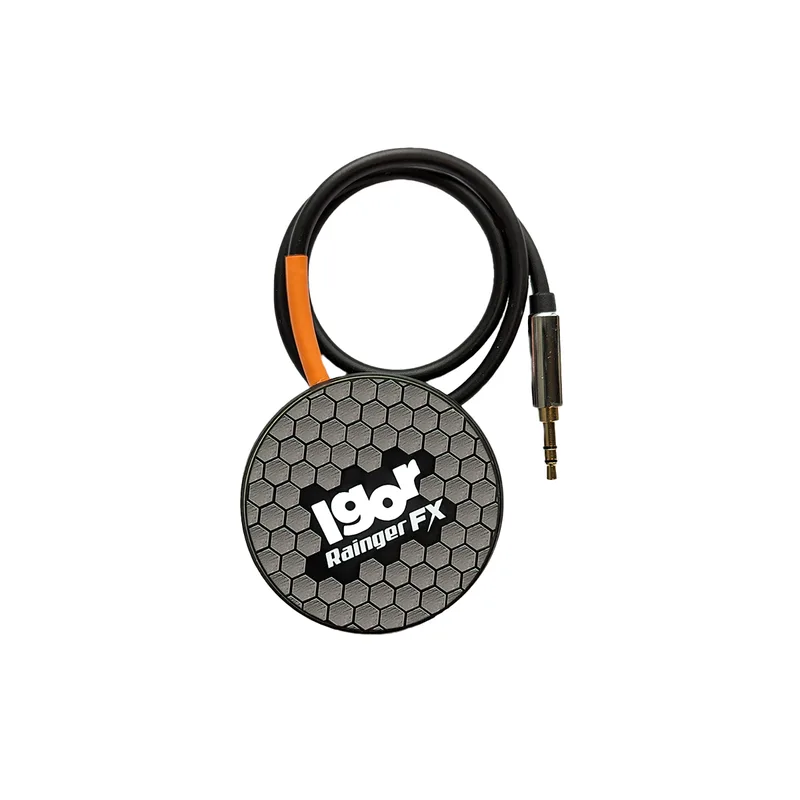
On the top end panel there is a minijack socket, primarily for use as CV in from a modular synth setup. It can also be used with a Rainger FX Igor controller pad, which is not supplied with the pedal. Inputs to this socket control the Overtone aspect of the pedal1. That makes the Stealth unusual among filter pedals at this size, since the filter can be driven externally rather than only by the guitar signal.
Where it sits in the Rainger FX line
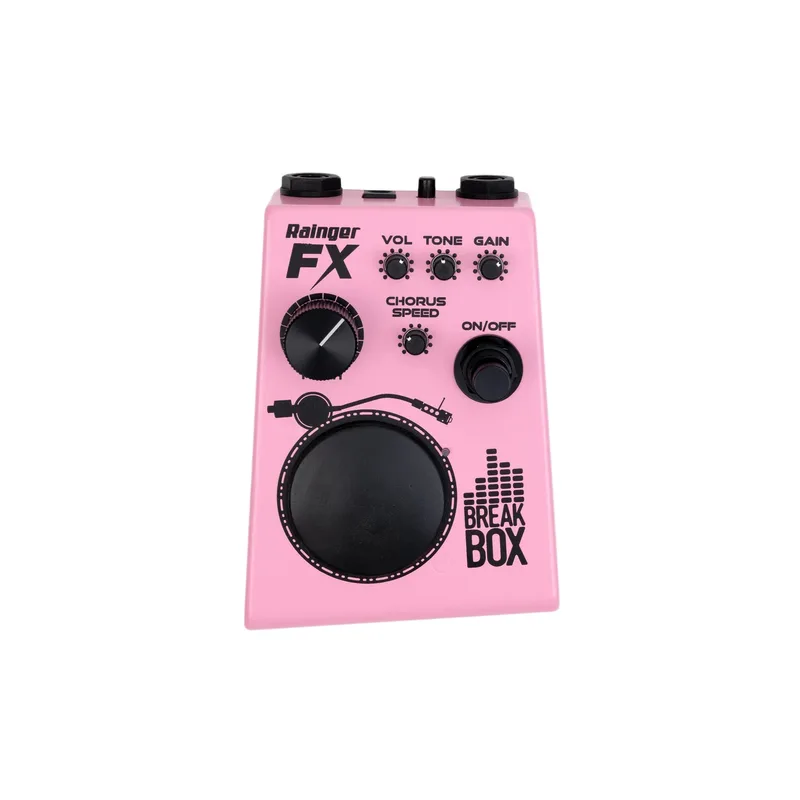
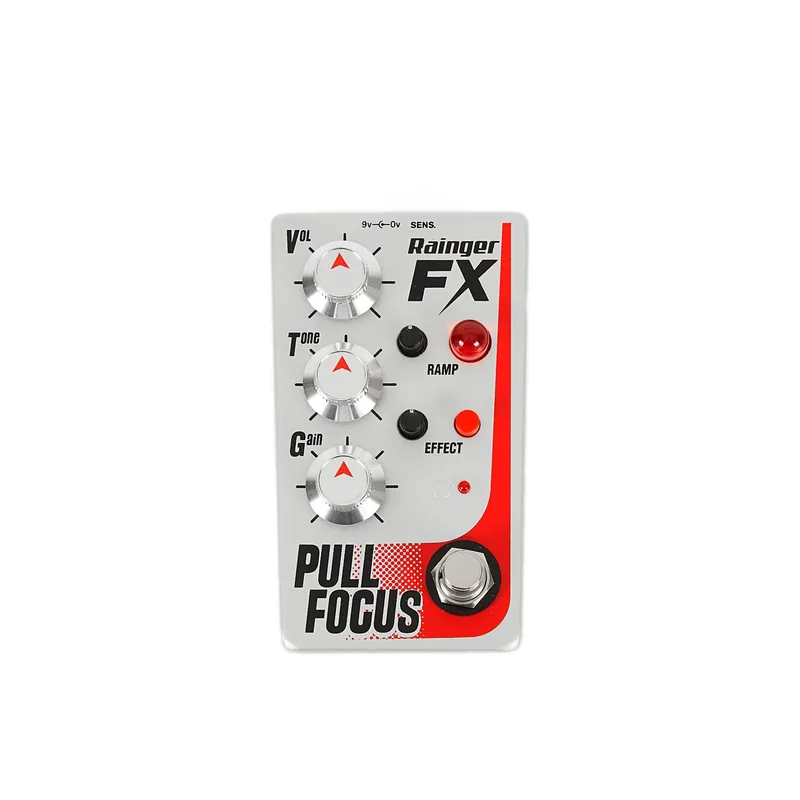
Guitar Pedal X later described the DFST-1 as "very much a cool mini take on the legendary core Dr Freakenstein Chop Fuzzz with some slight differences"3. Rainger FX has since built on the same family of ideas in other pedals, including the Rainger FX Break Box and the Rainger FX Pull Focus, both of which also pair distortion with a noise gate.
Videos
Demos In The Dark
SpiralCasterPlaysPedals
Sound Isles
Questions
What is the Rainger FX DFST-1 Stealth?
It is an extreme fuzz and filter mini-stompbox from London maker Rainger FX, built on the company's Dr. Freakenstein fuzz circuit. It combines a full-on fuzz with a resonant filter that can be driven either by your playing dynamics or by a step-modulation LFO, and it includes a built-in noise gate. It was released in December 2021 as a limited edition of 240 units.
How many DFST-1 Stealth pedals were made?
The DFST-1 Stealth is a limited edition Rainger FX pedal, with only 240 made. It was announced in December 2021 and was described as the first Dr. Freakenstein circuit pedal in the company's mini format.
What does the Pad switch do?
The Pad switch, on the left wing of the pedal, adjusts the sensitivity of the pedal so it can adapt to high output signal levels, such as those from synthesizers or active guitars. It works together with the Awareness knob, which adjusts the filter's sensitivity.
Does the DFST-1 Stealth have a noise gate?
Yes. The DFST-1 Stealth has a built-in noise gate to keep it ultra silent between notes. The Silence knob sets the gate's threshold, and can also be used for sputtery or interrupted tones.
What is the minijack input on the DFST-1 Stealth for?
The minijack socket on the top end panel is primarily for use as CV in from a modular synth setup. It can also be used with a Rainger FX Igor controller pad, which is not supplied with the pedal. Inputs to this socket control the Overtone aspect of the pedal.
Sources (3)
- New Pedal: Rainger FX DFST-1 Stealth Distortion/Fuzz, Delicious Audio, 2021-12-29
- Guitar Pedal X, Guitar Pedal X, 2022-04-26
- Guitar Pedal X, Guitar Pedal X, 2024-05-09