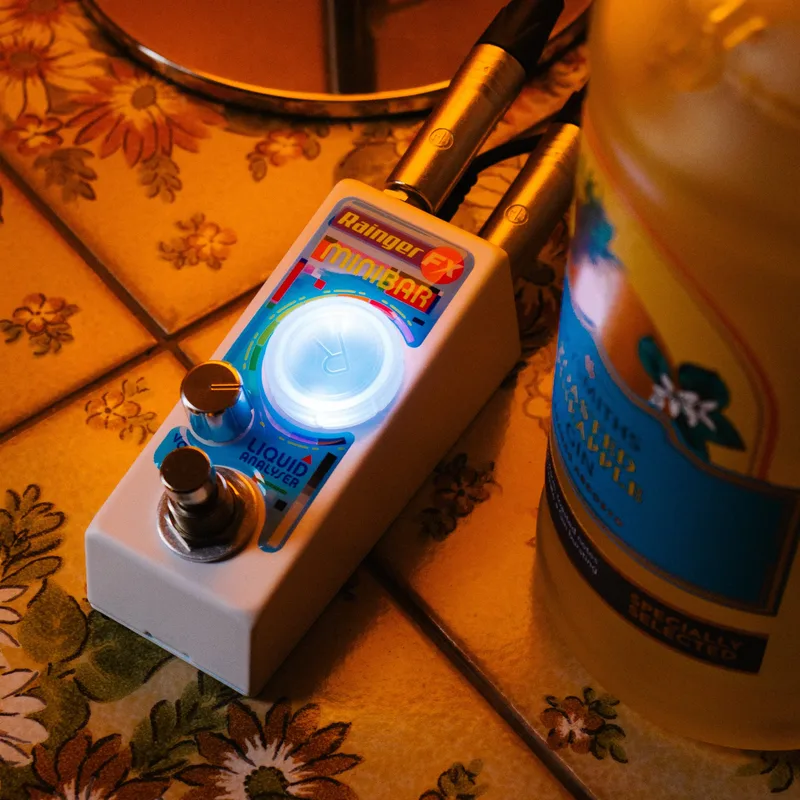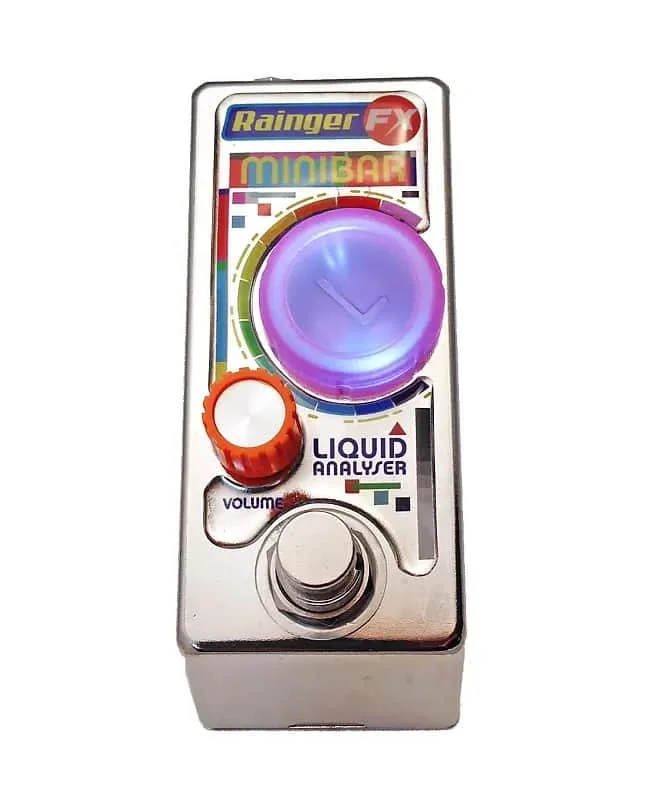


The Rainger FX Minibar Liquid Analyser is a drive/distortion/fuzz mini-pedal that changes its sound depending on which liquid you put into a plastic container built into the pedal. It has a single Volume control, carries a $149 street price, and is assembled in the United Kingdom1. GuitarPlayer's reviewer called it a "Fantastic, fun way to create an endless variety of cool, gritty tones."1
How a liquid becomes a distortion circuit
The idea is unusual among distortion pedals: the liquid itself is part of the circuit. According to David Rainger, the secret is the number of free ions in the liquid of choice. "Water has many and so it conducts well, producing low distortion. Alcohol has very few and creates high distortion." Olive oil has none, resulting in silence1. In practice, that means the liquid you choose sets both the amount and the texture of the gain, and swapping liquids is the way you voice the pedal.
What different liquids do to the sound
GuitarPlayer's reviewer tried a range of household liquids and found each gave a distinct character1:
| Liquid | What the reviewer heard |
|---|---|
| Tap water | Low-distortion gain with plenty of midrange push, like a vintage treble booster |
| Beard oil | Much more gain, volume and a fuzzier sound |
| Tabasco sauce | A nice warm drive |
| Hydrogen peroxide | Lower gain and a tone focused in the low midrange, good for fattening an already broken-up amp or pedal |
| Isopropyl alcohol | Lots of thick, Fuzz Face-style gain, brighter than the beard oil |
| Worcester sauce | Low volume and a very dark tone, too clean for distortion but possibly good for an EQ effect |
The beard oil and Worcester sauce results came from the same comparison, with the reviewer noting "the difference was striking, with much more gain, volume and, appropriately, a fuzzier sound" between the two1. The isopropyl alcohol result sits in familiar fuzz territory, and players curious about that character can read more on the fuzz pedals page.
Controls and use
The Minibar Liquid Analyser keeps its control set to a single Volume knob1. All the tonal variation comes from the liquid in the container, so the pedal suits a player who wants to shape gain by experiment rather than by turning knobs. The reviewer's verdict was that it offers an endless variety of gritty tones, and the liquid approach means no two players' settings need be the same1.
Videos
Andertons Music Co
AndyDemos
Reverb
Questions
How does a liquid change the distortion in the Minibar Liquid Analyser?
According to David Rainger, the secret is the number of free ions in the liquid of choice. Water has many and conducts well, producing low distortion. Alcohol has very few and creates high distortion. Olive oil has none, resulting in silence. The liquid sits in a plastic container that is part of the circuit, so swapping liquids changes how the pedal distorts.
What liquids can you put in the Minibar?
The reviewer tried tap water, beard oil, Tabasco sauce, hydrogen peroxide, isopropyl alcohol and Worcester sauce, each producing a different gain character. In principle the container holds various liquids to shape the sound, and the number of free ions in a liquid determines how much distortion it produces.
Where is the Rainger FX Minibar Liquid Analyser made?
GuitarPlayer lists the pedal as assembled in the United Kingdom.
What controls does the Minibar Liquid Analyser have?
The pedal has a single Volume control. Its distortion character comes not from knobs but from the liquid placed in its container, which changes the conduction and therefore the amount and texture of the gain.
Sources (1)
- Rainger FX Minibar Liquid Analyser Review, GuitarPlayer, 2021-03-19