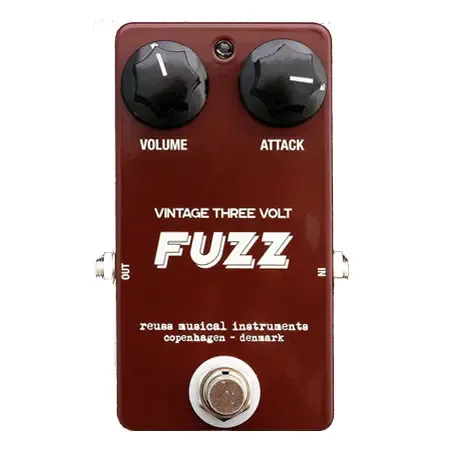


The Reuss Vintage Three Volt Fuzz is a fuzz pedal from Reuss built in the image of the original Maestro FZ-1, the circuit that started it all in the 1960s. Its defining feature is in the name: just like the original Maestro FZ-1, the Reuss version runs on just 3 volts, delivered by two AAA batteries rather than a conventional pedal power supply1.
What it does
The pedal uses GC301 germanium transistors, and Delicious Audio's Griffin Jennings, writing in a 2023 buying guide, attributes the pedal's character directly to them: "The limited bandwidth of the GC301 Germanium transistors makes for a nasal, gated fuzz tone perfectly emblematic of the early fuzzes of the 1960s"1. In plain terms, that is the tight, sputtering, mid-focused voice players associate with the earliest fuzz boxes, rather than the wide-open sustain of later designs.
"It runs on two AAA batteries, which means that you can't daisy chain it."
The pedal runs on two AAA batteries, which means it cannot be daisy chained from a shared power supply with the rest of a board1. Players used to running everything from one supply will need to plan around this.
Where it came from
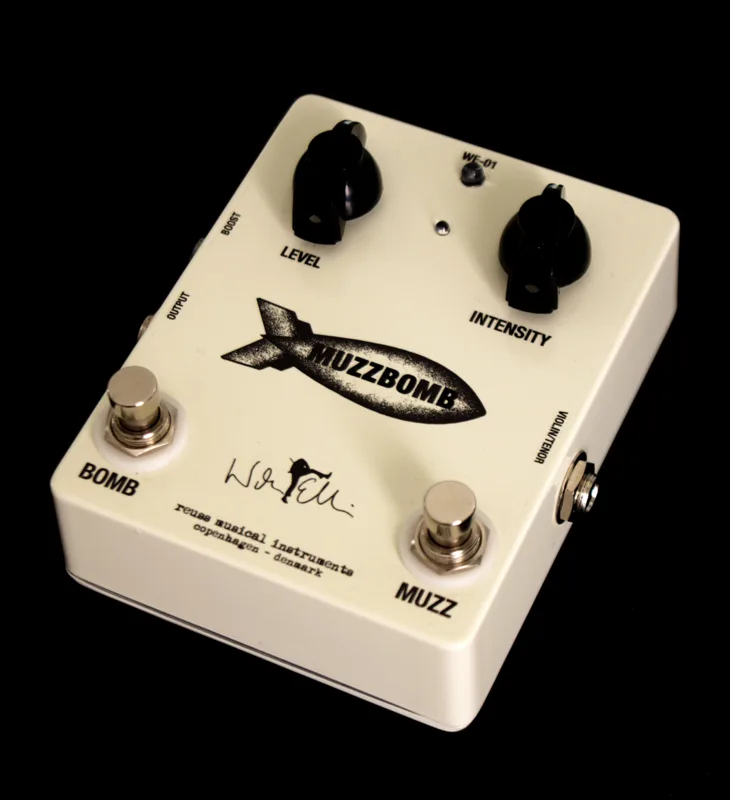
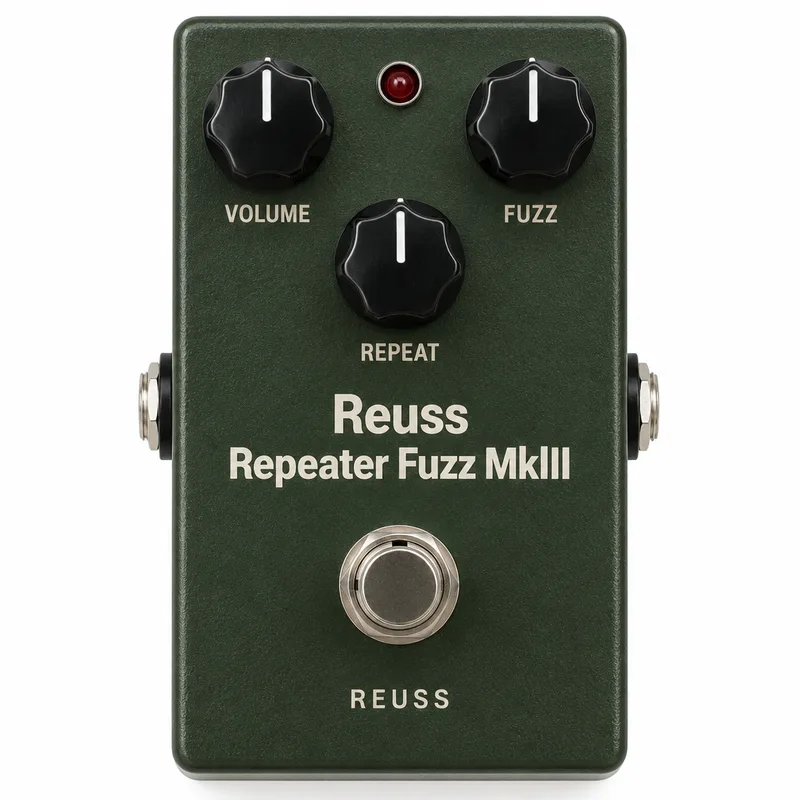
The Vintage Three Volt Fuzz is one of several fuzzes in the Reuss range, alongside the Reuss Muzzbomb and the Reuss Repeater Fuzz MkIII. Its stated aim, per the buying guide that covered it, is fidelity to the original Maestro FZ-1's 3-volt operation1.
Videos
Anders Marcuslund-Reuss (Reuss Musical Instruments)
Anders Marcuslund-Reuss (Reuss Musical Instruments)
Questions
Why does the Reuss Vintage Three Volt Fuzz run on AAA batteries?
The pedal runs on just 3 volts, the same low voltage as the original Maestro FZ-1, and it gets there with two AAA batteries rather than a standard 9V supply. Because of that battery arrangement, it cannot be daisy chained from a shared power supply with the rest of a pedalboard, so players need to plan around it.
What does the Reuss Vintage Three Volt Fuzz sound like?
Delicious Audio's Griffin Jennings describes it as a nasal, gated fuzz tone, and attributes that character to the limited bandwidth of its GC301 germanium transistors. In his words, that makes for a tone perfectly emblematic of the early fuzzes of the 1960s.
Sources (1)
- The Best Maestro FZ-1 Fuzz Tone Clones & Evolutions In 2023, Delicious Audio, 2023-05-15