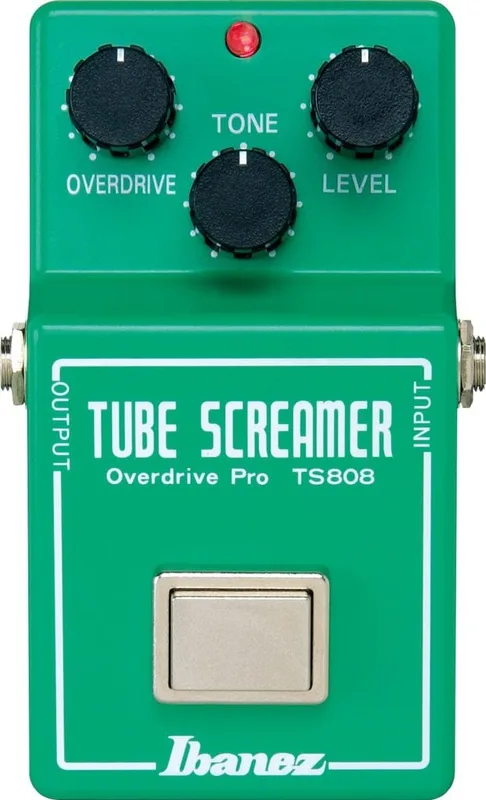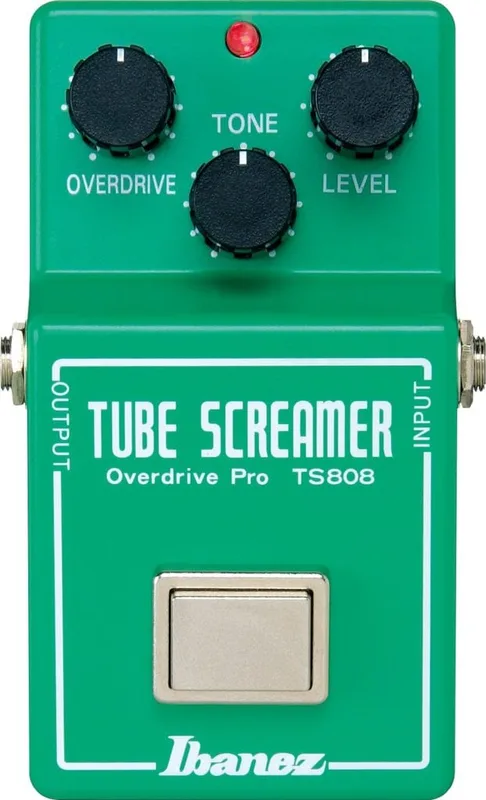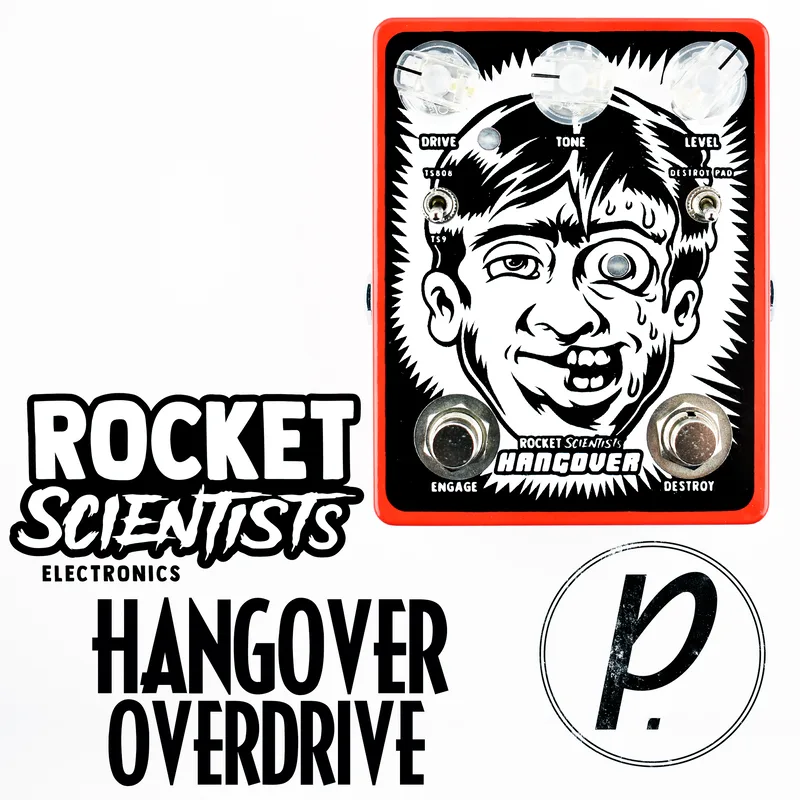


The Rocket Scientists Electronics Hangover Overdrive is an overdrive pedal that uses the Ibanez Tube Screamer as its base circuit and then builds on it, adding a second footswitch, two toggle switches and a pulsing LED graphic. Pedal of the Day's review describes it as taking "the best parts of the Tube Screamer, then adds to them, resulting in a furious drive pedal"1.
What it does
The Hangover keeps the familiar Tube Screamer control layout: Drive, Tone and Volume, which Pedal of the Day calls "the usual suspects in the parameter department"1. Around that core, the pedal adds two toggles and a second footswitch that reshape what the circuit can do, from the classic TS voicings to a higher-gain, louder mode the maker's reviewer found "delivers a powerful, chaotic and exciting musical path that is a blast to journey down"1.
The toggles and the Destroy footswitch
| Control | What it does |
|---|---|
| First toggle | Mode selector between TS808 and TS9 tonal flavors1 |
| Second toggle | Volume correction circuit between stock and Destroy modes1 |
| Destroy footswitch | Engages more volume, deeper low end and more gain/clipping via LED diodes1 |
| Drive, Tone, Volume | Standard Tube Screamer parameter set1 |
The first toggle is a mode selector, letting you go between TS808 and TS9, for tonal flavors reminiscent of those two classic versions of the Tube Screamer1. If you want to hear how those two circuits differ in practice, see our Boss SD-1 vs Ibanez TS9 Tube Screamer comparison.
The second toggle works with the second footswitch, Destroy. Once engaged, the Hangover puts out more volume, a deeper low end and more gain and clipping via LED diodes1. The volume correction toggle exists so that jumping between the stock and Destroy modes does not upset your level or your sound1.
There is also an LED in the face of the graphic that pulses with your playing, for a visual as well as auditory experience1.
The Tube Screamer connection
The Tube Screamer is one of the most modified overdrive circuits around, and the Hangover sits in that family. The independent technical analysis site runoffgroove.com, describing its own Tube Screamer-derived build, noted that such designs keep "some air of the original TS, but with more attitude and character"2. The Tube Screamer itself is classed as an overdrive and booster pedal3, and you can read more about the circuit type on our Overdrive Pedals page or about the budget DemonFx Tube Screamer.
Videos
Rocket Scientists
Rocket Scientists
Pedal of the Day
Questions
What circuit is the Rocket Scientists Hangover based on?
The Hangover uses the Tube Screamer circuit as its base. Pedal of the Day's review describes it as taking the famous green monster as a starting point and then building on it, adding switches and options to produce a more aggressive drive pedal. The standard Drive, Tone and Volume controls are carried over from the Tube Screamer layout.
What does the Destroy footswitch do on the Hangover?
Destroy is the second footswitch. Engaging it brings more volume, a deeper low end and more gain and clipping via LED diodes, taking the pedal beyond its stock Tube Screamer voicing. A second toggle switch works alongside it as a volume correction circuit, keeping level and tone consistent between the stock and Destroy modes.
What does the second toggle switch on the Hangover do?
The second toggle acts as a volume correction circuit between the stock and Destroy modes, so switching Destroy in does not throw off your level or your sound. It works together with the Destroy footswitch. The first toggle is separate: it selects between TS808 and TS9 tonal flavors.
What does the LED in the graphic do?
There is an LED in the face of the pedal's graphic that pulses with your playing, giving a visual as well as an auditory experience. It is a display feature rather than a control, and it is separate from the LED diodes used for clipping in Destroy mode.
Sources (3)
- Rocket Scientists Electronics Hangover Overdrive, Pedal of the Day, 2018-12-14
- UBE Screamer, runoffgroove.com, 2006-08
- Tube Screamer by DemonFx, RockBoard PedalPedia, 2026