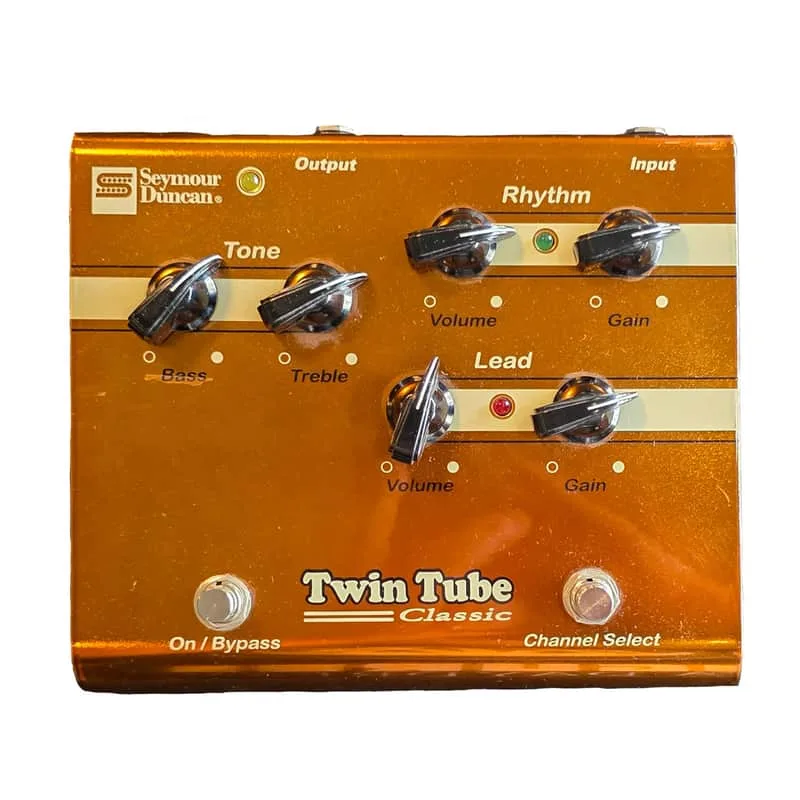


The Seymour Duncan SFX-03 Twin Tube Classic is a two-channel distortion pedal built around a pair of micro 6021 tubes, which were originally developed for use in military devices. It carries Rhythm and Lead channels, each with its own volume and gain controls, plus global bass and treble controls shared across both. Seymour Duncan is one of the oldest and best-known names in pickup design and manufacturing, and the Twin Tube Classic was part of the company's move into pedals1.
How it works and what it does
The Twin Tube Classic runs its micro 6021 tubes at 240 volts. Guitar World's reviewer noted that although most other tube-powered pedals run 12AX7 preamp tubes at low voltages, Seymour Duncan cooks these little tubes at full plate voltage, which is what gives the pedal its tube character. The resulting tone was described as smooth, warm and thick, like a great tube amp cranked to 10 (or 11)1.
Because the tubes are not sensitive to vibrations or jarring, the reviewer reported they should last the lifetime of the pedal, so there is no tube-swapping maintenance to plan for1.
Controls
| Control | What it does |
|---|---|
| Rhythm volume and gain | Individual level and drive settings for the Rhythm channel1 |
| Lead volume and gain | Individual level and drive settings for the Lead channel1 |
| Bass | Global bass control shared by both channels1 |
| Treble | Global treble control shared by both channels1 |
The bass and treble controls are global, so both channels share the same tone settings. Each channel has its own volume and gain, but not its own EQ.
What reviewers said
Guitar World's reviewer tested the pedal with a Les Paul Custom, a vintage Charvel and a Fender Vibro-King, and called it a well-built, heavy-duty pedal. On the Rhythm channel, the reviewer described the tone as old-school, with the midrange bloom of a "Plexi" on 5 and the warm crunch of a pushed Bassman quarter stack1.
Related pedals
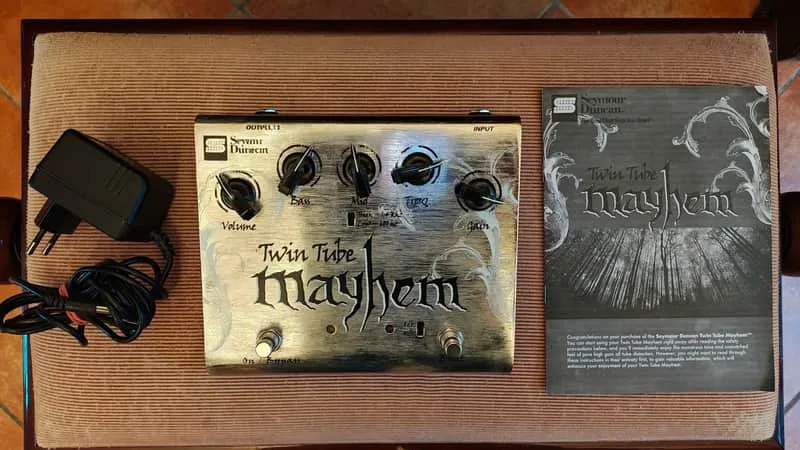
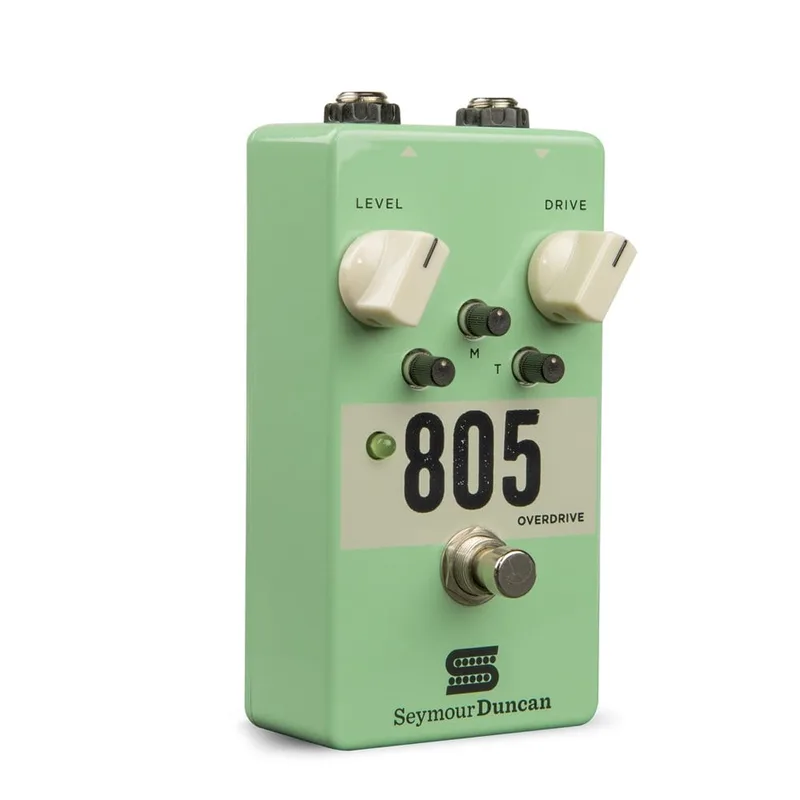
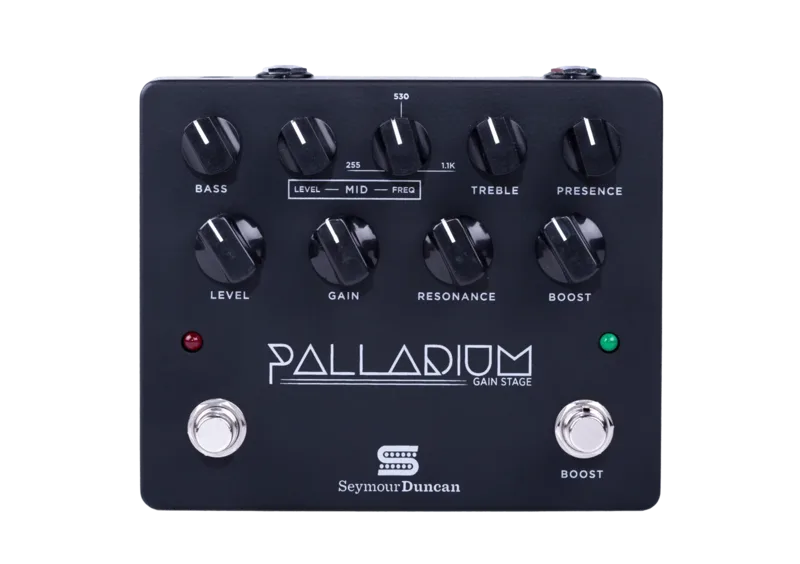
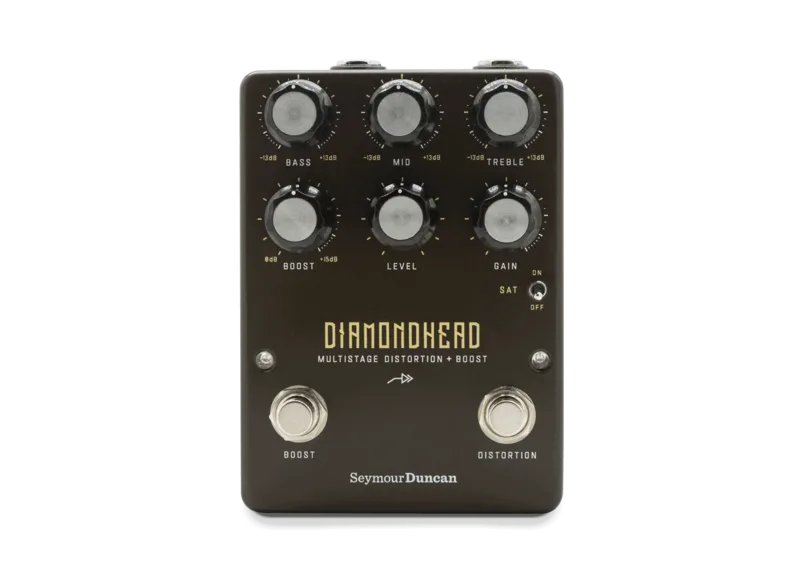
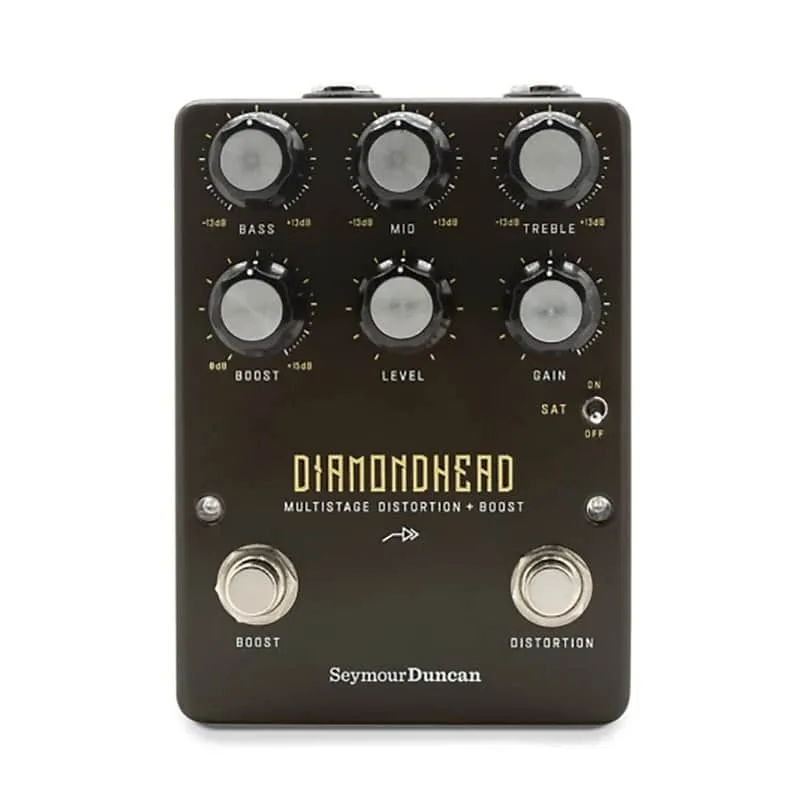
The Twin Tube Classic sat in a family of Seymour Duncan tube and gain pedals, including the SFX-04 Twin Tube Mayhem, and later designs such as the Seymour Duncan 805 overdrive, the Palladium Gain Stage high-gain preamp and the Diamondhead distortion and boost. For more on the effect type, see Distortion Pedals.
Videos
shnobel
Tone Works
ProGuitarShopDemos
Questions
What tubes does the Seymour Duncan Twin Tube Classic use?
The Twin Tube Classic is built around a pair of micro 6021 tubes, which Guitar World notes were originally developed for use in military devices. The pedal runs these tubes at 240 volts, unlike most other tube-powered pedals that run 12AX7 preamp tubes at low voltages. Because the tubes are not sensitive to vibrations or jarring, the reviewer reported they should last the lifetime of the pedal.
Is the Twin Tube Classic true bypass?
Yes. According to Guitar World's review, the pedal is true bypass when switched off, so your guitar's signal passes through to the amplifier without the pedal's circuitry in the way when the effect is disengaged.
Does the Twin Tube Classic come with a power adapter?
Yes. Guitar World's review notes that the pedal comes with the necessary AC power adaptor, so no separate power supply purchase is needed to run its tube circuitry.
Does the Twin Tube Classic have separate EQ for each channel?
No. The pedal has global bass and treble controls shared by both channels, along with individual volume and gain controls for the Rhythm and Lead channels. So each channel gets its own level and drive settings, but the tone shaping is shared.
Sources (1)
- Seymour Duncan SFX-03 Twin Tube Classic distortion, Guitar World, 2007-08-27