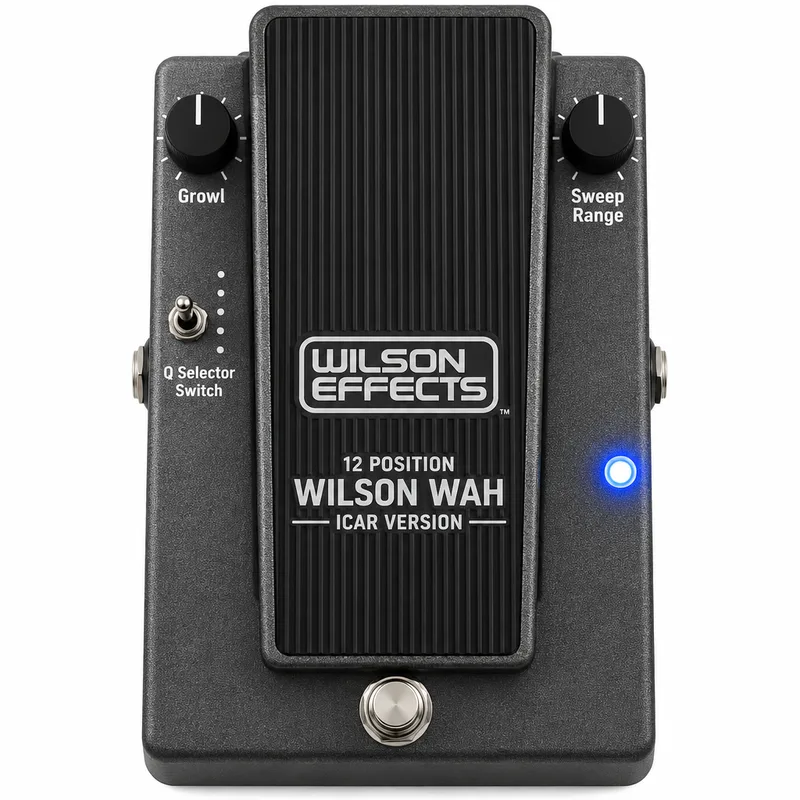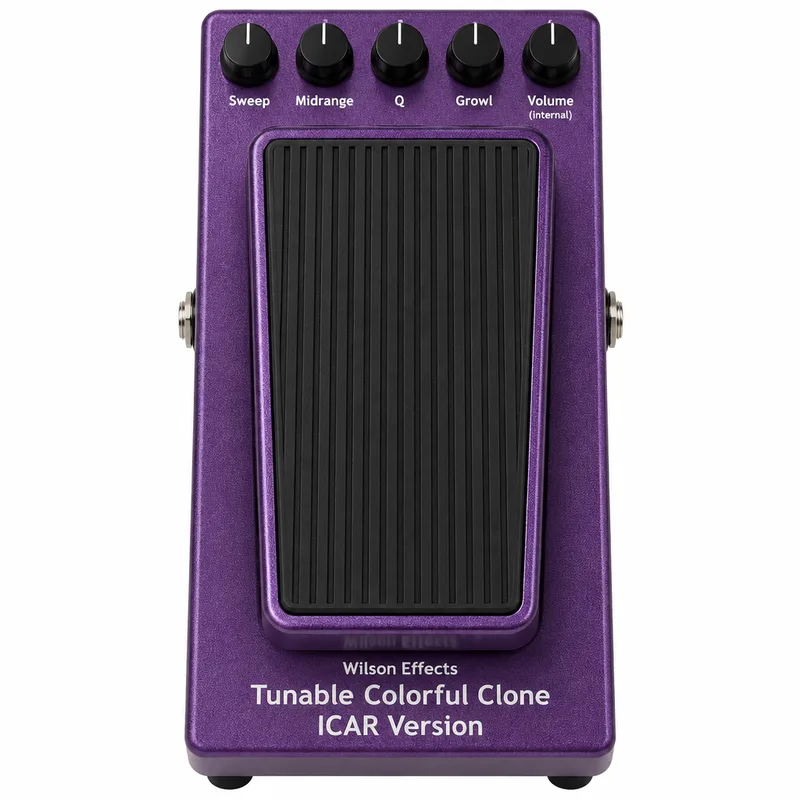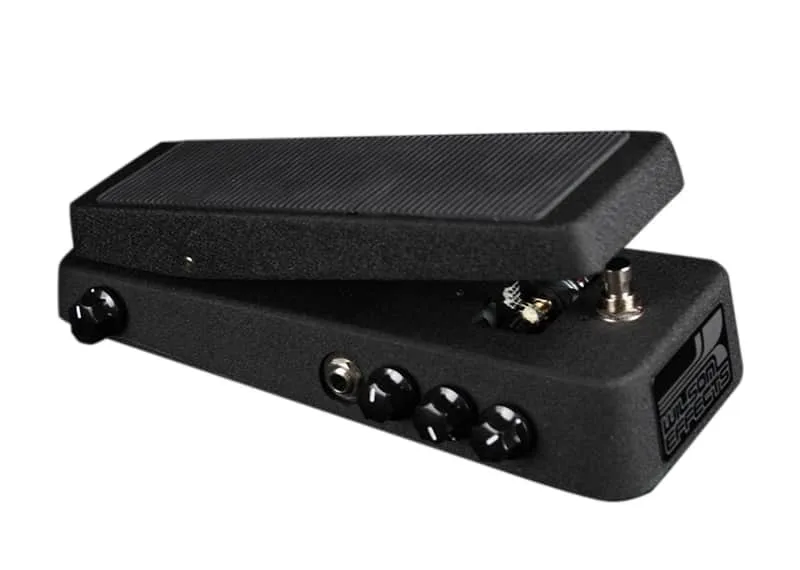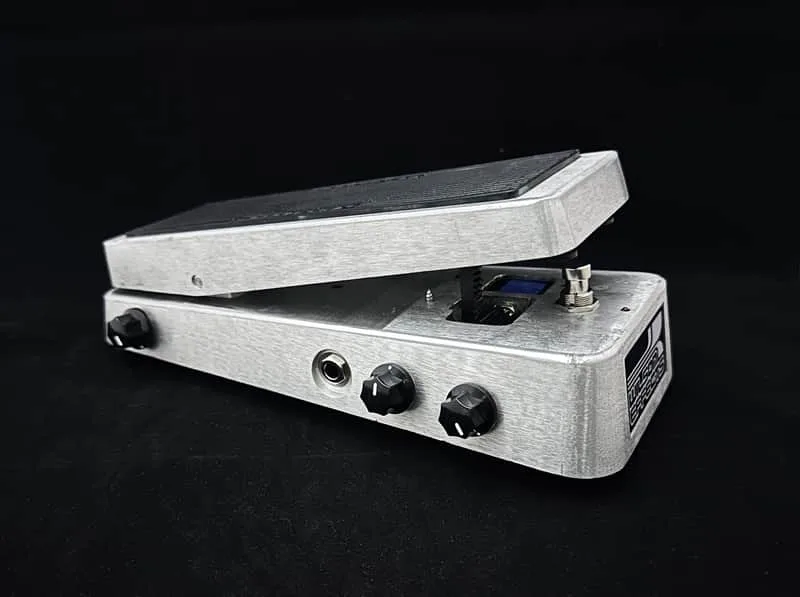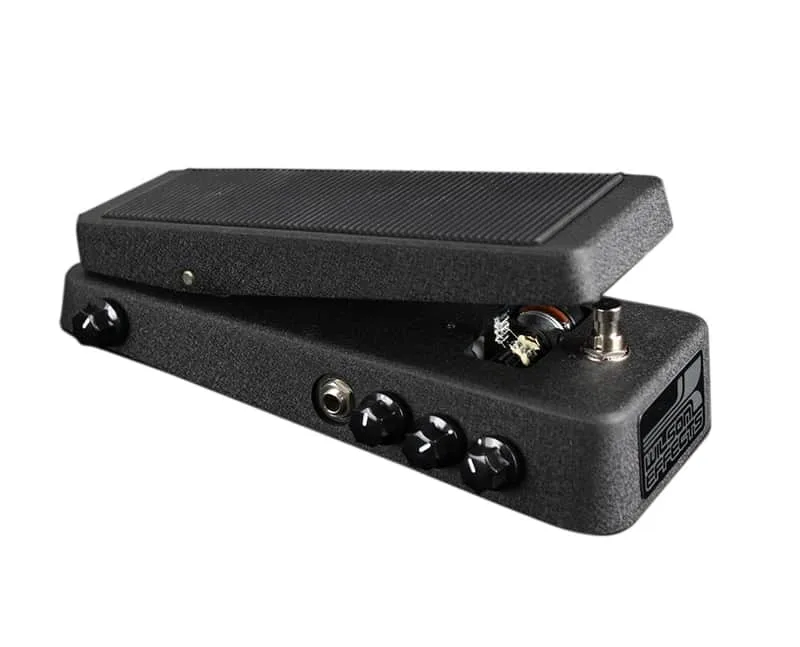


The Wilson Effects Tunable Colorful Clone is a wah pedal modeled after the vintage Macari wah, a circuit the maker describes as known for its "deep, throaty sweep and unmistakable tone." Wilson Effects calls it a faithful reproduction of the Macari wah circuit with tuning options at the player's fingertips, and says it ships set to the vintage Macari sound, with the ICAR version tuned side by side against the maker's own Macari wah12.
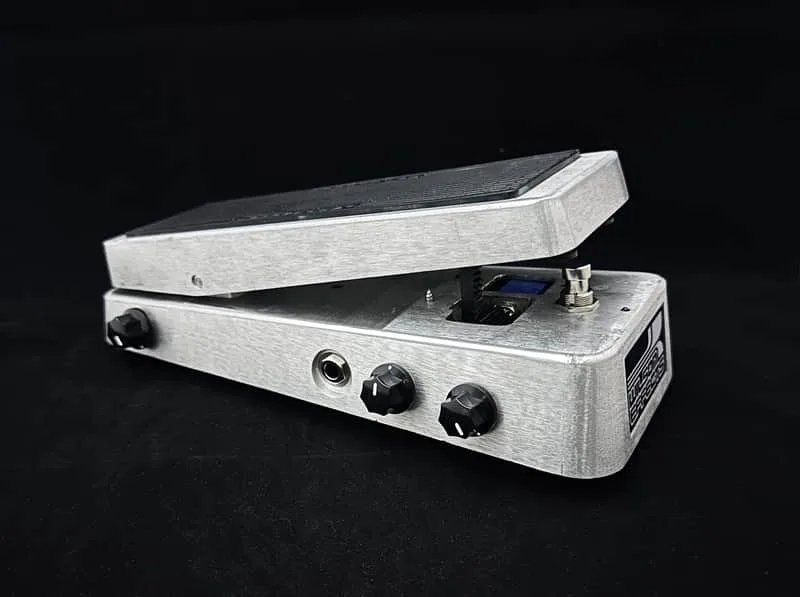
The pedal is available in two pot options, ICAR and Smooth Taper, each offered in either the traditional Black Powder finish or a newer Brushed Aluminum finish1. Wilson Effects says the Smooth Taper version has more exterior controls than any other Wilson wah3. Every pedal is hand-built in the U.S.A. and covered by a one-year warranty on parts and labor1.
A Macari-based wah with a deep, throaty sweep
The Tunable Colorful Clone takes its circuit and its character from the Macari wah. Wilson Effects describes the Macari as having a deep, throaty sweep and an unmistakable tone, and says the Tunable Colorful Clone was tuned to that sound, with the ICAR version set up side by side with the maker's own Macari wah12. Out of the box, both versions come set to the vintage Macari sound32.
The maker pitches the pedal as covering a wide tonal ground: "Vintage tone, modern tone and all the throat you'd ever want in a wah!"1. The tuning controls are what separate it from a straight reproduction, since they let the player move away from the stock setting in several directions at once.
The controls
Wilson Effects gives the Smooth Taper version more exterior controls than any other wah in its lineup3. The controls are laid out around the enclosure so they can be adjusted without opening the pedal, apart from the volume control, which sits inside.
| Control | Location | What it does |
|---|---|---|
| Sweep control | Front of the pedal | Adds or takes away depth from the sweep, for a subtle or bold wah effect13 |
| Q control | 6-position switch | One position deeper than the stock setting, plus four additional fine-tuning Q positions for various vintage wah tones13 |
| Growl control | Heel of the pedal | Makes the sweep even deeper or lightens it up, tailoring the response to your style13 |
| Midrange control | Knob on the pedal | Adds even more throat to the sweep or smooths it out, giving a wide range of tonal options14 |
| Volume control | Inside the pedal | Sets the pedal to unity gain or boosts the signal to cut through the mix3 |
The Q control is the deepest of the external adjustments. Beyond the stock Macari setting, it offers six additional positions: one deeper than stock, plus four further fine-tuning positions that Wilson Effects says unlock various vintage wah tones13. The midrange knob works on the character of the sweep rather than its range, letting the player push the throatiness further or pull it back toward something smoother14.
Fuzz buffer and bypass
The pedal includes a built-in fuzz buffer, paired with the internal volume control. Wilson Effects says this ensures seamless interaction with fuzz pedals and lets the output be set to unity gain or as a boost14. For players who run a wah into a vintage-style fuzz, a buffer built into the wah addresses the loading and impedance problems that can make that combination behave unpredictably.
The volume control that works with the buffer is inside the pedal, and adjusts the output from unity gain up to a boost level the maker describes as enough to cut through the mix3.
Bypass is true bypass on all versions. Wilson Effects states that all of its pedals are built with a true bypass circuit, "therefore not sucking the life out of your signal when in bypass"32. The switching also carries a super bright LED indicator intended to prevent accidental activation1.
Power comes from an industry standard 2.1mm center-negative supply or a high-quality alkaline battery13. The battery option means the pedal can run without a power supply, though the maker specifies a high-quality alkaline rather than any battery type.
ICAR and Smooth Taper versions
The two pot options change how the wah responds through its physical travel. Wilson Effects explains that when ICAR pots were originally developed, the wah pedals that used them had a very limited physical sweep, which caused the majority of the Q transition to happen at the toe end of the pedal's travel1. The ICAR version reproduces that behavior.
The Smooth Taper option instead maintains a smoother transition through the sweep of the Q range1. A player who wants the abrupt, vocal snap concentrated at the toe, in the vintage ICAR manner, leans toward the ICAR version; one who wants the sweep to open up more evenly across the pedal's travel leans toward Smooth Taper.
Both versions carry the same $215.00 list price12. Both ship via USPS Priority Mail, with returns accepted within 7 days of receiving the pedal, shipping costs not refunded and return shipping the customer's responsibility3.
The Brushed Aluminum finish is offered for both the ICAR version and the Smooth Taper version, alongside the traditional Black Powder finish156.
Videos
Wilson Effects
gearmanndude
Starrman1970
Questions
What is the Wilson Tunable Colorful Clone based on?
It is modeled after the vintage Macari wah, a circuit Wilson Effects describes as known for its deep, throaty sweep and unmistakable tone. The maker says each pedal is set to the vintage Macari sound out of the box, and the ICAR version was tuned side by side with the maker's own Macari wah.
What is the difference between the ICAR and Smooth Taper versions?
The ICAR version uses an ICAR-style pot, which historically had a very limited physical sweep with most of the Q transition at the toe end of the pedal. The Smooth Taper version uses a pot that maintains a smoother transition through the sweep of the Q range. Both share the same controls and price.
Is the Tunable Colorful Clone true bypass?
Yes. Wilson Effects builds the pedal with true bypass switching and a super bright LED indicator to prevent accidental activation. The maker states that all of its pedals use a true bypass circuit so the signal is unaffected when the pedal is bypassed.
Does it work well in front of a fuzz pedal?
Yes. The pedal includes a built-in fuzz buffer with its volume control, which Wilson Effects says ensures seamless interaction with fuzz pedals. The internal volume control can be set to unity gain or used to boost the signal to cut through the mix.
Is the Tunable Colorful Clone made in the USA?
Yes. Wilson Effects states that every Tunable Colorful Clone is hand-built in the U.S.A. and covered by a one-year warranty on parts and labor.
Can it run on a battery?
Yes. The pedal operates on an industry standard 2.1mm center-negative power supply or a high-quality alkaline battery, so it works on a pedalboard power supply or on battery power.
Sources (6)
- Tunable Colorful Clone, Wilson Effects
- Tunable Colorful Clone ICAR Version, Wilson Effects
- Tunable Colorful Clone Smooth Taper Version, Wilson Effects
- Tunable Colorful Clone Smooth Taper Deal, Wilson Effects
- Brushed Aluminum Tunable Colorful Clone ICAR Version, Wilson Effects
- Brushed Aluminum Tunable Colorful Clone Smooth Taper Version, Wilson Effects, 2026-10-19