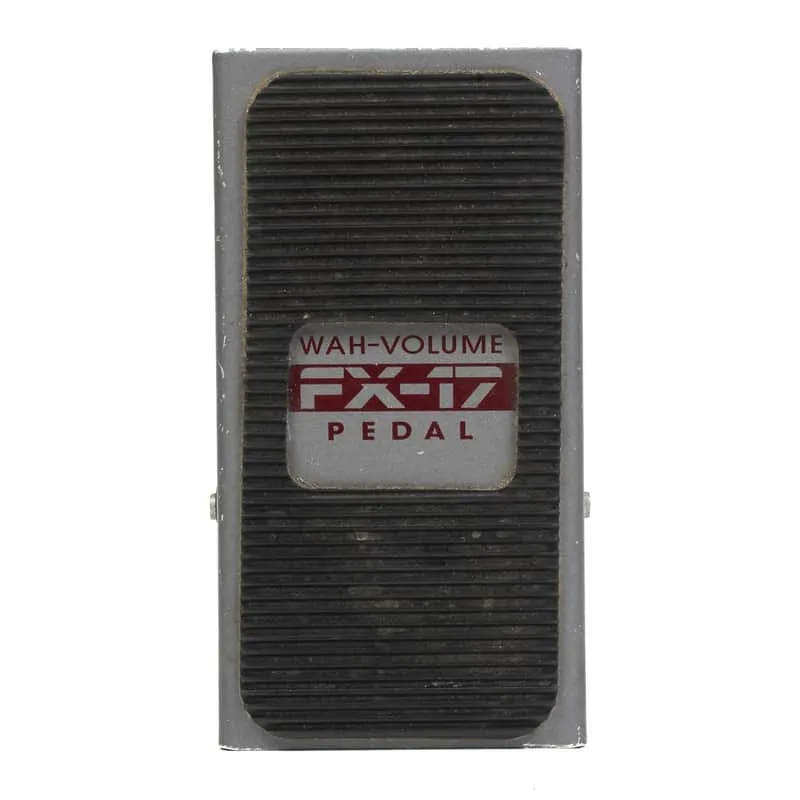
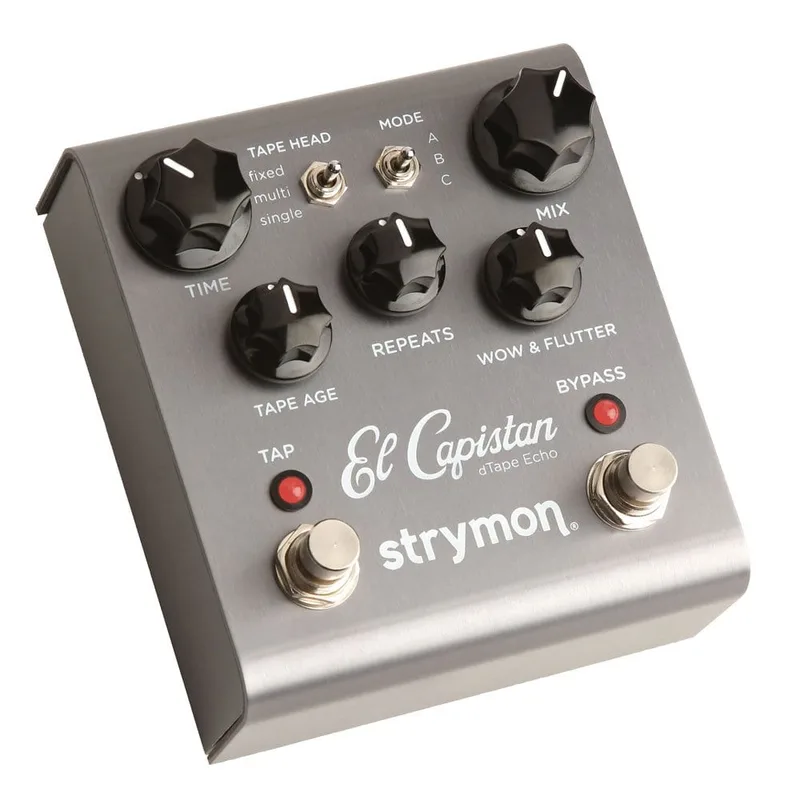
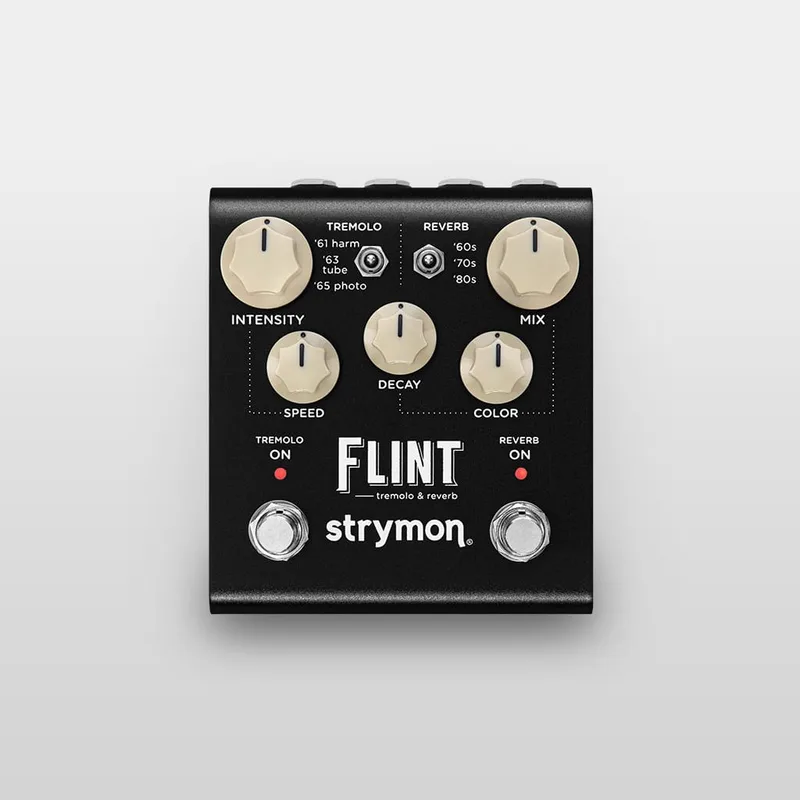
Daniel Tyack is a guitar player who primarily plays in church and takes hired gigs when called1. He has been building pedalboards since his high school days, and when demand grew he opened his own shop, Salvage Custom, in 20121. Strymon featured his board on its site in August 2014, where he described both his current rig and the general signal path he follows1.
A church and hired-gig player who builds boards
Tyack's playing life splits between church services and hired-out gigs1. The boards he builds for himself are not fixed in size: he says the count runs from about 6 to 13 pedals, and what gets used depends on where he is playing1. His own current board at the time of the Strymon feature was a 20x13 made from a piece of English Walnut that was a gift from Bob Taylor, housed in a Bourbon Burst finish case1.
The pedals on his board
His current rig, as photographed for the Strymon feature, ran ten pedals in this order1:
- FX-17 Wah
- Push+Pull Pedals Sputnik Mini Fuzz
- Push+Pull Pedals San B.
- SP Comp
- Fairfield Circuitry Randy's Revenge
- Volume Pedal (Tuner Out)
- Chase Bliss Warped Vinyl
- Earthquaker Devices Dispatch Master
- Strymon El Capistan (stereo)
- Strymon Flint (stereo)
He also described a fixed one-setup chain built around a Push+Pull Pedals Sputnik Fuzz, a San B., an Origin Effects Cali76 compressor, a buffered volume pedal with a tuner out, and the Strymon El Capistan and Flint at the end1. He calls the El Capistan and Flint staples of his setup1. Both were run in stereo in his current rig1. The El Capistan is a delay pedal and the Flint a reverb pedal, and reverb pedals are typically placed at the end of the signal chain or in the amp's effects loop so the reverb does not become distorted2.
Signal path: dirt first, then compression, volume, modulation, delay, reverb
His general signal path runs: Fuzz, Drive, Compression, Volume Pedal (buffered), Modulation, Delay, Reverb1.
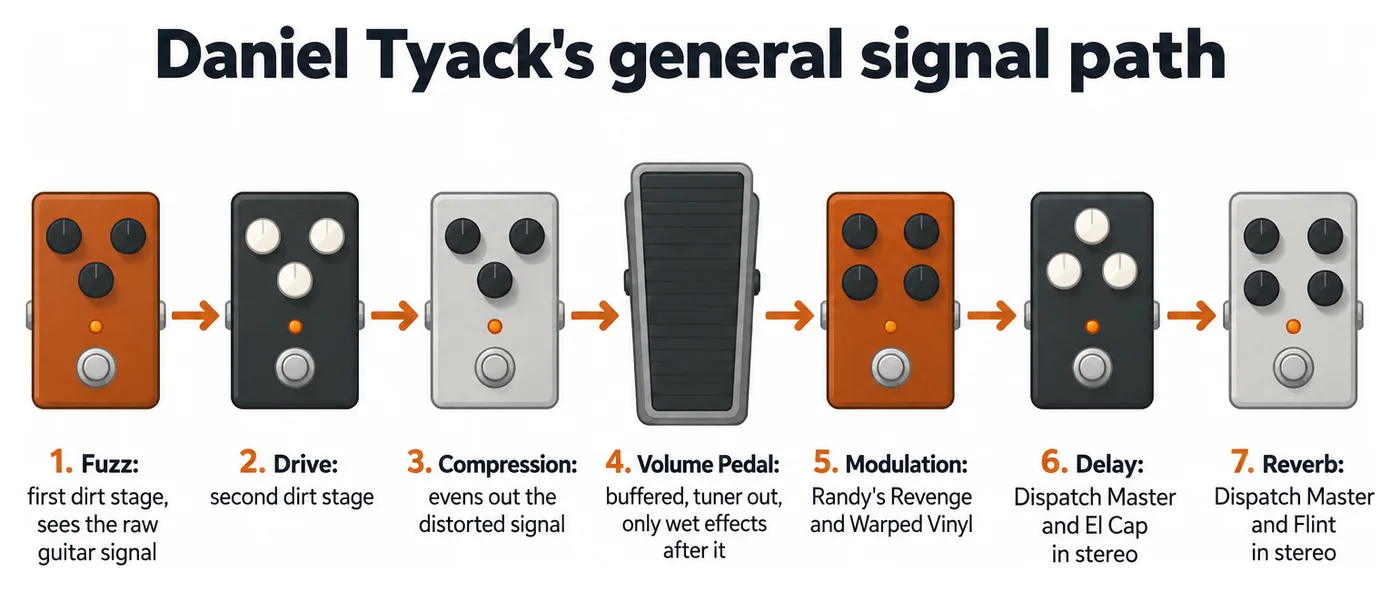
The reasoning he gives for putting fuzz and overdrive first is about responsiveness:
"I like keeping the dirt first in line to keep them as sensitive as possible to pick attack / guitar volume control and I very often leave a dirt pedal on and adjust how clean it is with the guitar volume knob."
The buffered volume pedal sits after compression and before the wet effects, with a tuner out1. That placement matches the approach Guitar World describes: placing the volume pedal near the end of the chain, just before delay and reverb, lets you perform fades or mute the guitar without cutting delay or reverb tails short3. Lehle's support article notes that a volume pedal's placement in the signal chain is one of the main considerations in using one, alongside freeing the hands and avoiding potentiometer wear4. Boss's guide records that a popular approach is to place a volume pedal at the start of the chain instead, with only reverb and delay after it5.
Power, wiring and the walnut board
The current rig is powered with a Dunlop MC403 + DC Brick and wired with Lava Tightrope wire1. The board itself is the 20x13 English Walnut build in a Bourbon Burst finish case1.
Simplicity over bells and whistles
Tyack's advice to other players is blunt:
"Simple is better. Don't put stuff on your board just to fill space."
He extends the same idea to his shop work, saying simplicity trumps bells and whistles in the long run and that he wants customers matched with a rig that keeps them happy for a long time1.
Questions
What fuzz does Daniel Tyack use?
His current rig carries a Push+Pull Pedals Sputnik Mini Fuzz, and his fixed one-setup chain used the Push+Pull Pedals Sputnik Fuzz. Fuzz sits first in his signal path, ahead of drive, so it sees the raw guitar signal and stays responsive to pick attack and the guitar's volume knob.
Why does Daniel Tyack put his dirt pedals first?
He keeps dirt first in line so the pedals stay as sensitive as possible to pick attack and the guitar's volume control. He often leaves a dirt pedal switched on and adjusts how clean it is with the guitar's volume knob, rolling the gain back from the instrument itself.
What power supply is on Daniel Tyack's pedalboard?
His current rig is powered with a Dunlop MC403 power system plus a DC Brick, and the board is wired with Lava Tightrope cable. That combination feeds a ten-pedal chain that ends with a stereo Strymon El Capistan delay and Flint reverb.
What is Salvage Custom?
Salvage Custom is the pedalboard shop Daniel Tyack opened in 2012 after building boards since his high school days and finding demand had grown. His 20x13 personal board is made from a piece of English Walnut given to him by Bob Taylor, in a Bourbon Burst finish case.
How many pedals does Daniel Tyack keep on his board?
The size of his boards varies from about 6 to 13 pedals, and what gets used depends on where he is playing. His current rig at the time of Strymon's feature ran ten pedals, from an FX-17 wah through to stereo Strymon delay and reverb.
Where does the volume pedal go in Daniel Tyack's signal chain?
It sits after compression and before modulation, delay and reverb, buffered, with a tuner out. That leaves only wet effects after it, so rolling the volume down does not choke off delay and reverb tails, an approach Guitar World describes as allowing fades without cutting those tails short.
Sources (5)
- Pedalboard Builder Feature: Daniel Tyack of Salvage Custom, Strymon (www.strymon.net), 2014-08-11
- The Best Reverb Pedals for Electric Guitar: From Budget to High-End, www.gearnews.com, 2026-06-08
- Guitar pedal order: how to arrange your pedalboard, Guitar World, 2019-09-24
- Where should I place my volume pedal?, blog.lehle.com, 2017-09-12
- The Ultimate Guide to Guitar Effects Pedal Order and Signal Chain, BOSS (articles.boss.info), 2023-03-01