Every pedal has to answer one question before it does anything else: when it is off, what happens to your signal? Two answers dominate. True bypass physically disconnects the pedal's circuitry so the signal passes straight from input jack to output jack through the switch alone. Buffered bypass leaves a buffer, a small amplifier circuit that keeps the signal strong, active in the path even when the effect is off.
The choice matters more than many players expect. A chain of true-bypass pedals with long cables can sound duller than the same guitar plugged straight into the amp, because the pickups end up driving every foot of cable on their own. A buffer solves that, but a buffer in the wrong place can change how fuzz and wah pedals react. This page covers what each bypass type does, when each one helps, and which pedals let you choose.
What true bypass and buffered bypass mean
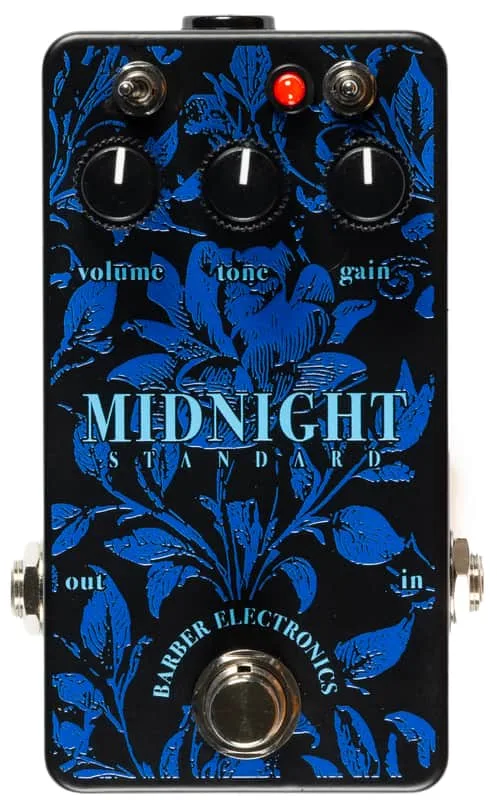
True bypass switching routes the guitar signal around the effect circuit entirely when the pedal is disengaged. Nothing in the pedal touches the tone: no buffer, no loading, no processing. Makers advertise it plainly, the way Barber Electronics lists "True bypass" for the Midnight Standard overdrive1 and Revv Amplification lists "true bypass" for the G4 V22.
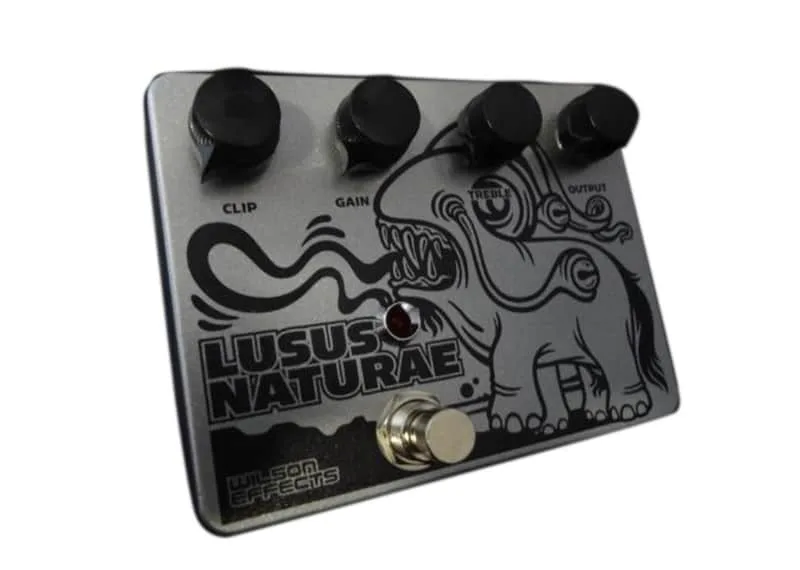
Buffered bypass keeps part of the pedal's circuit, the input buffer, in the signal path at all times. The buffer is a unity-gain amplifier with a high input impedance and a low output impedance: it presents an easy load to your pickups and then drives whatever comes next, cable and pedals alike, with a strong signal. Wilson Effects describes the buffered bypass on its Lusus Naturae as "faithful to the original design, maintaining clarity and consistency in your signal"3, which is the usual argument for it: the pedal behaves the same engaged or bypassed, and the chain stays driven.
A technical analysis of pedal switching at General Guitar Gadgets notes that some designers put the input buffer outside the bypass switching, so the buffer stays in the signal all the time and tone loss is minimized4. That is the design behind most classic non-true-bypass pedals.
"True bypass" and "buffered bypass" describe the switching, not the quality of the pedal. A well-designed buffered pedal can preserve tone better in a real rig than a true-bypass pedal at the end of a long cable run.
How the two bypass types affect your signal
The practical difference shows up in two places: cable length and circuit loading.
With true bypass, a bypassed pedal is electrically invisible, which is exactly the point. But if every pedal on your board is true bypass and off, your guitar's pickups are driving the full length of cable from guitar to amp with nothing helping them. Long cable runs roll off high frequencies, and that is the dulling players describe as "tone loss". Strymon's product pages describe the problem directly: the premium buffered bypass on the Brig "preserves your signal's integrity by preventing the high frequency roll-off that can" come from longer cable runs5, and the Olivera's buffered bypass likewise "preserves your signal's integrity by preventing the loss of high frequencies"6.
With buffered bypass, the buffer takes over the job of driving the cable, so the high end survives the trip. The trade-off is that the buffer is always there, and some circuits, particularly vintage-style fuzz pedals, are designed to see the guitar's pickups directly and can sound different behind a buffer.
JHS Pedals' guide to understanding buffers puts a number on when buffering stops being optional: "you may need more than one buffer, but this is generally only for rigs with 10+ pedals that are true-bypass"7. Below that, with reasonable cable lengths, one buffer, or none, is often enough.
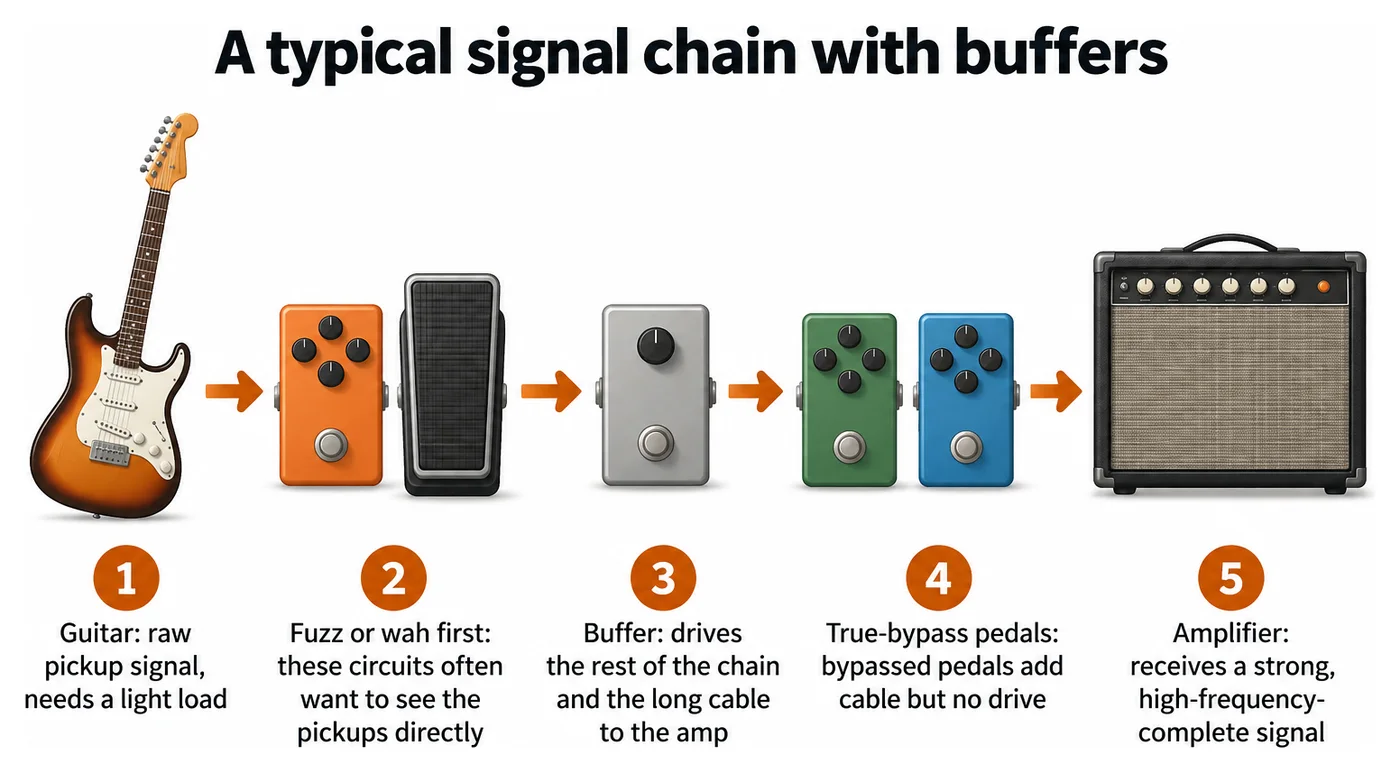
For the full ordering question, see our guide to pedal signal chain order.
Pedals with selectable true or buffered bypass
A growing number of pedals refuse to pick a side and let you choose, usually with an internal switch or a menu option. JHS Pedals notes that "a lot of pedals come with switchable buffered or true-bypass options, like Strymon and TC Electronic"7.
| Pedal | How you choose | What the maker says |
|---|---|---|
| JAM Pedals Boomster mk.2 | Selectable | Selectable true or buffered bypass8 |
| JAM Pedals Delay Llama mk.3 | Selectable | Selectable true or buffered trails; ships in true-bypass mode9 |
| Fromel Electronics Up! Clean Boost | Internally selectable | Relayed true bypass or buffered bypass10 |
| UAFX compact pedals (Evermore, Heavenly, Orion, 1176) | Selectable | Buffered or true bypass11 |
| Neunaber Expanse (True Bypass versions) | Selectable | Three bypass options: Buffered Trails, True Bypass, and two-stage Trails/True Bypass; buffered only if True Bypass is not installed12 |
The Strymon approach is worth a closer look because the company explains its reasoning. On the DIG V2, true bypass gives "a 100% untouched, unprocessed signal when the pedal" is disengaged, while the buffered option protects high end on long runs13. The relay switching matters too: an electromechanical relay does the same job as a footswitch contact but is rated for long life and can be controlled electronically.
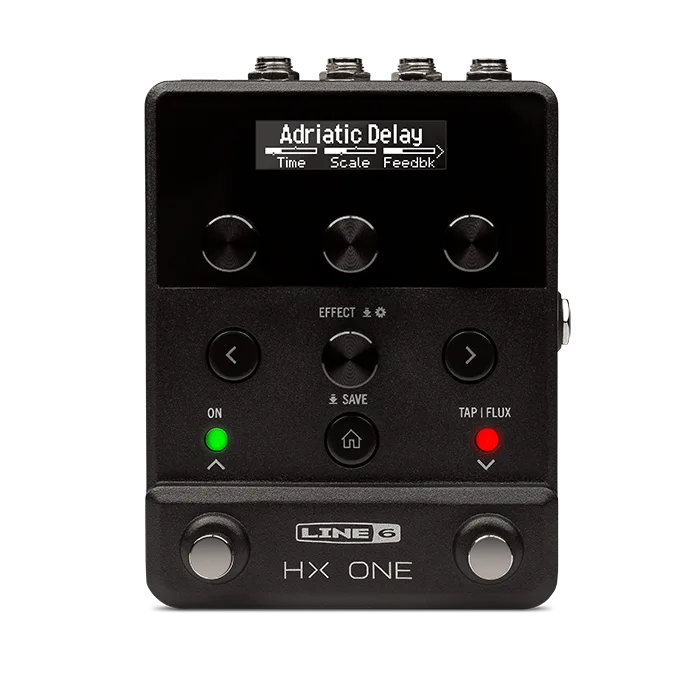
The Line 6 HX One shows a third consideration that only applies to digital pedals. Its buffered bypass is a "Buffered DSP bypass", meaning the signal still goes through the pedal's analog-to-digital and digital-to-analog converters even when the effect is off; its true bypass mode routes analog signals directly from input to output and avoids that conversion entirely14. Players who want their bypassed digital pedal to be fully analog prefer the second option.
JAM Pedals offers the same selectable bypass across its Boomster mk.2 line, including the "Dala" and "Achenbach" versions8, so the choice follows the player's rig rather than the pedal's design.
Buffered pedals and dedicated buffers
Plenty of pedals are buffered only, and their makers say so as a feature rather than an apology. Beyond the Wilson Effects example above, the Fender Engager Boost lists "True and buffered bypass modes" so the pedal "plays nicely in any rig"15, and BLAMMO! Electronics lists "True or Buffered bypass" for its Utility Boost16.
At the other end of the scale, many compact pedals are simply true bypass and make no apology for that either: the Walrus Audio Fundamental Phaser171819, the Flamma FS02 reverb with its "low noise true bypass"18, the MOOER Rage Machine19, and PastFX's reproductions of vintage circuits171819 all list true bypass outright.
If your board needs buffering and your pedals do not provide it, a dedicated buffer pedal does one job: it sits in the chain, presents a high impedance to whatever is upstream, and drives everything downstream. Our guide to building a pedalboard covers where one fits physically; the signal-chain question is covered above.
The case against true bypass
The argument against an all-true-bypass board is the cable-loading problem described earlier: bypassed true-bypass pedals give you no help driving wire, and high frequencies pay for it. Strymon's buffered bypass exists precisely because of "the high frequency roll-off that can" happen on longer cable runs5.
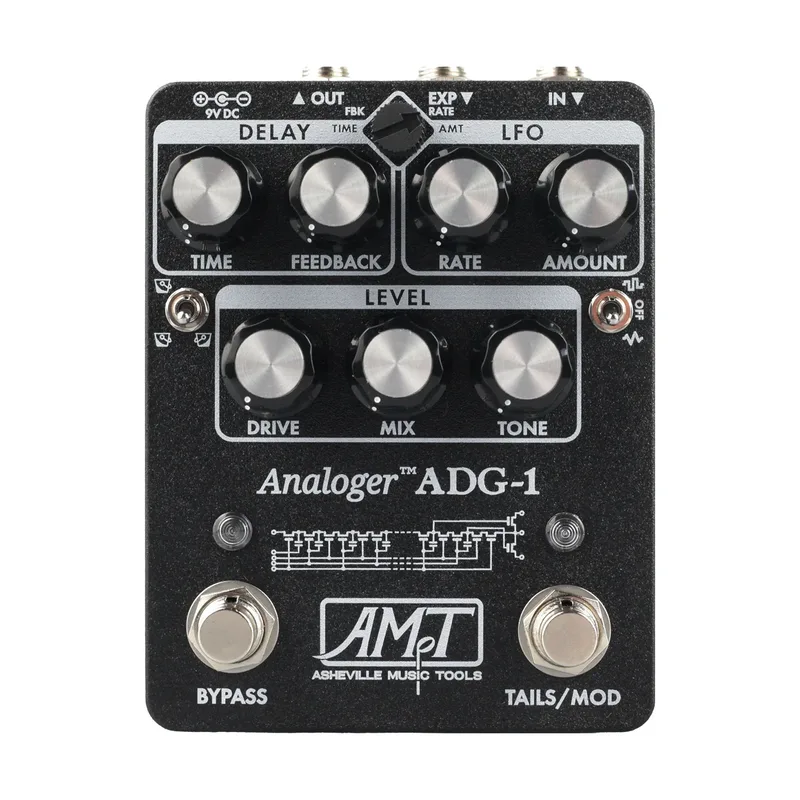
The counter-argument, from the true-bypass side, is that a buffer you cannot remove is a buffer you did not ask for. If a buffer colors the tone, or sits in front of a fuzz that needs to see the pickups, true bypass is the only switching that gets it out of the way completely. That is why the Asheville Music Tools ADG-1 offers its internal switch: true bypass "takes the ADG-1 entirely out of your signal path", or the JFET buffer stays in20. Both camps are arguing about the same thing, who drives the cable, and the right answer depends on the rig.
Boss and Ibanez pedals are not true bypass. A technical analysis of their schematics shows non-true-bypass switching with an input buffer in the circuit4. The buffer is part of why these pedals behave consistently in a chain, and it is why a board full of them rarely needs a separate buffer.
Pedals on this page
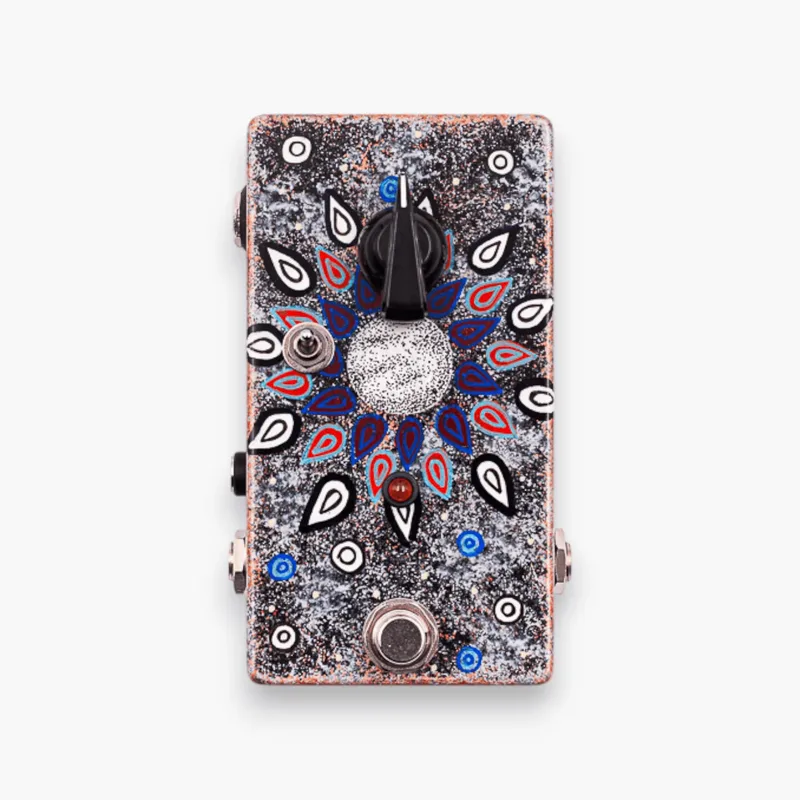
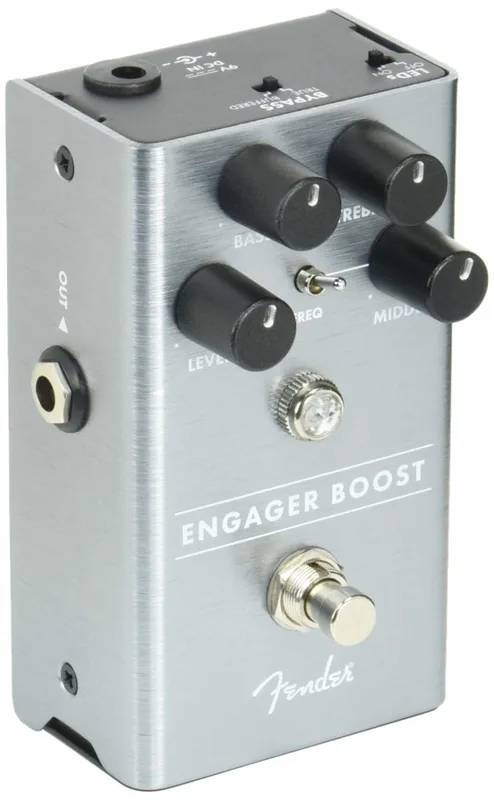
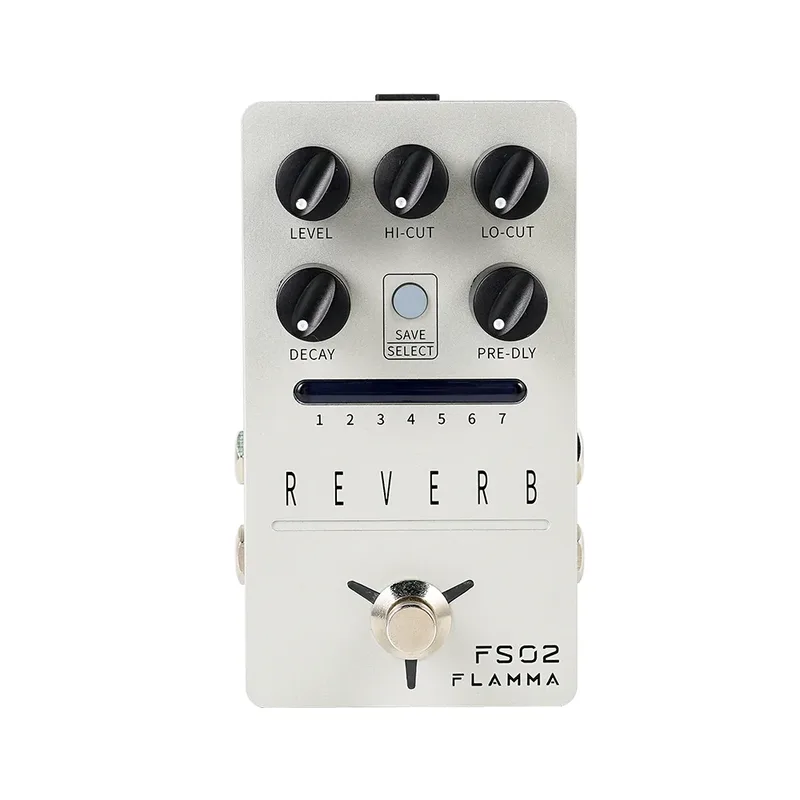
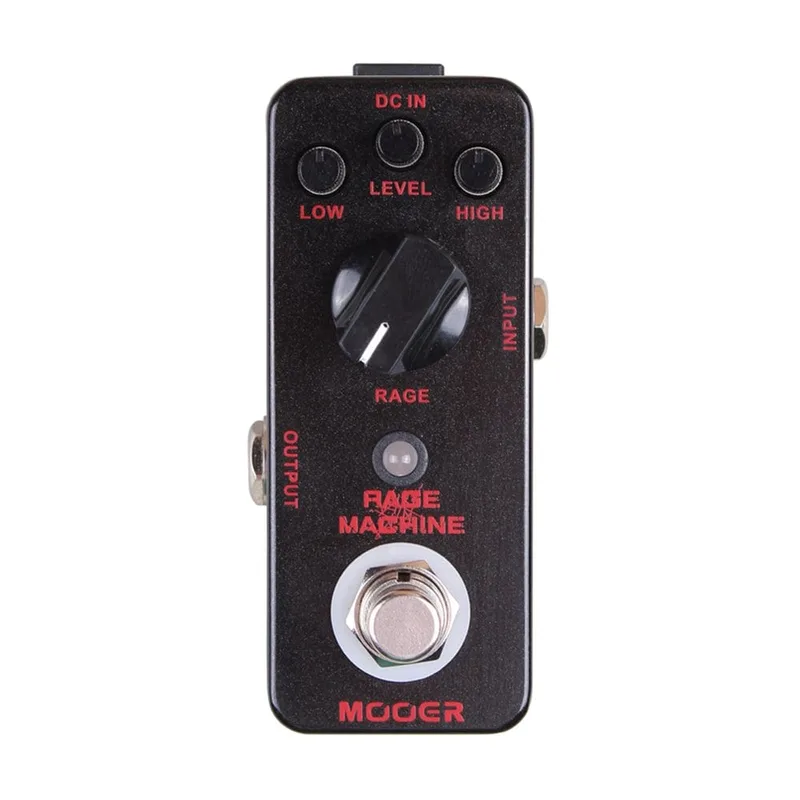
Questions
Is buffered bypass bad for tone?
No. A well-designed buffer keeps your signal strong and clear, and buffered bypass is what keeps many classic pedals working the way their designers intended. Some older non-true-bypass designs minimized tone loss by placing an input buffer outside the bypass switching so it stayed in the signal at all times. A poor buffer can color tone, but buffering itself is not the problem it is sometimes made out to be.
Do I need a buffer on my pedalboard?
It depends on your rig. If you run long cables or a large board of true-bypass pedals, a buffer can help preserve your high frequencies. According to JHS Pedals, you may need more than one buffer, but that is generally only for rigs with 10 or more true-bypass pedals. Small boards with short cables often need none.
Where should a buffer go in the signal chain?
A buffer works best at a point where it can drive the rest of your chain, typically early, after any fuzz or wah pedals that react to the guitar's raw signal. Many players also place one near the end of a long chain of true-bypass pedals to drive the cable to the amplifier. See our pedal signal chain order guide for the full picture.
Are Boss pedals true bypass?
No. Boss and Ibanez pedals use non-true-bypass switching with an input buffer in the circuit, according to a technical analysis of their schematics. The buffer stays active in the signal path, which is part of why these pedals behave consistently in a chain.
Can you switch a Strymon pedal to true bypass?
Yes. Several Strymon pedals, including the Brig, Olivera and DIG V2, ship with electromechanical relay-switched true bypass as the default and offer a selectable premium buffered bypass mode instead. You choose between the two on the pedal itself.
Does true bypass cause tone loss with long cables?
It can. With the pedal bypassed, true bypass leaves your guitar driving every cable in the chain on its own, and long cable runs can roll off high frequencies. Strymon describes its buffered bypass as preventing exactly this loss of high frequencies on longer cable runs.
Sources (20)
- Midnight Standard, Barber Electronics
- Revv Amps G4 V2, Revv Amplification
- Lusus Naturae Pedal for Guitar Tone Adjustment, Wilson Effects
- Bypass Switching Options for Guitar Pedals: True Bypass & More, generalguitargadgets.com, 2014-06-09
- Brig dBucket Delay, Strymon, 2026-02-18
- Olivera Vintage Oil Can Echo, Strymon, 2026-03-04
- UNDERSTANDING BUFFERS, JHS Pedals
- Boomster, JAM Pedals (www.jampedals.com)
- Delay Llama, JAM Pedals (jampedals.com)
- Up! Clean Boost Pedal, Fromel Electronics
- ''Creating dreamy sounds that were once only possible in world-class recording studios…'' The new award-winning range of stompboxes from Universal Audio will blow your mind, GuitarPlayer (www.guitarplayer.com), 2023-11-17
- Expanse User Guide (Deutsche), Neunaber Technology LLC (hosted at neunaber.net, page titled Quilter Labs)
- DIG V2 Dual Digital Delay, Strymon (www.strymon.net), 2026-08-12
- Line 6 | HX One | Stereo Effect Pedal, Line 6
- Engager Boost by Fender, RockBoard PedalPedia, 2026
- Utility Boost, BLAMMO! Electronics
- Fundamental Series Phaser, Walrus Audio
- FLAMMA FS02 Reverb Guitar Reverb Pedal Stereo In Stereo Output, Flamma Innovation (www.flamma.shop)
- Rage Machine_MOOER Audio, MOOER Audio
- ADG-1 Analog Delay, Asheville Music Tools