News
8 Effects Pedals for Jazz Players
Jazz is a type of music whose chief characteristic was improvisation. Jazz musicians often play solos that they create on the spot, and that necessitates considerable skill. Jazz has a tremendous variety, but is often very rhythmic, utilizes blue or bent notes, and possesses a forward momentum called swing. Listeners can usually hear call-and-response patterns, where a voice, instrument, or part of the band answers another. Jazz is capable of expressing a flurry of emotions, from sheer joy to sorrow. It is such an experimental genre that plenty of sounds are associated with it, making it difficult to pinpoint one correct sound. In jazz, individuals may notice the sounds of freedom as the music has been a strong voice for people experiencing discrimination due to their appearance or suffering because they resided in a nation headed by a cruel dictator. Jazz players place a high value on crafting their unique sound and style. They love to play their songs in the way they want, and so a dozen different jazz recordings of one song might sound different from each other. A player’s playing technique makes the version unique, and so do the improvised solos. Jazz is about turning a familiar piece into something new and making a tune known to everyone very personal. Those are only a few of the things that make jazz a fascinating art form, and reasons some individuals consider it the classical music of America. Effect pedals play a significant part in modern jazz guitarists’ tone—many of them utilize at least a couple effect stompboxes. Similar to other guitarists, jazz players leverage effects ranging from delay and overdrive to insane effects such as ring modulators. Many of them prefer amps that remain clean at higher volumes such as the Fender Twin Reverb or Deluxe Reverb. One of the most common effect stompboxes for jazz is a compressor. While it is more of a filter than an effect, it surely affects the tone. By squashing the lows and highs, a compressor provides an even tone that enables each not to flow so smoothly. Below are some pedals jazz players can use.
Boss CS-3 Compression Sustainer
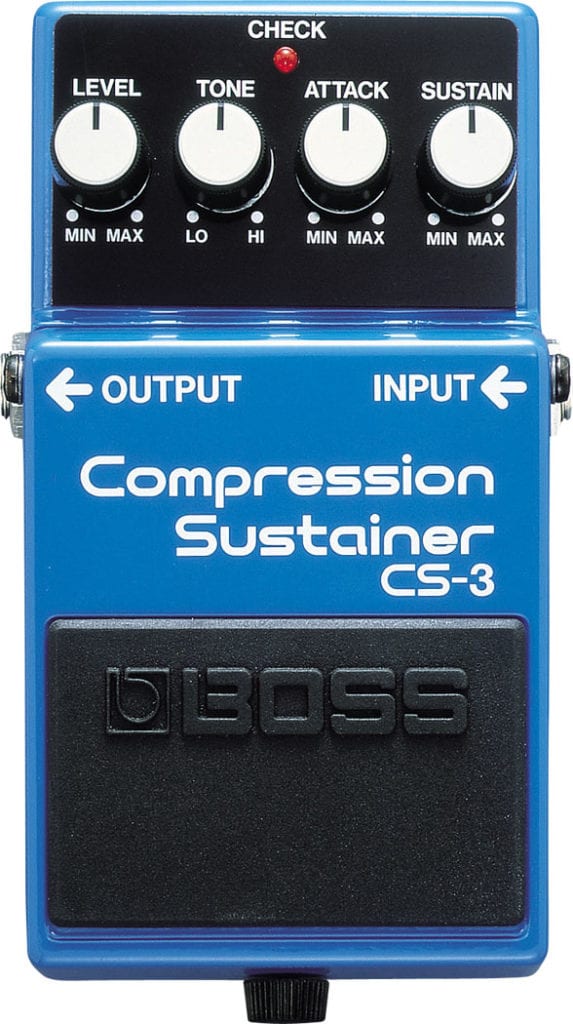
Get fatter sound, tight control of dynamics, and enhanced sustain, all from a single pedal, with the CS-3 Compression Sustainer by Boss. The CS-3 Compression Sustainer dishes out smooth sustain sans degrading the quality of the natural sound. Users can find a range of effects from subtle compression to squeezed sounds. Configured for phenomenal low-noise performance, the CS-3 Compression Sustainer also offers EQ for accurate sonic control. The CS-3 Compression Sustainer is perfect for improving the overall tone. It “compresses louder signals while boosting lower signals, providing smooth sustain without degrading the original sound quality.” The CS-3 Compression Sustainer is suitable for bassists and guitarists who wish to sound their best. It carries Attack, Tone, Level, and Sustain knobs that allow for accurate tonal shaping. This compact compression/sustainer unit boasts top-grade circuitry and low-noise design for extremely quiet operation.
Electro-Harmonix Small Clone
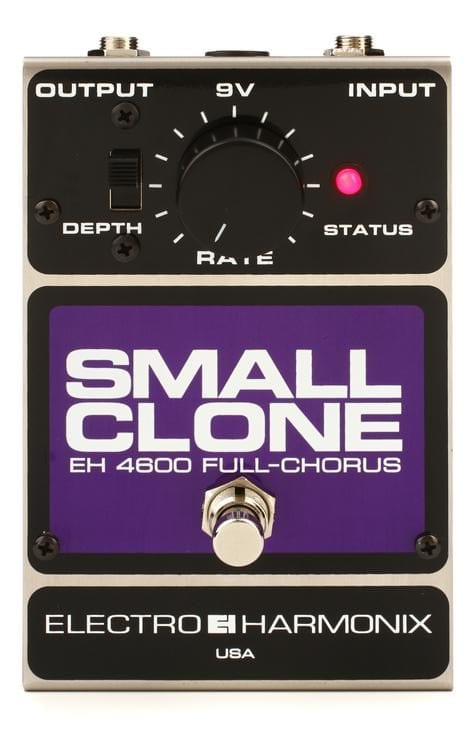
Presenting Kurt Cobain’s chorus stompbox of choice—the Small Clone, which is responsible for the dimension in Come As You Are as well as innumerable other Nirvana tracks. The pedal’s spacey, lush, and pure analog tones have kept it on the essential pedal list for well over two decades now—and it shows the moment it is engaged. Users can take the Small Clone pedal from a mild shimmer to pulsating warble to insane Leslie-esque effects. Utilized by J. Mascis and Kurt Cobain, the Small Clone is perfect for those who are looking for a chorus with a real vibe and mood. This exceptional little pedal has been a hot pick for over 20 years. It is full of character: emotional, dimensional, vibey, and other-worldly. The Small Clone consists of one Depth switch and one Rate knob. It also includes a true bypass that keeps the tone intact. “The classic chorus! Analog chorus pedal popularized by Kurt Cobain. The finest analog chorus sounds: from clear, rich and dimensional to warm pulsating warbles, can be intensified with the Depth Control. Simple tweaks generate exciting doubling effects. Chiming 12-string tone, or Leslie-like warbles,” Electro-Harmonix detailed.
Electro-Harmonix Holy Grail Nano
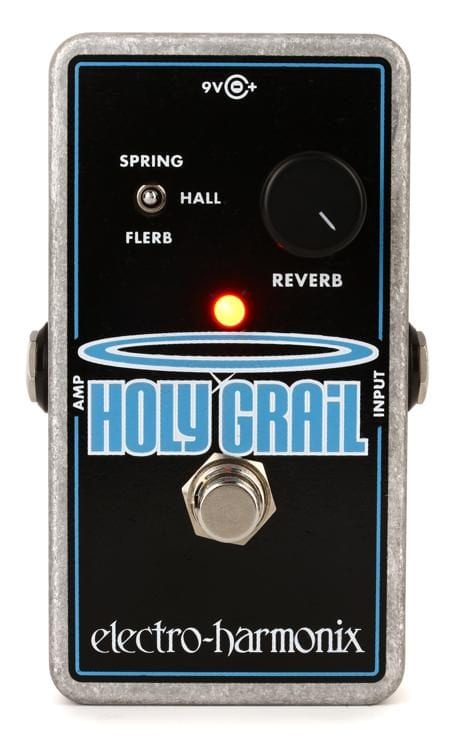
The Holy Grail Nano by Electro-Harmonix is a digital reverb in a portable guitar stompbox. This heavenly reverb pedal will revolutionize the way the user sees reverb. It contains a trio of reverb algorithms—Flerb, Spring, and Hall. All three algorithms have been tailored and designed for the electric guitar but will also work as fine on most instruments and voices. The Flerb algorithm is a unique and beautiful reverb, Hall is a new, lush reverb, while Spring is an emulation of the classic spring reverbs available in several guitar amps. “Divine reverb for mere mortals. Down from the heavens comes the Holy Grail, a compact digital reverb guitar pedal that is priced so low thou shalt not covet thy neighbor’s reverb tank any longer. The Holy Grail will make you a believer with its emulation of classic Spring reverb so faithful that even Dick Dale couldn’t tell the difference. Next, get lost in the lush spaciousness of the Hall reverb and ask yourself, ‘how did they fit Notre Dame into such a small package?’ Finally, reach enlightenment with the haunting Flerb,” Electro-Harmonix wrote.
**TC Electronic PolyTune 3 **
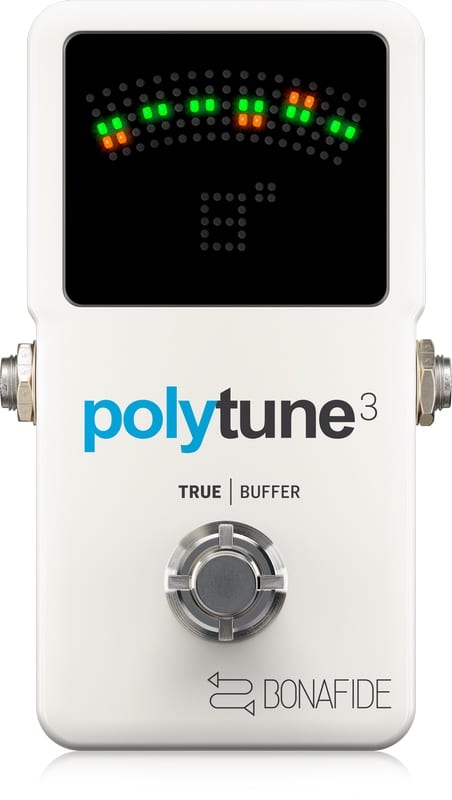
A tuner is a must-have for any guitarist, so it is not surprising that it is among the most popular stompboxes. While there are numerous tuners available, the PolyTune 3 from TC Electronic remains one of the best. When the original PolyTune was released in 2010, it has forever changed the way players tune their instruments. Acclaimed by amateur and professional players, guitar tuning immediately became as easy as “Strum - Tune - Rock!” The PolyTune 3 gets users in tune precisely and quickly. This ultra-compact polyphonic tuner boasts an inbuilt bonafide buffer and several tuning modes. It provides the user with quick and precise tuning as well as a stunning tone tool in one unit. The PolyTune 3 enables users to instantly get in tune with polyphonic, strobe, and chromatic tuning modes. Polyphonic tuning allows for tuning all the strings simultaneously, the dead-on strobe tuner delivers ±0.02 cent accuracy for supreme tuning performance, while lightning-fast chromatic tuner gives 0.5 cent accuracy. The inbuilt pure analog bonafide buffer circuitry maintains the tone through convoluted pedalboards and lengthy cable runs. The PolyTune 3 also features switchable true bypass or buffer modes that allow users to boost signal integrity for different setups. With the always-on mode, the tuner stays on. An ambient light detector and brilliant 109-LED display enable an instant clear readout in any viewing condition. The PolyTune 3 automatically switches between monophonic and polyphonic tuning modes, depending on the number of strings the user play.
Line 6 DL4 Delay Modeler
The DL4 Delay Modeler by Line 6 is a beautiful-sounding professional guitar effects stompbox configured to provide an extensive range of iconic and cutting-edge effects tones in a programmable pedal. It features infinite vintage delay and echo effects, as well as an onboard Tap Tempo control.
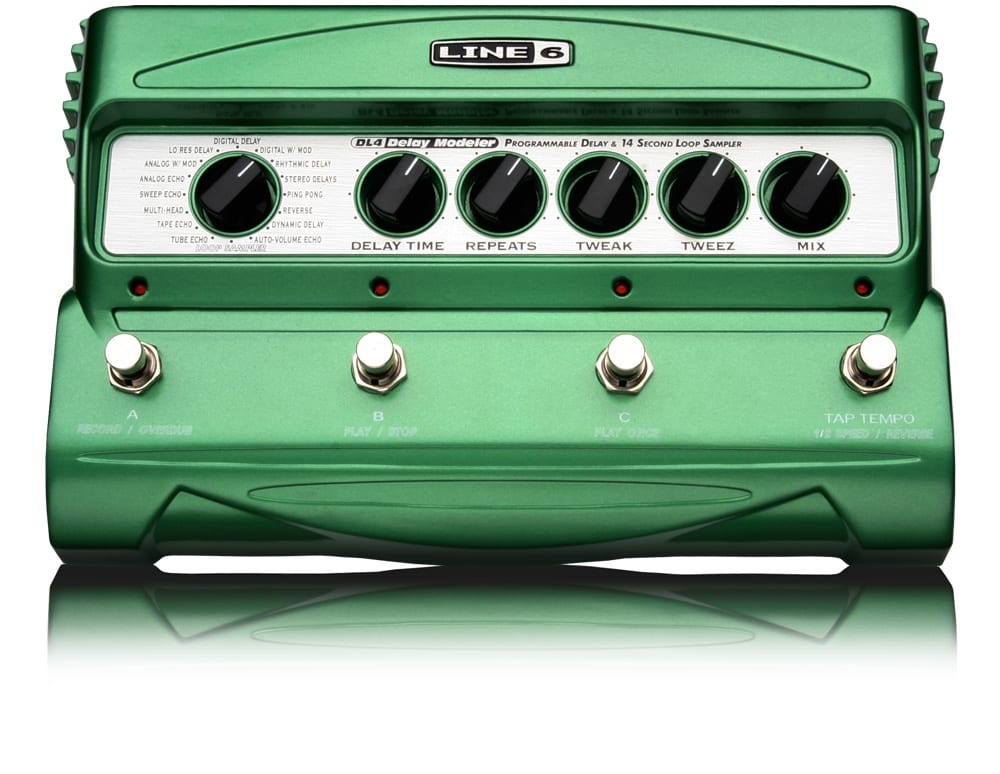
The DL4 Delay Modeler provides users with a tremendous array of sounds, from 24 bit squeaky clean digital echo to a tube-driven, tape loop echo equipped with customizable flutter and wow to real-time reverse delay. As if that were not enough, users also obtain full programmable control of every aspect of the sound on the stage and in the studio. Extremely simple to use, the DL4 Delay Modeler is an amazingly powerful device serving up delay effects never before available in one unit. With the DL4 Delay Modeler, users enjoy digital modeling based on over a dozen of coveted vintage delay and echo effects, including the EP-3 solid-state Echoplex, EP-1 Tube Echoplex, Deluxe Memory Man, Space Echo, Dynamic delay, Rhythmic delay, Reverse delay, and many more. This delay stompbox modeling pedal has “become a classic in its own right, as popular with guitarists as it is with singers, drummers, bassists, keyboardists, and anyone who wants a pure 24-bit true stereo signal path in the service of delays that run the gamut from gritty and psychedelic to pristine and heavenly.”
Pro Co RAT 2 Distortion
An iconic distortion/overdrive effect pedal, the Pro Co RAT boasts a trademark distortion, ranging from fuzz to several other tones. It ranks as one of the most widely utilized distortion units of all time. Among the jazz guitarists who employ the RAT are Ben Monder, Kurt Rosenwinkel, Lionel Loueke, and John Scofield. In 1988, the ProCo RAT 2 has emerged and continues to be a famous pedalboard staple for bassists and guitarists with its characteristic jagged gristle, provided by the elusive LM308 chip.
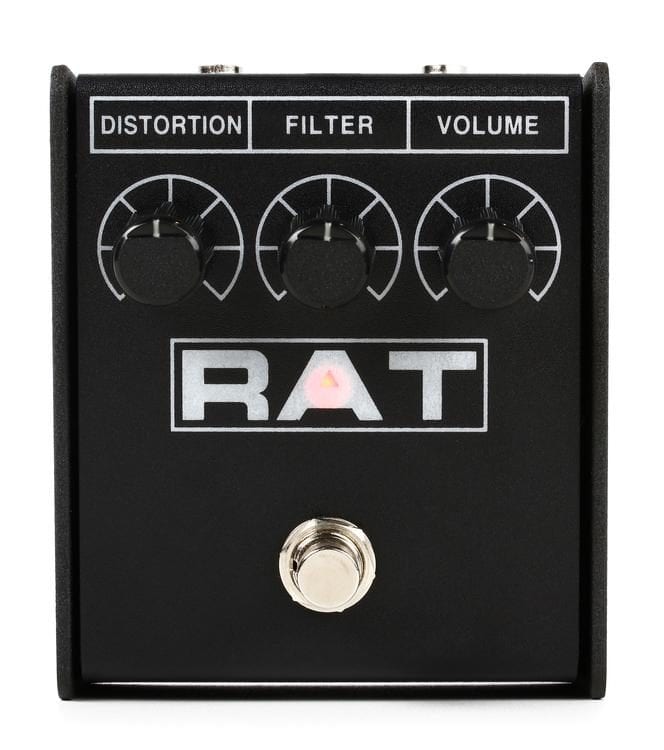
The classic RAT tone is a standard that every other distortion box is measured against. Heard on numerous recordings, the RAT has helped define the sound of the most influential bands of the past three decades. Users will love the RAT 2’s flexibility. Utilized as a primary distortion, the pedal performs well at soaring leads and arena rock rhythm tones. The RAT 2 Distortion nails that sweet spot where a tube amp transforms from squeaky clean to warm overdrive. For those who are already content with their amp’s distortion, the RAT 2 can be utilized as a boost for solos to achieve the added kick they want. The RAT 2 Distortion boasts the sophisticated RAT Filter control. To roll off brittle high-end frequencies, twist it to the right. Having difficulty slicing through the mix? Roll the Filter down and let the instrument’s natural brightness shine through. Controls for Volume and Distortion dial in the ideal gain amount while keeping the level consistent with the clean tone. The RAT 2 Distortion sports an On/Off LED indicator, glow in the dark graphics, military-spec glass-epoxy circuit board, and durable, industrial knobs, footswitches, and jacks. Other features include true bypass switching, which ensures that no unnecessary noise will creep into the signal when turned off.
**Electro-Harmonix Freeze Sound Retainer **
A lot of guitarists are jealous of how pianists can hold out their notes. Fortunately, guitarists can already do that as well with the Freeze Sound Retainer. This pedal is utilized by jazz guitarists, including Bill Frisell, Lage Lund, Mike Moreno, and Gilad Hekselman.
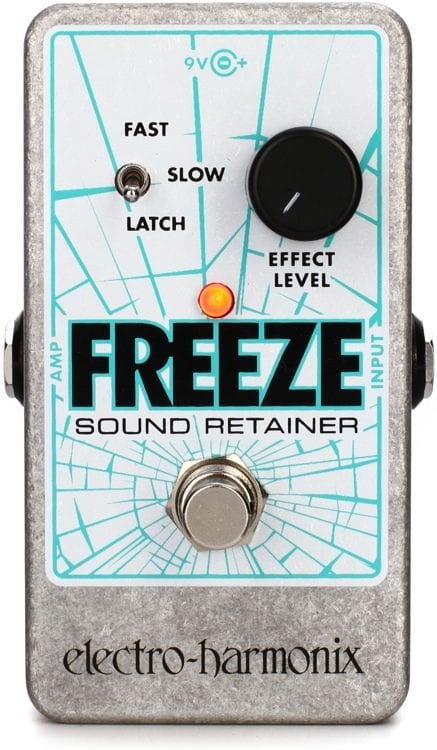
The Freeze Sound Retainer serves as a fascinating self-accompaniment tool. This aptly named pedal from Electro-Harmonix allows the users to play a chord or a note, hit the stompbox, and freeze the sound in sustained place, indefinitely. It provides the choice between slow and fast decay to allow the sound to fade out. It also features a Latch function option to enable the sound to continuously sustain for as long as the user want. Best of all, after they have nailed a sustained sound, they may continue playing over it. The Freeze Sound Retainer also allows users to dial in the exact amount of effect they desire, so it is suitable for an extensive range of applications. “Capture a frozen moment and turn it into a tonally unique sonic foundation. The Freeze Sound Retainer delivers infinite sustain of any note or chord at the press of a momentary footswitch. Release the footswitch and you are again sample ready,” Electro-Harmonix elaborated. The Freeze Sound Retainer incorporates a trio of selectable decay rates for liquid and smooth tonal transitions. “Hook the Freeze up with your favorite pedals for a sonic collage that will be unlike anything you have ever heard. It’s like adding an extra musician to the band,” Electro-Harmonix stated.
Ernie Ball VP Jr. 250K Potentiometer
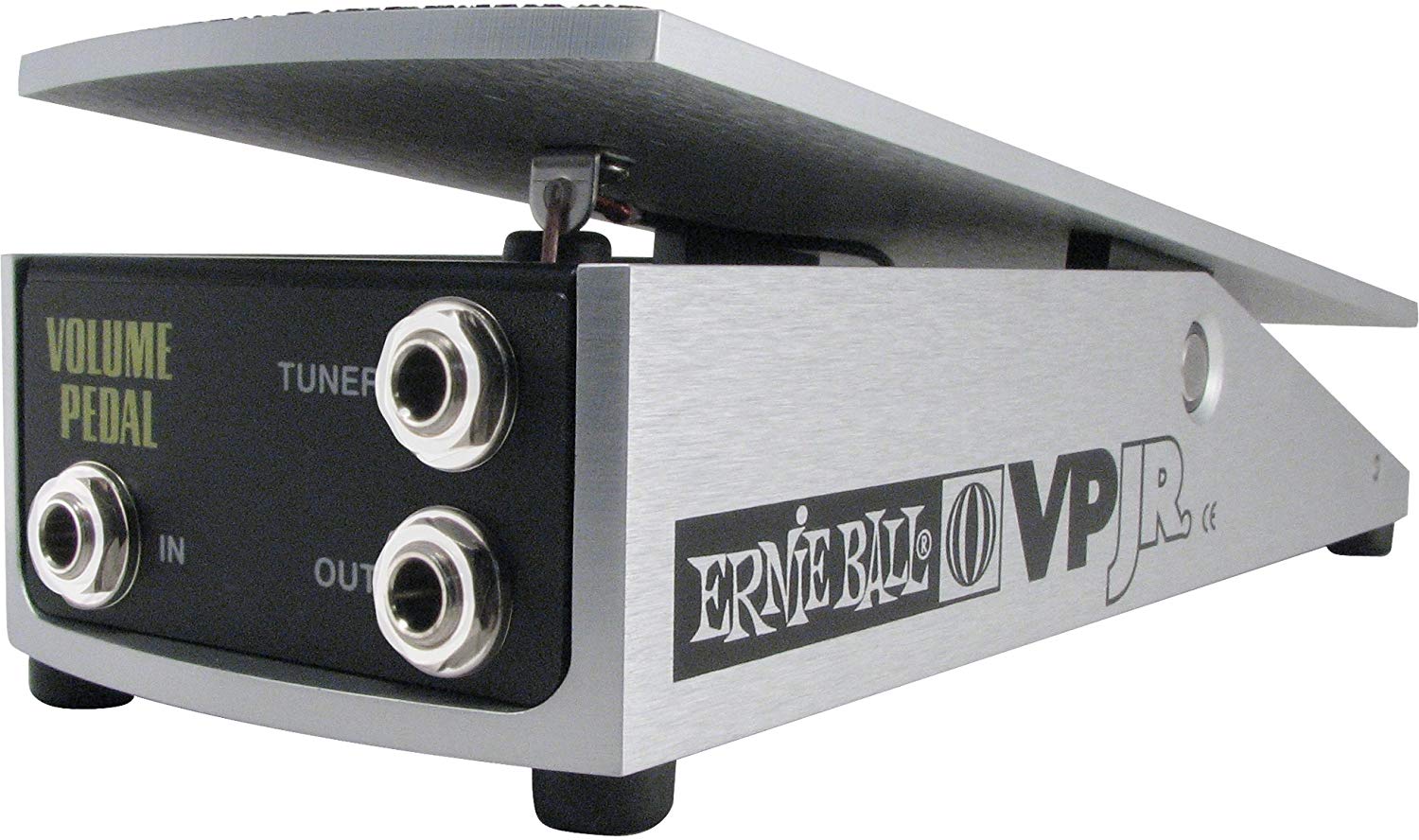
For obtaining tremolo effects, volume swells, or plain volume control, a volume stompbox serves as the perfect effect for the job. An Ernie Ball volume pedal is preferred by many guitarists due to its comfortable playability and solid construction. Perfectly voiced for passive signals, the VP 250k Jr sports a compact yet sturdy design consists of aircraft quality aluminum chassis that is practically indestructible. It carries a micro taper switch that gives the user two different volume swell rates. The potentiometer features a 250k ohm resistance appropriate for a passive instrument’s audio path. A tuner output is available and enables silent tuning while the stompbox is in a heel down position. Additionally, the VP 250k Jr’s new portable design provides more floor space.