A noise gate pedal sits in your chain and mutes the signal whenever it falls below a level you choose, so the hum, buzz and hiss of a high-gain rig disappear the moment you stop playing. Boss's effects guide draws the key distinction: "a noise gate clamps down and eliminates any signal below a certain threshold. This makes the noise gate a more harsh, less responsive option than a noise suppressor," which instead reduces noise while keeping dynamics and feel1. That trade-off, hard silence versus gentle reduction, runs through every gate on this page.
The twelve gates compared here range from one-knob minis to loop-equipped units that can wrap your whole drive section. What actually differs between them is the controls they offer and how they can be wired: a simple threshold knob handles a quiet pedalboard, while send/return jacks and multiple inputs open up the four-cable method for taming a noisy amp.
The twelve gates at a glance
| Pedal | Maker | Controls and connections |
|---|---|---|
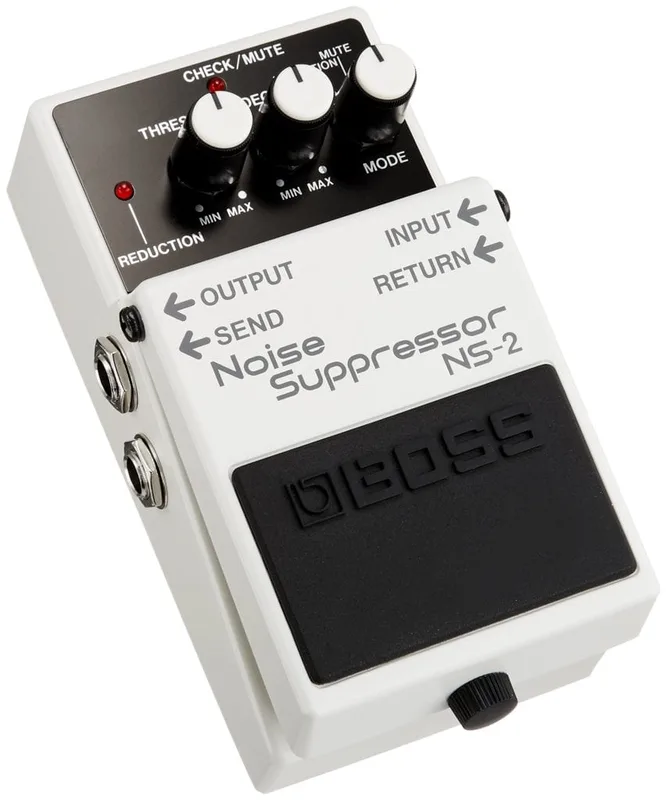
| Boss NS-2 Noise Suppressor | Boss | Cited by Boss's signal-chain guide as the noise gate for controlling an unruly pedalboard section2 |
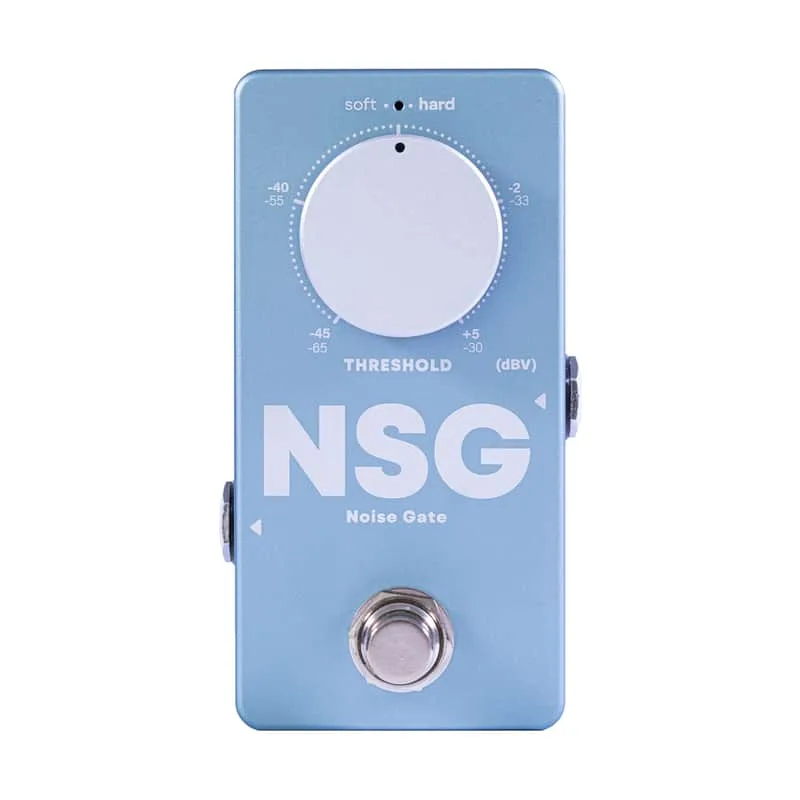
| Darkglass NSG | Darkglass | Threshold push knob3; Mode switch between hard and soft gain reduction, threshold the sole control4 |
| Boss NF-1 | Boss | Sens(ivity) knob sets the threshold where the pedal cuts off5 |
| TC Electronic Sentry | TC Electronic | Threshold, damp and decay controls6; loop Send/Return for silencing noisy pedals and amps7 |
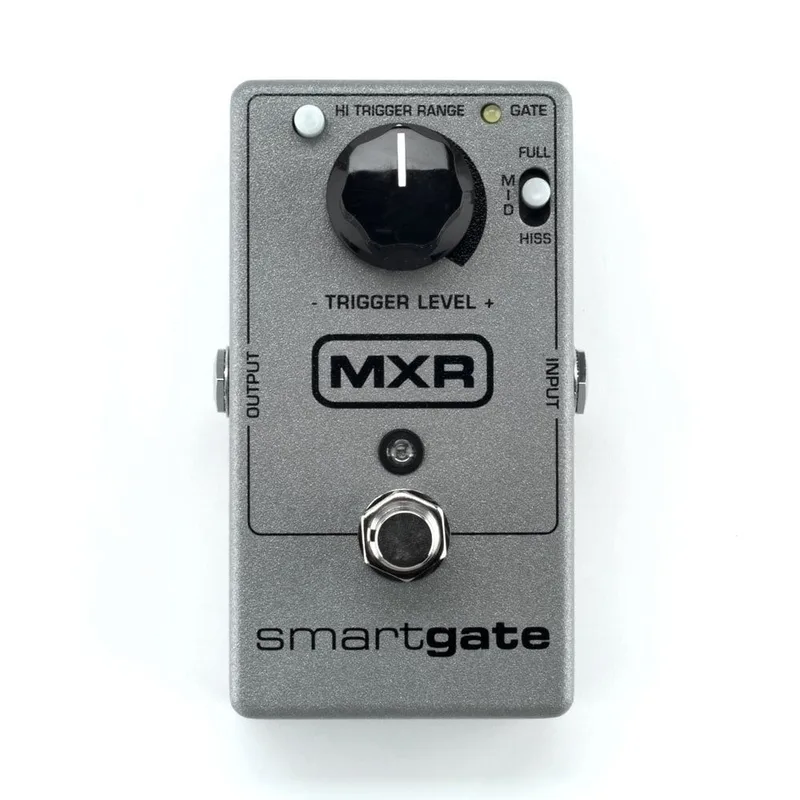
| MXR Smart Gate | MXR | Noise gate pedal8 |
| Mosky Noise Gate | Mosky | Mini-format guitar pedal9 |
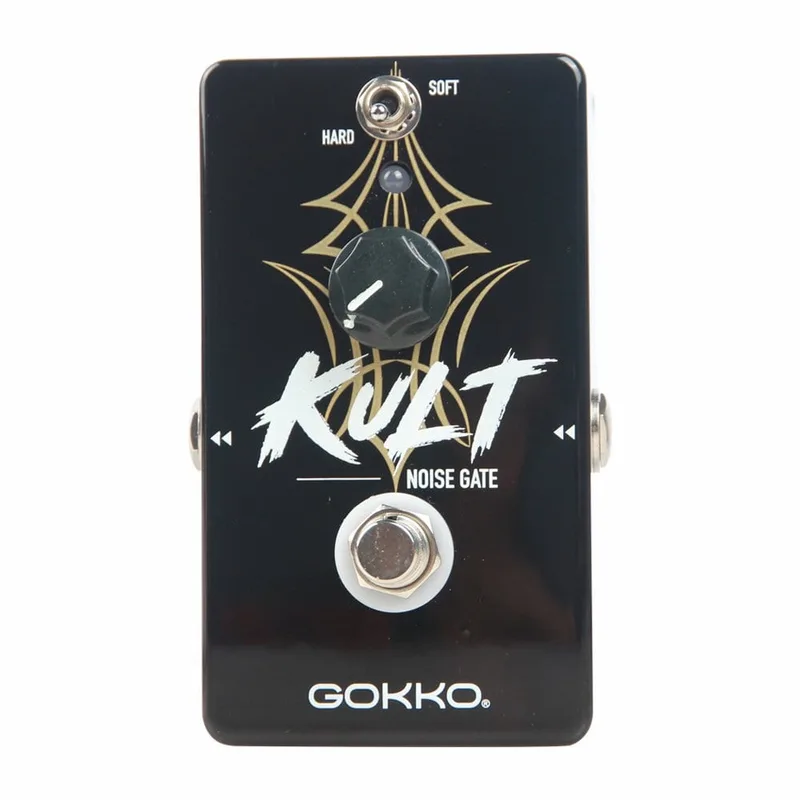
| GOKKO KULT | GOKKO | Reduces hum and buzz of other pedals, especially high-gain distortion10 |
| GUP Tech MWAC | GUP Tech | 2, 3 or 4-wire wiring methods1112 |
| GUP Tech SUN | GUP Tech | 4 jacks for 2, 3 or 4-wire method13 |
| GUP Tech TDS Sun | GUP Tech | 4 jacks for 2/3 or 4-wire method14 |
| Revv G8 | Revv | Quartet of jacks for two- or four-cable setups15 |
| KMA Pylon ATB | KMA Audio Machines | In/out and send/return jacks for various setups including the four-cable method16 |
The spread is wide. At the simple end, the Boss NF-1 "is just a simple noise gate that cuts off the signal once the level falls below the threshold set," with a single Sens knob to find that threshold5. The Darkglass NSG is similarly minimal, "with a simple threshold control acting as your sole control option," though its Mode switch chooses between hard and soft gain reduction4. At the full-featured end, the Sentry, Pylon ATB, G8 and the GUP Tech gates carry loop connections that change what the pedal can actually silence.
Controls: threshold, decay and mode
Gearnews's buying guide summarizes what most gates give you: "Typical parameters on noise gate pedals are threshold (level under which the pedal lowers the signal), decay (how fast the noise gate closes), and release (how quickly it lets go)"17.
- Threshold is the core control on every gate. Darkglass's manual describes it plainly: "Use this push knob to control the threshold of the noise gate"3. On the NF-1 the same job is done by the Sens knob5.
- Decay controls how fast the gate closes, and appears alongside threshold and damp on the TC Electronic Sentry6.
- Mode switches appear on gates that offer more than one reduction character. The Darkglass NSG's Mode switch selects between hard and soft gain reduction4, which is the practical difference between a hard mute and a gentler fade that Boss's guide associates with suppressors rather than gates4.
A gate with only a threshold, like the NF-1 or the NSG, asks you to find one level that kills noise without eating notes. Adding decay lets the gate close at a rate you set, so held notes can ring out before the silence kicks in.
Loops and the four-cable method
The biggest functional difference between these twelve pedals is whether they have loop connections. The TC Electronic Sentry has "a loop Send/Return for silencing noisy pedals/amps, all without cutting out dynamics or feel," which TC also describes as usable "for creative sidechaining in sync with other signals"7. The KMA Pylon ATB has in/out and send/return jacks "to facilitate various setups, including the four-cable method"16, and the Revv G8's "quartet of jacks allow for two- for four-cable setups"15.
The four-cable method is what those jacks are for. Boss's guide explains the principle: running the gate at the start of the effects chain, "with the guitar or bass connected" directly to the gate's input while gain pedals connect via the gate's effects loop, lets the gate "identify the clean guitar signal and pedal noise as separate sources"1. Guitar World's buying guide describes the full amp version: "you put drive pedals and the guitar preamp in the loop and run the effects send of the amp into the pedal return," so the gate is triggered by the clean input of the guitar and downstream noise can never open the gate18.
The GUP Tech gates are built around this. The SUN Noise Gate "includes 4 jacks to wire the pedal in 2, 3 or 4-wire method," with the right side jack as the detection input and the top right jack as the actual gate input13. GUP Tech notes the 4-wire method is "usable even without an amp FX loop," and that the pedal works in front of the amp or in the FX loop with a key input13. The TDS Sun carries the same 4-jack, 2/3/4-wire design14, and the MWAC "can be used in 2, 3 or 4 wires methods"1112, with its Guitar In/Thru jacks on the right side of the pedal and gate return jacks on top12.
A gate without a loop can only silence noise that reaches its input. A loop-equipped gate can put your noisiest pedals inside the loop while listening to the clean guitar at its input, which is why players with loud drive sections and hot amps tend toward the Sentry, Pylon, G8 or GUP Tech designs.
Where a gate goes in the chain
Placement depends on what you want silenced. Boss's effects guide advises that "if you're running several gain or EQ pedals, it's best to position the noise gate after all of them," so it reduces the noise of any pedals in front of it1. Boss's pedal-order guide also names the drive section of the board as "the logical place for a noise gate like the NS-2 to control the unruly pedalboard section"2. Anasounds' chaining guide adds a compressor-specific note: "add a noise gate after the compressor, if we like heavy distortions on the gain stage which adds too much noise"19.
For players running distortion or overdrive pedals, these guides point to the same spot: after the gain stages, where the noise has already been created, or wrapped around them via a loop.
Do you need one for high gain?
GOKKO's own product page frames the case: the KULT Noise Gate "can help reduce the noise hum and buzz of other pedals (especially high gaindistortion) in your pedal chain"10. High-gain distortion is the classic reason players add a gate, because gain multiplies whatever hum and hiss the rig already carries. A quiet rig at low gain may never need one; a high-gain metal board, like the drives compared in our high-gain metal pedals round-up, is where the threshold knob earns its place.
The cost of gating is the one Boss's guide flags: a gate that eliminates everything below its threshold is "a more harsh, less responsive option than a noise suppressor"1. Set the threshold low enough that only true noise falls under it, and sustain survives; set it too high, and note tails get clipped. Gates with a decay control or a soft mode, like the Sentry's damp and decay knobs6 or the NSG's soft reduction mode4, give you ways around that trade-off.
Questions
Where does a noise gate go in a pedal chain?
It depends on what you want it to silence. With several gain or EQ pedals, put the gate after all of them so it reduces the noise of everything in front of it. Many players put it in the drive section of the board to control that section, or after a compressor when heavy distortion adds too much noise. Loop-equipped gates can instead wrap the noisy pedals in their own loop.
Does a noise gate cut sustain?
It can. A noise gate clamps down and eliminates any signal below a certain threshold, which Boss's own guide describes as a more harsh, less responsive option than a noise suppressor. Set the threshold too high and the tail of a held note falls below it, so the gate closes early and chops your sustain. A lower threshold, or a soft reduction mode, preserves more of the decay.
What is the four-cable method for a noise gate?
The guitar connects straight to the gate's input, and your drive pedals and the amp's preamp go through the gate's effects loop, with the amp's effects send returned to the pedal. The gate is then triggered by the clean guitar signal, so downstream noise from pedals or the amp can never hold the gate open. Some gates support this even without an amp FX loop.
Is a noise reduction pedal the same as a noise gate?
Not exactly. A noise gate hard-mutes any signal below its threshold, which Boss's guide calls a more harsh, less responsive approach. A noise suppressor reduces noise more gradually while keeping dynamics and feel. Pedals are marketed under both names, so check whether the unit gates outright or reduces noise more gently.
Do I need a noise gate for high gain?
High-gain distortion pedals and amps add hum, buzz and hiss that becomes obvious whenever you stop playing, and gate makers like GOKKO specifically point to high-gain distortion as the problem their pedal addresses. If your rig is quiet at idle you may not need one, but heavy gain stages are the classic case where a gate earns its board space.
Sources (19)
- The Complete Guide to Noise Gate and Suppressor Pedals, BOSS (articles.boss.info), 2023-11-30
- The Ultimate Guide to Guitar Effects Pedal Order and Signal Chain, BOSS (articles.boss.info), 2023-03-01
- Noise Gate Manual, Darkglass
- Best noise gate pedals: control your tone, GuitarPlayer (www.guitarplayer.com), 2024-09-24
- TONEHOME, TONEHOME
- TC Electronic unveils Sentry Noise Gate guitar pedal, MusicRadar, 2015-09-29
- TC Electronic Introduces the Sentry Noise Gate, Premier Guitar, 2015-10-02
- MXR® SMART GATE® NOISE GATE, Jim Dunlop (jimdunlop.com)
- Noise Gate_Mini Guitar Pedals_Effect Pedals_Products_mosky pedal, moskyaudio.com
- KULT Noise Gate, GOKKO AUDIO
- MWAC Noise Gate Pedal Douche Edition, GUP Tech (guptech.ca)
- MWAC Gate, guptech.ca
- SUN Noise Gate Guitar Pedal, GUP Tech (guptech.ca)
- TDS SUN Noise Gate, GUP Tech (guptech.ca)
- Revv Amplification's new G8 Noise Gate pedal aims to sharpen up your tone, Guitar World, 2021-10-14
- KMA Audio Machines unveils the Pylon ATB Noise Gate, promising “silence and control” from the boost-equipped stompbox, MusicRadar, 2022-02-25
- The 7 Best Noise Gate Pedals of 2026: Not Hiss Problem (or Hers), gearnews.com, 2026-07-27
- Best noise gate pedals 2026: clean up your signal, Guitar World, 2021-03-19
- Learn how to chain your effects pedals, Anasounds, 2020-09-18