News
Best Effects Stompboxes for Synths and Keyboards
It is no secret that guitar effects stompboxes have forever revolutionized how the world hears music today. The impact this equipment made on music is noticeable. Even better, these effects stompboxes are not restricted only to guitars. They can be utilized with various instruments, including keyboards and synths, provided that the instrument employs a 1/4 inch TRS cable. There are plenty of reasons to use effects stompboxes with keyboards and synths. Guitar pedals are capable of taking a raw, dry signal and twisting it in ways one never thought possible. Since both components employ 1/4 inch jacks, the process is easy to assemble and achievable for practically anyone with some space at home. Gigging musicians may include it in their live set-up for that added wow factor. Synth keyboards often incorporate basic built-in effects such as chorus, reverb, and delay. In most cases, however, they are not as good-sounding or fleshed out as guitar stompboxes dedicated to crafting such effects. Pedals either house an arsenal of parameter controls or features a very specific modulated voicing. Musicians can find several brands and hybrids of effects. There are a few minor but noteworthy considerations to take into account before shedding some hard-earned cash on certain pedals. Synths generate about 20dB more than guitars. Running a loud synth into a guitar pedal may distort the signal or make it noisy. The quickest solution to that is to lower the volume on the synth. However, the noise-to-level ratio might remain too great, therefore producing background noise even with the volume turned down. That is most common in fuzzes, which does not react nicely to low impedance. Another thing one needs to consider is how they will incorporate the added gear into their setup. They have two suitable options: keep them on a dedicated stand / on top of the synth or build a conventional pedalboard like a guitarist. The former allows the player to twiddle and experiment on the fly, while the latter is perfect if the player does not need to adjust a lot of settings as they can keep it on the floor. Over the past decade, effect pedal choices have erupted, providing bassists and guitarists with a mind-bending selection of both common brand and boutique stompboxes. Several of these units can also be utilized with synthesizers and keyboards to drastically expand their sonic offerings. When it comes to listing the “best of the best” effects units for keyboards and synths, many individuals would agree that Eventide and Strymon belong at the top of the heap. Below are some marvelous effects stompboxes that works equally well with a guitar, keyboard, and synth.
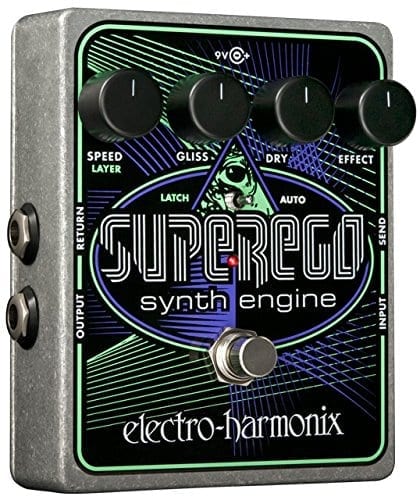
Electro-Harmonix Superego Synth Engine
It is not every day that a truly unique guitar effect arrives, just like the Superego Synth Engine stompbox from Electro-Harmonix. This marvelous guitar pedal is part sampler, part synthesizer, and part sustainer, letting users freeze their guitar sound and craft layers of sustained soundscapes. They may play synth-like leads on their guitar or sustain chords for etheric pad-like effects. Users can even sustain a chord or note, and then freeze it while soloing over. Featuring a completely original sound, an inbuilt effects loop, and pure analog circuitry, musicians will have a good time exploring the possibilities of the Superego Synth Engine.
The Superego Synth Engine leverages a sample-and-hold circuit to get a snippet of the guitar signal and sustains it to yield a pad-esque cloud of sound. For those who are playing rhythm, this pedal is capable of adding depth to the arrangements that they would usually obtain only with a keyboard player. When playing the lead, players can produce synth-style tones with a unique character. The key to getting the most out of the Superego Synth Engine is to explore its three operation modes. In Momentary mode, the effect is active only when the user stomps on the footswitch, and goes back to bypass operation once they lift their foot. Meanwhile, the Latch mode sustains anything the user plays while holding down the footswitch but continues sustaining until the effect is turned back off. Lastly, it has an Auto mode, which does not necessitate the user to hold the footswitch to add the effect. The Superego Synth Engine’s built-in effects loop can be utilized to add more sonic dimension to the tone by incorporating a delay stompbox, reverb, chorus, or other effects to the Superego Synth Engine’s signal.
MXR M101 Phase 90
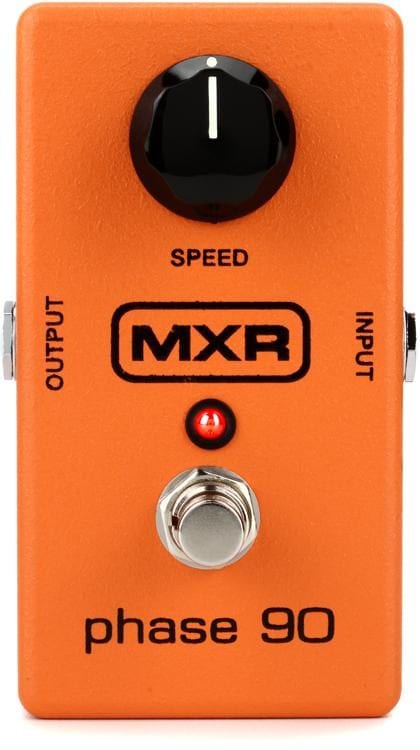
MXR’s iconic M101 Phase 90 pedal is a wildly popular phaser, which has found its way onto the arsenals of guitarists as wide-ranging as Dave Grohl to Eddie Van Halen to Nancy Wilson to Josh Homme, as well as innumerable other discerning guitarists seeking to inject a hint of shimmer to solos. The M101 Phase 90 is capable of dishing out smooth and watery effects to chords as well as muted strumming. The Phase 90 is not limited only to guitar but also works equally well on keyboards, vocals, or bass. The M101 Phase 90 features a straightforward, one-knob operation. The sole control adjusts the speed from subtle to fast, watery warble. The Phase 90 has basically taken its vintage, organic-sounding phase effect to the mainly digitized world of keyboards. Competitively priced and convenient to use, the M101 Phase 90 is among the effects stompboxes keyboardists can score without breaking the bank. On top of that, it is also the kind of pedal that is capable of fully altering a tone’s dynamic, whether the user is utilizing a synth or a keyboard. “No matter the genre or instrument, the Phase 90 has been there through it all to add its distinctly lush voice to a musician’s tone palette,” MXR states.
**Eventide H9 Harmonizer Effects Processor **
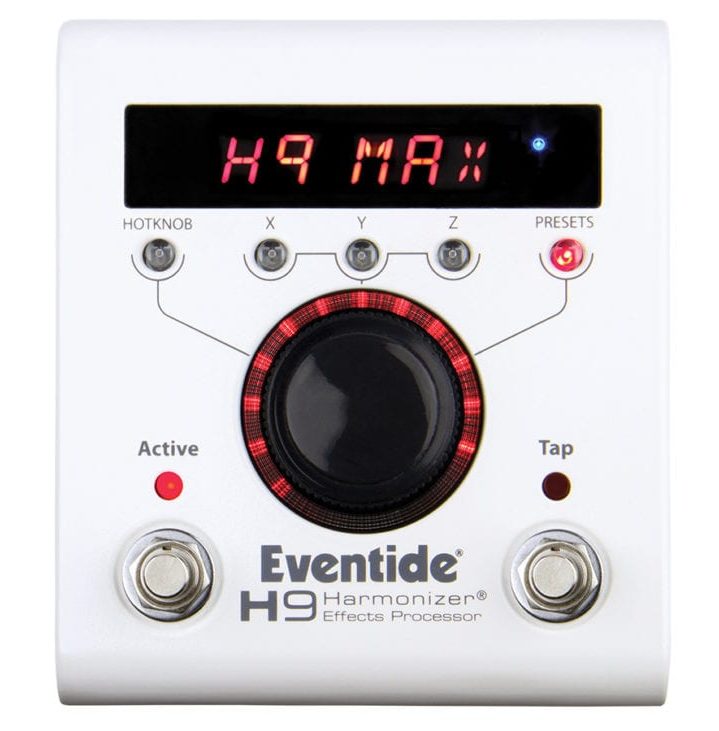
Pre-loaded with nine exceptional algorithms, the H9 Harmonizer Effects Processor enables users to leverage all of Eventide’s pedal effects from one unit. It is capable of running all the effect algorithms from Eventide’s Space (reverb), PitchFactor (pitch shifting), ModFactor (modulation), and TimeFactor (delay) stompboxes, plus some specially created for the H9 Harmonizer Effects Processor. It sports a straightforward, single-knob user interface, but what is astonishing is that it also connects wirelessly via Bluetooth to iPhones, iPads, and iPods for crafting and managing presets, in-app algorithm purchases, and live control. The H9 Harmonizer Effects Processor lets individuals add those iconic Eventide sounds to their tonal tool arsenal. Wholly and seamlessly controllable via its front panel, the H9 Harmonizer Effects Processor allows users to make adjustments on the fly. Additionally, a free Android/iOS app, H9 Control, is downloadable to an iPad or iPhone for live editing, crafting, and managing presets, as well as altering system settings wirelessly via Bluetooth. The H9 Harmonizer Effects Processor will be available for Mac or PC as well via USB. Eventide also ensured that the H9 Harmonizer Effects Processor can fit into any pedalboard scheme. It incorporates MIDI I/O and stereo audio I/O, as well as expression pedal and auxiliary switch inputs.
Moog Minifooger MF Delay
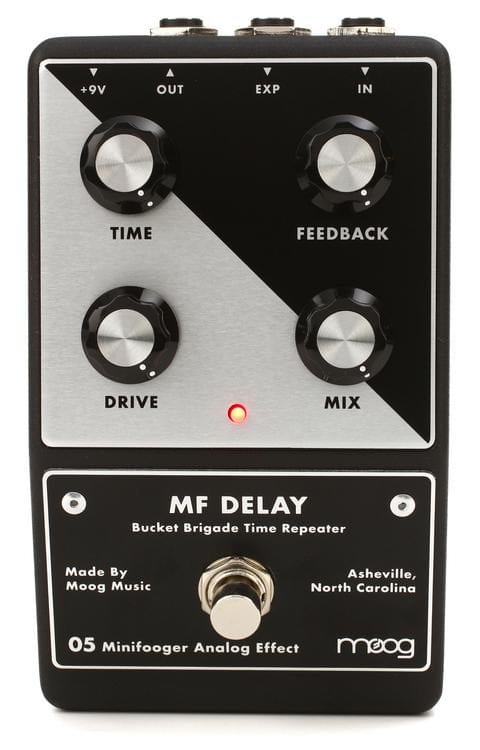
With their portable, pedalboard-friendly designs, Moog’s Minifooger stompboxes are a perfect fit for any pedalboard. The extended frequency ranges make these effects beautiful-sounding on guitar, as well as keyboards, bass, and more. True analog signal paths deliver the exceptional sound quality and the distinctive idiosyncrasies that make vintage pedals so amazing. Moreover, each unit has a CV input that allows users to hook up a Moog expression pedal or synth to take over different parameters. A boutique, pure analog effect tailored for the ultimate tone and feel, the Moog Minifooger MF Delay is among those few effects stompboxes that are capable of completely reinventing a rig. Leveraging four analog bucket brigade chips, this pedal allows users to dial in as much as 700ms of clear, naturally blooming delay decaying smoothly and organically into a practically reverb-esque tail. The MF Delay can provide a classic slap-back echo at shorter settings, while an onboard drive control allows users to rough up the sound with some added grit. Even better, users can hook up an expression pedal to manage the feedback or delay time, enabling convenient creation of swells and flanging, and tape delay-style effects with the MF Delay stompbox.
Boss CE-2W Waza Craft Chorus
The CE-1 Chorus Ensemble was the first-ever Boss pedal, and four decades after, guitarists are still drooling over its spacious modulated effects. Boss’ CE-2W Chorus Waza Craft Special Edition stompbox emulates the iconic sound of the CE-1, as well as its successor, the CE-2, leveraging premium pure analog circuitry.
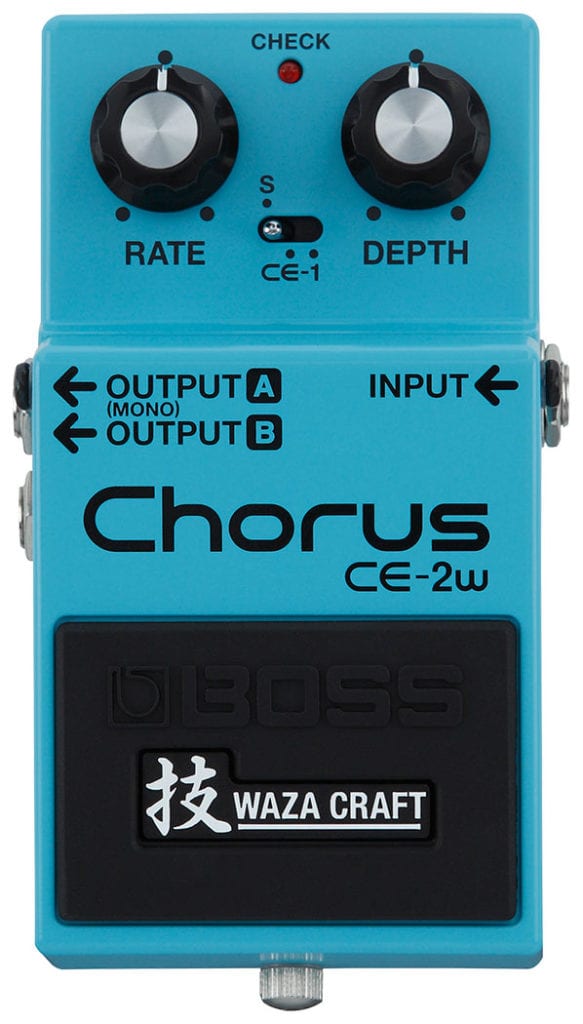
Per Boss, “The CE-1 and CE-2 represent the early days of BOSS’s longstanding dedication to innovation and quality, which remains stronger than ever at four decades and counting. Bringing together the cutting-edge technology of the time, savvy craftsmanship, and a devotion to helping musicians create great music, these landmark pedals embodied the spiritual mission for every BOSS product since.” With the flip of a switch, users can change between the standard CE-2 sound, and CE-1 chorus and vibrato effects. The CE-2W Waza Craft Chorus surpasses the capabilities of the original pedals, featuring variable depth for the CE-1 chorus sounds and stereo output for the CE-2 effects. It lets users incorporate expansive effects on their pedalboards. Analog bucket-brigade (BBD) technology yields exceptional vintage modulation effects, while Depth and Rate knobs allow for dead-on effect adjustment. The Japanese word “waza” means technique and art, a fitting title for Boss’s impressive collection of revamped guitar effects stompboxes. The Waza Craft units, even in their Standard modes, sound like idealized variants of the originals, providing a similar sonic character, which has made them legendary, but with a more consistent tone and less noise.
**Strymon TimeLine **
The TimeLine multidimensional delay pedal from Strymon serves up a dozen of unique delay machines, each with comprehensive command over sonic character and vibe. Users can go from clear and crisp, studio-grade digital delays to fluctuating and saturated tape delay machine sounds. The TimeLine is capable of dishing out anything from fuzzy and warm analog-esque repeats to sparkling, shimmery, and crystalline ice delays.
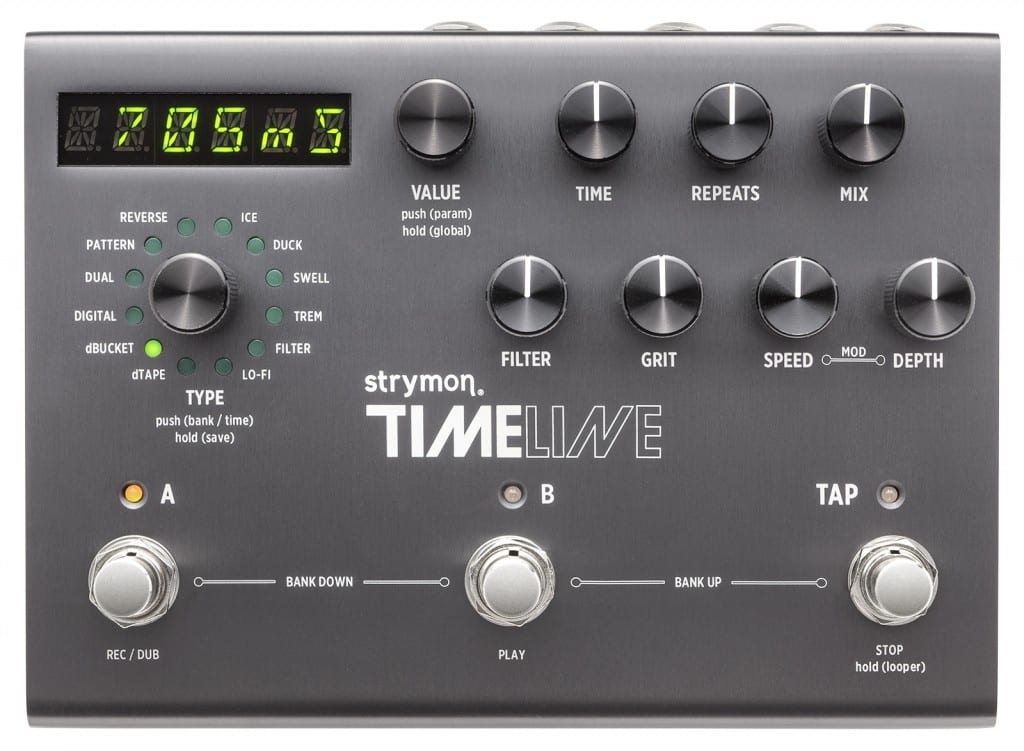
“When we decided to create a studio-class stereo delay effects pedal, we knew we must go well beyond what has been done in the past—in sound quality, sonic flexibility, hardware design, and processing power. We spent months locked up in the Strymon sound design labs dreaming up the most spacious, lush, creative, and tweakable delay effects ever heard. It was a monumental task—a relentless study of delays and their nuances, and a continuous pursuit of innovative and musically inspirational sounds. Utilizing a ridiculously powerful SHARC DSP, every drop of processing power is harnessed,” Strymon detailed. The TimeLine is an infinitely customizable, crystal-clear digital delay, equipped with Modulation, High Pass, Smear, Grit, and Filter controls. Users can capture an extensive variety of delay tones with the classic voiced digital approach. Select from Digital, Dual, Reverse, Ice, Duck, Swell, Filter, Lo-Fi, Trem, Pattern, dTape, or dBucket. Moreover, a non-linear mode lets the repeats fade more instantly while preserving the natural feel. Other features include 200 presets, a stereo looper, an expression pedal control, MIDI integration, and a feedback loop.
Moog Moogerfooger MF-102 Ring Modulator
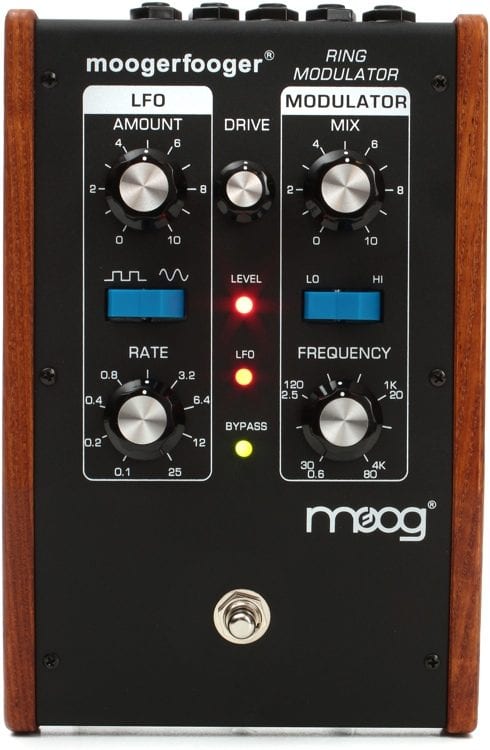
The Moogerfooger MF-102 Ring Modulator by Moog rebuilds the sound into two different tones and then employs an internal carrier oscillator to spread the tones apart within the frequency spectrum. Per Moog, it is “a direct descendant of Moog modular synthesizers designed to work with any sound source.” The MF-102 Ring Modulator can conjure a tremendous array of sounds ranging from natural to chaotic. It is capable of capturing beautiful tremolo effects at its more subtle settings. At extreme settings, the MF-102 Ring Modulator becomes fully transformative, crafting robotic and bizarre resonations. Designed by Bob Moog, the MF-102 Ring Modulator houses a voltage-controlled carrier oscillator, a ring modulator, and a voltage-controlled two-waveform LFO. It consists of controls for Drive, Mix, LFO Amount, Rate, and Frequency. Similar to other Moogerfoogers, the Ring Mod is pure analog and controllable with a Moog EP-2 expression pedal. It can be utilized with keys, samples, bass, guitar, as well as recorded tracks, for effects ranging from low-key to off-the-wall. The MF-102 Ring Modulator boasts the pure analog mojo for which Moog is renowned.