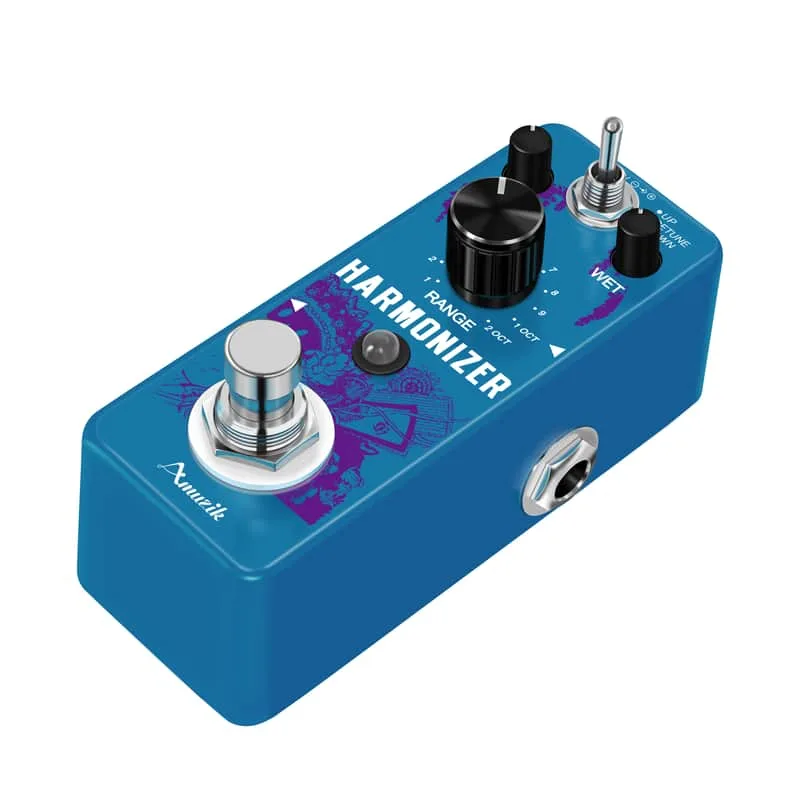


The Amuzik Harmonizer is a compact guitar harmonizer and pitch-shifting effects pedal. It produces harmony intervals, pitch shifts, and detune effects alongside your dry guitar signal, sitting in the octave and pitch family of pedals. RockBoard's PedalPedia describes it as a way to produce thicker or altered melodic tones, which is the usual reason players reach for a harmonizer: a single guitar line becomes two or more, moving in intervals you set1.
Harmony, pitch shift and detune modes
The pedal offers multiple effect modes: harmony, pitch shift, and detune1. Each does a different job to your signal:
- Harmony adds a second voice at a set interval above or below your playing, so a melody carries an accompaniment with it. This is the mode for two-guitar-style lines played by one player.
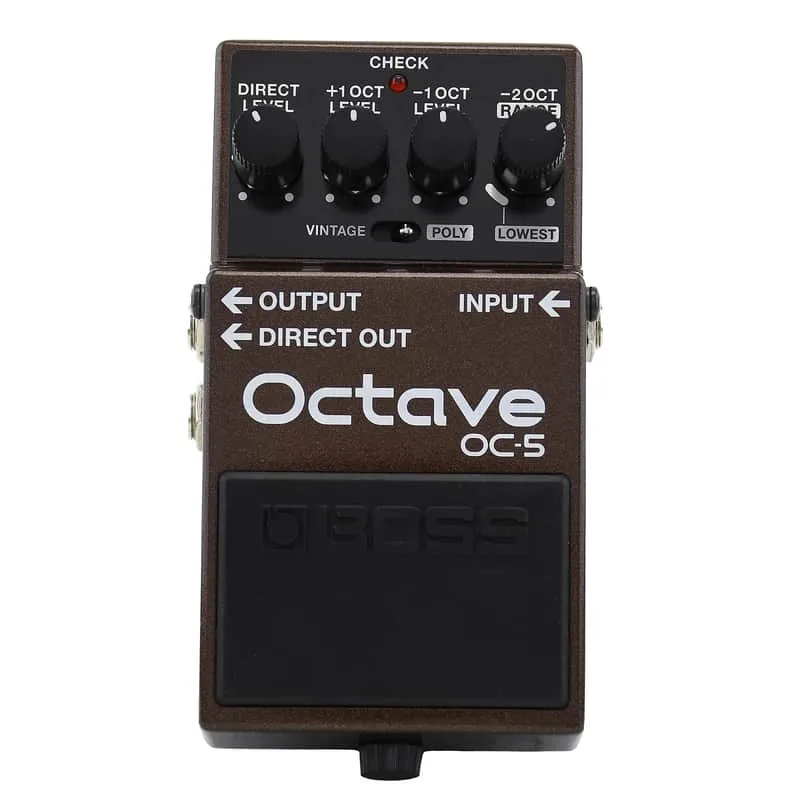
- Pitch shift moves your note to a different pitch, the core function behind both harmony and octave-style sounds. Shifted pedals in this family range from simple sub-octave units like the Boss OC-5 to interval-based harmonizers like the Boss PS-6 Harmonist.
- Detune keeps the same pitch but slightly offsets it, thickening the signal the way a doubled or chorused track does. It is the most subtle of the three modes and works well left on quietly under clean playing.
Amuzik describes the controls as adjusting the balance and type of harmony or pitch change. In other words, you set how much of the shifted voice sits against your dry signal and what kind of shift it is, which covers the range from a subtle thickening to a full two-guitar harmony line1. Because the shifted voice is blended with the dry signal rather than replacing it, the pedal can sit in a normal effects chain: the dry guitar keeps its character, and the effect voice is added on top.
Power, bypass and pedalboard fit
The Harmonizer runs on 9V DC, center negative, the standard polarity for compact pedals1. Its listed current draw is 128mA1, which is worth noting when planning a power budget: a supply rated for a handful of low-draw pedals may not have that much headroom on one output, so an isolated output with sufficient current is the safer pairing.
At 128mA, the Harmonizer draws more current than many compact analog pedals. A daisy-chain output shared with several other pedals may not deliver enough current, which can cause noise or cutouts. Give it its own supply output rated at or above its draw1.
The pedal is true bypass, and RockBoard's PedalPedia states that this design preserves the original signal when the effect is disengaged1. For a pitch pedal that sits in front of drive or delay pedals, true bypass means the dry tone is untouched when the Harmonizer is off, and the pedal only colors the signal when switched in.
For board space, RockBoard's PedalPedia says the small housing makes it easy to add to a pedalboard with limited space1. That makes it a candidate for players who want harmony and pitch effects without dedicating the footprint of a larger pitch unit, such as the bigger floor-based shifters in this family. Where it differs from many of those units is the analog circuit designation: RockBoard's PedalPedia lists the Harmonizer as analog1, while most dedicated pitch-shifting and harmonizing pedals are digital designs that sample and resample the note.
Videos
Leon Brown Music
C.O.G. Music
Questions
Is the Amuzik Harmonizer true bypass?
Yes. Amuzik's product listing on RockBoard's PedalPedia describes the Harmonizer as having a true bypass design, which preserves the original signal when the effect is disengaged. In practice that means your guitar's tone passes through unchanged when the pedal is off, with no extra circuitry left in the signal path.
What power does the Amuzik Harmonizer need?
The Harmonizer runs on 9V DC with a center negative polarity, the standard arrangement used by most compact pedals and shared power supplies. The listing does not mention battery operation, so plan on using a power supply or an isolated output from a pedalboard power brick.
Is the Amuzik Harmonizer analog or digital?
Amuzik lists the Harmonizer as an analog circuit on its RockBoard PedalPedia product page. That places it among analog pitch and harmony pedals rather than the digital pitch-shifters common in multi-effects units.
How much current does the Amuzik Harmonizer draw?
The product listing gives a current draw of 128mA. That is higher than many simple analog pedals, so it is worth checking the output rating of your power supply before adding the Harmonizer to a shared daisy chain.
Will the Amuzik Harmonizer fit on a small pedalboard?
According to Amuzik's product listing, the Harmonizer's small housing makes it easy to add to a pedalboard with limited space. It is described as a compact pedal, so it takes up less room than many harmony and pitch-shifting units.
Sources (1)
- Harmonizer by Amuzik, RockBoard PedalPedia, 2026